





Schedule a Call Back


Why Cleantech-driven Recycling is the key for India to Lead Global Manufacturing
 Articles
- Jan 21,26
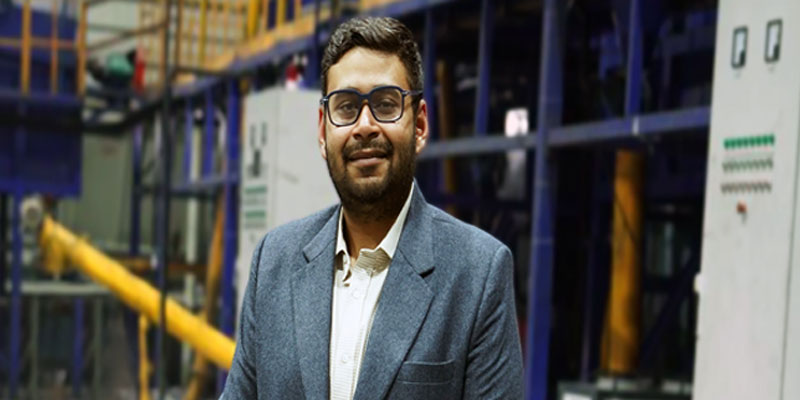
Cleantech-driven recycling can cut import dependence, strengthen supply chains, create jobs, and position India as a global leader in sustainable and circular manufacturing, comments Akhilesh Bagaria, Founder & Directo, NavPrakriti Green Energies
Key Takeaways:
- Cleantech-driven recycling can reduce India’s near-80 per cent import dependence on critical cleantech components while strengthening supply chain resilience.
- Recycling-led circular manufacturing offers a cost, sustainability and export advantage under the National Manufacturing Mission.
- Scaling impact requires dedicated finance, higher R&D investment, and over 150 recycling and recovery hubs by 2030.
- Workforce skilling and domestic procurement policies are essential to position India as a global hub for sustainable manufacturing.
India stands at a critical juncture in its industrial evolution. With bold climate commitments of 500 GW of non-fossil energy capacity and 30 per cent electric vehicle sales by 2030, and a net-zero targets for 2070, the country is not just pursuing environmental stewardship but laying the foundation for a resilient, globally competitive economic model. At the heart of this transformation lies cleantech-driven recycling, an underappreciated force rapidly emerging as India’s secret weapon to dominate global manufacturing.
The global context: Cleantech as a geoeconomic imperative
The world’s manufacturing map is being redrawn. Climate action is no longer a matter of reputation; it’s a core driver of industrial policy, market access, and supply chain security. The European Union’s Green Deal, COP30’s Declaration on Green Industrialisation, and the G20’s push for green value chains all signal that clean energy and sustainable manufacturing are now the benchmarks for global competitiveness. For India, the stakes are high: Dalberg analysis estimates the domestic market for critical cleantech components could soar to ?6-8 trillion annually by 2030.
Yet, India’s current reliance on imports for solar modules, batteries, and green hydrogen components close to 80 per cent poses a severe strategic vulnerability. The over-concentration in global supply chains, as highlighted by both COP30 and the G20, exposes India to geopolitical shocks and price volatility. Cleantech-driven recycling can flip this script by transforming waste into critical resources, fortifying domestic supply chains, and positioning India as a global supplier of sustainable manufacturing inputs.
Recycling: The cleantech engine for supply chain resilience
Critical minerals and materials such as lithium, nickel, cobalt, and rare earths are the lifeblood of the cleantech revolution. China’s dominance in refining and processing these resources underscores the urgency for India to build indigenous capacity. Recycling offers a strategic shortcut. By investing in advanced material recovery facilities, battery waste collection centres, and next-generation recycling technologies, India can reclaim valuable inputs from end-of-life products.
The government’s vision for a national circularity infrastructure, over 150 battery waste collection centres and material recovery hubs by 2030 have the potential to significantly reduce import dependence. This would not only save an estimated ?5-6 trillion in import bills by the end of the decade but also insulate Indian manufacturers from future supply disruptions. Public-private vehicles like KABIL can play a pivotal role in securing strategic overseas acquisitions, but the real game-changer is a robust domestic recycling ecosystem powered by cleantech innovation.
A growth engine: Cleantech recycling fuels industrial renewal
The case for cleantech recycling as the front-runner in India’s National Manufacturing Mission rests on three clear pillars: growth, jobs, and resilience.
Growth: Countries around the world are reconfiguring industrial policies to prioritise clean energy and circular economy principles. Cleantech-driven recycling gives Indian manufacturers a proprietary edge by enabling closed-loop production, reducing raw material costs, and boosting global marketability. As international buyers, especially in Europe, Japan, Korea, and the Nordics, seek sustainable supply chain partners, Indian firms with strong recycling capabilities will be first in line for export contracts and joint ventures.
Jobs: Dalberg projects that cleantech manufacturing could generate 1 million direct jobs by 2030 and up to 50 million net new green economy jobs by 2070. Recycling is a key driver of high-quality employment, from R&D and engineering to plant operations and logistics. By embedding recycling into the manufacturing value chain, India can address both its environmental and employment imperatives.
Resilience: Recycling mitigates supply chain risks by reducing exposure to global price swings and import shocks. It also strengthens India’s hand in trade negotiations, as countries and companies increasingly prioritise partners with robust circularity credentials.
Capital infusion: Financing the cleantech recycling revolution
To realise this vision, India must mobilise massive capital, an estimated ?2 trillion in public investment by 2030 across solar, wind, batteries, EVs, hydrogen, transmission, and recycling infrastructure. The creation of a Green Manufacturing Finance Institution, or the cleantech-focused revamp of NaBFID, is essential to lowering the cost of capital and de-risking early investments in recycling technologies.
This approach dovetails with the COP30 finance agenda, which calls for mobilising at least $1.3 trillion annually by 2035 and using country platforms to channel investments toward national priorities. By aligning domestic finance with global climate capital, India can accelerate the deployment of cleantech recycling at scale.
Innovation and R&D: India’s cleantech differentiator
India’s current R&D spend is just 0.6 per cent of GDP far below global leaders. To drive cleantech recycling innovation, the government must raise this to 1 per cent by 2030, incentivising industry-academia partnerships, matching grants for deep tech, and international technology transfer. Breakthroughs in battery chemistry, solar wafer recovery, and rare earth separation will give Indian recyclers a competitive moat in global markets.
A portion of the ?1 trillion budgeted under Research and Development Initiatives should be targeted directly at cleantech recycling and circular economy innovations. This is the only way India can leapfrog from being a technology taker to a technology creator in the global sustainability race.
Securing raw materials: Recycling as strategic insurance
India’s “India Plus Many” strategy, locking in bilateral mineral deals with partners like Australia, Brazil, and South Africa, must be complemented by aggressive investment in domestic recycling infrastructure. By scaling up indigenous refining capacity and incentivising the collection and processing of end-of-life batteries, e-waste, and solar panels, India can reduce its dependency on volatile international markets.
A three-part upstream approach is critical:
(1) Fiscal incentives for domestic critical mineral refining.
(2) Strategic overseas acquisitions via public-private vehicles.
(3) A nationwide network of recycling hubs to reclaim and process essential materials.
This holistic model is vital for de-risking India’s cleantech transition from geopolitical shocks and global price volatility.
Building the green workforce: Skilling for the future
The next generation of Indian manufacturing talent must be fluent in cleantech and recycling technologies. By 2030, over one million trained professionals will be needed in cleantech manufacturing alone. This requires a curriculum overhaul at ITIs and engineering colleges, global faculty exchanges, and targeted skilling programs.
Funds from the PMKVY and ITI upgradation schemes, currently allocated at ?600 billion should be earmarked to build this skilled workforce. The industry must also partner with academic institutions to ensure training is aligned with real-world recycling plant operations and cleantech innovation.
Creating domestic demand: Policy levers for scale
Domestic Content Requirements, the ALMM framework for solar and wind, and indigenous procurement mandates must be strengthened to give cleantech-driven recycling firms the scale and predictability they need. COP30’s Global Sustainable Public Procurement Declaration reinforces the importance of government procurement as a lever to accelerate green manufacturing and recycling. By incorporating these global signals into the National Manufacturing Mission, India can build a stable domestic market for recycled cleantech components.
Cleantech recycling at the core of India’s global ambition
The success of the National Manufacturing Mission will depend on placing bold bets. Cleantech-driven recycling is not merely aligned with India’s climate goals; it is central to industrial renewal, job creation, and global economic positioning. As international partners diversify supply chains away from China, India’s ability to deliver sustainable, circular manufacturing solutions will determine its place in the new world order.
By investing in advanced recycling technologies, mobilising capital, fostering innovation, securing raw materials, and skilling its workforce, India can transform recycled cleantech components into a strategic export and become the world’s preferred manufacturing partner. The time to act is now, because the future of global manufacturing is not just clean, it’s circular, and India is ready to lead.
About the author:
Akhilesh Bagaria is the founder of East India’s first large-scale lithium-ion battery recycling company, NavPrakriti Green Energies Pvt Ltd. An alumnus of St. Xavier’s College and a qualified Chartered Accountant, he holds a degree in Innovation & Entrepreneurship from the University of Warwick. As the driving force behind NavPrakriti, Akhilesh is recognized for his strategic decision-making, innovation mindset, and systems-thinking approach. He leads the company’s mission to accelerate India’s transition to a circular economy through advanced battery recycling and resource recovery solutions.
Blurbs: -- ONLY FOR PRINT
The next generation of Indian manufacturing talent must be fluent in cleantech and recycling technologies.
Cleantech-driven recycling can flip this script by transforming waste into critical resources, fortifying domestic supply chains, and positioning India as a global supplier of sustainable manufacturing inputs.
cleantech recycling
circular manufacturing India
green manufacturing
critical minerals recycling
sustainable supply chains
National Manufacturing Mission
cleantech investment India
Akhilesh Bagaria
NavPrakriti Green Energies
Related Stories
Plastic, Packaging & Printing

BioReform scales biodegradable bags, expands global sustainability footprint
BioReform, an AIC-IIITH incubated startup, is advancing biodegradable packaging solutions, expanding across metros and global markets while replacing millions of single-use plastic bags.
Read moreElectrical & Electronics

Jupiter International Commissions 1 GW Solar Cell Unit at Baddi
Jupiter International commissions its third solar cell unit in Baddi, adding 1 GW mono PERC capacity and taking total installed capacity to nearly 2 GW, with a 1.25 GW TOPCon line underway.
Read moreIndustrial Safety & Security

Cleantech Recycling: India’s Global Advantage in Manufacturing
Cleantech-driven recycling can cut import dependence, strengthen supply chains, create jobs, and position India as a global leader in sustainable and circular manufacturing, comments Akhilesh Bagari..
Read moreRelated Products

Grey Polka Dash Board Covers
INDUSTRIAL SAFETY & SECURITY SYSTEMS
Elegant Auto Accessories offers a wide range of grey polka dash board covers.

Fire Protection - Industrial Sirens
INDUSTRIAL SAFETY & SECURITY SYSTEMS
Amit Safety Enterprises offers a wide range of fire protection industrial sirens.
Read more
Fire Alarm Sysytem
INDUSTRIAL SAFETY & SECURITY SYSTEMS
Nayakson Security Systems is offering a range of fire alarm, intrusion alarm and gas alarm systems.
latest News
Subscribe to iNoW

For Industry News on WhatsApp, Give a Miss Call on: +91 84228 74016