





Schedule a Call Back


Operational Optimisation: Standardisation – The Invisible Engine of Scale
 Articles
- Jul 27,26
As we put our efforts into optimising our operations, our focus is on improving the efficiency with which we process the components required to produce the final products that leave our factory. In this month’s column, Zurvan Marolia challenges the basic inputs as we look at another dimension of making operations lean.

When we use the word “standardisation”, what immediately springs to mind are “SOPs” or Standard Operating Procedures, a documented manual of how things are to be done in set ways, in an effort to get set outcomes. This, however, has two flaws:
- SOPs represent only one half of the standardisation equation, as control of output is also dictated by control of input (component specification and design).
- The SOP manual, for all its good intent, generally becomes a document handed over to a newcomer to study, after which it is rarely referred to.
The latter is a topic for another day. Today, we focus our attention to the fact that for a successful operation, the standardisation lens has to be applied not only to the processes but to the product as well.
Process standardisation creates consistency in execution.
Product standardisation creates efficiency in design, procurement, manufacturing, inventory management, and service support.
Together, they form the foundation upon which profitable growth and scalable operations are built.
It is an inescapable fact that as markets mature and become more demanding, customers increasingly seek customised solutions. For organisations, the initial response was to build more flexibility into the manufacturing process (in effect investing in flexible CNC based equipment). This gave the organisations making such investments a “first mover advantage” which gave a distinct competitive edge in the evolving market.
However, that competitive edge is short-lived, and as the “me too” players catch up, the successful organisation has to look within to find a new competitive edge.
The answer for a successful organisation lies not in the ability to produce unlimited variety, but to deliver variety efficiently through the approach of “Mass Customisation”.
Locating the constraint
In all that we have covered on the subject of “Operational Optimisation” so far, we have gone with one unsaid assumption i.e., the constraint is to be located within the manufacturing processes on our shop-floor. There is however another angle that begs exploration.
When a new product is introduced, the typical approach is to start at the drawing boards and come up with a new set of drawings. This sets off a chain reaction as under:
New Drawing New Purchase Contract New Inventory New processes New SOPs…
…and the list is far from comprehensive, but the reader can see where it is leading. It is leading to enhanced complexity which requires more effort to manage, but which is difficult to extract value from because this effort is not perceived by the customer. Remember, customers pay for what they get, and not for the processes that are set.
This constraint is created and can be effectively addressed well before the first part starts its journey on the shop-floor – on the drawing board.
Yes, the most powerful standardisation decisions are made long before a product reaches the factory floor. The design process must actively challenge every new component and every new variation. The question every product designer needs to ask themselves is: “Can I use an existing part?” or “Can I modify an existing part to make it usable on existing as well as the new product?”.
The guiding principle for design has to be to maximise component commonality across product families.
This approach creates significant benefits such as:
- Simplified procurement
- Lower inventory
- Manufacturing efficiency
- Improved quality
- Faster product development
The result is that operations become simultaneously more agile and more efficient.
Mass customisation: The best of both worlds
It is true that in an evolving market, there is an increasing demand for customised products. It is here that designers start creating “Platform Designs” in place of “Product Designs”, which involves the development of a modular architecture. This approach balances the scale efficiency of mass production with the flexibility of custom tailoring. Operationally, this results in delaying the Customer Order Decoupling Point (CODP) as far down the supply chain as possible.
Standard, interchangeable sub-assemblies can be mass-produced during lean demand periods, using forecast-driven efficiency. These parts are then rapidly picked, configured, and finished only when a firm customer order arrives. This approach minimises finished goods inventory, reduces lead times, and maintains low unit costs while offering high product variety.
A case in point is the automobile industry, where the customer may choose from a range of options, including:
- Engine options
- Interior finishes
- Technology packages
- Colours
- Accessories
The vehicle feels customised, yet beneath the surface, a large proportion of components are shared across multiple models and product families.
Customers experience variety - Operations experience standardisation. That is the essence of mass customisation.
To the market, customisation comes at a premium (albeit a rapidly shrinking one), but, mass customisation is a win-win, where:
- The customer experience is enhanced with choice
- Operations do not have to add complexity.
The difference lies in how customisation is addressed, whether through a carefully designed system of standard modules or through uncontrolled product proliferation.
In an age of increasing customisation, standardisation is no longer a constraint. It is the enabler. Operational optimisation does not come from working harder - it comes from improving the flow, which we also addressed in our earlier column “It’s All About The Flow” (Refer: SM&E May 2026 edition).
“Good design is about process, not product”
- Jared Sinclair
“Good design is as little design as possible”
- Dieter Rams
About the author:
Zurvan Marolia is the former Senior Vice President of Godrej & Boyce Mfg. Co. Ltd, part of Godrej Enterprises Group. He is a former member of the National Manufacturing Council of the Confederation of Indian Industry (CII), and a former Chair of the Manufacturing Council of Godrej & Boyce. Marolia is now a freelance consultant and can be reached at zurvan@takttime.com.
Operational Optimisation
Zurvan Marolia
Godrej & Boyce
Godrej Enterprises Group
Product Standardisation
Process Standardisation
Mass Customisation
Manufacturing Efficiency
Lean Manufacturing
Modular Product Design
Supply Chain Optimisation
Manufacturing Scalability
Design for Manufacturing
Manufacturing Excellence
Inventory Optimisation
Operational Excellence
Related Stories
Smart Manufacturing
Operational Optimisation: Standardisation – The Invisible Engine of Scale
As we put our efforts into optimising our operations, our focus is on improving the efficiency with which we process the components required to produce the final products that leave our factory. In ..
Read moreAuto & Auto Components
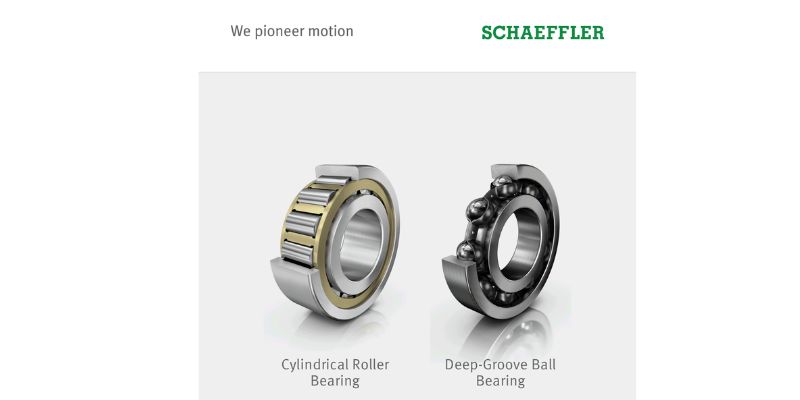
Schaeffler India Secures BIS Licence for Bearings
Schaeffler India’s Maneja and Savli plants have received BIS licences for Cylindrical Roller Bearings and Deep Groove Ball Bearings, marking a significant first for the company and India’s beari..
Read moreSmart Manufacturing

Operational Optimisation: Making Improvements That Matter
Optimising shopfloor operations requires finding the sweet spot where every improvement and investment reflects in the output and hence the bottom line of the business. In this month's column, Zurva..
Read moreRelated Products

Fanless Industrial Pc for Smart Manufacturing
Smart Manufacturing
CONTEC Launches BX-M4600 Series - Fanless Industrial PC for Smart Manufacturing.
latest News
Subscribe to iNoW

For Industry News on WhatsApp, Give a Miss Call on: +91 84228 74016