








Schedule a Call Back


Operational Optimisation: Making Improvements That Matter
 Articles
- Jun 25,26
Optimising shopfloor operations requires finding the sweet spot where every improvement and investment reflects in the output and hence the bottom line of the business. In this month's column, Zurvan Marolia discusses the methodology of making improvements that matter.

- Let’s start with a quick recap of what we have covered.
- Local efficiency does not translate into a profitable operation. On the contrary there are hidden costs.
- An operation is as efficient as the flow across the work-centres. Non-value-add costs become profit leakage areas.
- The output of the slowest process in a factory determines the output of the factory.
In the previous month’s column (“So Where do We Begin”), we explored how to identify the area where improvement efforts should be focused. The process of making improvements starts with a more basic question, “How much do we need to improve?”. The answer presupposes that we are working to a Business Plan, based on which we have a ballpark indication of the daily output expected from each of the machines/work-centres.
Working backward from the above data, we will arrive at the maximum time available to complete an operation and meet the desired daily output. This rate is the “Takt” or beat which has to be maintained in the current business cycle (generally a financial year) in order to meet and fulfil business expectations for the same period.
The next step is to patiently observe the operations (recommended to do it through video recording over multiple cycles at various times of the day) to determine the actual average cycle time of the process.
If Observed Cycle Time > Takt Time, we need to make improvements to reduce actual cycle time to < Takt Time.
Let us now turn our focus on to the process of improvement and the step-by-step approach whereby we start with the low-hanging fruit (zero investment) in graded steps up to actually investing in capacity augmentation.
The steps are:
- Extraction
- Maximisation
- Reallocation
- Optimisation
- Investment
- Reassessment
Extraction
Extraction as the term suggests asks the question, “Are we utilising all available capacity from the bottleneck process?” The objective is to recover hidden capacity without making any investment.
To put it simply, extraction is all about ensuring that the work-centre is ideally never idle. This includes reducing all types of downtime. This machine has to be given the topmost maintenance priority with smart manufacturing techniques such as “condition-based maintenance” being applied to ensure near 100-per cent machine availability.
Beyond ensuring optimum machine uptime, the next point of focus is the elimination of waiting. It is imperative to ensure that at any point in time, material has to wait for this machine and never the other way around.
Production planning has to be pivoted around the bottleneck capacity with the objective of ensuring that it is never starved of input materials. Scheduling of upstream processes has to be done in a way as to ensure that.
Where possible, the sequence in which parts are being processed on the bottleneck process may be altered if it can help reduce a changeover. This, however, should not be done at the cost of hurting a committed delivery schedule.

Maximisation
After extraction, we next ask: can we get more out of this existing resource.
I am reminded of my Business Head who used to urge the team to visualise the way a sugarcane juice vendor squeezes every drop of juice from the cane.
It is a live demonstration in operational optimisation. After the first pass through the crushing rolls, the vendor does not discard the cane. Instead, he folds it, rotates it, and feeds it back through the rollers repeatedly. With each pass, a little more juice is extracted from the same piece of cane. Only when every possible drop has been squeezed out does he throw away the fibrous residue.
Successful operations approach bottlenecks in much the same way. Before investing in additional capacity, every ounce of productive potential is extracted from existing resources. The cheapest capacity increase is often the capacity that is already present but remains untapped.
Applying the example to shopfloor operations, it means exploring how we can maximise the throughput by reducing cycle time and enhancing the yield through process flow improvement, composite tooling and working towards zero rejection/rework through rigorous implementation of quality control.
The objective is to “maximise” effective throughput from the same asset base.
Reallocation
Having gone through the steps of Extraction and Maximisation (yes there is some overlap between the steps), we take a step towards reducing the workload on the bottleneck resource. This may seem like a retrograde step, but on the contrary it is effective in helping achieve the objective of enhancing the throughput of the factory without adding capacity.
The trick here is to break down the operations being done to understand whether a particular part of the whole process can be assigned to an upstream or downstream process that has spare capacity.
The principle to be applied is “A bottleneck resource should perform only those activities that absolutely require that resource.”
An example that readily comes to mind is in the case of a flexible punching process done on a turret punch press which is a bottleneck resource. When using a large “mother sheet” for nesting of the punched components, significant time is lost in using repeated strokes with a parting tool. Depending on the size of the component, use of cut to size smaller sheets reduces the processing time taken on the turret punch press and instead utilises a shear machine with idle capacity.
Optimisation
This is where actual process improvement kicks in. The video shooting done in the process of deciding how much improvement is required now becomes an irreplaceable tool. The “as is” process is studied using the lens of actual run time (generically referred to as the “spindle run time” or “SRT”) as a percentage of the total process cycle time.
The result is usually revealing as it brings to the surface time lost on NVA (Non-Value-Added) activities which can either be eliminated, minimised or automated, in that sequence of preference.
This is a complete chapter on its own and can be dealt with at an appropriate time and place. This is normally factory specific, and actions applicable to one may not be adopted by another, though the principle is horizontally deployed.
At a generic level, there are graded steps here which look into the possibilities of process simplification followed by the option of making small layout improvements and critically evaluating the workflow.
Once the final stage of optimisation is reached and all the above options have been explored, the attention shifts to introducing automation which brings us to the next step, investment.
Investment
This is the stage where we seek to increase bottleneck capacity through capital or operating expenditure. The investment needs to be done in a graded manner, starting with the use of low-cost automation to maximise the SRT of the machines. Repetitive processes involving pure manual labour which cannot be eliminated need to be mechanised or automated. A case in point is the use of “pick & place” systems which minimise and remove variation in the time taken on loading and unloading.
Simultaneously, this is the time to start exploring additional equipment to enhance the capacity of the bottleneck. Investments ideally should be made keeping in mind the projected requirements of the next 3 to 5 years.
This keeps the investment levels in check and also allows the business to keep abreast of the latest available technology and higher productivity machines in a few years’ time.
Reassessment
This step is often missed and needs to be incorporated to avoid being taken by surprise and finding that improvements need to be done reactively rather than proactively.
As volumes grow, there will be times when the capacity limits will get tested with ‘spikes in demand’. This is a ‘happy problem’, and we have to address it in a way that the ‘problem’ is taken care of with while the ‘happy’ remains.
Each time such a spike occurs we need to ask ourselves, is this a “one time good time” or the beginning of a trend? One-time spikes are best taken care of by increase operating expenses such as overtime or adding a shift, while increasing trends tell us it is time to look at technology upgrades along with capacity augmentation.
Improvement is a continuous process as perfectly summed up below:
“Continuous improvement is better than delayed perfection.”
- Mark Twain
“Change – before you have to.”
- Jack Welch
About the author:
Zurvan Marolia is the former Sr VP of Godrej & Boyce Mfg. Co. Ltd, part of Godrej Enterprises Group. He is a former member of the National Manufacturing Council of CII. Marolia is now a freelance consultant and can be reached at zurvan@takttime.com.
Zurvan Marolia
Shopfloor operations
takt time
bottleneck management
manufacturing efficiency
non-value-added activities
process optimisation
throughput improvement
capacity augmentation
condition-based maintenance
smart manufacturing
Godrej & Boyce
Godrej Enterprises Group
Related Stories
Other Industrial Products
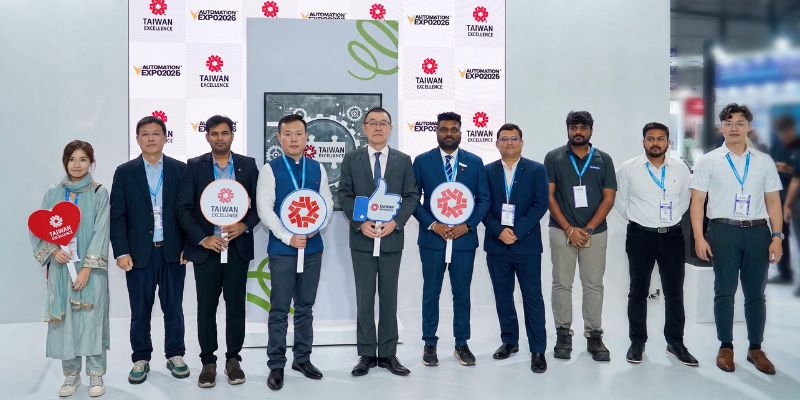
Taiwan Excellence showcases AI-powered manufacturing solutions at Automation Expo 2026
Taiwan Excellence showcased 55+ industrial innovations from 22 Taiwanese brands at Automation Expo 2026, highlighting AI-driven solutions for India's smart manufacturing growth.
Read moreAutomation & Robotics

AI Emerges as Key Growth Driver for Indian Manufacturing Sector: PwC
PwC study reveals 59 per cent of Indian manufacturers see AI as key to strategic growth over the next five years.
Read moreSmart Manufacturing
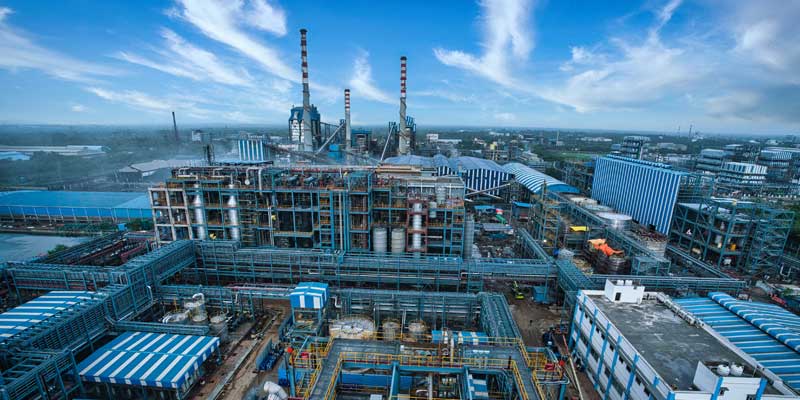
DCM Shriram Chemicals’ Jhagadia Site: A Lighthouse of Smart Manufacturing
DCM Shriram Chemicals’ Jhagadia site, recognised by the World Economic Forum’s Global Lighthouse Network with Distinction in Productivity, showcases how Industry 4.0 is transforming chemical man..
Read moreRelated Products

Fanless Industrial Pc for Smart Manufacturing
Smart Manufacturing
CONTEC Launches BX-M4600 Series - Fanless Industrial PC for Smart Manufacturing.
latest News
Subscribe to iNoW

For Industry News on WhatsApp, Give a Miss Call on: +91 84228 74016