







Schedule a Call Back


Optimising Shopfloor Operations Through Takt Time and Flow
 Articles
- May 25,26
Optimising shopfloor operations requires finding the right pace, known as Takt Time, to balance customer demand and cost efficiency. In this month's column, Zurvan Marolia explores the dilemma of where to put your money to derive optimum results.
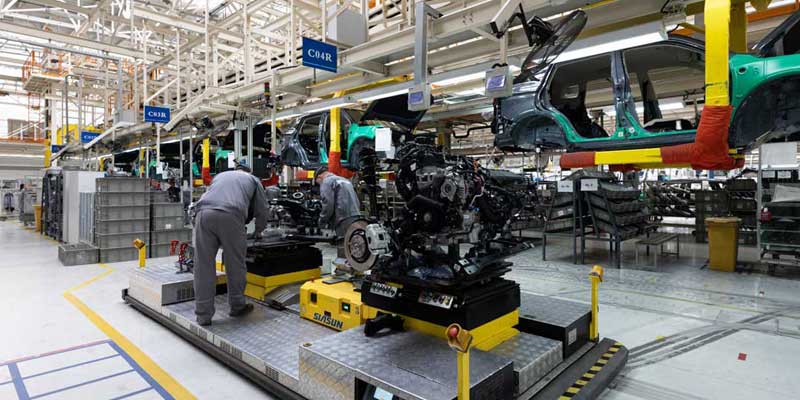
Let’s face it, we are not running the Olympics. Making improvements on the shopfloor are not meant to follow the Olympic motto of “Faster Stronger Higher…”. As we agreed at the start (Ref: SM&E’s April 2026 edition for “The Hidden Cost of Efficiency”), we are in business to make money. In other words, our aim has to be to operate at the optimal level or appropriate level or pace, no faster, no slower.
Operation at a level lower or slower than the optimum level will impact in terms of missed opportunity due to not being able to fulfil market demand. On the other hand, operating at a pace faster than the optimal pace will impact cost and hurt our competitiveness which again could have a negative impact on our business. Optimisation is all about finding that “sweet spot” and ensuring a smooth flow of our processes at that pace. That optimum pace is called “Takt Time” which finds it’s root in the German word “Takt” meaning beat or pulse in music. Within manufacturing, Takt Time of a factory is the rate at which it needs to produce in order to meet customer demand.
Takt Time = available production time per day
customer demand per day
Understanding Takt Time: The key to optimal pace
Having introduced the above concept, let us turn our attention to our topic of the day – where do we begin our process of making improvements.
The first thought that comes to mind when we seek to enhance throughput is to look around on our shopfloor to spot idle machines and seek to keep them operating. As we discussed in our column (“The Hidden Cost of Efficiency”) in the March issue, this improves utilisation of the resources but does necessarily enhance the overall throughput efficiency of the factory.
Let us take a look at the schematic in Figure 1.

Figure 1: An ideal flow (laminar)
Figure 1 depicts a Utopian situation, where every capacity is balanced. It is the ideal factory where the capacity of every process matches that of the preceding and / or succeeding one. This is akin to the laminar flow of a liquid in a pipe.
We have to view the process flow on the shopfloor akin to the flow of liquid through a conduit. The less the obstruction, the smoother the flow, and the liquid moves through with minimum turbulence and negligible losses. This is the state to keep in mind as we go about taking steps to improve the flows across the factory floor.
In an ideal factory, the raw material once handled for the first process must ideally be put down only after all the processing across the various routing are completed. This minimises the non-value-added costs associated with multiple handling of WIP components, thereby improving overall costs which improves competitiveness.

Figure 2: Non-uniform flow (the equivalent of turbulence)
Figure 2 is closer to reality. Let the funnel in the figure represent the factory, where capacities are not balanced. What we observe is that the rate of output is decided by the rate at which the spheres can flow through the narrowest part at the lower end of the funnel.
The output is much lower than the input – The process efficiency is low
Pouring in resources in volumes which can be processed prior to the constriction will only lead to a pile up of inventory at the constriction. That point chokes the system and decides the actual revenue of the business. In this state it is easy to visualize that:
The flow as depicted in Figure 2 is the least cost effective, as resources are poured in, but the constricted flow leads to blockage of working capital, and the business is hit with a non-value-added cost of finance which reduces competitiveness.

Figure 3: Optimising the output within the given constraints
Figure 3 depicts one of the options at our disposal to enhance competitiveness. We can control the rate of input flow, to a level matching the lowest rate of flow in the system. This makes the process efficient / cost effective.
Critical note: A small buffer must be built to ensure that the slowest processes are never starved of material from the preceding processes.
Coming back to the “Takt” time, our aim is to ensure that the rate of flow (capacity) of the slowest process is always above the “Takt” by just enough to meet the steady requirements with a contingency allowance for surges such as peak demand.
This is where we begin our journey of enhancing competitiveness through process flow management.
“Well Begun is Half Done”
- Often attributed to Aristotle
(*Images generated by the author with prompts using Nano Banana)
About the author:

Zurvan Marolia is the former Senior Vice President of Godrej & Boyce Mfg. Co. Ltd, part of Godrej Enterprises Group. He is a former member of the National Manufacturing Council of the Confederation of Indian Industry (CII), and a former Chair of the Manufacturing Council of Godrej & Boyce. Marolia is now a freelance consultant and can be reached at zurvan@takttime.com.
Zurvan Marolia
Godrej & Boyce
Shopfloor optimisation
Takt Time
process flow
throughput efficiency
chokepoint management
manufacturing competitiveness
resource utilisation
cost-effective production
Operational Optimisation
Related Stories
Smart Manufacturing
Operational Optimisation: Making Improvements That Matter
Optimising shopfloor operations requires finding the sweet spot where every improvement and investment reflects in the output and hence the bottom line of the business. In this month's column, Zurva..
Read moreSmart Manufacturing
Optimising Shopfloor Operations Through Takt Time and Flow
Optimising shopfloor operations requires finding the right pace, known as Takt Time, to balance customer demand and cost efficiency. In this month's column, Zurvan Marolia explores the dilemma of wh..
Read moreMaterial Handling Equipment
Godrej Enterprises Group: Driving India’s Material Handling Revolution
It is believed that India’s material handling sector is in a transformative phase. Godrej is all set to capture this growth with its electric material handling equipment (MHE), IoT-enabled fleets,..
Read moreRelated Products

Fanless Industrial Pc for Smart Manufacturing
Smart Manufacturing
CONTEC Launches BX-M4600 Series - Fanless Industrial PC for Smart Manufacturing.
latest News
Subscribe to iNoW

For Industry News on WhatsApp, Give a Miss Call on: +91 84228 74016