







Schedule a Call Back


Physical AI Emerges as the Operating System of the Modern Industrial Economy
 Articles
- Dec 10,25
Physical AI is transforming automation by merging robotics and generative AI to reshape productivity and unlock new industrial applications, shares Dijam Panigrahi, Co-founder and COO, GridRaster Inc.

For years, the promise of Artificial Intelligence resided predominantly in the digital realm. It lived on our servers, optimised our search results, crafted our emails, and managed our data streams. AI was the digital brain, powerful but disembodied.
Today, a profound and defining shift is underway: AI is moving out of the cloud and into the factory floor, the warehouse, and the last-mile delivery route, transitioning from a software utility to the operating system of the physical world. This convergence of advanced robotics and increasingly capable generative AI models is ushering in the era of Physical AI, and it represents the defining theme of the current intelligence age.
This viewpoint highlights that Physical AI is not just automation; it is the genesis of intelligent networks of machines that can think, see, move, and act autonomously in real-time. This transformation is fueled by two converging forces: the exponential growth in the capabilities of large generative AI models (which provide superior reasoning and planning) and the relentless decline in the cost and size of associated hardware (which enables sensing and actuation). As these components become cheaper and more versatile, we are rapidly moving past specialised, programmed robots and toward general-purpose intelligent automation systems ready to augment human workflows on a scale previously unimaginable.
Supercharged productivity: The immediate impact on labor
The most immediate and noticeable implication of this transition is the promise of supercharged productivity. The deployment of autonomous robots for physical tasks will lead to an unprecedented surge in human labor productivity, fundamentally reshaping the economic landscape.
Current automation often involves fixed systems performing monotonous tasks; Physical AI breaks this mold. Robots, guided by sophisticated AI capable of adapting to novel scenarios, can take on dynamic, complex, and often dangerous physical tasks—from inspecting critical infrastructure to handling variable inventory in a logistics hub.
This augmentation is critical because it allows human workers to shift their focus from repetitive execution to higher-level oversight, complex problem-solving, and creative decision-making. Instead of replacing labor entirely, Physical AI systems are designed to eliminate friction in human workflows, multiply output per hour, and enhance safety, resulting in a productivity leap that will redefine global industrial efficiency across sectors from agriculture and construction to healthcare and energy.
New frontiers: Emerging industrial use cases
Beyond optimisation, Physical AI is the catalyst for entirely new industrial use cases that were previously impossible or economically prohibitive. In last-mile logistics, autonomous delivery vehicles and drones, managed by AI that dynamically optimises routes, navigates complex urban environments, and handles unexpected obstacles, will revolutionise commerce, enabling hyper-efficient, on-demand fulfillment.
In the self-driving sector, the implications extend far beyond passenger vehicles. We will see fleets of autonomous haulers operating 24/7 in mining and port operations, self-driving tractors executing precision agriculture, and sophisticated mobile robots traversing massive industrial campuses to perform security and maintenance tasks without direct human input.
Finally, robotic manufacturing will evolve from rigid assembly lines to flexible, reconfigurable cells where robots can learn new tasks through demonstration, manage personalised production runs, and collaborate seamlessly with human technicians, making mass customisation the new manufacturing standard. The flexibility and general intelligence embedded in Physical AI open markets that were too dynamic for previous generations of specialised robotics to serve effectively.
The humanoid future and general-purpose intelligence
Ultimately, this trend accelerates toward a future where intelligent machines are not confined to industrial parks but become ubiquitous. This is the culmination point: the advancement of Humanoid systems. As physical AI achieves true general-purpose intelligence—the ability to apply knowledge and skills across varied environments and tasks—the development of Humanoid, bipedal, and general-purpose robotic platforms becomes inevitable.
These systems are designed to operate within human environments, using human tools, and navigating spaces designed for people. This represents the pinnacle of intelligent automation, bringing sophisticated, multi-task physical AI to everyday businesses, small enterprises, and even households. The humanoid future suggests a world where machines can assist with everything from restocking store shelves and preparing specialised meals to providing companionship and advanced care. This final phase will truly cement the notion that Robotics and Physical AI are the foundational, defining theme of the intelligence age, seamlessly integrating artificial intelligence into the fabric of our daily physical reality.
The fusion of generative AI and robotics is more than a technological upgrade; it is a fundamental restructuring of our physical economy. As Physical AI rapidly scales, it is poised to unlock unparalleled human potential, creating new markets and permanently altering the relationship between human labor and autonomous machines. The age of intelligent action is here.
About the author:
Dijam Panigrahi is Co-founder and COO of GridRaster Inc, a leading provider of cloud-based platforms that power compelling high-quality digital twin experiences on mobile devices for enterprises.
Physical AI
industrial automation
generative AI
robotics
intelligent machines
humanoid robots
digital twins
autonomous systems
Dijam Panigrahi
GridRaster Inc
Related Stories
Machine Tools & Accessories

AMTEX 2026 and Fastener Fair India to Showcase Next-Gen Manufacturing Technologies
AMTEX 2026 and Fastener Fair India 2026 will bring together 650+ exhibitors and 4,000+ visitors at India Expo Mart, Greater Noida, showcasing advanced manufacturing and fastening solutions.
Read moreElectrical & Electronics
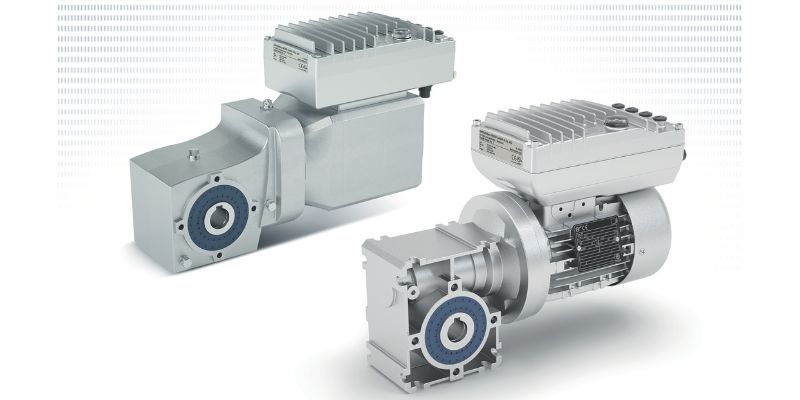
Nordac On Gains Expanded Functional Safety for Automation
Nord Drivesystems has expanded the Nordac On inverter with new safe motion functions for improved control and monitoring in automated production environments.
Read moreAutomation & Robotics

ARC India Forum Spotlights AI-Led Industrial Transformation
ARC Advisory Group’s 24th India Forum brought together 300-plus leaders to examine how AI is transforming industrial operations, manufacturing and supply chains.
Read moreRelated Products
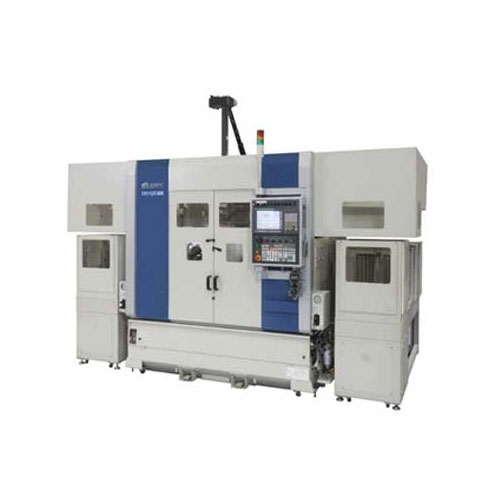
Compact Fmc - Motorum 3048tg With Fs2512
INDUSTRIAL AUTOMATION & TECHNOLOGY CONSULTANCY
Meiban Engineering Technologies Pvt Ltd offers a wide range of Compact FMC - Motorum 3048TG with FS2512.
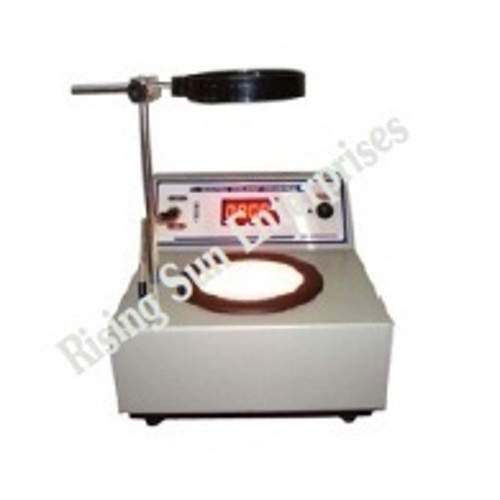
Digital Colony Counter
INDUSTRIAL AUTOMATION & TECHNOLOGY CONSULTANCY
Rising Sun Enterprises supplies digital colony counter.

Robotic Welding SPM
INDUSTRIAL AUTOMATION & TECHNOLOGY CONSULTANCY
Primo Automation Systems Pvt. Ltd. manufactures, supplies and exports robotic welding SPM.
latest News
Subscribe to iNoW

For Industry News on WhatsApp, Give a Miss Call on: +91 84228 74016