




Schedule a Call Back


Mobec reshapes EV charging, battery reuse: Harry Bajaj
 Articles
- Dec 27,25
Mobec is redefining both how EV charging is delivered and how battery resources are reused, enabling a flexible and circular EV ecosystem.

How did the idea of Mobec Innovation originate, and how is Mobec differentiating itself in the areas that it operates in?
The idea of Mobec Innovation started when we noticed a clear gap in India’s EV journey. Electric vehicles were increasing rapidly, but charging access was not growing at the same speed. I strongly believe that when a system doesn’t work well for people, it needs to be redesigned, and that’s how Mobec was born.
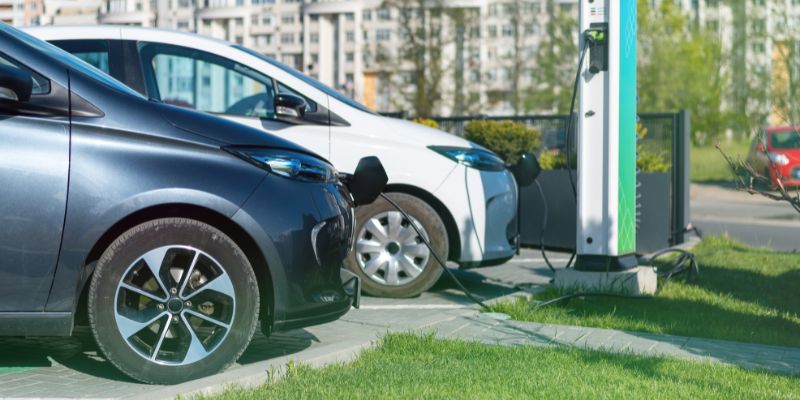
Instead of making EV users search for charging stations, we decided to take charging directly to the vehicle. We focus on mobile and portable DC fast-charging solutions that can be deployed wherever charging is needed.
What really differentiates Mobec is our flexible approach. While most companies concentrate on fixed charging infrastructure, we focus on speed, reliability, and portability. Our charging solutions work across all vehicle categories, making them practical for real-world use.
Along with charging, we also place strong emphasis on battery recycling and end-to-end battery management. This helps recover valuable materials and supports sustainability.
In simple terms, Mobec is redefining both how EV charging is delivered and how battery resources are reused, enabling a flexible and circular EV ecosystem.
With India pushing for electrification and renewable energy adoption, how do you see mobile charging solutions complementing fixed-charging infrastructure in the coming decade?
With India targeting around 30 per cent EV adoption by 2030, the country will need a mix of charging solutions to support this growth. Fixed charging infrastructure works well in urban centres and high-demand locations, but many EVs operate in smaller towns, highways, and fleet-based use cases where such infrastructure is limited.
In these areas, mobile charging solutions can provide on-demand support, reach underserved locations, and reduce downtime for commercial fleets, improving efficiency. A combination of fixed and mobile charging will make EV usage more reliable and convenient, helping India accelerate its transition to clean and sustainable mobility.
What technological or operational challenges do you see in scaling energy storage solutions in India?
When we talk about scaling energy storage solutions in India, there are a few challenges we need to keep in mind.
On the technology side, we need batteries and storage systems that are efficient, safe, and can last long, even in India’s very different climate conditions.
On the operational side, one big challenge is the high initial cost, which makes it hard for large-scale adoption. Then, we also need reliable supply chains and access to the right materials. Another important point is integrating storage with our existing grid—that still needs more work to make it smooth.
Also, many industries and users are still learning about how energy storage can help them, so awareness is growing but not fully there yet. And finally, maintenance, managing the lifecycle of batteries, and recycling them properly are things we need to plan right from the start.
If we address all these challenges, energy storage solutions can really help India move towards clean energy and electrification goals in a sustainable way.
Battery recycling and refurbishment are gaining attention with rising EV penetration. In your experience, what are the key bottlenecks in building an efficient circular ecosystem for EV batteries in India?
In my experience, building an efficient circular ecosystem for EV batteries in India faces several challenges. The regulatory framework, like Extended Producer Responsibility, exists but enforcement and tracking are weak, making proper collection and recycling difficult. Infrastructure gaps, such as underdeveloped reverse logistics and collection networks, further complicate moving used batteries from consumers to recycling facilities. Financially, recycling and refurbishing batteries is expensive, and the returns are relatively low, which discourages investment.
Technological limitations, including limited data on battery usage, designs not optimised for recycling, and evolving recycling technologies, add another layer of challenge. The ecosystem is also fragmented, with poor coordination between manufacturers, recyclers, and regulators, and no standard processes in place. Finally, low demand for recycled materials and continued reliance on imported raw materials slow down collection, reuse, and recycling efforts. Together, these factors create significant bottlenecks in making battery circularity truly effective in India.
As demand for EVs surges, concerns around charging infrastructure availability, grid stability, and storage capacity are also rising. What policy or industry-level interventions do you believe are most crucial at this stage?
As EV adoption grows, the pressure on charging networks, the electricity grid, and energy storage is increasing. To address these challenges, strong policy and industry-level interventions are crucial.
First, faster grid upgrades and dedicated EV feeders are needed to handle the increased electricity demand. Along with this, policy support and incentives for large-scale energy storage will help manage peak loads and improve overall grid stability.
Second, we must move beyond a “fixed infrastructure” mindset. Mobile and flexible charging solutions such as portable DC chargers, mobile charging vans, and on-demand charging models should be recognised and supported as part of the national charging strategy. These models are faster to deploy, cost-effective, and can reach areas where traditional stations cannot.
Third, a strong circular battery ecosystem is essential. Clear guidelines for battery recycling, mineral recovery, and second-life usage will reduce dependence on raw material imports and strengthen the circular economy, ensuring long-term storage capacity.
Finally, coordinated efforts between policymakers and industry stakeholders are necessary to implement these measures effectively. With the right policies, India can build an EV ecosystem that is large, sustainable, resilient, and ready for the future.
Which emerging trends excite you the most in the EV charging, energy storage and battery recycling sectors?
What excites me the most in the EV world are the trends that make the ecosystem smarter and more circular. First, the growth of mobile and fast charging is making EVs more convenient and accessible for everyone. Second, the rising adoption of energy storage systems (ESS) is strengthening the shift toward clean and reliable energy. Third, the increased focus on battery recycling is giving old batteries a second life, supporting sustainability.
What’s really exciting is the integration of charging, storage, and recycling -together, these trends are creating a circular and sustainable EV ecosystem. Fast charging makes EVs easy to use, ESS ensures energy efficiency, and battery recycling closes the loop, making the entire system more environmentally friendly. This combination is what I’m truly passionate about.
What are your growth plans for the company in the next 2-3 years?
In the next 2–3 years, we plan to double our team to bring in the right talent and strengthen both our technical and operational capabilities. We also aim to expand our battery recycling capacity to keep up with the rising demand for EVs and support a circular, sustainable ecosystem.
Alongside this, we are looking to enter new EV and energy storage segments where Mobec’s solutions can make the most impact. By scaling our infrastructure and technology in line with market growth, we want to continue focusing on innovation and sustainability. Overall, our goal is to position Mobec as a strong, future-ready player in India’s clean mobility landscape while creating long-term value.
About the author:
Harry Bajaj, an entrepreneur and investor, is the Founder and CEO of Mobec Innovation Pvt
Ltd. Harry has been working at a frenetic – but quiet – pace to help India shift to an electric future. He believes electric mobility is a viable alternative to petroleum-based vehicles and offers green, sustainable, affordable, and easy charging solutions.
Blurbs (if required) -- FOR PRINT
While most companies concentrate on fixed charging infrastructure, we focus on speed, reliability, and portability.
With India targeting around 30 per cent EV adoption by 2030, mobile charging solutions can provide on-demand support, reach underserved locations, and reduce downtime for commercial fleets.
EV charging
mobile charging
battery recycling
energy storage
sustainability
circular economy
flexible solutions
clean mobility
Harry Bajaj
Mobec Innovation
Related Stories
Machine Tools & Accessories
Advait Starts Ahmedabad Facility Operations
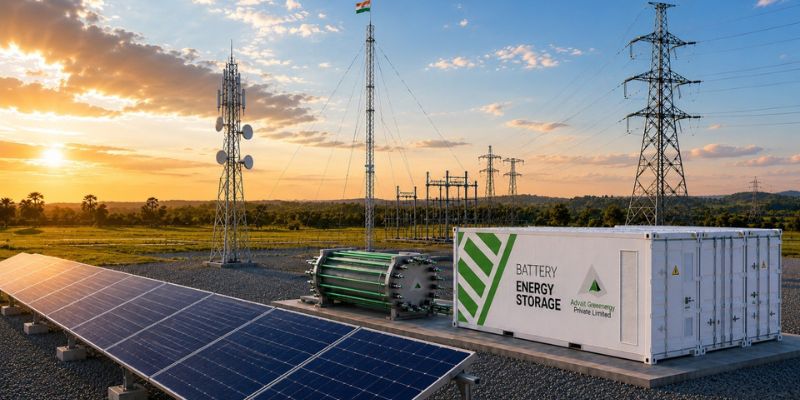
Advait Energy Transitions has commenced operations at its integrated Gangad facility in Ahmedabad, as Q1 FY27 consolidated revenue rose 48 per cent YoY to Rs 1.79 billion.
Read moreElectrical & Electronics

MiniMines secures patent for Hybrid Hydrometallurgy battery recycling technology
MiniMines has secured an Indian patent for its HHMR technology, enabling recovery of high-purity critical minerals from end-of-life lithium-ion batteries and electronic waste.
Read moreElectrical & Electronics
Waaree Transpower secures Rs 1.6 billion BESS equipment order
Waaree Transpower has secured an order worth about Rs 1.6 billion to supply 8.3 MVA Medium Voltage Skids for Battery Energy Storage System applications.
Read moreRelated Products

Automotive Oil Pump
AUTO COMPONENTS & ACCESSORIES
Kalpak Auto Pvt Ltd offers a wide range of
automotive oil pump.
Tata Motors unveils facilities for development of Hydrogen propulsion tech
AUTO COMPONENTS & ACCESSORIES
Tata Motors, India?s largest automobile company, unveiled two state-of-the-art & new-age R&D facilities for meeting its mission of offering sustainable mobility solutions. The unveilings constitute of Read more
Tata Motors plans petrol powertrain for Harrier and Safari SUVs
AUTO COMPONENTS & ACCESSORIES
Tata Motors is in the process of developing a new petrol powertrain for its premium sports utility vehicles, the Harrier and Safari, as confirmed by a senior company official. Currently, these models Read more
latest News
Subscribe to iNoW

For Industry News on WhatsApp, Give a Miss Call on: +91 84228 74016