









Schedule a Call Back


Future Factory Expo Webinar Series: Smart Warehouses for Resilient Supply Chains
 Industry News
- Aug 14,26
In the run-up to Future Factory Expo 2026 (to be held on November 3-4 in Mumbai), Smart Manufacturing & Enterprises recently hosted the webinar exploring how automation, digitalisation, smart infrastructure and real-time visibility can help businesses build agile, resilient and future-ready warehouses and supply chains, writes Rakesh Rao.
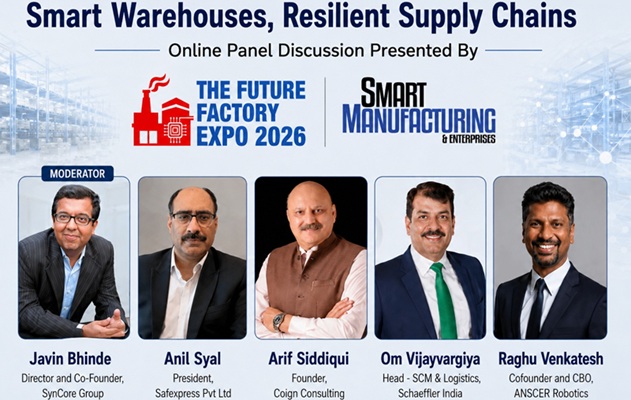
As India’s manufacturing sector expands, warehouses are evolving from static storage facilities into strategic supply-chain hubs. Yet many operations continue to grapple with manual inventory handling, order errors, stock mismatches and limited real-time visibility. Against this backdrop, Smart Manufacturing & Enterprises (SM&E), in association with Future Factory Expo 2026 (FFE 2026), organised the online panel discussion “Smart Warehouses, Resilient Supply Chains” on 13 August 2026 under its Future-Ready Factories Webinar Series. The session examined how automation, digitalisation and smarter warehouse design can strengthen supply-chain agility, resilience and competitiveness.
Moderated by Javin Bhinde, Director and Co-Founder, SynCore Group, the panel brought together Anil Syal, President, Safexpress Pvt Ltd; Arif Siddiqui, Founder, Coign Consulting; Om Vijayvargiya, Head – SCM & Logistics, Schaeffler India; and Raghu Venkatesh, Cofounder and CBO, ANSCER Robotics.
Opening the discussion, Bhinde highlighted the depth of experience represented on the panel and set the context around an increasingly volatile operating environment. Reflecting on the challenges businesses face today, he observed, “Every day is a new challenge.” His comments framed the central question for the session: how can supply chains become faster, more visible and more adaptable without losing sight of safety, people and long-term scalability?
Visibility at the heart of resilience
For Om Vijayvargiya, supply-chain resilience begins with the ability to see what is happening across the network in real time. Global sourcing, shorter delivery cycles, demand volatility and disruptions at ports can quickly cascade into production delays, making supply-chain management increasingly dynamic.
He cited recent disruptions and congestion affecting material movement as examples of how events in one part of the world can have operational consequences elsewhere. In such an environment, he argued, there can be no permanent solution; supply-chain strategies need to be reviewed continuously.
“Visibility is the most important factor from my perspective,” Vijayvargiya said, adding that real-time consignment visibility allows managers to respond to delays or early arrivals and take timely decisions to keep production lines supplied.
Beyond visibility, he emphasised the need for alternative routing options rather than dependence on a single port. Near-shoring and localisation can also help reduce exposure to global disruptions. However, he cautioned that no single approach is suitable for every organisation. Supply-chain managers must assess the requirements of their own businesses and select solutions accordingly. In a constantly changing environment, solutions themselves have to remain dynamic and subject to continuous review.
From support function to business driver
Taking the discussion into Logistics 4.0, Anil Syal underlined how transparency and connectivity are reshaping transportation and supply-chain networks. He placed Logistics 4.0 within the broader Industry 4.0 framework, where cyber-physical systems, smart networks, robotics, control systems, instrumentation and the Internet of Things allow systems and processes to communicate with one another.
This connectivity, he explained, improves visibility across the movement of goods — whether they are on the road, at sea, in a warehouse or elsewhere in the supply chain. Information available ahead of shipment can enable better capacity planning and more efficient asset utilisation, while information flowing back from logistics networks can help managers replan and respond to delays or misrouting.
Syal also pointed to a more fundamental shift in how businesses view logistics. “Logistics has become so critical a tool that one can’t imagine going forward [with] logistics and supply chain not at the front and centre,” he said.
Quick-commerce models illustrate this change particularly well. Their speed does not come only from faster vehicle movement, but from distributed inventory, multiple storage points, data and technology-led planning. As a result, logistics has moved from being viewed primarily as a support activity to becoming an integral part of product, market and business-model design.
Bhinde reinforced this point, noting that “the speed, efficiency and the predictability of logistics” can directly influence whether companies meet their revenue and profitability targets. He added that logistics has moved from a support function to a key business-driver function.
Designing warehouses for tomorrow
While automation often dominates discussions around smart warehouses, Arif Siddiqui argued that the journey begins much earlier — at the infrastructure design stage. Decisions made while planning a facility, he said, determine whether a warehouse remains relevant for decades or becomes obsolete within a few years.
He outlined five key considerations for future-ready warehouse design: flexibility and scalability; automation readiness; safety; digital infrastructure; and people-centric design. Warehouses should be modular enough to accommodate changes in product mix and throughput without major structural alterations. Even when companies are not investing immediately in robotics or automated storage and retrieval systems (AS/RS), buildings should be capable of supporting such technologies later through adequate clear heights, column spacing, floor loads, power availability and digital connectivity.
Safety, he stressed, must be engineered into the facility rather than treated only as a compliance requirement. “Smart warehouses cannot succeed without safe warehouses,” Siddiqui said. Fire protection, structural integrity and the safe movement of people and equipment must form part of both design and everyday practice.
Digital infrastructure is equally critical. Warehouses need robust data networks, IoT readiness, sensor integration and connectivity with warehouse management systems and warehouse control systems so that they can generate real-time operational intelligence, rather than merely store inventory.
Yet technology cannot replace the need to design for people. Lighting, ventilation, ergonomics, welfare facilities and intuitive workflows can improve productivity, reduce fatigue and create a stronger sense of belonging among warehouse employees. For Siddiqui, the most successful warehouses of the future may not necessarily be the most automated, but the most adaptable.
Robots must adapt to existing realities
Raghu Venkatesh brought the robotics perspective to the discussion, focusing on the operational problems AMRs, AGVs and robotic systems are designed to solve. Different warehouses face different constraints: speed can be critical in distribution centres, while weight and large-scale material movement can dominate in mother warehouses.
One of the biggest adoption challenges, he noted, is that companies have already invested heavily in existing infrastructure. New technology therefore needs to work with what is already in place. “You have to also build technology not only for tomorrow, but also to solve what is already there,” Venkatesh said.
He also highlighted the growing need for people and robots to work safely together. The next phase of automation will therefore be shaped not only by machine capability but by how effectively technology integrates with existing facilities, processes and workforces.
Looking ahead, Venkatesh expects B2B supply chains to draw lessons from quick commerce. Technologies such as AI, blockchain, data science and digital twins can help organisations improve information sharing, simulate operations and move materials faster across complex networks. He also broadened the definition of robotics beyond physical machines, pointing to digital tools that can model and optimise processes before execution.
Picking up on this theme, Bhinde suggested that B2B companies could think and operate more like e-commerce businesses by redesigning and optimising their supply-chain processes to ensure critical parts and materials are sourced and delivered in the shortest possible time.
The future-ready warehouse
Across the discussion, a common message emerged: smart warehousing is not simply about adding robots or software. Resilience requires visibility across supply chains, infrastructure that can evolve, flexible sourcing and routing, strong digital foundations, safe operations and technology that works alongside people.
The warehouse is increasingly becoming a strategic node where supply-chain resilience, customer service, operational efficiency and business competitiveness converge. Automation can accelerate that transformation, but its impact depends on whether organisations have the right processes, infrastructure and workforce readiness in place.
The webinar also provides a natural lead-in to Future Factory Expo 2026, scheduled for November 3-4, 2026. For manufacturers, logistics leaders and supply-chain professionals, participation in FFE 2026 offers an opportunity to take forward conversations around automation, smart warehousing, robotics and digitalisation and explore approaches to building more agile, resilient and future-ready enterprises.
Future Factory Expo 2026
Future Factory Expo Webinar
Smart Warehouses
Resilient Supply Chains
Smart Manufacturing & Enterprises
warehouse automation
logistics
digitalisation
smart infrastructure
future-ready warehouses
supply chains
Rakesh Rao
Indian manufacturing sector
Future-Ready Factories
Javin Bhinde
SynCore Group
Anil Syal
Safexpress
Arif Siddiqui
Coign Consulting
Om Vijayvargiya
Schaeffler India; Raghu Venkatesh
ANSCER Robotics
Logistics 4.0
Industry 4.0
Internet
Related Stories
Automation & Robotics
Future Factory Expo Webinar Series: Smart Warehouses for Resilient Supply Chains
In the run-up to Future Factory Expo 2026 (to be held on November 3-4 in Mumbai), Smart Manufacturing & Enterprises recently hosted the webinar exploring how automation, digitalisation, smart infras..
Read moreMachine Tools & Accessories

igus launches dirt-resistant hybrid ball bearing for overhead conveyors
The new xiros hybrid ball bearing combines stainless steel and high-performance plastic for lubrication-free operation and load capacities of up to 39 kg.
Read moreSmart Manufacturing
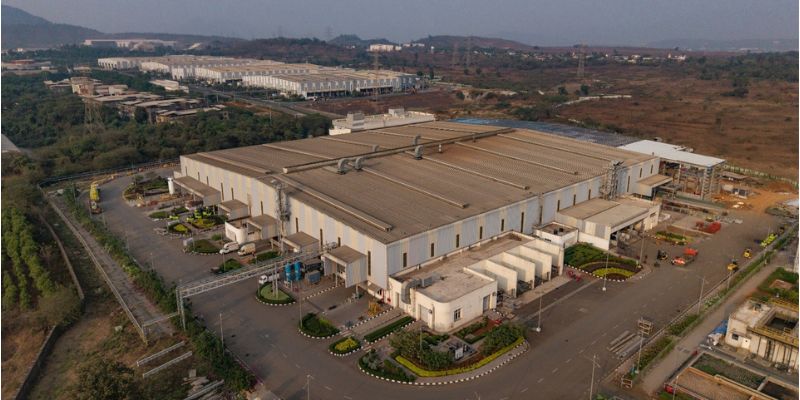
Godrej MHE begins operations at advanced Khalapur manufacturing facility
The facility will produce up to 6,000 material handling units annually, scalable to 15,000, for domestic and export markets.
Read moreRelated Products
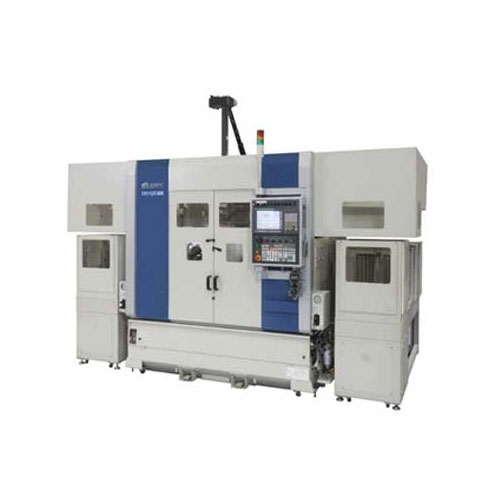
Compact Fmc - Motorum 3048tg With Fs2512
INDUSTRIAL AUTOMATION & TECHNOLOGY CONSULTANCY
Meiban Engineering Technologies Pvt Ltd offers a wide range of Compact FMC - Motorum 3048TG with FS2512.
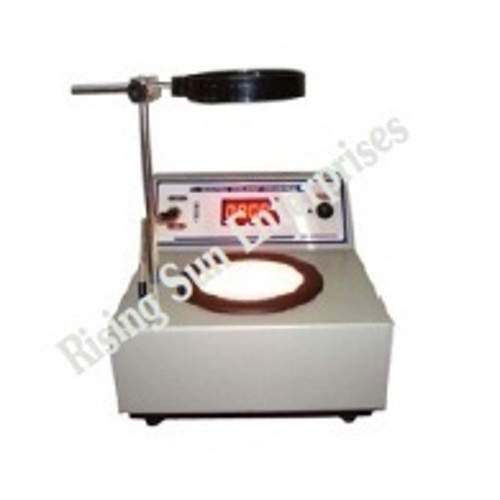
Digital Colony Counter
INDUSTRIAL AUTOMATION & TECHNOLOGY CONSULTANCY
Rising Sun Enterprises supplies digital colony counter.

Robotic Welding SPM
INDUSTRIAL AUTOMATION & TECHNOLOGY CONSULTANCY
Primo Automation Systems Pvt. Ltd. manufactures, supplies and exports robotic welding SPM.
latest News
Subscribe to iNoW

For Industry News on WhatsApp, Give a Miss Call on: +91 84228 74016