









Schedule a Call Back


Defence budget hits record high with push for modernisation, self-reliance
 Industry News
- Feb 02,26
Record defence allocation boosts modernisation, domestic industry, veterans’ healthcare and R&D in India’s Budget 2026–27.
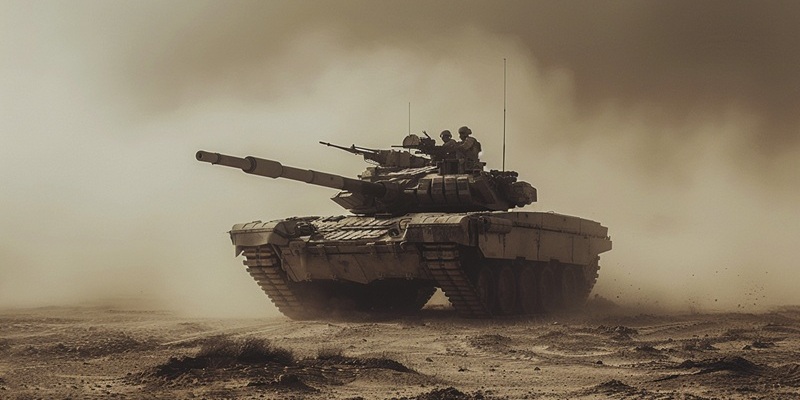
The Union Budget 2026–27 has accorded the Ministry of Defence its highest-ever allocation, underscoring the government’s emphasis on modernisation, operational readiness and self-reliance in a challenging geopolitical environment. In the Budget presented to Parliament, defence services received an allocation of Rs 7.85 trillion, marking a 15.19 per cent increase over the Budget Estimates of FY 2025–26 and accounting for 14.67 per cent of total central government expenditure.
The allocation represents 2 per cent of the estimated GDP for FY 2026–27 and is the highest among all ministries. The enhanced provisioning follows the requirements arising after Operation Sindoor, including emergency procurement of arms and ammunition under both capital and revenue heads, alongside routine modernisation and operational needs of the Armed Forces.
A significant portion of the defence outlay has been earmarked for capital expenditure, reaffirming the government’s strategic shift towards strengthening military capability and achieving the objectives of Aatmanirbhar Bharat. Capital expenditure for FY 2026–27 stands at Rs 2.19 trillion, compared with Rs 1.80 trillion in the previous year’s Budget Estimates, representing a substantial increase aimed at accelerating force modernisation.
Modernisation and capital acquisition take centre stage
Under the capital head, the allocation for the Defence Forces has risen by 21.84 per cent over FY 2025–26. Of this, Rs 1.85 trillion has been earmarked specifically for capital acquisition, reflecting a 24 per cent jump over the previous year. The Ministry of Defence noted that, in the prevailing geopolitical context, such a quantum increase in modernisation funding is a strategic imperative.
During FY 2025–26, up to the third quarter ending December 2025, the Ministry concluded defence contracts worth Rs 2.10 trillion and accorded Acceptance of Necessity approvals exceeding Rs 3.50 trillion. The upcoming capital acquisition pipeline includes next-generation fighter aircraft, smart and lethal weapon systems, naval platforms including ships and submarines, unmanned aerial vehicles, drones and specialist vehicles, aimed at enhancing operational capability across the services.
The capital-heavy orientation of the Budget reflects a broader transformation agenda for the Armed Forces, with a focus on advanced technologies, network-centric warfare and enhanced deterrence capabilities.
Aatmanirbharta and domestic industry focus
A defining feature of the defence allocation is the continued thrust on indigenisation and domestic procurement. Of the total capital acquisition budget for FY 2026–27, Rs 1.39 trillion, equivalent to 75 per cent, has been earmarked for procurement from domestic industries, including private sector players.
The Ministry of Defence said the earmarking of funds for domestic industry reassures Indian manufacturers of sustained demand and encourages long-term investment in capacity, technology and innovation. The enhanced allocation is expected to have a positive multiplier effect on the national economy, catalysing growth in ancillary industries and generating employment across the defence manufacturing ecosystem.
The emphasis on domestic sourcing comes against the backdrop of global supply-chain disruptions and export controls, which have highlighted the strategic necessity of reducing import dependence not only for sustenance but also for future modernisation.
Revenue expenditure and operational preparedness
In addition to capital spending, the defence budget has made a provision of Rs 3.65 trillion under revenue heads, representing a 17.24 per cent increase over FY 2025–26 Budget Estimates. Of this, Rs 1.58 trillion has been allocated for operational and sustenance-related expenditure, with the balance earmarked for salaries and allowances.
The enhanced revenue allocation is expected to facilitate timely procurement of critical stores and spare parts, ensure maintenance of vital platforms and support the day-to-day operational requirements of the Armed Forces. Higher operational funding is also aimed at sustaining readiness levels amid evolving security challenges.
Border infrastructure and strategic connectivity
The Budget has reiterated the government’s commitment to strengthening infrastructure in border areas through higher allocations to the Border Roads Organisation (BRO). Capital allocation to BRO for FY 2026–27 has been increased to Rs 73.94 billion, compared with Rs 71.47 billion in the previous year.
The enhanced allocation will support the execution of strategically significant projects, including tunnels, bridges and airfields, improving last-mile connectivity in border regions. In addition to strengthening defence preparedness, these projects are expected to promote regional development and tourism in remote and strategically sensitive areas.
Veterans’ healthcare and welfare
Veterans’ welfare has emerged as another key focus area in the defence budget. Allocation to the Ex-Servicemen Contributory Health Scheme (ECHS) has been raised to Rs 121 billion for FY 2026–27, marking a 45.49 per cent increase over the previous year’s Budget Estimates.
The allocation will fund medical treatment-related expenditure for veterans and their dependents, reinforcing the government’s commitment to providing quality healthcare facilities to ex-servicemen. Over the past five years, allocation to ECHS has increased by more than 300 per cent compared with FY 2021–22 Budget Estimates.
Raksha Mantri Rajnath Singh described the enhanced allocation for ECHS as a testimony to the government’s resolve towards the welfare of ex-servicemen.
Boost to defence R&D
The Union Budget 2026–27 has also strengthened support for defence research and innovation. Allocation to the Defence Research and Development Organisation (DRDO) has been increased to Rs 291 billion, up from Rs 268.17 billion in FY 2025–26. Of the total allocation, Rs 172.50 billion has been earmarked for capital expenditure.
The increased funding is expected to accelerate indigenous development of critical technologies, platforms and systems, further reinforcing the self-reliance agenda and reducing dependence on imports for advanced defence capabilities.
Defence pensions and social security
Total budgetary allocation for defence pensions has been pegged at Rs 1.71 trillion, reflecting a 6.56 per cent increase over FY 2025–26 Budget Estimates. The allocation will support the disbursement of monthly pensions to more than 34 lakh pensioners through SPARSH and other pension disbursing authorities, ensuring timely and transparent payments.
Reacting to the defence allocation, Raksha Mantri Rajnath Singh, in a post on X, expressed gratitude to Prime Minister Narendra Modi, stating that under his visionary leadership, India’s journey towards a Viksit Bharat continues to gather momentum. He congratulated Finance Minister Nirmala Sitharaman for presenting a Budget that seeks to “transform aspiration into achievement” and “potential into performance”.
Describing the Budget as a “Yuva Shakti–driven Budget”, Singh said it would further strengthen the Prime Minister’s vision of an Aatmanirbhar and Viksit Bharat. He added that inspired by the three kartavyas, the Budget aims to accelerate and sustain economic growth, fulfil the aspirations of the people and ensure meaningful participation for all.
“Together, these priorities will drive inclusive development, promote the manufacturing sector, and create sustainable infrastructure. This budget is designed to ensure that the dividends of growth reach every section of society, with special focus on the poor, the underprivileged, and the disadvantaged,” he said.
Singh thanked the Prime Minister for allocating Rs 7.85 trillion to the defence sector, stating that the Budget strengthens the balance between security, development and self-reliance and is firmly in the national interest. He added that the allocation, coming after the success of Operation Sindoor, reinforces the government’s resolve to bolster national security and enhance military capabilities.
Union Budget 2026–27
Defence Budget
Capital Acquisition
Aatmanirbhar Bharat
DRDO
ECHS
Border Infrastructure
Operation Sindoor
Related Stories
Machine Tools & Accessories
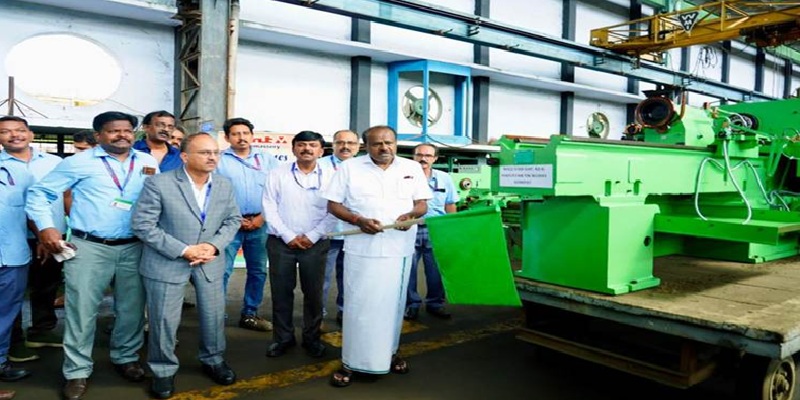
HMT Exports Indigenous Machine Tool to South Africa
Union Minister H.D. Kumaraswamy reviews HMT Kalamassery’s manufacturing capabilities, export growth, modernisation plans and PSU strengthening efforts.
Read moreAerospace Defence

India’s security calculus is shaped by West Asia conflict: Satyabrata Satapathy
In this interview with Satyabrata Satapathy, Co-founder & CEO BonV Aero, outlines how global conflicts, import dependence and policy shifts are accelerating India’s demand for drones, counter-dron..
Read moreOther Industrial Products

Warehousing: Enabling Make in India by Boosting Manufacturing Ecosystem
Efficient warehousing is crucial to strengthening India’s manufacturing ecosystem under the Make in India initiative, enabling scalability, competitiveness, and global supply chain resilience, say..
Read moreRelated Products
Troop Comforts revolutionises military gear with indigenous innovations
Aerospace & Defence
Troop Comforts Ltd (TCL), a state-owned defence corporation, has recently received a request for proposal (RFP) from the Northern Command of the Indian Army for its indigenously developed military gea Read more
latest News
Subscribe to iNoW

For Industry News on WhatsApp, Give a Miss Call on: +91 84228 74016