



Schedule a Call Back




How Agentic AI is Rewiring Industrial Robotics
 Articles
- Feb 26,26
Robots are moving from scripted execution to bounded autonomy, owning full inspection loops and transforming quality, rework, and operational decision-making, states Dijam Panigrahi, Co-founder and COO, GridRaster Inc.

Key Takeaways
- The breakthrough isn’t more robots, it’s smarter autonomy. When machines can observe, judge and act within defined boundaries, inspection becomes proactive, rework shortens, and quality data turns instantly actionable.
- The competitive edge shifts to organisations that hand over full decision loops, not just tasks, while using human expertise to manage complexity and edge cases.
From factories to distribution centres, robots are shifting from executing instructions to deciding what to do next and that shift will define the next wave of ROI for executives.
From cobots to deciding robots
For a decade, collaborative robots have been positioned as efficient assistants executing scripted, repetitive tasks while humans retained decision rights. They weld along preset seams, move pallets on fixed routes, and halt when sensors detect anomalies. While efficient, this model capped automation’s potential because every exception required human escalation.
Agentic AI raises that ceiling by granting robots bounded autonomy over micro-decisions. Instead of following only programmed instructions, systems assess conditions in real time and determine the appropriate next action without pausing operations. This is not general intelligence, but a practical step forward: robots that manage complete work loops rather than isolated motions.
Learning from video and language
Two advances enable this shift: learning from video and learning from language.
Through video-based learning, robots observe skilled operators and translate human movements, tool use, and outcomes into machine-understandable patterns. They do not replay trajectories; they learn how visual and physical cues correlate with correct actions.
Through language-based learning, Large Language Models and Vision Language Models ingest instruction manuals and work procedures, converting documentation into operational playbooks. Rather than technicians translating manuals into robot parameters, AI systems infer tolerances, defect taxonomies, and escalation paths directly. Combined, these capabilities ground robots in both real-world human practice and formal process standards.
The autonomous inspection loop
Inspection is the first large-scale application of this autonomy. It is data-rich, safety-critical, and historically under-automated. In complex welding, casting, and forging, robots can:
- Capture high-resolution visual and depth data across joints, surfaces, and internal geometries.
- Classify defects- porosity, cracks, undercut, misalignment, inclusions, against standards encoded from manuals and historical human judgments.
- Decide whether nonconformance is acceptable, reworkable, or scrap without human review of every frame.
Systems can now close the loop by autonomously generating and inserting task orders into repair queues. If a weld on an aircraft frame falls outside tolerance bands, the robot logs defect type, location, severity, and recommended remedy, then creates a digital work order for the appropriate technician or downstream robot cell.
Inspection thus becomes an active orchestrator of rework, shortening cycle times and making quality data immediately actionable. For manufacturers and logistics operators, this delivers higher first-time yield, lower rework labour, stronger traceability, and more stable schedules. The strategic question shifts from robot count to the number of closed loops handed to autonomous systems.
Limits and the human role
Robots are not yet capable of owning complex process decisions. In high-complexity welding, human experts interpret subtle cues, arc sound changes, discolouration, heat feedback—to adjust technique, consumables, and temperature. These judgments draw on tacit knowledge that remains largely undocumented.
Current systems also struggle with novel scenarios such as one-off repairs, improvised fixturing, or incomplete documentation. Human operators blend formal rules with intuition about risk, cost, and downstream impact, capabilities AI only approximates.
The near-term equilibrium is clear: robots decide within well-bounded domains, while humans define boundaries, manage edge cases, and refine playbooks. The transition will be progressive—inspection autonomy first, followed by standardised rework procedures, and later more complex operations as multimodal data expands.
Capturing the ROI of “Thinking” robots
Leaders should frame agentic robotics as a transformation of information and decision rights rather than a hardware upgrade. Three priorities stand out:
- Build a digital backbone: Ensure consistent access to 3D models, historical quality data, manuals, and work instructions. Fragmented data will limit autonomy more than sensor performance.
- Capture expert knowledge: Systematically record expert decisions through video and structured data to create robust training ground truth.
- Redesign roles and KPIs: As robots own more closed loops, human work shifts to oversight, exception handling, and continuous improvement. Metrics should reflect deviation reduction, recovery speed, and quality stability, not only throughput.
Repetitive, judgment-light activities, where experts say they “know the answer the second they see it”, are prime candidates for agentic inspection and triage. By proving full-loop ownership from observation to action, organisations can expand autonomy into more demanding tasks as data maturity grows.
Executives who move early will not simply deploy more robots; they will embed autonomy into the decision fabric of operations. In an environment where resilience, quality, and speed define competitiveness, shifting from “repeat what you were told” to “decide what must happen next” may be the most consequential automation upgrade of the next decade.
About the author:
Dijam Panigrahi is Co-founder and COO of GridRaster Inc, a leading provider of cloud-based platforms that power compelling high-quality digital twin experiences on mobile devices for enterprises.
agentic AI
autonomous robots
industrial inspection automation
smart manufacturing
robotics in welding
AI quality control
decision loop automation
vision language models
Dijam Panigrahi
GridRaster Inc
Related Stories
Automation & Robotics

AI Anomaly Detection Enhances Smart Factory Reliability
AI-powered anomaly detection enables manufacturers to identify equipment issues early, reduce downtime and improve maintenance efficiency by analysing complex sensor data beyond traditional monitori..
Read moreAutomation & Robotics

Covasant Earns ISO/IEC 42001 Certification for Responsible Enterprise AI
Covasant Technologies secures ISO/IEC 42001:2023 certification, reinforcing its governance-led AI platform and enabling enterprises to deploy secure, compliant AI agents in mission-critical environm..
Read moreAutomation & Robotics
How Agentic AI is Rewiring Industrial Robotics
Robots are moving from scripted execution to bounded autonomy, owning full inspection loops and transforming quality, rework, and operational decision-making, states Dijam Panigrahi, Co-founder and ..
Read moreRelated Products
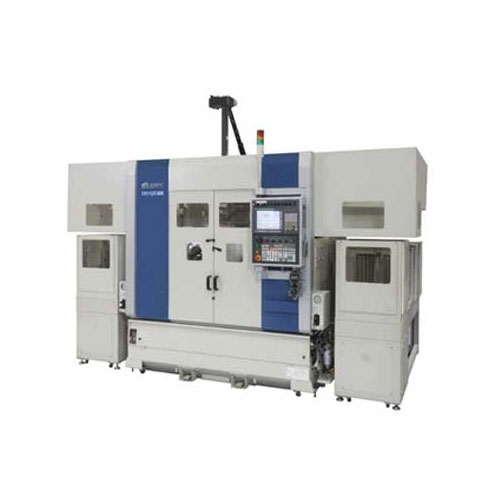
Compact Fmc - Motorum 3048tg With Fs2512
INDUSTRIAL AUTOMATION & TECHNOLOGY CONSULTANCY
Meiban Engineering Technologies Pvt Ltd offers a wide range of Compact FMC - Motorum 3048TG with FS2512.
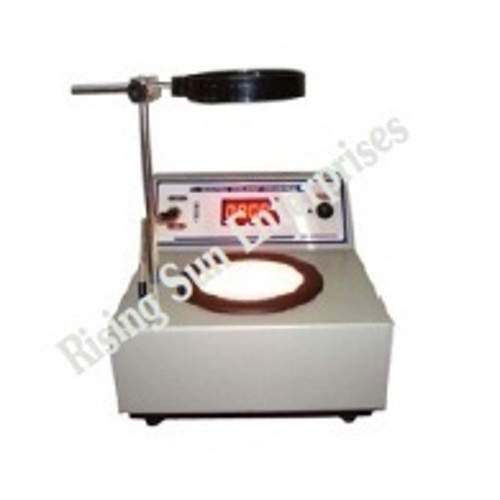
Digital Colony Counter
INDUSTRIAL AUTOMATION & TECHNOLOGY CONSULTANCY
Rising Sun Enterprises supplies digital colony counter.

Robotic Welding SPM
INDUSTRIAL AUTOMATION & TECHNOLOGY CONSULTANCY
Primo Automation Systems Pvt. Ltd. manufactures, supplies and exports robotic welding SPM.
latest News
Subscribe to iNoW

For Industry News on WhatsApp, Give a Miss Call on: +91 84228 74016