






Schedule a Call Back


India must focus on R&D alongside electronics manufacturing: Sanjay Huprikar
 Articles
- Feb 06,26
In this interview with Rakesh Rao, Sanjay Huprikar, Chief Global Officer of the Global Electronics Association, explores trends in global electronics industry, India’s manufacturing ambitions, and long-term industry outlook.
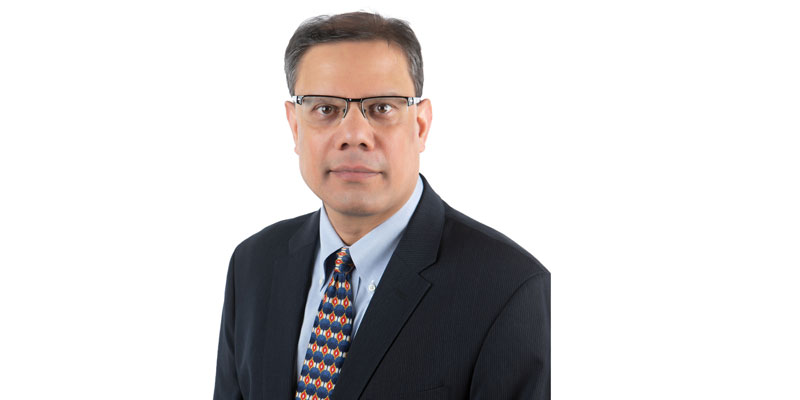
As geopolitical uncertainty reshapes global manufacturing, the electronics industry stands at the centre of innovation, resilience, and economic growth. Amid these changes, India is aiming to scale up its stake in global electronics supply chains. In this free-wheeling conversation with Rakesh Rao, Sanjay Huprikar, Chief Global Officer of the Global Electronics Association, explores trends in global electronics industry, India’s manufacturing ambitions, policy priorities, and long-term industry outlook.
How is Global Electronics Association playing a role of facilitator for the industry?
The Global Electronics Association, formerly known as IPC, is an industry trade association that represents the entire electronics ecosystem—electronics design, electronics manufacturing, and the broader electronics supply chain. Today, we have a community of more than 3,200 member companies worldwide. From our inception, our core focus has been on three foundational pillars: standards development, workforce training, and education programs for the electronics industry. These areas form the DNA of our organisation.
Over the last 15 to 20 years, we have evolved significantly into a full-fledged global trade association. Alongside our traditional strengths, we are now deeply engaged in industry intelligence, advocacy, and communications—both internal and external—to better serve our members and support the industry at large.
Given the current geopolitical environment, what structural changes are you seeing in the global electronics manufacturing industry?
We are operating in an environment of unprecedented geopolitical tension. On any given day, the news alternates between reports of new tariffs and announcements of fresh free trade agreements. The level of volatility is extremely high, and there is very little stability. For the electronics industry—which relies on deeply interconnected global supply chains—this creates both risk and complexity.
As a trade association, our role is to help members navigate this environment by providing timely, relevant, and credible information. Companies rely on us for data, insights, and industry intelligence so they can make informed decisions about sourcing, manufacturing locations, and supply chain strategy. The structural shift we are witnessing is a deliberate move toward diversification and resilience, with companies rethinking over-dependence on single geographies and investing in alternative manufacturing hubs.
How large is the global electronics industry, and which countries are the key contributors?
Our estimate places the global electronics industry at approximately $6 trillion in value. It is an immense industry and one of the most exciting sectors today. Every major vertical—agriculture, automotive, aerospace, healthcare, automation—depends on electronics in some form.
To illustrate this transformation, consider the automobile industry. Twenty-five years ago, electronics accounted for less than 10 percent of a vehicle’s value. Today, even in internal combustion engine vehicles, electronics content exceeds 50 percent, and in electric vehicles it is even higher.
In terms of geography, the major contributors include the United States, China, leading European economies such as Germany, France, and the UK, as well as India, Malaysia, and Mexico. Collectively, the top eight to ten countries account for nearly 75 to 80 percent of global electronics production. That said, the industry is so large that even smaller economies have meaningful opportunities to participate and grow.
India, in particular, has been an extraordinary case study. In 2017, India’s electronics industry was valued at roughly $50 billion. By 2025, it has grown to about $150 billion—a threefold increase in just eight years. The government has set an ambitious target of reaching $500 billion by 2030, which reflects both confidence and strong policy support.
There is often a perception that India’s growth has been driven mainly by assembly of finished goods. How do you see India developing a deeper electronics supply chain?
That perception is not entirely incorrect, and importantly, the Indian government recognises this. Of the projected $500 billion electronics industry by 2030, around $350 billion is expected to come from finished goods such as mobile handsets, communication devices, and automotive products. The remaining $150 billion is expected from components—a segment that is still developing.
For India to achieve sustainable and unhindered growth, it must reduce its dependence on imported components and build a robust domestic supply chain. We are already seeing movement in this direction, particularly in semiconductor manufacturing. Historically, India had minimal semiconductor fabrication capability, but now the government has introduced targeted incentives with the aim of developing over $100 billion in semiconductor manufacturing capacity by 2030.
This is a critical step toward supply chain resilience. However, one area where India still lags is research and development expenditure. Manufacturing capabilities have advanced remarkably, but increased investment in R&D is essential to move up the value chain. If India can accelerate R&D alongside manufacturing, the long-term potential is enormous.
How does the Global Electronics Association support India’s positioning in the evolving global electronics market?
Our role is fundamentally that of an enabler and a connector. We do not manufacture products or conduct R&D ourselves. Instead, we bring together the right stakeholders—industry, government, and academia—to collaborate and drive progress.
Events such as Integrated Electronics Manufacturing & Interconnections (IEMI) in India exemplify this approach. Here, we have representatives from industry, academia, and government, including engagements with the Ministry of Defence, with whom we have signed a memorandum of understanding. By providing a platform for collaboration and dialogue, we help identify challenges and facilitate solutions. This model has worked in many countries, and we are confident it will be equally effective in India.
Which sectors do you see as key growth drivers for the global and Indian electronics industries?
In India, mobile handsets are clearly the dominant growth driver and will likely remain so for the next five to ten years. Companies such as Apple and Samsung have made significant investments in India, attracted by its scale, talent, and policy environment.
Globally, strategic industries such as aerospace and defense, medical electronics, and high-end automotive are gaining importance. These sectors demand extremely high reliability—what we refer to as Class 3 products—where failure is not an option. Our standards and certification programs are widely used in these industries to ensure defect-free production.
In addition, electric vehicles and wearable technology represent fast-growing segments. India’s strong textile heritage positions it uniquely to lead in wearable electronics, merging traditional strengths with advanced electronics manufacturing.
Are you working with Indian standards bodies such as BIS on certification and standards alignment?
Yes, we have engaged with BIS since the launch of our India office 14 years ago. The relationship has seen cycles of activity, but currently we are in a positive phase. Our collaboration with the Ministry of Defence has brought additional momentum, encouraging closer engagement between Indian standards agencies and our organisation. While the future will depend on continued alignment, we are optimistic about deeper cooperation.
Finally, what is your outlook for the global electronics industry amid ongoing uncertainty?
Despite geopolitical and economic uncertainty, the outlook for the electronics industry remains highly positive. We are seeing strong growth across regions such as Southeast Asia, Mexico, and India. Innovation is accelerating, and consumer demand continues to expand.
There will undoubtedly be challenges and disruptions, but the opportunities far outweigh the risks. For an association like ours, this environment reinforces our relevance—we are here to support our members through both good times and difficult periods. Overall, electronics remains a dynamic, resilient, and future-defining industry.
Global Electronics Association; Sanjay Huprikar electronics manufacturing industry; global supply chain; Indian electronics market; semiconductor manufacturing; industry outlook; aerospace and defense; workforce training
Rakesh Rao
Related Stories
Automation & Robotics
India plays a central role in Eplan´s strategy: Haluk Menderes
In this interview with Rakesh Rao, Haluk Menderes, MD, Eplan GmbH & Co KG, outlined the company’s strategic focus on innovation, automation, and seamless customer experience
Read moreAutomation & Robotics

India is a key for Stefanini Group’s growth strategy in Asia: Marco Stefanini
During interaction with Rakesh Rao, Marco Stefanini, Founder & Global CEO of Stefanini Group, outlines the company’s strategic approach to digital transformation in manufacturing and its global ex..
Read moreMaterial Handling Equipment
Godrej Enterprises Group: Driving India’s Material Handling Revolution
It is believed that India’s material handling sector is in a transformative phase. Godrej is all set to capture this growth with its electric material handling equipment (MHE), IoT-enabled fleets,..
Read moreRelated Products

Ultra-slim Humidity/temperature Indicator With Large 4” Display
ELECTRICAL & ELECTRONIC EQUIPMENT
Countronics offers a wide range of ultra-slim humidity/temperature indicator with large 4” display – Model 7100-4W.
Read more
Integrated Electric Gripper S Series
ELECTRICAL & ELECTRONIC EQUIPMENT
IBK Engineers Pvt Ltd offers a wide range of integrated electric gripper S series.

Geared Electric Motors
ELECTRICAL & ELECTRONIC EQUIPMENT
Delco Fans Pvt Ltd offers single phase capacitor run and three
phase geared Instrument motors, totally enclosed face/foot mounted.
latest News
Subscribe to iNoW

For Industry News on WhatsApp, Give a Miss Call on: +91 84228 74016