





Schedule a Call Back


IMTEX Forming celebrates human ingenuity & machine intelligence: Jibak Dasgupta
 Interviews
- Jan 20,26
In this interview with Rakesh Rao, Jibak Dasgupta, Director General & CEO, Indian Machine Tool Manufacturers' Association (IMTMA), explores trends in the machine tools industry and shares some highlights of IMTEX Forming 2026.
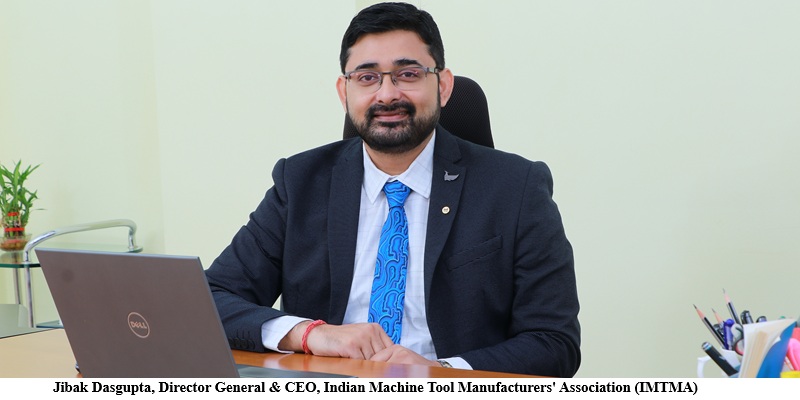
IMTEX Forming 2026 - to be held from 21–25 January 2026 at BIEC, Bengaluru - will feature exhibitors from 22 countries and is expected to attract around 50,000 visitors. The event will serve as a key platform for showcasing next-generation technologies, fostering collaboration and driving innovation across the manufacturing ecosystem, states Jibak Dasgupta, Director General & CEO, Indian Machine Tool Manufacturers' Association (IMTMA).
What is the current status of the Indian machine tools sector? How have its two sub-segments—metal cutting and metal forming—performed?
Metal cutting and metal forming machine tools are vital to India’s industrial development. They form the foundation for sectors such as automotive, aerospace, defence, heavy engineering and precision manufacturing. In FY25, metal cutting alone accounted for nearly 71 per cent of India’s total demand for metalworking machine tools, underscoring its critical role in production systems. To a large extent, India’s domestic industry continues to rely on foreign suppliers, with about 52 per cent of metal cutting machines used in FY25 being imported.
The fiscal year also highlighted the size and structure of the metal forming segment. Consumption of metal forming machine tools stood at Rs 91.39 billion, compared to a domestic output of Rs 26.96 billion. Encouragingly, exports of metal forming machine tools increased by around six per cent year-on-year, signalling steady growth in India’s export-oriented manufacturing sector.
With rising investments supported by key Central Government policies and various State Government initiatives, along with renewed focus on advanced manufacturing technologies, the metal forming segment is poised for sustained growth in the years ahead, strengthening India’s position in the global machine tool landscape.
How is the metal forming segment structured, and which industries are the key drivers of demand?
The metal forming industry in India is supported by a wide range of technologies, including mechanical and hydraulic presses, advanced servo presses, sheet-metal working machines, forging systems, roll-forming lines and tube-bending solutions. The ecosystem comprises a mix of domestic manufacturers, global OEMs and specialised system integrators, each catering to different levels of precision, automation and productivity requirements.
The automotive sector remains the primary driver of demand, owing to its extensive press shop and forging requirements. Other industries—such as electronics, aerospace and defence, railways, metro systems, packaging, power equipment and consumer durables—also depend heavily on the metal forming sector. Technologies including sheet metal forming, stamping, deep drawing and forging are in high demand across these industries.
As these sectors expand and modernise their production processes, they continue to support the steady growth of the metal forming ecosystem and position India as an increasingly significant player in the global manufacturing landscape.
What emerging technologies are shaping advancements in metal forming, particularly with the growing demand for lightweighting and high strength?
A range of emerging technologies is transforming the metal forming industry as manufacturers pursue aggressive lightweighting and higher strength-to-weight ratios. Traditional processes such as stamping dies, press brakes and CNC punch presses are rapidly evolving through automation and digital integration.
At the same time, advanced techniques such as hot stamping, hydroforming, flow forming and electromagnetic forming are gaining traction for producing complex components from ultra-high-strength steels and lightweight alloys, particularly in automotive, aerospace and defence applications. In bulk forming, forging, extrusion, casting and pressure die casting remain fundamental, with new alloys and enhanced process controls enabling the production of stronger and lighter structural components.
Together, these technologies are ushering in a new era of efficiency, precision and material optimisation within the metal forming sector.
How is the metal forming sector addressing challenges related to precision, surface quality and increasing complexity in manufacturing?
Metal forming manufacturers are responding to rising demands for higher precision, improved surface quality and complex geometries through advanced technologies, smarter process control and digital integration. Precision is being enhanced through advanced sensing systems, in-process monitoring, CNC automation and tighter process controls, supported by rigorous material testing to ensure consistent performance.
To improve surface quality, manufacturers are optimising forming parameters, adopting warm- and hot-forming techniques, refining die and tool designs, and applying specialised post-processing and surface-engineering treatments to minimise defects and enhance finish quality.
To address increasing complexity, the industry is adopting next-generation forming technologies, hybrid manufacturing approaches and high-fidelity simulation tools, including digital twins, to create intricate shapes that are difficult to achieve using conventional methods. Integration with Industry 4.0 frameworks enables more predictable and efficient operations, helping manufacturers meet evolving market requirements.
What gaps remain between research and industrial adoption in metal forming, and how can collaboration help bridge them?
Research and development in areas such as lightweighting, advanced coatings, aluminium composites, and integrated forming processes—combining forming with welding, heat treatment and thermal mapping of dies and moulds—are opening new opportunities for closer collaboration between academia and industry.
There is also significant potential for joint development of predictive, AI-based defect analysis tools that can forecast failures well in advance, enabling improved productivity, quality and cost efficiency.
What are the key highlights of IMTEX Forming 2026, and what message would you like to share with the industry ahead of the event?
The evolution of metal forming manufacturing will be comprehensively showcased at IMTEX Forming, Asia’s largest exhibition on metal forming and manufacturing technologies, to be held from 21 to 25 January 2026 at the Bangalore International Exhibition Centre (BIEC), Bengaluru. Tooltech, Digital Manufacturing and Weldexpo will be organised as concurrent events.
Parallel programmes such as the International Seminar on Forming Technology (22–23 January), i2 Academia Square and the Jagruti–IMTMA Youth Programme will also take place during IMTEX Forming 2026.
The exhibition will feature exhibitors from 22 countries across four exhibition halls, covering 48,000 square metres of exhibition space. Germany, Italy, Japan and Taiwan will participate with dedicated country pavilions.
IMTEX Forming 2026 celebrates human ingenuity alongside machine intelligence, paving the way for the next breakthroughs in manufacturing excellence. IMTMA expects around 50,000 visitors from diverse manufacturing sectors and encourages industry stakeholders to attend and experience first-hand the technologies that will shape the next era of manufacturing. Participation will be critical in driving collaboration, innovation and growth across the ecosystem.
Jibak Dasgupta
Indian Machine Tool Manufacturers' Association
IMTMA
Indian machine tools industry
Metal Forming
Machine Tools
IMTEX Forming 2026
Advanced Manufacturing
Industry 4.0
Lightweighting Technologies
Automotive Manufacturing
Precision Engineering
Rakesh Rao
Related Stories
Auto & Auto Components
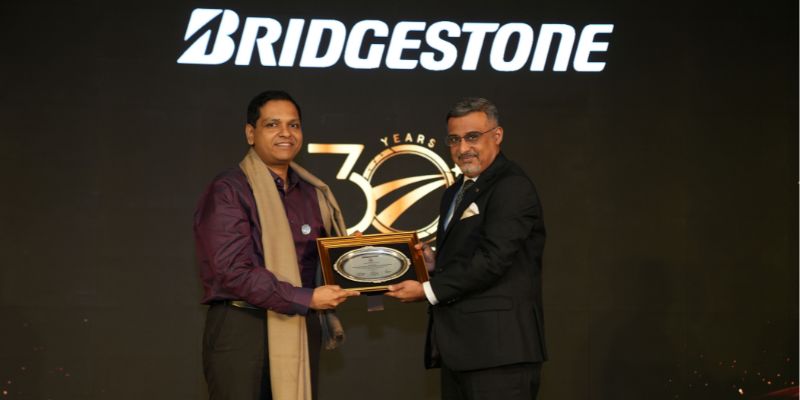
Bridgestone marks 30 years of operations in India
Bridgestone India has completed 30 years in the country, highlighting its manufacturing growth, technology investments, partnerships and focus on sustainable mobility.
Read moreSmart Manufacturing
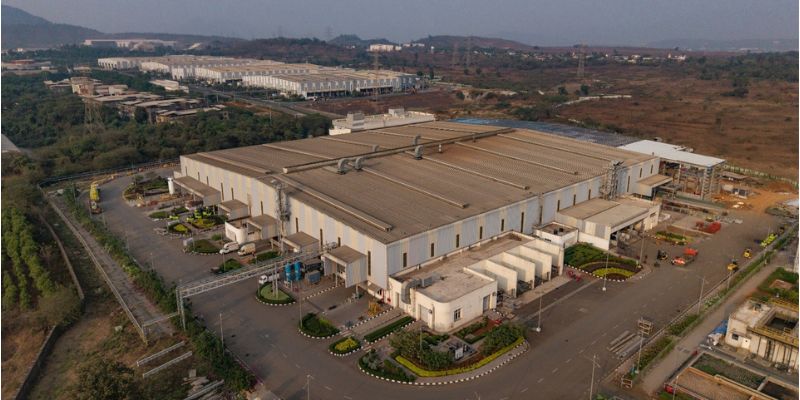
Godrej MHE begins operations at advanced Khalapur manufacturing facility
The facility will produce up to 6,000 material handling units annually, scalable to 15,000, for domestic and export markets.
Read moreAuto & Auto Components
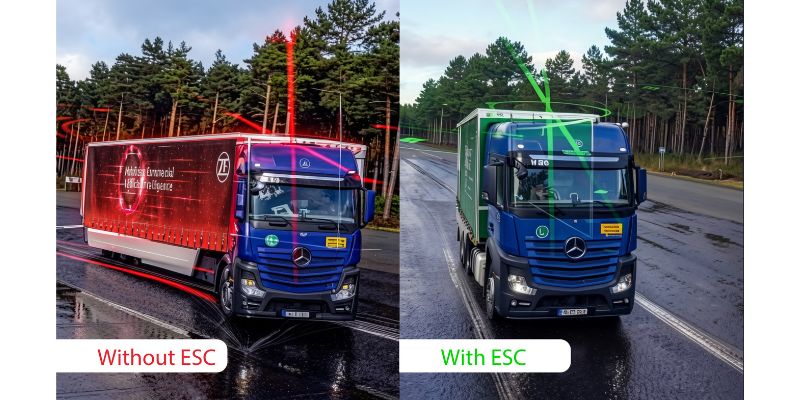
ZF CVCS India Secures Escsmart Nominations from Three Oems for Trucks
ZF CVCS India has secured multi-year ESCsmart nominations from three Indian commercial vehicle OEMs, supporting upcoming truck platforms aligned with new ESC safety regulations.
Read moreRelated Products

Hittco SOLID Carbide End Mills
MACHINE TOOLS, POWER & HAND TOOLS
Hittco Tools Ltd offers a wide range of Hittco solid carbide end mills.
Read more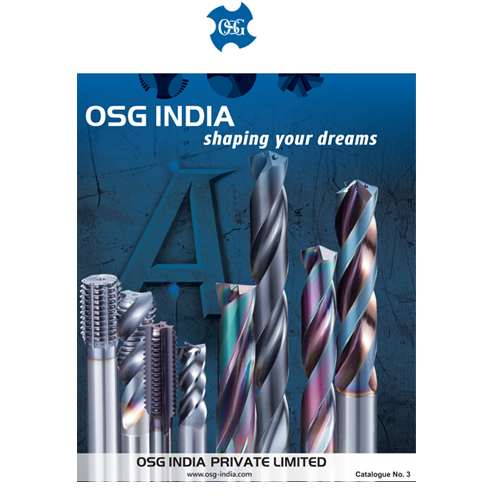
Precision Cutting Tools1
MACHINE TOOLS, POWER & HAND TOOLS
S S Trading Corporation offers a wide range of precision
cutting tools.
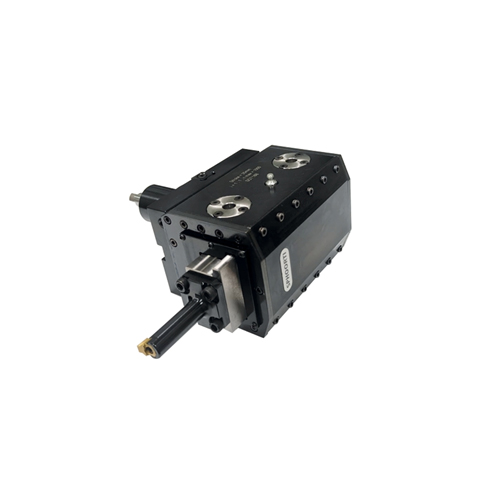
Slotting Head Unit for All Cnc Turn Mill Centers
MACHINE TOOLS, POWER & HAND TOOLS
Sphoorti Machine Tools Pvt Ltd offers a wide range of
slotting head unit for all CNC turn mill centers.
latest News
Subscribe to iNoW

For Industry News on WhatsApp, Give a Miss Call on: +91 84228 74016