




Schedule a Call Back




India’s Manufacturing Reset in an Uncertain World
 Articles
- Jan 26,26
Global manufacturing is being reshaped by volatility and disruption. This release outlines how India is strengthening depth, resilience and capability to emerge as a long-term manufacturing partner, says Satyabrata Satapathy, Co-Founder and CEO, BonV Aero.
Key Takeaways:
- India’s manufacturing landscape is moving beyond assembly towards deeper capabilities such as design, testing and system-level production, supported by Make in India and Atmanirbhar Bharat initiatives.
- The drone sector illustrates this shift, evolving from niche applications to mission-critical use across defence, agriculture, construction, logistics and emergency response, with a strong emphasis on indigenous capability.
- The article underscores that converting global uncertainty into sustained advantage will depend on policy stability, skill development, regulatory clarity and the strategic use of automation, data and AI.
Manufacturing today operates in an environment very different from what it was even a decade ago. Geopolitical uncertainty, shifting trade relationships, supply chain disruptions, and rapid technology cycles have introduced a level of volatility and complexity that businesses can no longer treat as temporary. For India, this uncertainty presents both a challenge and a defining opportunity.
The global manufacturing ecosystem is being reshaped. Companies are reassessing long-standing sourcing models, reducing overdependence on single geographies, and prioritising resilience alongside cost. In this evolving landscape, India is no longer viewed only as an emerging market but increasingly as a long-term manufacturing partner, provided it can deliver consistency, capability, and scale.
India’s manufacturing shift is already underway
Within India, manufacturing has moved well beyond traditional sectors. Advanced industries such as aerospace, electronics, defence, and precision engineering are seeing renewed focus. Government initiatives under Make in India and Atmanirbhar Bharat have played a meaningful role in encouraging domestic production, particularly in strategic technologies where long-term self-reliance is critical.
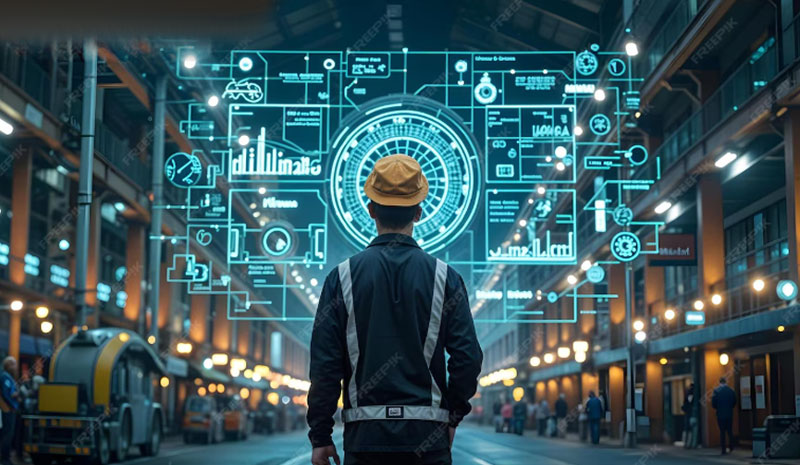
What is changing most visibly is the depth of manufacturing. Indian companies are no longer limited to assembly or integration. Increasingly, design, testing, validation, and system-level manufacturing are being developed in-house. This shift is strengthening the ecosystem and reducing long-term dependency on imports.
The drone industry reflects this transformation
The evolution of the drone sector offers a clear example of how Indian manufacturing has matured. Drones were once largely associated with hobby use or aerial photography. Over time, their role expanded into surveillance applications using electro-optical and thermal imaging. Today, their use spans agriculture, defence, wildlife monitoring, mapping, construction, logistics, and emergency response.
India’s growing defence requirements and complex operating environments have accelerated the demand for indigenous drone solutions that can be built, supported, and upgraded locally. This has encouraged manufacturers to focus on reliability, adaptability, and operational relevance rather than just cost competitiveness.
Challenges that still demand attention
Despite progress, Indian manufacturers continue to face structural challenges. Volatile global demand, trade tensions, and component dependencies complicate long-term planning. In high-technology sectors, access to skilled talent, testing infrastructure, and clear certification pathways remains uneven.
Regulatory complexity also adds friction, particularly for companies attempting to scale from pilots to sustained production. Addressing these issues will be essential if India is to strengthen its position in global manufacturing value chains.
Opportunity in a shifting global order
At the same time, uncertainty is creating opportunity. Global supply chains are actively diversifying under the China Plus One approach, and India is increasingly viewed as a credible alternative. Free trade agreements, export incentives, and localisation policies are reinforcing this shift.
Restrictions on certain imports and a stronger emphasis on domestic capability have pushed manufacturers to invest in end-to-end production. In sectors such as defence and aerospace, this has accelerated learning cycles and improved engineering maturity.
Technology as a strategic enabler
Technology is playing a decisive role in this transition. Automation, data-driven manufacturing, and artificial intelligence are improving efficiency, quality, and predictability. In the drone sector, AI-enabled systems have significantly strengthened defence capabilities, particularly in intelligence gathering, surveillance, and logistics support. Recent global conflicts have further reinforced the strategic importance of unmanned systems in modern warfare.
For manufacturers, the focus is no longer only on producing hardware, but on building systems that can evolve with changing operational requirements.
Building for the long term
Succeeding in a VUCA world requires a long-term approach. Policy stability, industry and government collaboration, investment in skills, and shared infrastructure will be critical to sustaining momentum. Manufacturing resilience cannot be built through short-term incentives alone. It depends on consistency, capability, and trust across the ecosystem.
India has the scale, talent, and policy direction needed to emerge as a global manufacturing hub. The next phase will depend on how effectively uncertainty is converted into strategic advantage. If done right, Make in India can evolve from a national initiative into a globally recognised manufacturing promise.
About the author:

Satyabrata Satapathy is an aviation and technology leader with deep experience in aerospace and defence sectors. He is the Co-Founder and Chief Executive Officer of BonV Aero, bringing vision and operational leadership to the company. Prior to this, he held key roles at Voyzon and Reliance Asteria, where he focused on avionics and advanced system architecture.
Indian manufacturing
Make in India
Atmanirbhar Bharat
drone industry
manufacturing resilience
China Plus One
defence manufacturing
smart manufacturing
Satyabrata Satapathy
BonV Aero
Related Stories
Policy Regulation

Indian manufacturing sector: Negotiating its way in a less VUCA world
India’s manufacturing sector is evolving through policy support, technology adoption and sectoral growth, though challenges in R&D and skilling remain, writes Prof R Jayaraman, Head, Capstone Proj..
Read moreAuto & Auto Components

Manufacturing Strength Behind India’s Self-reliance and Global Positioning
India’s manufacturing sector is evolving from domestic self-reliance to global leadership, navigating a VUCA environment through strategic policy, capability building and infrastructure-led execut..
Read moreAerospace Defence
India’s Manufacturing Reset in an Uncertain World
Global manufacturing is being reshaped by volatility and disruption. This release outlines how India is strengthening depth, resilience and capability to emerge as a long-term manufacturing partner,..
Read moreRelated Products
Troop Comforts revolutionises military gear with indigenous innovations
Aerospace & Defence
Troop Comforts Ltd (TCL), a state-owned defence corporation, has recently received a request for proposal (RFP) from the Northern Command of the Indian Army for its indigenously developed military gea Read more
latest News
Subscribe to iNoW

For Industry News on WhatsApp, Give a Miss Call on: +91 84228 74016