





Schedule a Call Back


Indian manufacturing sector: Negotiating its way in a less VUCA world
 Articles
- Jan 26,26
India’s manufacturing sector is evolving through policy support, technology adoption and sectoral growth, though challenges in R&D and skilling remain, writes Prof R Jayaraman, Head, Capstone Projects, at Bhavan's S P Jain Institute of Management & Research (SPJIMR).

Key takeaways:
- Policy-led reforms and large investments are reshaping India’s manufacturing base across sectors.
- Automation, IoT and Industry 4.0 are critical to sustaining manufacturing competitiveness.
- R&D, skilling and training must be treated as investments for long-term growth.
The Indian economy has apparently entered a more stable phase since at least 2020, if not 2014. The then new government took the reins and began the process of planning for economic development. Such activity in a third-world, developing economy is fraught with many dangers, not least political survival. Such survival calls for watchfulness and keeping the electorate on the right side.
However, the new government embarked upon a number of risky ‘adventures’, such as the opening of Jan Dhan bank accounts (which went on to establish world records for the number of accounts opened in a short time) and Swachh Bharat, which set the tone for events to come. When DeMo followed, people were convinced that the government meant business. While the nation struggled to understand the real reasons behind DeMo, the film Dhurandhar has provided some hints, perhaps based on the book by Sree Iyer (Who Painted My Money White). It is said that the final denouement will be seen in Dhurandhar 2.
Policy reset and risk
Having taken care of some of the basics, the government went on to design drastic measures to build the economy. It is often said that if you want to win a race, you must enter it. Similarly, if you want to shed the ‘third-world’ tag, you must start thinking big—and that is precisely what the government did. Even six years later, one is left wondering how this government finds the funds. Just recently, another announcement of around Rs 420 billion was made for investment support under the ECMS (Electronics Components Manufacturing Scheme).
Over the past few years, several schemes with massive capital outlays have been announced, some of which have already reached maturity. These include Make in India, Start-up India, PM Gati Shakti, the National Industrial Corridor Programme, the Production Linked Incentive (PLI) Scheme, initiatives to promote Ease of Doing Business (EoDB) and reduce compliance burdens, the National Single Window System (NSWS), the India Industrial Land Bank, the Project Monitoring Group (PMG), liberalisation of the FDI policy, and the Indian Footwear and Leather Development Programme Scheme. And what is the financial outlay? Take electronic goods, for instance (Refer “Table 1”).
Table 1: Government incentives for Indian
electronics industry
|
Scheme name |
Year introduced |
Outlay |
Remarks |
|
PLI for electronic hardware |
2021 |
Rs 73.25 billion |
Expected to boost hardware sales by Rs 550 billion |
|
PLI for electronic hardware – 2.0 |
2023 |
Rs 169.39 billion |
Localisation of items consumed |
|
Innovation Fund for the EV industry |
2024 |
Rs 1 trillion |
Boost production in the Indian EV auto industry |
|
PLI for Auto EV industry |
2021 |
Rs 259.38 billion |
Boost production in the Indian EV auto industry |
|
ECMS |
2024 |
Rs 420 billion |
Increase production of electronic components |
All these schemes have been implemented, and in some cases, the benefits are already in the pipeline. While electronics has been given pride of place, other manufacturing-related sectors, including automobiles, have also seen substantial investment. PM Gati Shakti is a classic example of a futuristic scheme, massive in its conception, aiming to adopt a holistic approach by integrating road, rail, port and logistics development. It also seeks to integrate the functioning of multiple central ministries through the use of software and IoT.
Launched with a projected outlay of $ 1.2 trillion (Rs 1 quadrillion), PM Gati Shakti is currently under implementation and is expected to have a significant impact on the Indian economy going forward. After the difficult years between 2010 and 2013, marked by corruption and weak governance, the Modi government has infused fresh momentum into the Indian economy with broad-based growth. This is evident not only in India achieving fourth place globally in GDP rankings in 2025, with a GDP of $ 4.51 trillion, but also in several other indicators.
India has invested substantial resources in strengthening five economic engines—infrastructure, metals, IT/ITES, telecom and automobiles/electronics—which are expected to steer the country towards a brighter future.
According to one projection, the numbers are as given in Figure 1.

Source: The Sports Story
Manufacturing growth engines
Let’s take a look at the output from the main industries in India between the period 2014 and 2024 (Refer “Table 2”):
Table 2: Output from the main
industries in India
|
Sector of economy |
Base year output, 2013/14, in Rs billion |
Final year output, 2023/24, Rs billion |
10-year CAGR (in %) |
|
Iron and steel |
5,642 |
14,380 |
9.52 |
|
Electric power |
3,324 |
7,353 |
10.06 |
|
Automobiles |
5,987 |
18,308 |
10.36 |
|
Crude oil & natural gas |
1,309 |
1,838 |
4.7 |
|
Transport services (railways, airlines, etc.) |
2,045 |
4,873 |
8.25 |
|
IT/ITES |
4,278 |
17,266 |
13.12 |
|
Wholesale and retailing trading |
14,823 |
38,041 |
8.97 |
|
Textiles |
2,738 |
4,108 |
3.36 |
|
Telecom |
2,785 |
4,151 |
8.62 |
Source: CMIE Industry Outlook
The foundation industries—iron and steel and power—and modern industries such as IT/ITES and automobiles have all shown strong performance, registering double-digit CAGRs over the last decade. Other key industries essential to a modern economy have also performed well, although textiles and crude oil have not grown at the desired pace. This perhaps explains India’s heavy reliance on crude oil imports.
Future growth sectors include iron and steel (with crude steel production expected to reach 300 mtpa in the near future), automobiles (India already ranks fourth globally), IT/ITES (with strong performance in AI- and IoT-driven enterprises such as GCCs, though more investment is needed in data centres) and energy.
Across these industries, several path-breaking developments are shaping the future. In iron and steel, electric arc furnaces are increasingly being deployed to process scrap, raising recycled input tonnage. Greater use of pellets in blast furnaces has reduced dust pollution while consuming iron ore fines that had accumulated to environmentally dangerous levels. Automation using IoT, high-speed processing equipment and sensor-driven, SCADA-controlled centralised systems has improved yields, reduced water consumption and significantly lowered emissions. Through the adoption of TQM and other management excellence practices, leading steel producers have been recognised as ‘Lighthouses’ by the WEF and recipients of Deming Awards.
The automobile industry has achieved unprecedented design capabilities, offering customers a wide choice of models. Many Indian vehicles are now more aesthetically appealing than their global counterparts. Recent SUVs from Kirloskar Toyota, Maruti, Tata and Hyundai can compete with global models. The industry has also cracked the complexities of EV manufacturing, with India emerging as one of the largest EV markets. R&D expenditure has increased from Rs 68 billion to Rs 121 billion over the past decade, reflecting a CAGR of 6 per cent per annum.
The IT/ITES sector has grown at over 13 per cent annually during the last decade, with export earnings reaching approximately Rs 13,000 billion in FY 2023–24. TCS recently announced a $ 1 billion investment in AI. GCCs have proliferated across India, though data centres are yet to witness comparable growth. As of March 2025, the United States leads globally with 5,426 data centres, followed by Germany (529), the UK (523) and China (449). The global data centre market is projected to reach $ 624.07 billion by 2029, according to Statista. India currently hosts 265 data centres. While high power and water consumption remain concerns, investments exceeding $ 70 billion announced by Amazon, Google and Microsoft could change the trajectory.
The energy sector in India is a mix of renewable and non-renewable sources, with the renewable segment growing rapidly, mainly due to India’s commitment to sustainability. In the conventional, fossil-fuelled sector, growth is continuing in view of the expected steep demand arising from increased industrial activity. As of 2023–24, renewable energy sales stood at about Rs 390 billion, compared with Rs 7,353 billion from the conventional sector. The CAGR over the last decade has been 16.75 per cent for renewables, compared with 10.06 per cent for the conventional sector, according to CMIE Industry Outlook data.
Recent developments include the use of hydrogen for mobility and small nuclear reactors (SMRs) for distributed power generation. With full government support for EVs in the automotive sector, the non-renewable sector could also see significant growth. However, for the foreseeable future, coal-fired power plants are likely to retain dominance. In terms of generation, conventional sources accounted for 1,364 GW in 2023–24, while renewables contributed only 255 GW (Source: CMIE Industry Outlook data).
Technology-led transformation
India’s future economic development will be driven by both the services and manufacturing sectors. Agriculture will also continue to grow, with new markets being explored and crop tonnages rising substantially. Indian farmers are outperforming many other countries in terms of output and practices.
The services sector comes naturally to India, with capabilities developed over centuries. Indians excel across diverse fields worldwide—not to suggest that others do not, but Indians are among the most capable globally. Manufacturing, however, does not come as naturally unless supported by extensive automation and the use of IoT and AI to control operations. While there is considerable momentum in this direction, much remains to be done.
Encouraging developments are emerging from IITs and government laboratories, but the industrial sector remains highly constrained in its approach to R&D and innovation. Even today, including in large companies, employees are not easily sent for training, as approval processes are lengthy and organisations hesitate to sanction expenditures of Rs 4–5 lakh despite rising corporate turnovers.
Recently, the government increased the sales threshold for classification under the small-scale industry category to Rs 2 billion, but large companies are yet to respond meaningfully. R&D, training and skilling expenses must be treated as investments and insurance for a secure future; failing this, India risks remaining a third-world economy despite its size.
About the author:
R Jayaraman is the Head, Capstone Projects, at Bhavan's S P Jain Institute of Management & Research (SPJIMR). He has worked in several capacities, including Tata Steel, for over 30 years. He has authored over 60 papers in academic and techno economic journals in India and abroad. Jayaraman is a qualified and trained Malcolm Baldrige and EFQM Business Model Lead Assessor.
R Jayaraman
Indian Manufacturing
Make in India
PM Gati Shakti
PLI Scheme
Industry 4.0
Electric Vehicles
IT/ITES Sector
Renewable Energy
Dhurandhar movie
S P Jain Institute of Management & Research
Deming Awards
Related Stories
Electrical & Electronics
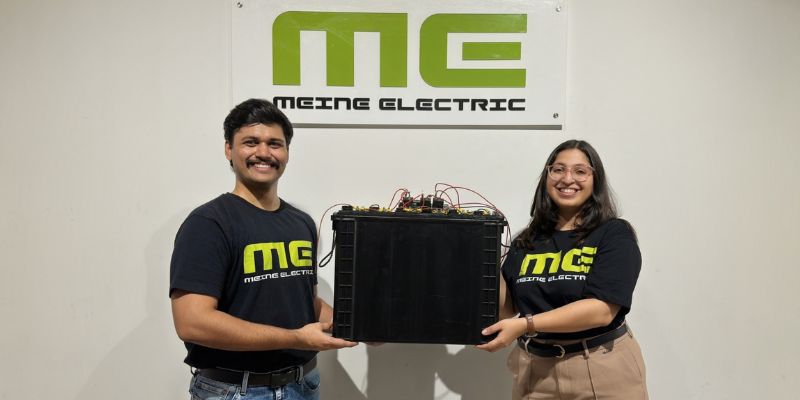
Meine Electric Develops Fast-Charging Iron-Air Battery System
The independently validated system charges in six hours and discharges over 18 hours, targeting daily renewable energy balancing and long-duration storage applications.
Read moreAuto & Auto Components
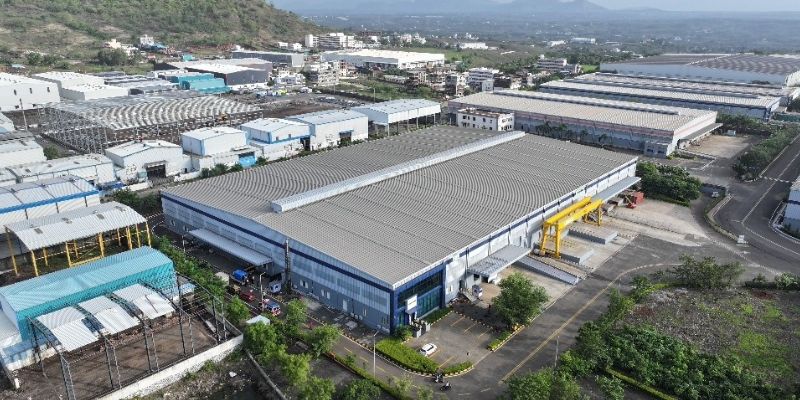
AmpereHour Opens 5 GWh BESS Manufacturing Facility in Pune
The Chakan facility will integrate Make in India battery blocks and digitally validated energy storage systems for utility-scale and industrial applications.
Read moreSmart Manufacturing

DCM Shriram Partners Serentica for 58 MW Hybrid Renewable Project
The project will supply renewable power to DCM Shriram Chemicals’ Bharuch plant and raise the company’s total renewable energy capacity to 176 MW peak.
Read moreRelated Products
latest News
Subscribe to iNoW

For Industry News on WhatsApp, Give a Miss Call on: +91 84228 74016