





Schedule a Call Back


Manufacturing Excellence in the Age of Integrated Automation and Industry 4.0
 Articles
- Feb 03,26
Manufacturing leadership is shifting from scale-driven efficiency to integrated, data-led systems that deliver resilience, sustainability and enterprise-wide performance through Industry 4.0 and automation shares Ajith Kumar, COO, Birla Opus Paints.
For much of modern history, scale defined manufacturing
excellence. Bigger plants, longer production runs, and cost arbitrage were the
markers of success. Today, that definition is being quietly, but decisively,
rewritten. Why? Because manufacturers are facing a unique convergence of
pressures: persistent cost inflation, increasingly volatile demand, tighter
quality and compliance expectations, and intensifying sustainability
requirements.??
In this dynamic environment, sheer size is not a competitive
advantage unless paired with intelligence, adaptability, and resilience.
Business initiatives such as automation, robotics, and Industry 4.0 are already
viewed as an integral part of the manufacturing value chain as incremental
efficiency levers are emerging as non-negotiable capabilities.?
Moving beyond cost:
The differentiation that Industry 4.0 delivers?
The defining shift is architectural. Manufacturing
excellence now emerges from integrated, data-driven systems that coordinate
assets, people, and decision-making across the board instead of optimising
individual machines or processes in isolation. While productivity gains remain
important, the more material value lies in system reliability, decision
quality, and operational foresight.?
This is exactly where Industry 4.0 steps into the picture.
At its core, it represents a shift from reactive production systems to
anticipatory ones. Its digitally enabled manufacturing environments are better
equipped to anticipate disruptions, stabilise performance, and allocate capital
more effectively; sensors provide continuous operational visibility, analytics
convert data into actionable intelligence, and digital platforms enable
enterprise users at all levels to intervene early and decisively. For CXOs,
this integration translates into greater predictability of outcomes, improved
return on assets, and stronger governance over complex production networks.
Numbers back up this assertion; McKinsey & Company
estimates that manufacturers which deploy Industry 4.0 technologies at scale
achieve productivity improvements between 10 and 30 per cent, and reduce
unplanned downtime by up to 50 per cent, apart from making measurable gains in
yield consistency and quality.?
Automation and
robotics at scale: Moving from pilots to platforms, empathetically?
Similarly, automation and robotics play a critical role in
large-scale operations by delivering consistency, precision, and endurance in
high-volume and high-variability environments and reducing the need for manual
intervention for critical tasks. This impact is particularly pronounced in
processes where quality variation and safety risks carry disproportionate
operational and reputational costs.?
Yet the strategic challenge lies not in adoption, but in
scale. Many organisations remain constrained by pilot-led approaches that
deliver localised benefits but fail to translate into enterprise-wide
performance.?
The transition from pilots to platforms is, therefore,
pivotal. Building integrated digital backbones that span Manufacturing
Execution Systems, Enterprise Resource Planning platforms, and Industrial
Internet of Things architectures is imperative to enable effective and
measurable standardisation, data governance, and cross-plant visibility.??
All of this is essential to empowering teams, from the
leadership level to those operating on-ground, to compare performance,
replicate best practices, and make capital allocation decisions with greater
confidence. It also ensures that any new initiatives compound competitive
advantage and not end up being fragmented, suboptimal investments.?
However, while talking about automation, it is crucial to
not shy away from one of its most sensitive dimensions: its impact on the
workforce. Concerns around job displacement are real and valid, enterprises
must address it within the broader evolution of industrial work, beyond
claiming that roles are transformed rather than eliminated. Manufacturing
organisations must help their workforce visualise the shift of the skill mix
toward oversight, diagnostics, and continuous up skilling and reskilling.?
Take, for instance, the growing adoption of nuanced
industrial automation initiatives, such as collaborative robots, allowing
enterprises to automate selectively to enhance safety and productivity while
preserving workforce flexibility. Such hybrid deployment models are
increasingly relevant in environments where product complexity, frequent
changeovers, or regulatory oversight demand critical human judgement alongside
machine execution.
To succeed, companies must make workforce training a top
business priority. Instead of treating learning as optional extra, things like
internal academies, reskilling programs, and change management must be seen as
essential steps to making technology work. For policymakers, this means
education and vocational training must be redesigned to match the real-world needs
of modern manufacturing.
The growing focus on
resilience, sustainability, and system-level performance?
Automation and digitalisation are also redefining how
manufacturing systems absorb shocks and meet sustainability objectives.
Predictive maintenance, enabled by real-time condition monitoring and
analytics, reduces the incidence of catastrophic failures and improves asset
utilisation. For leadership teams, this translates into greater operational
continuity and more predictable maintenance expenditure.?
Digital manufacturing also makes sustainability a core
business advantage. By tracking energy and material use in detail, companies
can cut waste and lower costs at scale, making it easier to meet environmental
goals and government regulations. However, these benefits only happen when
technology is treated as a total business transformation. When automation and
robotics are built into a system focused on data and transparency, they act as
‘force multipliers’ that drive long-term success.
Manufacturing excellence is shifting from guesswork,
trial-error and simple automation to a more deliberate strategy. While new
machines provide quick wins, lasting success requires a clear, company-wide
plan rather than just upgrading technology in isolation. For CXOs and
policymakers alike, the implication is clear: leadership alignment, robust data
governance, cyber security resilience, and cross-functional accountability are
as important as the underlying technologies. The focus must be on building
systems and processes that are continuous, data-informed, and people-enabled.
After all, the next phase of this on-going industrial re-evolution will be
shaped not by who automates first, but by who integrates best.
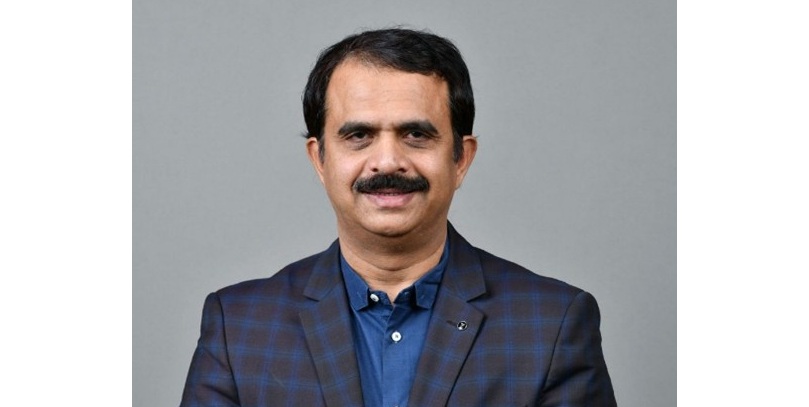
About the author:
Ajith Kumar is the COO at Birla Opus. He has 31 years of
rich leadership experience, having worked with Asian Paints for more than a decade;
he has also worked with ICI Paints (Akzo Nobel) for 16 years in various roles.
He is a technical expert with a deep understanding of paint manufacturing
operations.
Industry 4.0
smart manufacturing
industrial automation
robotics in manufacturing
digital manufacturing systems
manufacturing resilience
predictive maintenance
sustainable manufacturing
Ajith Kumar
Birla Opus Paints
Related Stories
Smart Manufacturing

Gautam Solar earns EcoVadis Silver Medal for sustainable manufacturing practices
Gautam Solar has received the EcoVadis Silver Medal with a score of 78/100, placing it among the Top 15 per cent of companies assessed for sustainability performance.
Read moreMachine Tools & Accessories

AMTEX 2026 and Fastener Fair India to Showcase Next-Gen Manufacturing Technologies
AMTEX 2026 and Fastener Fair India 2026 will bring together 650+ exhibitors and 4,000+ visitors at India Expo Mart, Greater Noida, showcasing advanced manufacturing and fastening solutions.
Read moreElectrical & Electronics
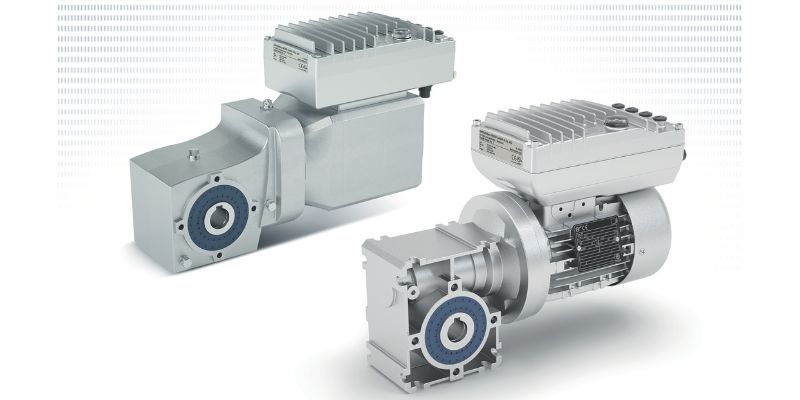
Nordac On Gains Expanded Functional Safety for Automation
Nord Drivesystems has expanded the Nordac On inverter with new safe motion functions for improved control and monitoring in automated production environments.
Read moreRelated Products
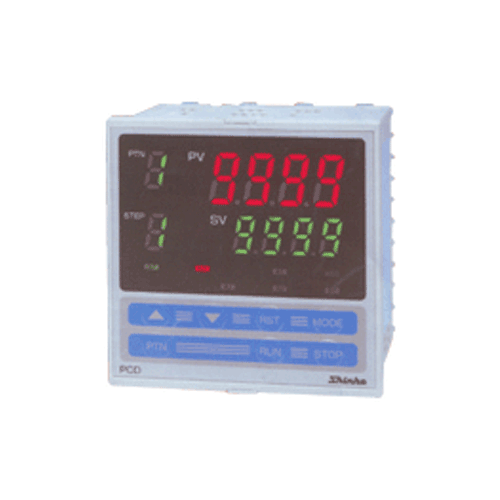
Programmable Controllers - Pcd-33a Series
CHEMICAL PROCESS, FOOD/PHARMA EQUIPMENT & ANALYTICAL INSTRUMENTS
Pro-Med Instruments (P) Ltd offers a wide range of programmable controllers - PCD-33A Series.

Gasket Graphite Powder
CHEMICAL PROCESS, FOOD/PHARMA EQUIPMENT & ANALYTICAL INSTRUMENTS
Arihant Packing & Gasket Company offers a wide range of gasket graphite powder.
Asahi Kasei expands 3D printing filament sales in North America
CHEMICAL PROCESS, FOOD/PHARMA EQUIPMENT & ANALYTICAL INSTRUMENTS
Asahi Kasei, a leading resin and compounding technology provider, has initiated the sales of 3D printing (3DP) filaments in North America through Asahi Kasei Plastics North America (APNA). The soft la Read more
latest News
Subscribe to iNoW

For Industry News on WhatsApp, Give a Miss Call on: +91 84228 74016