





Schedule a Call Back


End-of-Line Automation in an Era of Volatile Manufacturing Operations
 Articles
- Feb 03,26
Manufacturers face labour volatility, stricter compliance, and rising delivery expectations, making resilience as critical as efficiency. End-of-line automation is emerging as a strategic foundation for sustainable competitiveness, says Srinivas Choudhary, Director, Alligator Group.

Today's manufacturing leaders are dealing with a business setting
that has undergone a complete transformation compared to the situation a few
years ago. The historically steady state of labour availability, regulatory
supervision, and production capacity has been altered, making it necessary for
companies to re-evaluate their strategies. Structural labour shortages instead
of cyclical ones, difficult compliance requirements across different countries,
and increasing efficiency expectations along with customer demands for speedy,
precise, and trustworthy delivery are all contributing to the changing
landscape of the production industry. Thus, these factors are causing the
manufacturers to rethink their concepts of productivity, resilience, and
long-term competitiveness.
Within such a setting, operational excellence ceases to be isolated
improvements in efficiency efforts. Rather, it is influenced by the degree to
which an organisation is able to absorb and deal with volatility, all without
diminishing quality. There is possibly no benefit to operational excellence
that has been experienced as clearly as it has been in relation to end-of-line
processes.
Why the
end-of-line has become a strategic priority
The heart of today’s operational changeover is end-of-line, the
last stage of the operation, and surely the most undervalued in the past.
End-of-line was traditionally seen as a manual-intensive back-office process.
As a result, end-of-line processes were often optimised last, after other
operations had been addressed. That approach is no longer viable.
The end-of-line is now a critical point in the realisation of
production targets, converting into successful deliveries, compliant, and happy
customers. Inefficiencies, errors, or setbacks occurring in this final stage of
the plant may undermine the efforts made in other areas of the plant.
Manufacturing firms have now come to realise the importance of turnkey
end-of-line automation as a non-negotiable basic framework in order to maintain
a stable growth trajectory.
Labour volatility
and the potential for unstable operations
Volatility in the workforce has become one of the most
unpredictable and challenging issues that current manufacturers have found
themselves dealing with lately. The availability in the workforce keeps
fluctuating, the turnover is extremely high, and the level of the skills gap is
widening every day. At times, even when the workforce is available, the human
processes entail certain uncertainties that impact the output directly.
End-of-line processes are particularly exposed to these issues.
Activities like packing, labelling, inspecting, and organising are extremely
dependent on shift integrity and human accuracy. A single absence can lead to
undelivered orders, additional costs due to overtime, and impacted service
levels. The long-run implications create delivery reliability issues and
problems in building strong customer relationships.
It should be noted that, in this case, automation does not imply
creating unemployment. It implies having predictability and sustainability in
an environment that sees uncertainty of labour as the norm.
Manufacturers have the ability to achieve predictability
regardless of the uncertainties of labour.
Increasing
expectations of compliance and consequences of human error
In this context, besides manpower issues, there is an increase in
regulations and compliance concerns in food, beverages, pharmaceuticals,
chemicals, and consumer products. Regarding traceability, serial numbers, labelling,
and quality documentation, there is very little room for error. There is not
just an increase in compliance but even enhanced documentation regarding
end-to-end compliance.
As far as manual end-of-line operations are concerned, no matter
what type of training and supervision is being imparted, they are liable to be
plagued by problems of fatigue. Even minor issues such as inaccurate data,
missing batch information, or labelling errors can lead to recalls, regulatory
penalties, and reputational damage.
Turnkey end-of-line automation embeds regulatory compliance
directly into the production process through integrated vision systems,
automated verification, and real-time data capture. This ensures every unit
produced consistently meets defined regulatory standards. The benefit is not
only risk reduction but also assurance with regard to regulatory and customer
compliance.
Efficiency,
flexibility, and the need to deliver at scale
The expectations for efficiency have also undergone a major
change. The vendors are not judged on the basis of the quantities they produce
anymore, but on their capacity to perform reliably, on their quickness to react
to demand variations, and on their ability to cope with rising SKU complexity.
The SKU stands for stock-keeping unit.
The end-of-line frequently becomes the bottleneck under these
conditions. Manual systems struggle to scale efficiently or adapt to frequent
changeovers without sacrificing accuracy or uptime. As volumes increase and
product mixes diversify, throughput variability becomes a direct constraint on
growth.
Automated end-of-line solutions address this challenge by
combining robotics, intelligent controls, and modular system design. These
systems increase speed while maintaining precision and allow rapid adjustments
to changing requirements. More importantly, they enable manufacturers to align
throughput with real-world demand rather than being limited by manual capacity.
The limitations
of incremental automation
In response to these pressures, many organisations experiment with
incremental automation, adding individual machines or semi-automated stations.
While such measures may offer short-term relief, they often fail to deliver
sustainable results.
End-of-line processes are deeply interconnected. Inefficiencies or
mismatches in one area can quickly undermine performance across the entire
line, leading to downtime, manual rework, and data units. Fragmented upgrades
also increase integration complexity and maintenance overheads.
Turnkey end-of-line automation solutions also keep a holistic view
as if the end-of-line were a completely integrated system designed from the
ground up with synchronisation, scalability, and data integrity in mind. This
helps to minimise downtime and human intervention, as there’s seamless
integration of different operations like conveying, packing, inspection, and palletising.
It’s designed with scalability as an integral part of the system, which helps
manufacturers scale up lines or launch new product SKUs. This particular aspect
of data architecture helps them view operations in real-time with regard to
indices like efficiency and performance as if they were a single system.
Turnkey solutions also turn out to be more cost-effective as
opposed to piecemeal automation if volatile labor costs, an increased
likelihood of rework, downtime, and so on are also added to the cost of
operations.
How turnkey
end-of-line solutions generate an integrated value
Apart from the enhanced efficiency that turnkey end-of-line
automation solutions offer, it is their strategic benefit that extends beyond
the production department. By minimising the need to rely on human labour at
the most critical points in the production line, the company is better
insulated from the risks of disruptions in the labour force.
Consistent and automated processing guarantees equal quality
performance. Products are also processed in line with set norms, hence avoiding
divergences. However, data from end-of-line operations allows for more informed
decision-making. Trends in performance, bottlenecks, and forecasts are
essential in turning the end-of-line into a blind spot. The blind spot has been
a weakness in monitoring factory performance.
Efficiency
gains to strategic business impact
Turnkey automation is also applicable to overall sustainability
and safety strategies. Less waste material, fewer products to repair, and more
rationalised use of energy directly relate to sustainability. Reducing
repetitive and physically demanding tasks helps to promote a more secure
working environment and improve employee sustainability.
In the environment where ESG factors are becoming increasingly
important for the decisions and choices of investors and customers alike, these
advantages have implications that reach well beyond the factory floor.
End-of-line automation enables the manufacturer to integrate its execution with
its commitments in the area of corporate responsibility.
Addressing
common barriers to automation adoption
In spite of the many advantages, there is still hesitation in
adopting automation. These include the cost of investment, flexibility to
operate, and availability of internal expert knowledge. However, the often
underestimated cost of poor quality includes unpredictability in employee
behaviour, compliance failures, and reduced output.
Contemporary turnkey solutions are modular and scalable in nature
so that the manufacturer can invest in stages and derive results at each stage.
Flexibility is built in through software changeover solutions, robotics with
adaptability to accommodate frequent changes in products, and vision systems
that can smoothly adapt to product variations. Another benefit is that
experienced automation consultants assist in all aspects, right from design to
service life.
Making the
end-of-line an asset
The leading players are already reshaping the future character of
the end-of-line. The companies that have embraced turnkey automation have
reported benefits in terms of increased efficiency, reduced number of quality
deviations, increased delivery performance, and confidence in capacity utilisation.
More importantly, they have removed the constraints associated with the
end-of-line and made it a positive contributor to growth, compliance, and
customer trust.
Why automation
is now a strategic imperative
As manufacturing enters an era defined by volatility and speed, the
criteria for competitiveness are changing. Efficiency alone is no longer
enough. Predictability, compliance, flexibility, and resilience at scale have
become equally critical.
Turnkey end-of-line automation delivers on all these dimensions.
For today's industry leaders, the question is no longer whether automation
makes sense, but whether their operations can remain competitive without it. In
this evolving industrial landscape, end-of-line automation is not an upgrade
but a strategic foundation for the future.
About the author:
Srinivas Choudhary is the Director at Alligator Group, is a
visionary leader whose strategic insight and passion for engineering have been
central to transforming the organisation into a global force in automation. As
a co-founder and one of the organisation’s primary driving forces, he leads
critical functions including sales, HR, finance, and service, ensuring synergy
across teams and maintaining a strong operational backbone.
End-of-line automation
ESG
factory automation
smart manufacturing
Srinivas Choudhary
Alligator Automation
turnkey automation
labour volatility
Related Stories
Smart Manufacturing

Gautam Solar earns EcoVadis Silver Medal for sustainable manufacturing practices
Gautam Solar has received the EcoVadis Silver Medal with a score of 78/100, placing it among the Top 15 per cent of companies assessed for sustainability performance.
Read moreMachine Tools & Accessories

AMTEX 2026 and Fastener Fair India to Showcase Next-Gen Manufacturing Technologies
AMTEX 2026 and Fastener Fair India 2026 will bring together 650+ exhibitors and 4,000+ visitors at India Expo Mart, Greater Noida, showcasing advanced manufacturing and fastening solutions.
Read moreAutomation & Robotics
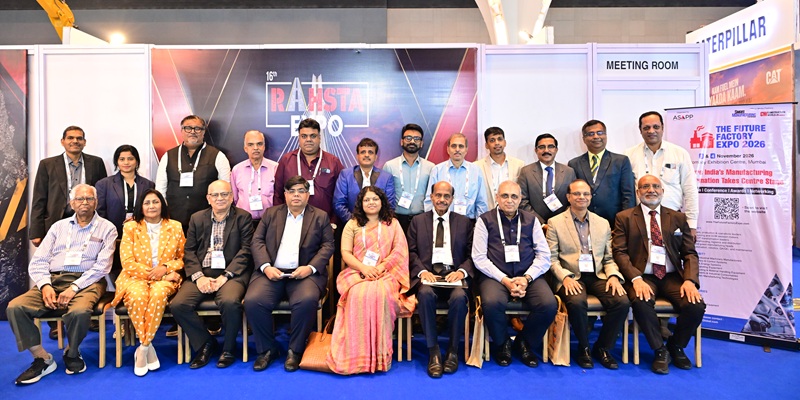
Future Factory Expo CXO Roundtable Charts Smart Transformation for SMEs
During the roundtable, hosted by Smart Manufacturing & Enterprises (SM&E) and The Future Factory Expo 2026, industry leaders outlined how SMEs can use practical digitisation, automation, skilling an..
Read moreRelated Products
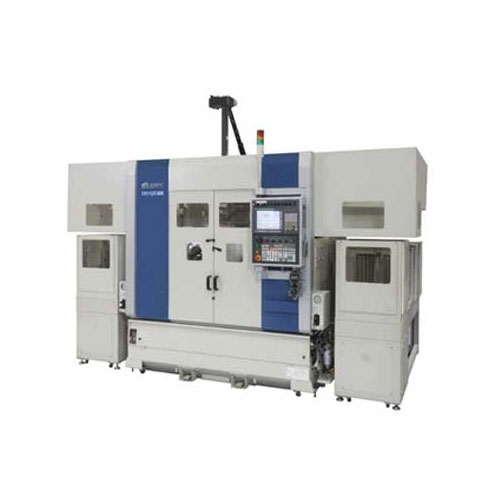
Compact Fmc - Motorum 3048tg With Fs2512
INDUSTRIAL AUTOMATION & TECHNOLOGY CONSULTANCY
Meiban Engineering Technologies Pvt Ltd offers a wide range of Compact FMC - Motorum 3048TG with FS2512.
Digital Colony Counter
INDUSTRIAL AUTOMATION & TECHNOLOGY CONSULTANCY
Rising Sun Enterprises supplies digital colony counter.

Robotic Welding SPM
INDUSTRIAL AUTOMATION & TECHNOLOGY CONSULTANCY
Primo Automation Systems Pvt. Ltd. manufactures, supplies and exports robotic welding SPM.
latest News
Subscribe to iNoW

For Industry News on WhatsApp, Give a Miss Call on: +91 84228 74016