








Schedule a Call Back


PPPA 2026: Automation takes centre stage in India’s process industry
 Articles
- May 11,26
India’s process industries are accelerating towards automation, AI and cyber security. Industry leaders at the ISA forum discussed smarter factories, skills gaps and India’s next growth phase.
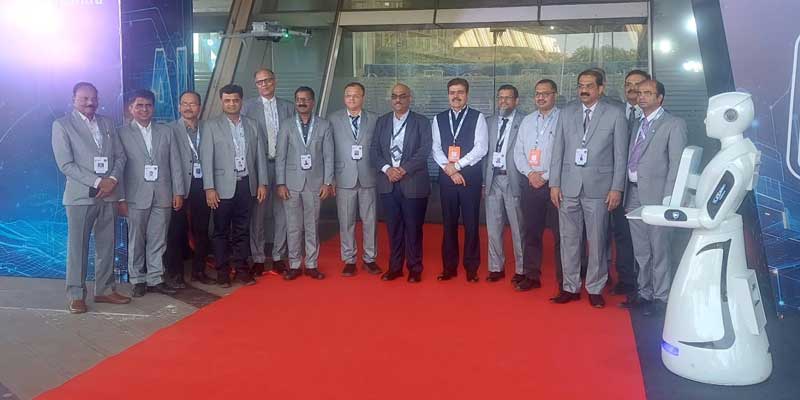
The Power Process Petroleum & Automation Meet (PPPA) 2026 technical conference-cum-exhibition brought together automation professionals, OEMs, end users, consultants and EPC companies to discuss new trends shaping the industry. Organised by the Maharashtra Section of ISA (International Society of Automation) on April 10–11, 2026, at CIDCO Exhibition & Convention Centre, Vashi, Navi Mumbai, the event focused on artificial intelligence (AI) in process automation, Operational Technology (OT) cyber security, functional safety, smart manufacturing and the growing need for skilled manpower.
The International Society of Automation (ISA) is a global non-profit organisation that develops standards, training and technical knowledge for the instrumentation and control industry. Its Maharashtra section, established in 1991, was the first ISA section in India. Since then, other sections have been formed in Pune, South India, Kolkata, Delhi and Gujarat.
The event also highlighted the importance of cross-industry collaboration. Power, petroleum, chemical and process industry professionals used the platform to exchange ideas, compare technologies and explore vendor collaborations. “ISA has more than 135 standards followed all over the world regarding automation and instrumentation devices and their documentation,” said Niranjan Bhise, Treasurer, ISA - Maharashtra Section. “ISA provides a platform where industry people can share challenges and professionals from across the globe respond with solutions based on their experience.”
According to Asif Mulla, President, ISA - Maharashtra Section, the Maharashtra section has steadily expanded its activities from smaller seminars to larger exhibitions and conferences. “Every year, we see progress. More and more people are coming to understand new trends in the automation industry,” he said.
Cyber security becomes critical
A major concern across the discussions was the growing importance of OT cyber security. Unlike IT cyber security, which mainly involves financial losses, OT cyber security directly affects process plants and can lead to serious safety incidents. “OT cyber security is specifically for process plants and is more stringent because if someone hacks a plant, they can change processes and even cause explosions, leading to casualties,” said Asif Mulla.
ISA’s work in cyber security standards has therefore become increasingly relevant as plants become more connected and automated. Dr Upendra Joshi, former President, ISA - Maharashtra Section, said the process industry has moved significantly in the past five years. “Five years ago, SIL was not mandatory. Now, the SIL study, the HAZOP report, and SIL validation and verification are mandatory,” he said.
He added that IEC 62443, the cyber security standard developed by IEC and ISA together, is now becoming central to industry compliance. “Five years ago, the focus was functional safety management. Now, it has become cyber security. In the next five years, it will be AI and smart manufacturing,” he said.
However, Dr Joshi believes India is still in an early phase of cyber security adoption. “I would say India is in the adolescent stage now. We have started implementing cyber security. Many companies are still not detecting this threat because they are small or medium in size,” he said.
Automation as the next growth driver
Speakers agreed that automation is no longer optional for Indian industry. As demand grows, manufacturers are moving away from older manual systems and adopting robotics, communication systems, AI and automated plants. “Manufacturing has greatly improved and become highly automated in many industries,” said Niranjan Bhise. “Automation has improved product quality to international standards, helping companies market products not only within India but globally.”
The discussion also underlined that automation is not meant to replace manpower, but to shift workers towards higher-value roles. “Automation will not take away jobs. It will shift people towards more complex roles where creativity is needed. Automation removes monotonous jobs,” said Asif Mulla.
Dr Joshi echoed this view, comparing the rise of automation with the introduction of computers. “In 1983, when computers were introduced, people feared jobs would be lost. But jobs were created, and computers became an industry,” he said. “Similarly, the automation industry will grow further when machine learning, cyber security and AI come into the picture.”
Pharma automation gains momentum
The pharmaceutical industry was presented as one of the strongest growth areas for automation. Sandeep Rathi, Founder & CEO, Sierra Instrumentation and Controls, said Indian pharma companies have deep chemistry expertise but many still operate with limited automation. “Post-Covid, the demand for pharmaceutical medicines has skyrocketed three times. Now it is very difficult for them to manage manually. Over the next five years, pharmaceutical companies are going to benefit by leaps and bounds whenever they decide to invest in automation and make their plants more US-FDA compliant,” he added.
Sierra Instrumentation and Controls provides pharma automation solutions from design engineering, detail engineering, panel manufacturing, logic writing and SCADA graphics to loop checks, installation, commissioning, IT systems and control system validation. “We are one company in India with a pharmaceutical platform from design till commissioning, till validation. We have delivered more than 500 projects which are US-FDA audited, with zero observations,” he further added.
He also pointed to remote digitisation, cloud-based systems and mobile-enabled DCS access as future trends. “Earlier, people were operating only from DCS control rooms. Now we are extending DCS systems into the field using mobility devices,” Rathi said.
MSMEs and phased automation
A key issue discussed was the adoption of automation among MSMEs. While smaller companies often worry about high upfront costs and lack of knowledge, speakers said automation can improve quality, increase output and optimise manpower. “MSMEs operate on a smaller scale. Looking at manpower requirements and costs, they are using AI to reduce manufacturing costs,” said Niranjan Bhise.
In pharma, Sandeep Rathi explained, “Training is essential to help smaller companies adopt automation. Sierra strongly believes in training people. When I take interviews, I do not look at degrees. I look at whether the person is ready to work with his hands. Customer training is also part of large contracts. Unless we do this together, the country and the pharma industry cannot move ahead rapidly.”
Skill shortage remains a concern
Despite automation’s growth, speakers repeatedly warned that India faces a serious shortage of trained professionals in core engineering disciplines. “Skilled labour is required across many trades. But today, more skilled people are going into software compared to mechanical, electrical, instrumentation or civil sectors,” said Asif Mulla.
He added that parents often prefer software careers because they appear more comfortable and offer work-from-home options. This has created an imbalance in core engineering fields.
Dr Joshi said automation itself is also suffering from lack of manpower. “Colleges of instrumentation are getting closed. Every parent wants their child to enter IT, AI or another field,” he said.
He stressed that automation offers both hardware and software exposure. “It is right from the field, cables and junction boxes to the control room, controllers, programming, fibre optic networking, AI, cyber security and functional safety,” said Dr Upendra Joshi.
Niranjan Bhise added that if core industries do not survive, IT itself cannot survive. “Courses like mechanical, electrical, civil, electronics and instrumentation must continue so industries can get trained professionals,” he said.
The road ahead
Another recurring concern was India’s dependence on foreign technology. Speakers said that while manufacturing is shifting to India due to lower costs, the technical know-how still largely remains abroad. “We are almost 90 per cent dependent on principals where the technology is being developed. Manufacturing is shifting to India because of low cost, low labour cost and low land cost. But the technical know-how still remains abroad,” said Dr Upendra Joshi.
According to him, India must move beyond application engineering and contract manufacturing. “The instrumentation and automation industry should move towards that goal where India becomes a pioneer or leader in the world, and technology is given by India to the world,” he said.
Asif Mulla also called for greater investment in innovation. “If India wants to become a global leader, automation companies must come together, invest more in research, allocate resources, and develop products based on industry requirements,” he advised.
Across the three conversations, the message was clear: India’s process and manufacturing industries are entering a new phase where automation, cyber security, AI, compliance and skilled manpower will define competitiveness. Covid, global disruptions and rising demand have accelerated digital adoption. At the same time, companies must address cyber risks, develop local technologies and train the next generation of engineers.
As India strengthens its position as a manufacturing hub, the automation industry has a major role to play in improving safety, quality, productivity and global competitiveness. The future, as the speakers agreed, will not be about replacing people, but about preparing people and industries for smarter, safer and more resilient operations.
(With inputs from Ashlin Rajan)
Automation
Industrial Automation
Process Industry
Smart Manufacturing
Artificial Intelligence
Cyber Security
Make in India
Process Automation
Instrumentation
ISA
International Society of Automation
Niranjan Bhise
Asif Mulla
Dr Upendra Joshi
Sandeep Rathi
Sierra Instrumentation and Controls
Related Stories
Auto & Auto Components

Godrej Tooling strengthens local manufacturing for next-gen mobility
Godrej Enterprises expands advanced tooling capabilities to support localisation and next-generation automotive manufacturing.
Read moreAerospace Defence

Tembo Global JV to begin UAV component production within 90 days
JR UAV Limited will start manufacturing specialised UAV components at Tembo Global’s Kashidkopar facility within 90 days, targeting at least Rs 1 billion in first-year revenue.
Read moreMachine Tools & Accessories

Walter to unveil new Helitronic and Helicheck at AMB and IMTS 2026
Walter will unveil new Helitronic and Helicheck machines at AMB and IMTS 2026, alongside solutions in grinding, measurement, EDM, software and automation.
Read moreRelated Products
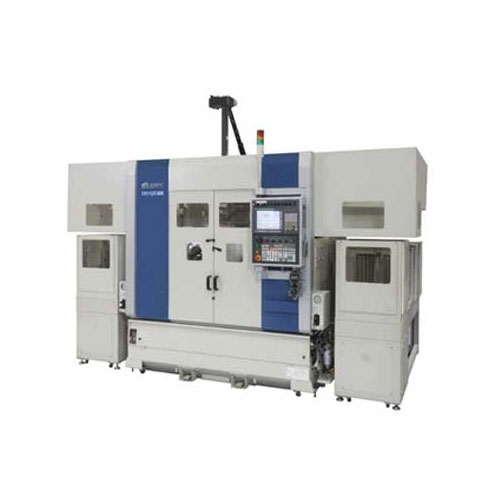
Compact Fmc - Motorum 3048tg With Fs2512
INDUSTRIAL AUTOMATION & TECHNOLOGY CONSULTANCY
Meiban Engineering Technologies Pvt Ltd offers a wide range of Compact FMC - Motorum 3048TG with FS2512.
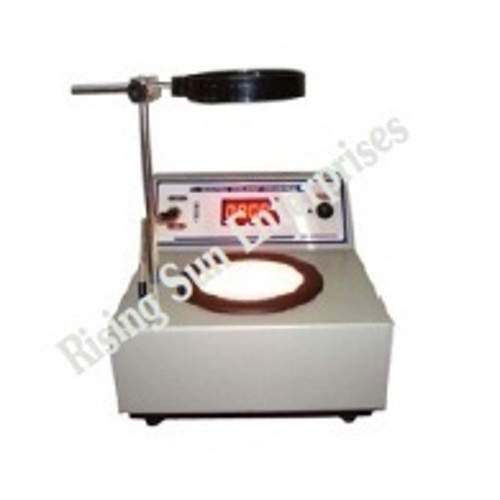
Digital Colony Counter
INDUSTRIAL AUTOMATION & TECHNOLOGY CONSULTANCY
Rising Sun Enterprises supplies digital colony counter.

Robotic Welding SPM
INDUSTRIAL AUTOMATION & TECHNOLOGY CONSULTANCY
Primo Automation Systems Pvt. Ltd. manufactures, supplies and exports robotic welding SPM.
latest News
Subscribe to iNoW

For Industry News on WhatsApp, Give a Miss Call on: +91 84228 74016