






Schedule a Call Back


Improving Manufacturing Efficiency with the Right Flow
 Articles
- May 11,26
Often, the gap between documented processes and actual workflow leads to significant inefficiencies, with non-value-added time eroding competitiveness despite well-defined systems. In this month's column, Zurvan Marolia explores the criticality of “The Flow” in building competitiveness.

During an annual conference on my earlier assignment, while addressing the team, I made a statement which went:
“Customers will pay for the products they get
They will not pay for the processes we set”
We often fall into the trap of being lulled into a false sense of wellbeing of account of having well defined processes. If we are to question the team about their workflow, which happens during ISO audits, we get confident and rehearsed responses describing the process steps, systems, responsibility matrices. Cloud drives are opened to share numbered and cross-referenced process documents and flowcharts neatly stored for easy retrieval.
Let’s pause here for a moment and ask, “is this what the customer pays for?”
Are we call confusing the “means” for the “ends”?
This gap — between documented process and actual flow — is where a significant portion of operational inefficiency hides.
Viewing the above purely from an operations point of view, let us consider any product we manufacture in our factory and ask the following questions:
- How much is the time lapse from the moment the raw material is picked up for the first process to the time at which the product is ready for delivery?
- How much is the actual “value-add” time when the product (its components) are being worked on / being processed (largely the sum of the cycle time of all the processes)
The difference between the two above is the non-value-added time and cost. This is the cost that, given an alternative, a customer will not bear. The larger the gap, the less competitive we are in the eyes of the customer.
Impact of clunky flow across the shopfloor
Common causes for this difference stand out if we observe the movement of a batch as it makes its way across the shopfloor. We observe instances where:
- Materials wait
- Materials get looped back
- Material gets inspected (yes, inspection too is a non-value-add cost which we will deal with in future articles)
- Materials get reworked
- Materials get re-inspected
The list is by no means exhaustive but serves as an eye-opener.
When mapped end-to-end, the actual “work time” is found to be less than 20 per cent of total lead time. The balance time is not just inefficiency, it is opportunity for improved competitiveness.
Typically, organisations tend to optimise individual activities but miss out on seeing the system as a whole (More on this in “The Hidden Cost of Efficiency” article published in the April 2026 edition of Smart Manufacturing & Enterprises).
The root cause of elements of the workflow remaining hidden stems from the fragmented approach with which performance gets evaluated. It is a classic reflection of the accepted fact that “what gets measured gets performed”. We rarely question the total time taken to execute an order as compared to the actual time of value addition. On the other hand, we monitor the speed with which the value addition is done, without a measure of the time lapse between processes as well as the often resultant “over production”.
The result is that the prevalent way of working is accepted as the norm. While departments and functions strive to out-do each other to create pockets of excellence, the performance of the overall system is found wanting.
In a competitive scenario, the customer is spoilt for choice. The customer expects to pay for the product and not for the inefficiencies built into the system by way of processes which inflate the cost (and thereby the price) without adding value.
Value stream mapping: Making the invisible visible
This is where Value Stream Mapping comes into play. It is a tool which facilitates the steps in the flow of materials and information required to execute a customer’s order. It maps every step irrespective of value-added or otherwise and provides visibility to identify the opportunities to do one of the following to the non-value-added steps:
- Eliminate it (first preference)
- Minimise it
- Automate it (if the process is unavoidable e.g. – material movement)
The mapping process must be done diligently (ideally with video recording over extended periods) in order to document the process “as is” and how it is “intended to be”.
The documentation of the recording must be done with granularity of as little as 5 seconds with a view to making the invisible visible. Once documented, it will begin to show areas such as (and not limited to):
- How many steps does the operator have to walk to retrieve parts?
- How often and for how much time does the process stand idle while the operator goes looking for parts?
- In a two-operator process, how often and for how much time is one operator idle while the other is engaged? – Is there an opportunity to reallocate the work and reduce the overall cycle time?
- Are the work-centers ergonomically friendly or do they cause fatigue (which impacts cycle time and potentially quality)?
Let us consider one of the most common and easily relatable example to illustrate the point – consider a set-up change or a die and punch changeover on a press. This process typically runs into close to an hour when we measure the time between
- the stoppage of the machine after the last part of the preceding batch, and
- the first piece of correct quality of the new batch

Common observations are:
- There is a time loss as the operator stops the machine and goes in search of the punches and dies to be loaded.
- There is time lost in locating the appropriate hand tools.
- The tool to be loaded may not be ready and may need some attention prior to loading
- The dies and punches unloaded from the preceding set-up need to be put aside in the appropriate location
- The newly loaded dies and punches need to be loaded and adjusted for correct alignment and engagement
- The first piece of with new set-up is processed and inspected – this leads to an iterative process of bend and check before getting the set-up done as per drawing
- A final tightening of the fasteners and the press is ready
An analysis of the above simplistic example, done with the recommended granularity will yield a classification of the steps into “on-line processes” and “off-line” processes.
The aim is to do all the preparatory work (the “off-line” processes) before the machine is stopped, and to complete the “on-line” or value-added processes within the minimum time (ideally within <10 min).
The process flow study using Value Stream Mapping makes this possible.
A similar exercise on a production flow process will yield large(r) savings as the time saved though smaller will be in multiples.
The next question which would have crossed your mind would be “where do we begin?”. That brings us to the subject of Prioritization which we will address in the next article.
To bring the curtains down on this segment, a quote which sums up the essence of what we have just discussed.
“Perfection is achieved, not when there is nothing more to add, but when there is nothing left to take away.”
– Antoine de Saint Exupery
About the author:
Zurvan Marolia is the former Senior Vice President of Godrej & Boyce Mfg. Co. Ltd, part of Godrej Enterprises Group. He is a former member of the National Manufacturing Council of the Confederation of Indian Industry (CII), and a former Chair of the Manufacturing Council of Godrej & Boyce. Marolia is now a freelance consultant and can be reached at zurvan@takttime.com.
Zurvan Marolia
Godrej & Boyce
Godrej Enterprises Group
Takt Time
Operational optimisation
manufacturing efficiency
value stream mapping
shopfloor productivity
industrial competitiveness
lead time reduction
non-value-added activities
process flow improvement
Related Stories
Smart Manufacturing

Operational Optimisation: Standardisation – The Invisible Engine of Scale
As we put our efforts into optimising our operations, our focus is on improving the efficiency with which we process the components required to produce the final products that leave our factory. In ..
Read moreSmart Manufacturing

Operational Optimisation: Making Improvements That Matter
Optimising shopfloor operations requires finding the sweet spot where every improvement and investment reflects in the output and hence the bottom line of the business. In this month's column, Zurva..
Read moreMaterial Handling Equipment
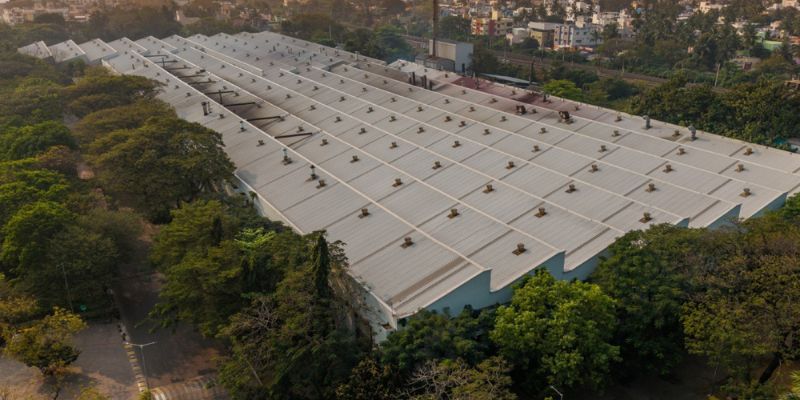
Godrej Storage Solutions Marks 25 years of Chennai facility
Godrej Enterprises Group’s Storage Solutions business marks 25 years of its Chennai facility, with continued investments in automation and warehousing infrastructure.
Read moreRelated Products

Fanless Industrial Pc for Smart Manufacturing
Smart Manufacturing
CONTEC Launches BX-M4600 Series - Fanless Industrial PC for Smart Manufacturing.
latest News
Subscribe to iNoW

For Industry News on WhatsApp, Give a Miss Call on: +91 84228 74016