





Schedule a Call Back


India’s EV Opportunity Moves Beyond the Showroom
 Articles
- Jul 28,26
With EV sales rising and component demand set to multiply, India’s next mobility phase will depend on localisation, technology ownership, policy execution and the strength of domestic manufacturing.
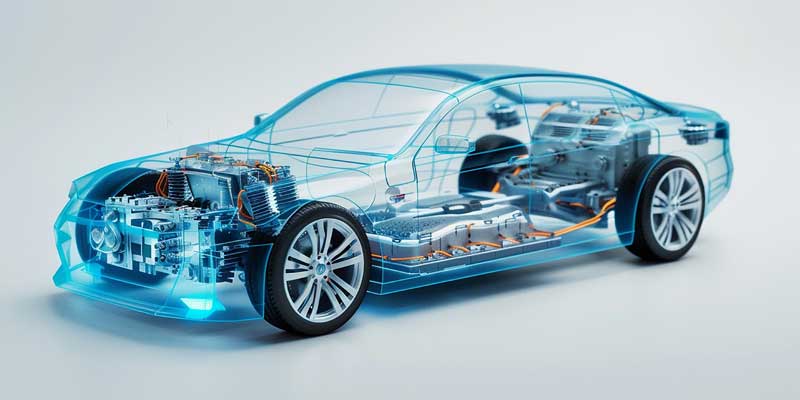
India’s electric vehicle story is entering a phase in which vehicle sales alone will no longer provide the complete measure of progress. The more consequential test will be whether the country can build the batteries, motors, power electronics and control systems needed to support electrification at scale.
The India Electric Vehicle & Components Market Overview Report places domestic component manufacturing at the centre of India’s cost competitiveness, supply-chain resilience and technology self-sufficiency ambitions. The study covers electric two-wheelers, three-wheelers, four-wheelers, buses and trucks, as well as major powertrain categories including battery packs, battery management systems, traction motors, inverters and DC-DC converters.
India’s EV market shifts gears
India sold approximately 2.6 million electric vehicles in 2025, up from 2 million units in 2024, representing growth of about 26 per cent. Electric vehicles accounted for around 9.5 per cent of total vehicle sales during the year, compared with 8.1 per cent in 2024.
Electric two- and three-wheelers together accounted for more than 90 per cent of EV sales in 2025, confirming that electrification remains concentrated in smaller and commercially intensive vehicle formats. Electric cars, buses and trucks formed a much smaller, though expanding, share.
This gives India a distinctive electrification profile. The country ranked second globally in electric two-wheeler sales, with approximately 1.5 million units, but electric four-wheeler penetration remained at only 4.4 per cent, against the global average of 25 per cent. Even so, India’s overall EV sales grew faster than the global market in 2025.
According to the reports, the annual EV sales could increase from 2.6 million units in 2025 to 17.2 million units by 2032, representing a compound annual growth rate of 31 per cent. Under its higher-growth National EV Target scenario, annual sales could reach 30.4 million units, with a CAGR of 42 per cent.
Components take centre stage
The expansion in vehicle volumes is creating a much larger opportunity for EV powertrain systems. India’s EV components market was valued at Rs 410 billion in 2025 and is projected to expand at a CAGR of about 38 per cent through 2032. The market could reach approximately Rs 3.55 trillion by the end of the period.
Battery packs represented more than half of the component market in 2025, reflecting their significant influence on vehicle cost, range and performance. Traction motors formed the next-largest category, while inverters, battery management systems and DC-DC converters made up the remaining market. Motors and power electronics should gain importance as EV volumes increase.
Battery demand is also rising faster than vehicle sales because of larger average pack sizes. Customized Energy Solutions estimates that demand increased from 13 GWh in 2024 to approximately 19 GWh in 2025. It could reach 229 GWh by 2032 under the business-as-usual scenario and 362 GWh under the National EV Target scenario.
Four-wheelers already consumed the largest share of EV batteries in 2025 despite accounting for less than 8 per cent of unit sales. Electric buses showed a similar pattern: limited vehicle volumes but a disproportionately larger battery requirement because of their pack sizes.
At a glance
- Rs 410 billion: EV components market in 2025
- 38 per cent: Projected CAGR through 2032
- 2.6 million: EV sales in 2025
- 52 per cent: Battery-pack share
- 19 GWh: Battery demand in 2025
- 10–20 per cent: Pack localisation in 2025
Demand rises, localisation lags
The scale of the opportunity does not yet reflect the depth of domestic manufacturing. Localisation stood at only 10–20 per cent for battery packs, 22 per cent for inverters, 25 per cent for DC-DC converters, 28 per cent for battery management systems and 35 per cent for traction motors in 2025.
Battery cells, power semiconductors and rare-earth-based components remain heavily import-dependent. While battery management systems benefit from India’s software capabilities, hardware localisation continues to lag. Inverter supply chains are also described as heavily reliant on imports.
This gap has direct commercial consequences. Batteries and power electronics together account for approximately 50–60 per cent of total EV cost, making domestic capability important not merely for import substitution but also for pricing control, margins, supply continuity and technology development.
The domestic companies such as Bharat Forge, Bosch India, Uno Minda and Tata AutoComp are expanding into EV subsystems. However, it also observes that manufacturing scale and technology depth remain uneven.
This growth will not benefit every supplier equally. Domestic companies that invest in R&D, manufacturing capability and resilient supply chains are likely to capture a larger share of the opportunity. Players building early strength in power electronics and drivetrain integration will be better placed as demand accelerates towards 2032.
Policy push, uneven outcomes
While policy support has helped stimulate EV production, the benefits have not flowed evenly across the value chain.
Policy remains one of the strongest drivers of India’s EV market. The study identifies PM E-DRIVE, state-level incentives, the Auto PLI scheme, phased manufacturing measures, electronics and semiconductor support, and manufacturing-oriented policies among the principal enablers through 2032.
Yet the distribution of incentives reveals an imbalance. Cumulative disbursement under the Auto PLI scheme reached Rs 23.22 billion by FY 2025–26. However, nearly 99.9 per cent went to five vehicle manufacturers, leaving component producers with a negligible share.
Investment under the scheme had reached Rs 356.57 billion against a target of Rs 425 billion by December 31, 2025. The scheme had also supported 1.361 million incentivised EVs across segments. State policies are adding another layer of support through subsidies, tax waivers, manufacturing clusters and regulatory mandates.
Manufacturing will define the next phase
India’s EV outlook remains constrained by affordability, charging accessibility, critical-mineral dependence and gaps in incentive support. Some of these restraints to ease over time, but supply dependence remain a continuing concern.
The next phase will therefore be decided by more than the number of electric vehicles registered. Battery-cost reductions, charging infrastructure, execution of PM E-DRIVE and PLI commitments, and reduced dependence on imported minerals and technologies will determine whether rising demand creates a genuinely domestic industrial ecosystem.
India already has scale in electric two- and three-wheelers and a widening pipeline in passenger vehicles, buses and trucks. Turning that demand into durable manufacturing value will require component companies, OEMs and policymakers to close the gap between vehicle assembly and ownership of the technologies inside the vehicle.
electric vehicles India
EV components
battery manufacturing
electric mobility
EV localisation
automotive supply chain
traction motors
power electronics
charging infrastructure
EV policy India
Ashlin Rajan
Related Stories
Auto & Auto Components
India’s EV Opportunity Moves Beyond the Showroom
With EV sales rising and component demand set to multiply, India’s next mobility phase will depend on localisation, technology ownership, policy execution and the strength of domestic manufacturin..
Read moreSmart Manufacturing
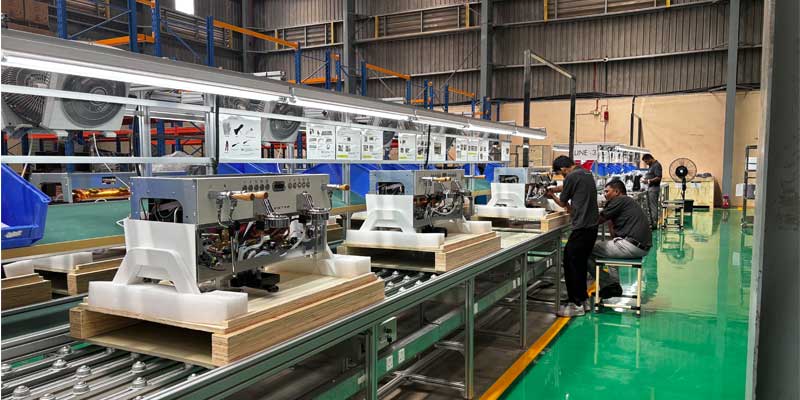
How Trufrost & Butler Is Building India’s Foodservice Equipment Base
A flexible factory, a localisation roadmap and an export ambition define Trufrost & Butler’s manufacturing bet, writes Ashlin Rajan.
Read moreAutomation & Robotics
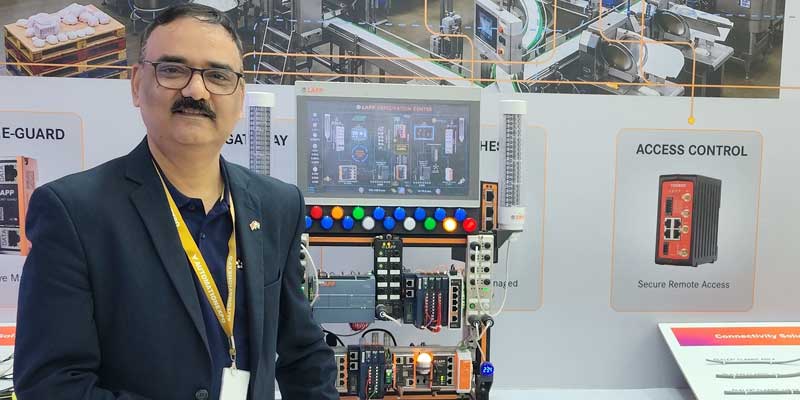
LAPP is aiding Industry 4.0 with connectivity solutions: Uphar Srivastava
In this interview with Rakesh Rao, Uphar Srivastava, VP, LAPP India, discusses Industry 4.0 trends, market opportunities, and the company’s growth strategy in India.
Read moreRelated Products

Automotive Oil Pump
AUTO COMPONENTS & ACCESSORIES
Kalpak Auto Pvt Ltd offers a wide range of
automotive oil pump.
Tata Motors unveils facilities for development of Hydrogen propulsion tech
AUTO COMPONENTS & ACCESSORIES
Tata Motors, India?s largest automobile company, unveiled two state-of-the-art & new-age R&D facilities for meeting its mission of offering sustainable mobility solutions. The unveilings constitute of Read more
Tata Motors plans petrol powertrain for Harrier and Safari SUVs
AUTO COMPONENTS & ACCESSORIES
Tata Motors is in the process of developing a new petrol powertrain for its premium sports utility vehicles, the Harrier and Safari, as confirmed by a senior company official. Currently, these models Read more
latest News
Subscribe to iNoW

For Industry News on WhatsApp, Give a Miss Call on: +91 84228 74016