







Schedule a Call Back


DCM Shriram Chemicals’ Jhagadia Site: A Lighthouse of Smart Manufacturing
 Articles
- Jul 28,26
DCM Shriram Chemicals’ Jhagadia site, recognised by the World Economic Forum’s Global Lighthouse Network with Distinction in Productivity, showcases how Industry 4.0 is transforming chemical manufacturing through digital intelligence, operational excellence and human capability, writes Rakesh Rao.
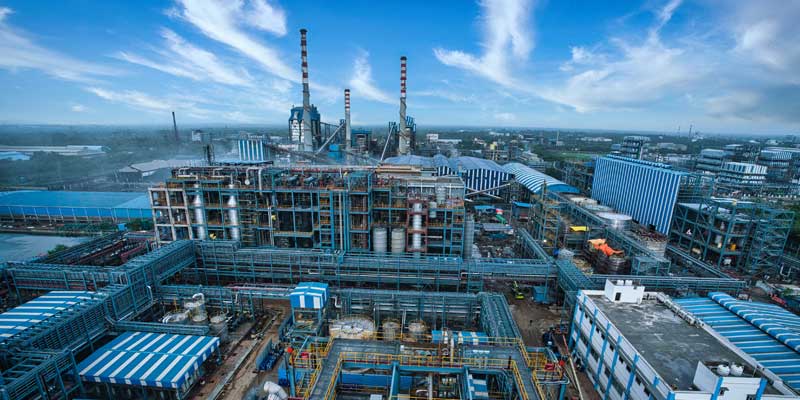
India’s chemical manufacturing sector is entering a decisive phase in which scale alone is no longer enough to create a sustainable competitive advantage. Manufacturers must now combine production capacity with digital intelligence, energy efficiency, process integration, safety and workforce capability. DCM Shriram Chemicals’ manufacturing complex at Jhagadia, Gujarat, represents this evolving model of industrial excellence.
DCM Shriram Chemicals is part of DCM Shriram Ltd, a diversified Indian conglomerate with a group turnover of Rs 142.64 billion. The company is among India’s largest chlor-alkali manufacturers with an annual capacity of one million metric tonnes and operates major manufacturing facilities at Jhagadia in Bharuch, Gujarat, and Kota, Rajasthan.
The company’s product portfolio extends beyond basic chlor-alkali products and includes hydrochloric acid, hydrogen, sodium hypochlorite, aluminium chloride, stable bleaching powder, epichlorohydrin, refined glycerine and hydrogen peroxide. These products cater to industries such as textiles, pharmaceuticals, water treatment, pulp and paper, agrochemicals and other process industries.
Established in 1996, the Jhagadia site is India’s largest single-location chlor-alkali facility. The plant has an installed caustic soda capacity of 2,225 tonnes per day across 26 electrolysers and four production lines. “The site brings together large-scale chlor-alkali manufacturing, captive utilities, renewable-energy and downstream chemicals, allowing an integrated ecosystem from co-products from one process to become inputs for another,” says Sabaleel Nandy, Executive Director & CEO, DCM Shriram Chemicals.
Located within Jhagadia GIDC, the facility benefits from its proximity to industrial customers and provides an efficient supply base for chemical industries. Over the years, the site has become a strategic anchor for DCM Shriram Chemicals’ basic chemicals business while supporting the company’s transition towards advanced materials and value-added chemical solutions.
Expanding product capabilities
The Jhagadia facility is built around chlor-alkali manufacturing, with caustic soda as its primary product, produced in both lye and flake forms. Alongside caustic soda, the site produces chlorine and associated co-products such as hydrochloric acid, hydrogen and sodium hypochlorite.
The facility has also developed downstream capabilities to improve resource utilisation and enhance value creation. These include manufacturing anhydrous aluminium chloride, epichlorohydrin and hydrogen peroxide.
“The site also manufactures value-added derivatives that use these streams more productively. This integration is important because it reduces dependence on selling every co-product in its basic form and allows the complex to serve a wider set of end-use industries,” says Nandy.
The Bharuch-Jhagadia facility currently operates with a caustic soda capacity of 2,225 tonnes per day and 26 electrolysers across four production lines. It also has an anhydrous aluminium chloride capacity of 50,000 tonnes per annum, peak hydrogen production capacity of 6.23 lakh normal cubic metres per day, a 50,000-tonne-per-annum epichlorohydrin facility and a 52,500-tonne-per-annum hydrogen peroxide plant.
A 100,000-tonne-per-annum refined glycerine plant commissioned in 2025 further strengthened backward integration with the epichlorohydrin business. “Together, these assets make Jhagadia an integrated chemicals complex in which scale, downstream conversion and resource efficiency strengthen the overall sustenance and profitability,” Nandy adds.
Strength through integration
For a large-scale chemical manufacturing facility, operational competitiveness depends on more than production capacity. Jhagadia’s strengths come from its scale, customer connectivity, integrated processes and technology-enabled operations.
According to Nandy, one of the site’s key advantages is its extensive pipeline infrastructure. “DCM Shriram Chemicals at Jhagadia also operates one of the largest chlor-alkali pipeline networks comprising 20 pipeline customers who are dependent on this site for a reliable and steady supply of products such as chlorine, hydrogen, steam, hydrochloric acid and caustic lye through a pipeline network that extends over 35 kilometres.”
This direct supply model enables long-term relationships with customers while improving logistics efficiency and reliability. Another major advantage is process integration. Chlor-alkali manufacturing generates multiple streams that can be converted into higher-value products. Chlorine, hydrogen and other co-products are utilised for downstream manufacturing of aluminium chloride, hydrogen peroxide and epichlorohydrin.
“The second strength is process integration. Chlor-alkali production generates chlorine, hydrogen and other streams that can be directed into products such as aluminium chloride, hydrogen peroxide and epichlorohydrin. This improves resource utilisation, broadens the product mix and reduces exposure to the economics of a single commodity,” says Nandy.
A digital lighthouse in chemicals
In an industry where scale, energy efficiency, safety and process reliability define competitiveness, DCM Shriram Chemicals’ Jhagadia manufacturing site has emerged as a benchmark for smart manufacturing. The Gujarat-based facility was recently recognised by the World Economic Forum’s Global Lighthouse Network with Distinction in Productivity, marking a significant milestone in the company’s digital transformation journey.
The recognition places Jhagadia among the world’s leading manufacturing facilities that have successfully adopted advanced digital technologies to drive measurable improvements in productivity, sustainability and operational excellence. It is also the first chlor-alkali site globally to be selected for the World Economic Forum’s Global Lighthouse Network.
Speaking about this achievement, Nandy says, “The World Economic Forum ‘Lighthouse’ recognition is a major milestone for the Chemicals Business. The Global Lighthouse Network recognises industrial sites that have demonstrated and adopted novel digital technologies across their processes in their journey towards Industry 4.0.”
The recognition is a result of Project BLESSED—Becoming a Lighthouse through Exemplary Safety Systems & Excellence in Digitalization—which was launched in July 2024 to accelerate digital adoption across the Jhagadia facility. Through 45 advanced digital and analytics solutions, including AI-enabled process control and a GenAI-enabled maintenance manager, the site has achieved significant operational improvements. The transformation has delivered measurable business outcomes, including an 11-percentage-point improvement in EBITDA, a 32 per cent reduction in power costs, a 15 per cent reduction in material costs and a 14 per cent reduction in carbon dioxide emissions.
“The core element of our digital interventions are focused on productivity improvement in cost and quality through technology-enabled transformation, including asset utilisation, workforce enablement and resource management,” explains Nandy.
Technology powering transformation
The foundation of Jhagadia’s smart factory journey has been the deployment of 45 digital and analytics solutions under Project BLESSED. These solutions were developed as an integrated operating system rather than isolated technology pilots. Among the most impactful interventions are AI-enabled process control and the GenAI-enabled maintenance manager.
“AI-enabled process control helps teams analyse multiple operating variables together, identify deviations earlier and support more stable decisions in an energy-intensive continuous process,” explains Nandy.
The objective of these systems is not to replace human expertise but to enhance decision-making by providing operators with faster and deeper insights into process conditions, energy consumption, product quality and cost performance.
The GenAI-enabled maintenance manager addresses another important challenge in manufacturing—making operational knowledge easily accessible. The system helps teams retrieve information, analyse equipment history and identify appropriate actions without manually searching through multiple records. “The GenAI-enabled maintenance manager converts dispersed maintenance knowledge into practical support for frontline teams,” says Nandy.
Beyond these technologies, the digital ecosystem supports automation, analytics, performance monitoring and standardised workflows across operations. By embedding digital tools into daily processes, teams can focus more on problem-solving and continuous improvement.
Enabling people and productivity
While technology has been central to Jhagadia’s transformation, the biggest shift has been in the way employees make decisions. “What changed first was not the equipment, but the way decisions were made,” says Nandy.
In a continuous-process plant, even minor deviations can impact energy consumption, raw material usage and output quality. Digital systems have enabled teams to identify these changes earlier and take corrective actions faster.
Initiatives such as the production mix optimiser and fuel mix optimiser provide operating and supply chain teams with real-time optimisation capabilities based on market demand, yield, cost and efficiency. Nandy explains, “Operators now have a more immediate view of process behaviour, while maintenance teams can draw on equipment history and plant knowledge without spending time searching through multiple records.”
The transformation has also changed workforce roles by reducing time spent on routine monitoring and data compilation. Engineers and operators can now focus more on judgement-based decisions, troubleshooting and improvement initiatives. “Technology delivers value only when people trust it and use it consistently,” says Nandy.
Sustainability through smarter operations
For an energy-intensive sector like chlor-alkali manufacturing, sustainability and operational efficiency are closely linked. Electricity is one of the largest operating inputs, making energy optimisation a critical priority. “At Jhagadia, the effort has focused on making the process more stable, reducing avoidable losses and using every major input more carefully,” says Nandy.
Digital monitoring systems have helped teams understand energy consumption patterns and identify inefficient operating conditions earlier. These interventions have contributed to a 32 per cent reduction in power costs, while improved process control and material management have reduced material costs by 15 per cent. Carbon emissions have also declined by 14 per cent.
The site’s sustainability approach extends beyond energy optimisation. Process integration allows chlorine, hydrogen and other streams to be utilised effectively in downstream products, improving resource productivity.
Guided by DCM Shriram Group’s Sustainability Pledge, the company is also expanding renewable energy adoption. A recent partnership with Serentica Renewables for an additional 58 MW of renewable power has taken the total renewable footprint to 176.4 MW. “The aim is not to pursue isolated green projects. It is to build a manufacturing system that consumes less, wastes less and remains safe, dependable and competitive over the long term,” says Nandy.
Future-ready manufacturing
The next phase of Jhagadia’s journey will focus on scaling digitalisation, expanding innovation and strengthening sustainability across the organisation. “We intend to keep strengthening AI-assisted process control, maintenance intelligence, automation and real-time performance visibility, while ensuring that digital tools remain closely connected to safety, reliability, quality and workforce capability,” says Nandy.
The company also plans to expand into new products and businesses. Having already moved beyond basic chlor-alkali into epichlorohydrin, refined glycerine and hydrogen peroxide, DCM Shriram Chemicals has also acquired the epoxy business of HSCL to enter the advanced materials segment.
This evolution will allow the Jhagadia ecosystem to convert more captive streams into specialised, high-value products while serving industries requiring advanced material solutions. The broader vision is to create a manufacturing facility that is not only larger but also more integrated, resilient and resource-efficient.
“On sustainability, priorities will include greater energy efficiency, higher usage of renewable-energy, lower process variability and more productive use of materials and co-products. We also want to institutionalise the Lighthouse approach by building stronger digital skills and encouraging teams to identify the next generation of use cases. Our ambition is to make Jhagadia not only larger, but more integrated, resilient and resource-efficient, with technology and people advancing together,” concludes Nandy.
DCM Shriram Chemicals’ Jhagadia site demonstrates how traditional process industries can embrace Industry 4.0 by combining digital intelligence, operational excellence and human capability. As one of the world’s recognised smart manufacturing facilities, Jhagadia represents the future direction of chemical manufacturing—where productivity, sustainability and innovation move together.
Sabaleel Nandy
DCM Shriram Chemicals
Jhagadia
Gujarat
smart manufacturing
smart factory
Rakesh Rao
World Economic Forum
global lighthouse network
industry 4.0
digital transformation
chemical manufacturing
chlor alkali industry
artificial intelligence
predictive maintenance
industrial automation
sustainability
energy efficiency
Related Stories
Electrical & Electronics
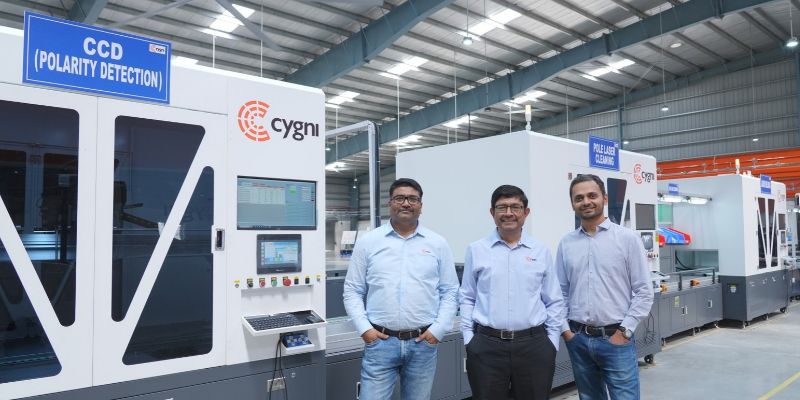
Cygni Energy, Indus Towers Plan 1.5 GWh BESS Manufacturing Capacity
Cygni Energy and Indus Towers have signed an MoU to explore energy storage solutions for telecom infrastructure, including BESS manufacturing capacity of up to 1.5 GWh.
Read moreAutomation & Robotics

Schneider Electric buys PTC for $22.6 bn to expand industrial software portfolio
Schneider Electric will acquire PTC for $22.6 billion, strengthening its industrial software, AI and digital engineering capabilities. The deal is expected to significantly reshape competition in in..
Read moreAutomation & Robotics
IIIT Hyderabad, Hexagon Set Up Digital Twin Centre of Excellence
IIIT Hyderabad and Hexagon R&D India are establishing a Digital Twin CoE to advance AI-led research, education and industry applications in computer vision and spatial computing.
Read moreRelated Products

Fanless Industrial Pc for Smart Manufacturing
Smart Manufacturing
CONTEC Launches BX-M4600 Series - Fanless Industrial PC for Smart Manufacturing.
latest News
Subscribe to iNoW

For Industry News on WhatsApp, Give a Miss Call on: +91 84228 74016