








Schedule a Call Back


Budget 2026 sharpens focus on manufacturing scale-up across strategic sectors
 Industry News
- Feb 02,26
Union Budget 2026–27 advances manufacturing-led growth with sectoral schemes, higher outlays and supply-chain reforms.
New Delhi
The Union Budget 2026–27 places manufacturing firmly at the centre of India’s growth strategy, outlining a wide-ranging set of interventions aimed at scaling up production, strengthening domestic supply chains and positioning the country as a competitive global manufacturing hub. Presented in Parliament by Finance Minister Nirmala Sitharaman, the Budget emphasises scaling up manufacturing across seven strategic and frontier sectors as part of the “First Kartavya” to accelerate and sustain economic growth.
The manufacturing push is anchored in targeted schemes, higher financial outlays and ecosystem-level reforms spanning biopharma, semiconductors, electronics, capital goods, chemicals, textiles, construction equipment and emerging sectors such as sports goods. Together, these measures are designed to enhance productivity, reduce import dependence and build resilience amid global supply-chain disruptions.
Presenting the Budget, Sitharaman said the proposed interventions form part of six focus areas under the first kartavya, aimed at enhancing competitiveness and building long-term national capabilities. She underscored that India must respond to global uncertainty by strengthening domestic manufacturing depth while remaining integrated with international markets.
Biopharma SHAKTI and life sciences scale-up
A major highlight of the Budget is the launch of Biopharma SHAKTI, a flagship initiative with an outlay of Rs 100 billion over the next five years, aimed at developing India into a global biopharma manufacturing hub. The programme is designed to build a robust ecosystem for the domestic production of biologics and biosimilars, segments that are expected to see strong global demand growth over the coming decade.
As envisaged in the Budget, Biopharma SHAKTI will establish a biopharma-focused institutional network comprising three new National Institutes of Pharmaceutical Education and Research, alongside the upgradation of seven existing institutes. It will also create a network of more than 1,000 accredited clinical trial sites, strengthening India’s clinical research infrastructure and accelerating product development timelines.
The Budget further proposes to strengthen the Central Drugs Standard Control Organisation through a dedicated scientific review cadre and specialist teams to ensure faster approvals aligned with global standards. This move is expected to improve regulatory predictability and enhance India’s attractiveness as a destination for global biopharma investments.
Reflecting industry sentiment, Baba Kalyani, CMD, Bharat Forge, said the Budget “reinforces the government’s bet on manufacturing” and aligns policy continuity with long-term capability building. He noted that measures supporting healthcare, cities and industrial infrastructure were “timely and strategic”, particularly at a time of heightened geopolitical and supply-chain uncertainty.
Semiconductors, electronics and supply-chain security
Building on the momentum of the India Semiconductor Mission (ISM) 1.0, the Budget announces ISM 2.0, marking a decisive step towards deepening India’s semiconductor ecosystem. The new phase will focus on producing semiconductor equipment and materials, designing full-stack Indian intellectual property and fortifying supply chains.
Sitharaman said the emphasis under ISM 2.0 will be on industry-led research and training centres, aimed at developing both technology capabilities and a skilled workforce. The move is expected to reduce strategic dependencies and improve India’s positioning in the global semiconductor value chain.
Complementing this push, the Electronics Components Manufacturing Scheme, launched in April 2025 with an outlay of Rs 229.19 billion, will see its allocation increased to Rs 400 billion in Budget 2026–27. The enhanced outlay reflects strong industry response and aims to capitalise on momentum in electronics manufacturing, particularly in components and sub-assemblies where India seeks to move up the value curve.
Welcoming the direction, Dr Anish Shah, Group CEO and Managing Director, Mahindra Group, said the emphasis on frontier and strategic manufacturing sectors, including ISM 2.0, “reflects a clear commitment to building global-scale manufacturing capabilities” and strengthening domestic value chains.
Rare earths, chemicals and capital goods capability
Addressing vulnerabilities in critical materials, the Budget proposes the establishment of dedicated Rare Earth Corridors across mineral-rich states including Odisha, Kerala, Andhra Pradesh and Tamil Nadu. These corridors will promote integrated development covering mining, processing, research and manufacturing, supporting India’s transition to advanced manufacturing and clean technologies.
In the chemicals sector, the Budget proposes a scheme to support states in setting up three dedicated Chemical Parks through a challenge-based route. Designed on a cluster-based, plug-and-play model, the initiative aims to enhance domestic chemical production, improve scale efficiencies and reduce import dependence.
The Budget also places strong emphasis on capital goods, recognising their role as a determinant of productivity and quality across sectors. Sitharaman announced that Hi-Tech Tool Rooms will be established by central public sector enterprises at two locations as digitally enabled, automated service bureaus capable of designing, testing and manufacturing high-precision components at scale and lower cost.
In addition, a Scheme for Enhancement of Construction and Infrastructure Equipment will be introduced to strengthen domestic manufacturing of high-value and technologically advanced equipment. This will cover a wide spectrum, ranging from lifts and fire-fighting equipment to tunnel-boring machines used in metro projects and high-altitude road construction.
A dedicated Container Manufacturing Scheme, with a budgetary allocation of Rs 100 billion over five years, has also been announced to create a globally competitive container manufacturing ecosystem, addressing logistics bottlenecks and reducing reliance on imports.
Dr Pawan Goenka, Chairman, IN-SPACe and the SCALE Committee, observed that the focus on manufacturing, infrastructure and Champion MSMEs reflects “an understanding that scale and resilience are built through stable policy and institutional support”. He added that the rare earth corridors were a timely step towards securing critical materials and strengthening domestic value chains.
Textiles, handicrafts and rural manufacturing
The labour-intensive textile sector receives a comprehensive push through an Integrated Programme with five components. These include a National Fibre Scheme to promote self-reliance in natural, man-made and new-age fibres; a Textile Expansion and Employment Scheme to modernise traditional clusters; a consolidated National Handloom and Handicraft Programme; the Tex-Eco Initiative for sustainable textiles; and Samarth 2.0 to upgrade skills through industry-academia collaboration.
To enhance value addition in technical textiles, the Budget proposes setting up Mega Textile Parks in challenge mode, aimed at providing scale, infrastructure and common facilities to globally competitive textile manufacturers.
The Budget also announces the Mahatma Gandhi Gram Swaraj initiative to strengthen khadi, handloom and handicrafts, with a focus on global market linkage and branding. The initiative will streamline training, skilling and quality processes, benefiting weavers, village industries, the One District–One Product programme and rural youth.
Emerging sectors and sports goods manufacturing
Recognising India’s potential in emerging manufacturing segments, the Budget proposes a dedicated initiative for sports goods, aimed at promoting manufacturing, research and innovation in equipment design and material sciences. Sitharaman said India has the potential to emerge as a global hub for high-quality, affordable sports goods, leveraging its design capabilities and skilled workforce.
Industry leaders view this as part of a broader effort to diversify India’s manufacturing base beyond traditional sectors, while aligning innovation, sustainability and export competitiveness.
Industry reactions to the manufacturing-focused Budget have been largely positive. Sunil Mathur, Managing Director and CEO, Siemens Limited, welcomed the government’s consistent focus on long-term growth and structural transformation, noting that the Rs 12.2 trillion capital expenditure allocation and emphasis on infrastructure, technology-led manufacturing and next-generation mobility provide a “clear and credible roadmap for sustainable and inclusive growth”.
Rajamani Krishnamurti, President, ISSDA, described the Budget as a “definitive statement of intent”, highlighting the Rs 100 billion allocation for MSMEs as a lifeline for the backbone of Indian manufacturing. He noted that strengthening MSMEs would empower them to upgrade technology, enhance quality and compete more effectively against substandard imports, while supporting sustainability and asset longevity.
From a macro perspective, Baba Kalyani emphasised that the Budget’s multi-pronged growth framework and three kartavyas reinforce confidence among investors. He said the progression of the semiconductor programme to ISM 2.0, along with rare earth corridors and green competitiveness initiatives, would significantly strengthen domestic supply chains and align sustainability with industrial performance.
Similarly, Dr Anish Shah pointed to the significant increase in capital expenditure to Rs 12.2 trillion for FY27 as a strong signal of policy continuity and infrastructure-led development, which would help crowd in private investment and support tier-II and tier-III cities as emerging economic hubs.
A manufacturing-led growth pathway
Overall, the Union Budget 2026–27 presents a coherent manufacturing-led growth pathway, combining sector-specific incentives with ecosystem development, institutional strengthening and supply-chain security. By addressing strategic vulnerabilities, enhancing scale and improving competitiveness, the Budget seeks to position Indian manufacturing as a key driver of long-term economic growth, employment and global integration.
Union Budget 2026–27
Manufacturing
Biopharma SHAKTI
ISM 2.0
Electronics
Textiles
Capital Goods
MSMEs
Baba Kalyani
Bharat Forge
Dr Anish Shah
Mahindra Group
Dr Pawan Goenka
IN-SPACe
SCALE Committee
Sunil Mathur
Siemens Limited
Rajamani Krishnamurti
ISSDA
Related Stories
Automation & Robotics

LTTS Launches Agenticiq AI Platform for Engineering and Manufacturing
LTTS has launched AgenticIQ, an end-to-end Agentic AI platform designed to enable autonomous, multi-agent workflows across engineering, manufacturing and industrial operations.
Read moreMachine Tools & Accessories
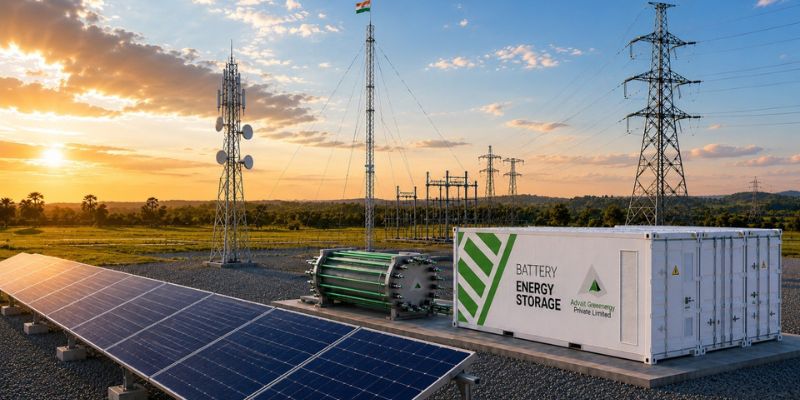
Advait Starts Ahmedabad Facility Operations
Advait Energy Transitions has commenced operations at its integrated Gangad facility in Ahmedabad, as Q1 FY27 consolidated revenue rose 48 per cent YoY to Rs 1.79 billion.
Read moreMachine Tools & Accessories

Schaeffler India appoints Amit Bhalerao as Chief Operating Officer
Amit Bhalerao will lead Schaeffler India’s manufacturing operations, with a focus on operational excellence, digital transformation, localisation and capability development.
Read moreRelated Products
latest News
Subscribe to iNoW

For Industry News on WhatsApp, Give a Miss Call on: +91 84228 74016