





Schedule a Call Back


Transportation – Miles to go
 Technical Articles
- Jan 01,17

Transportation – the act of transporting people and goods – is one of the most important economic activities in the world and one that determines the progress of a nation.
If the perfection of the steam engine in the 18th Century accelerated the Industrial Revolution, it was the internal combustion engine that led to the automobilisation and rapid development of the US, later adopted by the European countries and followed by the Tiger economies of Asia.
India is a large country and there are several modes of transport including rail, road, coastal shipping, inland waterways and air transport. Despite having one of the largest networks of roads and railways in the world, thanks to the vast geographical spread and the large population, transportation in India is in a perpetual bottleneck situation as the infrastructure development has failed to keep pace with the rising aspirations of a rapidly growing economy. In fact India’s roads and railways straddle the movement of freight accounting for close to 95 per cent of the total freight transported within the country.
Roadways
Statistics indicate that the transport sector contributes 6% of the country’s GDP with road transport having around a lion’s share of 70%. More than 60% of freight and 90% of the passenger traffic in the country is handled by roads.
Highway traffic in the country is on a growth trajectory Overall annual freight traffic in the country is estimated to reach around 13,000 billion tonne km (btkm) by 2030 from about 2,000 btkm in 2011-12. Overall annual passenger traffic is estimated to reach around 168,000 billion passenger km (bpkm) by 2030 from about 10,000 bpkm in 2011-12. For both of the above, road transport is likely to cater to around 50% of traffic.
The Government of India has launched major initiatives to upgrade and strengthen highways and expressways in the country including enabling policy measures. The Ministry of Road Transport and Highways (MoRTH) is the apex body for formulation and administration of the rules, regulations and laws relating to road transport, and transport research, in order to increase the mobility and efficiency of the road transport system in India. In recent years, MoRTH awarded the highest ever kilometres of new highways in 2015. In addition to highway development, focus is also on efficient operations and network management for improving logistics efficiency. This shall give rise to new investment opportunities.
MoRTH is implementing enabling measures like setting up of model driving training institutes for drivers of heavy vehicles. These schools will further help in streamlining the process of obtaining licenses. In addition, MoRTH envisages training of 20,000 construction workers such as pavement technicians, masons, carpenters, reinforcement technicians each year. Some of the important initiatives for the sector are:
USD 8.21 billion outlay planned for highways during 2016-17. In addition, NHAI has been authorised to generate Internal & Extra Budgetary Resource (IEBR) of USD 8.85 billion during 2016-17. NHAI shall raise its resources under IEBR through 54 C Bonds, Tax Free Bonds and others as approved by the Ministry of Finance USD 22.6 billion budgetary support for central road sector development during 2012-17 5.23 million km of roads and highways in the country, and 1.01 million km of National Highways.
The MoRTH aims to expand the National Highway network to 0.2 million km over the next 4-5 years. MoRTH has so far approved in-principle about 38,750 km of State roads as new NHs subject to outcome of their detailed project reports (DPRs). Further, about 14,000 km of additional state road stretches are proposed to be upgraded under the “Bharatmala Pariyojana”.
Railways
Indian Railways is the largest passenger carrier in the world and the fourth largest rail freight carrier. The nearly 1.5 million strong work force also makes the Indian Railways one of the largest employers in the country second only to the armed forces. The Indian railways network comprises 115,000 km of track over a route of 67,312 km and 7,137 stations, making it the world’s third largest rail network. In 2014-15, Indian railways carried around 8224.12 million passengers, which is about 1.430 million higher than the passengers of the world put together. At the same the railways run more than 9202 freight trains, carrying about 3 million tonnes of freight every day.
Increasing urbanisation coupled with rising incomes (both urban and rural) is driving growth in the passenger segment. Growing industrialisation across the country has increased freight traffic over the last decade. Both passenger and freight traffic volumes have increased steadily in the past five years. While passenger traffic witnessed a CAGR of 2.6% during 2010-2015, freight traffic has registered a marginally lower CAGR of 4.3% during the same period.
According to the Make in India portal of the Government of India, Indian Railways offer attractive investment opportunities in the areas of:
Components manufacturing
Infrastructure projects
High speed train projects
Railway lines to and from coal mines and ports
Projects relating to electrification, high-speed tracks and suburban corridors
Dedicated freight corridors
The re-development of railway stations
Power generation and energy-saving projects
Freight terminals operations
Setting up of wagon, coaches and locomotive units
Gauge conversion and
Network expansion.
Waterways
India has over 7500 km of coastline with 12 major and about 200 minor and intermediate ports. About 90% of the country’s trade by volume and 70% by value is moved through maritime transport. The cargo traffic achieved a CAGR of 4.4% during 2009-10 to 2014-15. The breakdown of cargo handled at ports in 2014-15 by category is: dry bulk (34% iron ore, coal, fertilizer and food grains); liquid bulk (33% petrol, oil and lubricants); break bulk (17%) and container (16%). The 12 major ports of India handle approximately 57% of total cargo traffic. There has been an unprecedented increase in cargo-handling capacity of the major ports – 965.36 million metric tonnes (MMT) in March, 2016 from 575 MMT in 2009.
There are many reasons to invest in India’s ports and shipping infrastructure. The projected cargo traffic to be handled by Indian ports by 2021-22 is expected to be 1695 MMT as per the report of the National Transport Development Policy Committee (an increase of 643 MMT from 2014-15). A total of 2422 MMT of cargo handling capacity would be required in Indian ports by 2021-22. For this, additional cargo handling capacity of 901 MMT is required to be created in Indian ports in the next 6 to 7 years.
Ports projects involving investment of over USD 10 billion have been identified for award during the next five years. Coastal Economic Zones (CEZs) are being developed under “Sagarmala initiative” in close proximity to several ports comprising coal-based plants, steel plants and oil refineries.
Investment opportunities exist for:
Port development – the opportunity to serve the spill demand from major ports
Port support services – operation and maintenance services such as pilotage, dredging, harbouring and provision of marine assets such as barges and dredgers, and
Ship repair facilities in ports – demand for ship repair services will increase, providing opportunities to build new dry docks and set up ancillary repair facilities.
Aviation
India is one of the fastest growing aviation markets and currently the ninth largest civil aviation market in the world. The country is projected to be the third largest aviation market by 2020.
The total passenger traffic stood at 224 million during 2015. India is one of the least penetrated air markets in the world with 0.04 trips per capita per annum as compared to 0.3 in China and more than 2 in the USA. Indian carriers plan to increase their fleet size to reach 800 aircraft by 2020. The Indian aviation sector is likely to see investments totalling USD 15 billion during 2016-2020 of which USD 10 billion is expected to come from the private sector.
Summing up
According to a study conducted jointly by logistics firm Transport Corporation of India (TCI) and IIM-Kolkata, India suffers a loss of US $21.3 billion annually on account of delays and additional fuel consumption due to poor road conditions and frequent halts. The highlights of the study are:
The share of waterways and airways in carrying domestic freight is almost insignificant
Road transportation is door-to-door, reliable and efficient, with vehicles available almost in real-time
Railways, on the other hand, suffer from inefficiency, poor service, loading delays and the unavailability of rakes, and
Freight rate increased more than freight cost in the last three years with an increase in the contribution margin over the 2011-12 level on Delhi-Bangalore and Delhi-Mumbai routes.
Reading between the lines and in totality, the report makes it clear that besides the overall improvement of the roads network, the county needs to increase the share of waterways and airways in domestic freight, improve the railway network as well as efficiency.
Related Stories
Machine Tools & Accessories
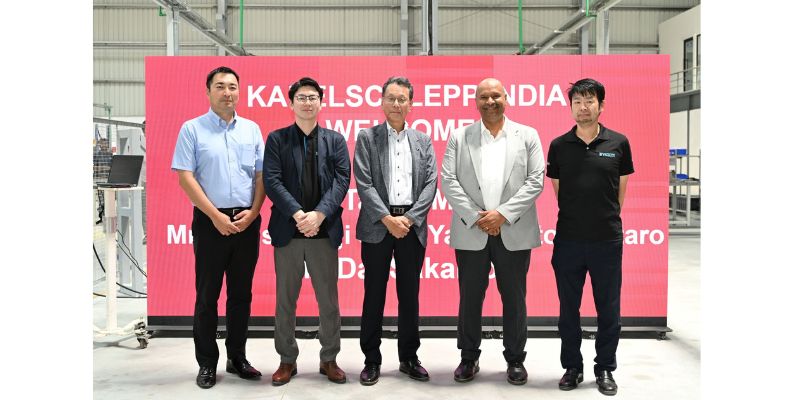
Tsubaki Leadership Reinforces India Growth Strategy during Kabelschlepp Visit
Tsubaki’s senior leadership visited Kabelschlepp India to review growth, localisation and innovation initiatives while strengthening engagement with employees, partners and customers.
Read moreAuto & Auto Components
Škoda Auto Volkswagen India Announces Leadership Transition
Piyush Arora will assume additional responsibility for Group sales and marketing in India as Jan Bures moves to a new role at Volkswagen AG.
Read moreProcess Equipment

Godavari Biorefineries Starts 200,000-litre Grain Distillery
The Rs 1.3 billion facility at Sameerwadi raises Godavari Biorefineries’ ethanol capacity to 800,000 litres per day and adds 60 million litres annually.
Read moreRelated Products

Liquid Ring Vacuum Pumps/Compressors
Compressors and Allied Equipment
Aeromatic Engineering Private Limited offers a wide range of liquid ring vacuum pumps/compressors.
Read more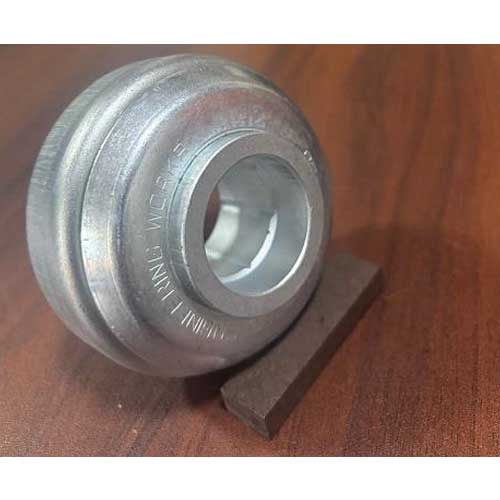
Hot Wheel Bearing
Bearings, Bushings, Wheels and Gears
SICCO Engineering Works offers a wide range of hot wheel bearing. Read more

Kusam-meco DC Power Supply Model Km-ps-3020 Abf / Km-ps-3030 Abf
Power Supplies, Batteries & Accessories
<p>Kusam Electrical Industries Ltd offers Kusam-Meco DC power supply model KM-PS-3020 ABF/ KM-PS-3030 ABF</p> Read more
latest News
Subscribe to iNoW

For Industry News on WhatsApp, Give a Miss Call on: +91 84228 74016