








Schedule a Call Back


Solar for a brighter tomorrow
 Technical Articles
- Oct 10,14
NULL

With the solar power segment maturing at a rapid pace, several private companies are now focusing on setting up solar power projects in India.

With growing urbanisation there is an ever-increasing need for energy. India can meet her energy requirements through the effective use of solar energy, since most parts of the country have between 300 to 330 sunny days in a year (equivalent to over 5,000 trillion kWh per year of energy), which could be harnessed. There are still around 300 million people waiting for their homes to be lit. Even in this day and age, a large number of villages in several Indian states are outside the reach of technology, as the basic tool of development - electricity - has not reached them. With the segment maturing at a rapid pace, several private companies are now focusing on setting up solar power projects to service these areas.
The domestic PV installation market aims to clock around 2.6 gigawatts (GW) in FY2014. By 2030, about 100 GW of solar capacity shall be established in the country. The year 2013 showed a positive development in the states of Rajasthan and Gujarat, with solar power generation capacity of 117.75 MW and 860.4 MW respectively during fiscal 2013-14. Gujarat continues to be the No. 1 state and the total capacity in the country is 2,208 MW. Various other states have since followed this trend with the launch of suitable schemes. Madhya Pradesh has too joined the solar bandwagon with installations plans for around 347 MW.
The segment is now further expanding with more private companies entering the market. Recently, Welspun Energy (WEPL) commissioned its 50 MW solar project at Baramati, Maharashtra. Besides, the company is also building large capacity solar projects in Tamil Nadu and Punjab. Vineet Mittal, Managing Director Welspun Energy Ltd said, "We have been setting up solar power projects pan India. Moving forward we are expanding our commitment to support the illustrious state of Maharashtra in meeting its RPO obligations. This is the second project we have built in the state. Like our other projects across the state, we will be bringing our expertise in project development to this one as well." Welspun aims to develop 1.75 GW of renewable energy in the next three years.
Enrich Energy has also got an approval for setting up of 60 MW solar project under 'Solar Park Concept' in the newly formed state of Telangana. Ankit Kanchal, Director, Enrich Energy, avers, "We at Enrich Energy are committed towards developing the renewable energy sector in India and are happy to partner with the government of Telangana in their clean energy initiative. We are dedicated to providing world class solar energy solutions from concept to commissioning and further hand hold in operations and maintenance during the lifecycle of the project."
Another company, First Solar, has shown interest in setting up a project with capacity of 45 MW. The project will include construction at two different sites in the Mahabubnagar district, Telangana. It is expected to be in commercial operation by May 2015. "The state of Telangana has an energy deficit that demands immediate creation of incremental generation capacity. We are optimistic that the state will enhance their plans for creating a higher deployment of solar in the overall energy mix to address the energy deficit in a sustainable manner," said Sujoy Ghosh, Country Head, for First Solar India. "The excellent solar resource in the Telangana combined with our CdTe thin film module technology that is ideally suited for hot climates like India, allows us to bid tariffs that brings solar energy pricing to parity with diesel/gas and potentially imported coal, for the consumers across all segments," Ghosh added.
Karnataka too is on the road to solar power generation, with Rays Power Infra gearing to commission a 5 MW solar project in Bijapur, north Karnataka. Rahul Gupta, Director, Rays Experts stated, "We are aggressively expanding our business portfolio and venturing into new verticals like Independent Solar Power Parks, solar roof-top models and other such offerings. Making use of innovative technology and skilled manpower, our company has opened new solar parks in Gajner and Anantpur regions and has acquired a turnkey order of a 45 MW solar EPC project. A lot of new solar projects are also in the pipeline." This project will have an estimated annual output of 9 million kWh. After stiff competition, Jakson Group has been successful in securing a prestigious contract from Delhi Metro Rail Corporation (DMRC). Jakson will install rooftop solar power plants at DMRC's three premises with an aggregate capacity of 250 kWp. "We are positive about completing the projects within the deadline. This contract is just the beginning and we are looking forward to a long and mutually beneficial relationship with DMRC. After the successful installation of these units, we are optimistic of getting more such contracts for other stations, depots, parking lots as well as residential complexes," said Sundeep Gupta, Joint-Managing Director, Jakson Group. The company is targeting to commission three projects within next six months. Solar power is thus expected to play a significant role in the Indian power segment. Many villages are under the development stages, while some have already been benefited. Dharnai in Bihar is one such example, highlighted on the social media. Around 2,400 people have now been supplied with quality electricity at the initiative of the NGO Greenpeace, which has powered the village with a 100 kW micro-grid.
Tech scene
The solar equipment manufacturing segment in the domestic market is still at infant stage. Lack of adequate manufacturing capacities has given rise to import of raw materials. Today, most of the photovoltaic (PV) plants use imported C-Si and Thin Film modules. This in turn affects the domestic PV module manufacturers. By 2030, if this situation continues, India will be seen importing USD 65 billion worth of solar equipment. With the boost to domestic manufacturing, the segment can generate around 50,000 jobs in the next 5-6 years. But, the scenario is still unclear. A lot of efforts are also needed from the government to encourage domestic solar equipment manufacturing. This will not only help boost the Indian economy, but also offer quality equipment. Today, the solar equipment is mainly imported from Chinese companies, which enjoy a cost advantage but often suffer from low quality. As on date, less than 250 MW of cell manufacturing capacity is operational in India.
Challenges
- Lack of awareness
- Lack of an effective financing infrastructure
- Lack of comprehensive R&D schemes and incentives
- Land scarcity
- Dependence on imports
- Cheap imports
- High equipment cost
- High costs of solar power generation
- Lack of technological innovations
- Lack of standards
This is the scenario in spite of the government imposing a Domestic Content Requirement (DCR) on some of the sponsored schemes. Under the DCR policy, solar cells and modules used in the power plants must both be made in India. With the new government highly focussed on use of indigenous equipment for solar projects, incentives in terms of customs and excise duty reductions have been given to sector. An amount of Rs 400 crore has been set aside for solar power driven agricultural pump sets and water pumping stations. This initiative is likely to have long-term positive impact in terms of supporting domestic manufacturing base for the solar equipment as well as bringing down the cost of solar power. Today, enterprises have started realising the importance of solar equipment manufacturing in India. The enthusiasm shown by companies has also generated excitement into export segment. Almost Rs 1,620 crore in solar exports were registered in financial year 2013-14. The European market was the major demand driver. Exports have also started reaching the African, the Middle East and South East Asian markets. But such markets still remain small as of now. The manufacturers expect huge demand from the domestic market.
Government's take
There is a need to boost the solar segment in a bigger way in India. Thus, the positive role of government is important. The Indian government can look at reducing various hurdles that the solar industry faces. Reduction of import duties on raw materials or components is required. Also, new equipment manufacturers and developers are now entering the Indian market with a positive signal from the Indian government. To protect domestic firms, the Union Ministry of Commerce and Industry had recommended a levy of anti-dumping duty (ADD) in the range of $0.11-0.81 per watt on solar cells, modules or panels imported from countries such as China, Taiwan and the US. But this led to an unhappy situation with the solar power companies opposing the measure and equipment manufacturers supporting it. The resulting stalemate brought the installations to a near halt and the government let the deadline for imposing the ADD lapse.

Currently, there are three government bodies to promote solar energy in India. This includes the Ministry of New and Renewable Energy (MNRE), India Renewable Energy Development Agency (IREDA), and Solar Energy Centre (SEC). Various policies and subsidies have been rolled to add more solar power to the country's energy basket in the coming years. The National Solar Mission aims to increase the usage of solar thermal technologies in urban areas, industry and commercial segments. Capital subsidies have also been offered to semiconductor manufacturing plants in Special Economic Zone (SEZs) and outside SEZs through semiconductor policy launched in 2007. In 2009, MNRE launched Jawaharlal Nehru National Solar Mission (JNNSM). The JNNSM plans a three-phase approach with specific targets for each phase. The other targets of this mission include achieving grid parity (same production cost as current electricity source) by 2022 and parity with coal based power generation in 2030. The aim to achieve grid tariff parity has been set up on the basis of large scale utilisation, rapid diffusion and deployment at a scale which leads to cost reduction. The goal can also be achieved through R&D, local manufacturing, pilot project and the supportive infrastructure. In 2010, the grid-connected solar power was around 10 MW. While the government funded solar energy accounted to approximately 6.4 MW in 2005. But, in 2013-14, the installed grid connected solar power had increased to 2,208.36 MW. By 2017, India expects to install an additional 10,000 MW, and a total of 20,000 MW by 2022. Many investors worldwide are also keen in the Indian market. Around 16 companies from Canada are exploring partnership opportunities with Indian firms in the renewable energy space.
Conclusion
Many villages are still in the dark, literally, and solar segment stands out to be the best option given the circumstances and the infrastructure cost of connecting these to the national grid. While the power sector today offers a huge potential in the Indian market, lack of investment and resources is a reality. But despite various challenges, the segment offers enormous opportunities. A lot more efforts are still required by the government and the private players. A major focus on manufacturing components locally is the current necessity.
Related Products

Liquid Ring Vacuum Pumps/Compressors
Compressors and Allied Equipment
Aeromatic Engineering Private Limited offers a wide range of liquid ring vacuum pumps/compressors.
Read more
Hot Wheel Bearing
Bearings, Bushings, Wheels and Gears
SICCO Engineering Works offers a wide range of hot wheel bearing. Read more
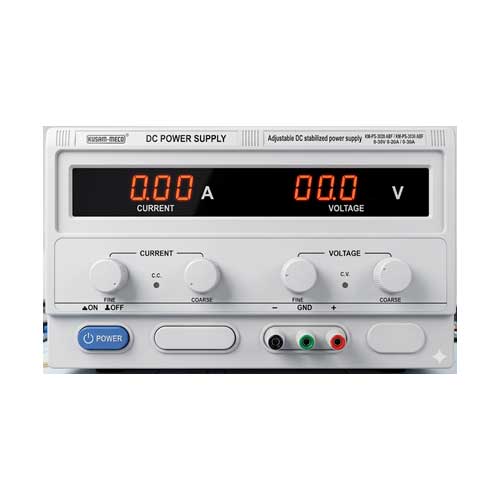
Kusam-meco DC Power Supply Model Km-ps-3020 Abf / Km-ps-3030 Abf
Power Supplies, Batteries & Accessories
<p>Kusam Electrical Industries Ltd offers Kusam-Meco DC power supply model KM-PS-3020 ABF/ KM-PS-3030 ABF</p> Read more
latest News
Subscribe to iNoW

For Industry News on WhatsApp, Give a Miss Call on: +91 84228 74016