





Schedule a Call Back


Powering India’s Growth Momentum
 Technical Articles
- Feb 03,16

- HUNED CONTRACTOR
Recent government initiatives and the drive to make power generation, transmission and distribution an integral part of India’s march towards economic prosperity spells good news.

If one were to consider an overview of the power sector in India, the year FY15 turned out to be comparatively much better with power generation growing by 8.4 per cent YoY and the peak deficit down to 3.5 per cent in FY15 from 4.5 per cent in FY14. This was largely on the back of rising coal stock availability at majority of the power stations and increase in the installed power capacity. It was also a year of some major reforms, including reallocation of coal blocks through the e-auction process, new gas pooling mechanism to bail out 14,000 MW of stranded power plants, and the coming into play of the new Ultra Mega Power Project (UMPP) policy. Also, there has been an improved focus on the transmission and distribution (T&D) sector to improve the power supply conditions in the country.
During the 12th Five Year Plan period, India has added the highest ever power generation capacity with cumulative power capacity of 61,014 MW up to March 2015, which is an achievement of about 69 per cent. This has largely been led by sharp achievement in the thermal segment, which achieved up to 80 per cent of the targeted capacity addition, followed by hydro (21 per cent) and balance by the nuclear segment (19 per cent). Out of the total targeted capacity addition, NTPC Ltd. had set a target of adding 14,038 MW and has already added 7,000 MW. According to the company’s management, the focus is on achieving the target by the end of FY17.
Meanwhile, the Union Cabinet recently approved a path-breaking mechanism for making operational stranded gas-based generation capacity in FY16 and FY17. The mechanism talks about importing re-gassified liquefied natural gas (RLNG) for supply to stranded power plants and plants receiving domestic gas. However, both these types of power plants can use RLNG to operate their power plant to the maximum extent of 30 per cent plant load factor (PLF). Given the expensive nature of imported RLNG, the government will be providing a subsidy, which is capped at Rs 35 billion for FY16 and Rs 40 billion for FY17. The subsidy will be funded through the Power Sector Development Fund (PSDF). Given the large share of gas-based power capacity being stranded, this may help many companies in kick-starting these capacities.

What has also added to the momentum is the UMPP policy to approach a plug-and-play model. Under this model, coal linkages and indicative green clearances are expected simplify mining and faster execution. The government has announced plans to auction five new UMPPs in the plug-and-play mode to ensure their smooth execution and help unlock investments to the tune of Rs 1 trillion. Also, apart from the ambitious targets set for the thermal power sector, the government has increased its focus on the renewable energy sector. India’s current capacity from renewable sources of energy stands at 31,692 MW as of April 2015, which is 12 per cent of the total installed power generation capacity. The government’s earlier target of installing 20,000 MW of solar energy capacity by 2022 has been revised to 1,00,000 MW. The government also wants to put in place 60,000 MW of wind power capacity, 10,000 MW biomass and 5,000 MW small hydro capacities.
Given all these facts, power remains one of the most critical components of infrastructure, affecting economic growth. “The government’s focus on the manufacturing sector through its flagship initiative, Make in India, is likely to drive the demand high. Further, India’s per capita power consumption stands at a much lower level of 957 kWh per year compared to 2,940 kWh per year for China and 2,980 kWh per year for the world. The government has planned to provide affordable 24x7 power for all homes, industrial and commercial establishments and adequate power for farms by 2019. Along with generation, the government has also increased its focus on the T&D space, which is likely to help in improving PLF levels along with improving the financial health of state electricity boards and reducing transmission losses,” states a report by the HDFC Bank Investment Advisory Group.
New Initiatives
To be able to put fresh wind in the power sector’s sails, India has approved a rescue package for its loss-making power utilities, unveiled as a major reform that Prime Minister Narendra Modi hopes will end electricity blackouts and spur economic growth. “Over the next two years states will be allowed to take on 75 per cent of the debts of their utility companies, which have grown to Rs 4.3 trillion after years of undercharging customers for electricity. By clearing past debts and putting them on a better financial footing, the utilities would be returned to profitability before 2019. The government believes that this will help the Indian power sector turn around once and for all and help the states provide 24x7 power,” said Coal and Power Minister Piyush Goyal at a media briefing. States and utilities which want to take up the rescue package will sign agreements with the power ministry, committing them to improve performance in return for the debt swap. The remaining debt not absorbed by states will be converted by banks into low interest rate loans, and states will also take over up to 50 per cent of the utilities’ future annual losses.

Power Equipment Industry
Along with the power generation, transmission and distribution industry, the role played by the Indian electronics and electrical equipment industry has been significantly substantial. A study conducted by Frost & Sullivan reveals that consumption of electrical equipment is estimated to go up from over USD 28 billion now to USD 363 billion in the coming decade. Industry experts believe that during 2010-2015, the Indian electrical equipment manufacturing has grown at 5.5 times the growth rate of the global electronic equipment production. Growth in exports has also assisted the growth of some sectors like transformers, switchgear, cables, capacitors, energy meters, transmission line towers and conductors.
“The Indian government’s plans to improve the power situation have picked up momentum and industries in the equipment space are also gearing up to meet these new demands. For example, capacity at both our plants in India has been increased. At the Bangalore plant, production space has been more than doubled. The new space will allow the manufacture of 60,000 kilometres of multi-core conductor cables and 78,000 kilometres of single conductors. The investment came to around Euro 1.8 million. At the second plant, in Bhopal, a new production line for multi-core conductor cables was installed,” says Andreas Lapp, Chairman of the Board, Lapp Group, global manufacturers of several types of cables.
The new wave of optimism bodes well considering that the electrical equipment industry grew by just 3.5 per cent in the last fiscal mainly due to lack of orders from utilities which faced liquidity crunch. In 2012-13, the electrical industry witnessed a negative growth of 7.8 per cent. Now, however, the industry is once again placing big bets on resurgence. And this may well be reflected during ELECRAMA 2016. The 12th edition is scheduled from February 13-17 at the Bangalore International Exhibition Centre (BIEC).
“India today is the world’s third-largest producer of electricity and has a robust and thriving electrical products’ and equipment manufacturing industry, spanning the entire value chain from generation, transmission, control, distribution and last mile connectivity to end users – industrial, commercial and domestic, with metering and even collection. The Indian electrical equipment industry has a diversified, mature and strong manufacturing base, with robust supply chain, and a rugged performance design of products. There is also an emerging global reputation of Indian electrical equipment for sourcing of base products and components,” says a press release from the Indian Electrical & Electronics Manufacturers’ Association (IEEMA), the apex industry association of 800-plus manufacturers of electrical, industrial electronics and allied equipment in India as well as the organisers of the show.

In particular, the Indian light electrical products’ industry is expected to grow exponentially in the future due to various growth drivers. With the increased income, people are trying to make their life more convenient with the use of electrical appliances at their homes and offices. Air-conditioners and water heaters have become a necessity these days. Moreover, the use of electrical appliances is an urban phenomenon and with the increase of urban population, the demand for electrical appliances is also increasing. The most important requirement for the working of these electrical equipments is the production of power and electricity and the production of electricity has been increasing over the years. The growth in number of houses is another factor pushing the demand for light electrical equipments in India,” the press release adds.
The Department of Heavy Industry (DHI), in consultation with various stakeholders and with support from IEEMA, has prepared the Indian Electrical Equipment Industry Mission Plan 2012-2022 with a view to boost and support the domestic electrical equipment industry’s future development, and enhance its global competitiveness. The Mission Plan, which was launched on July 24, 2013, seeks to steer, coordinate and synergise the efforts of all stakeholders to accelerate and sustain the growth of the domestic electrical equipment industry. The Vision 2022 articulated in the Mission Plan is ‘to make India the country of choice for production of electrical equipment and reach an output of USD 100 billion by balancing exports and imports’. The Mission Plan identifies five key areas for action: (a) industry competitiveness; (b) technology upgradation; (c) skills development; (d) exports; and (e) conversion of latent demand.
Given the forecast, certain companies have already embarked on ambitious expansion plans. Anchor Electricals, a wholly-owned subsidiary of Panasonic Corporation, recently announced that it would invest Rs 150 crore in a manufacturing facility in Haridwar. The facility will produce a complete range of wiring devices. With the new unit, the company would scale up its capacity as per the planned phase-wise expansion in the additional space. India is now also drawing the interest of MNCs. As for example, German company Sikora that manufactures measuring, control and test devices for the wire and cable sector. “Prime Minister Narendra Modi’s Make in India campaign endeavours towards reviving the Indian economy. This has created positive sentiments within the nation and also internationally. The power sector, in particular, offers good opportunities,” comments Premjeet Saggu, Director, Sikora India. Varun Kapoor, Director, Sarvasv, a manufacturer of extrusion machinery for the wire and cable sector, agrees. “This is the right time to plan for capacity expansion given the long-term strategy unveiled for the Indian power sector,” he says.

Energy Efficiency
Of equal importance along with power generation and distribution is the emphasis on achieving higher levels of energy efficiency. For example, continuing its effort towards skilling India, Danfoss Industries, a leading player in the climate and energy space, signed a Memorandum of Understanding with National Productivity Council, Government of India (NPC) to leverage common facilities for training in the area of energy efficiency. NPC and Danfoss India have been working together in the areas of improving energy efficiency and have in the past been associates in preparing the energy efficiency curriculum for energy auditors. “Danfoss is dedicated to solving India’s energy conundrum through industry collaborations and energy-efficient solutions and this partnership is testament of that. A recent industry report suggests that on the basis of the current consumption pattern, the energy demand from industries in India is expected to grow to about 5,397 TWh per year by 2027. However, if industries can further strengthen their approach towards energy efficiency, we can expect the demand to reduce to 5,143 TWh per year,” says Ravichandran Purushothaman, President, Danfoss India.
The Way Ahead
All this can come true if the generation projects are completed on time. This is what Sunil Misra, Director General, IEEMA, feels. “From policy and law-makers side, it will call for a strong forward-looking political will, ensuring political stability while coming up with investment-friendly policy decisions and their fast implementation, and addressing the challenges of the issues that are bugging the power sector. Higher budgetary spending in capital expenditures in infrastructure-related projects shall be essential to support growth. The industry shall have to focus on project innovation and delivering superior product quality. We in India spend lot of resources in research; however, there is not much focus on development. Superior manufacturing and process technologies shall need to be harnessed for cost reduction and becoming competitive,” he adds.
Related Stories
Automation & Robotics
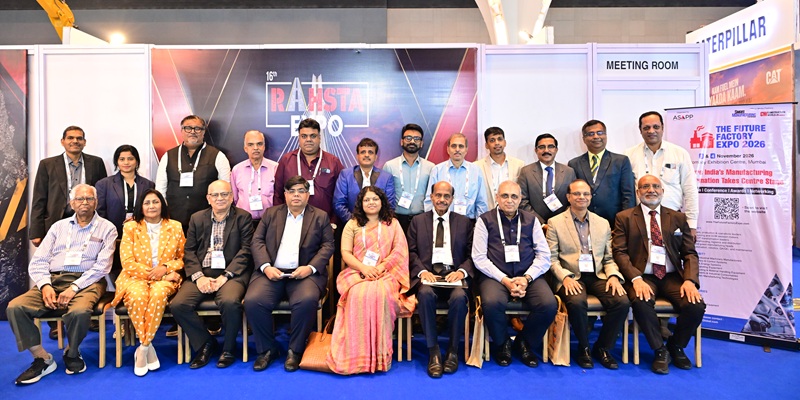
Future Factory Expo CXO Roundtable Charts Smart Transformation for SMEs
During the roundtable, hosted by Smart Manufacturing & Enterprises (SM&E) and The Future Factory Expo 2026, industry leaders outlined how SMEs can use practical digitisation, automation, skilling an..
Read moreAutomation & Robotics

ARC India Forum Spotlights AI-Led Industrial Transformation
ARC Advisory Group’s 24th India Forum brought together 300-plus leaders to examine how AI is transforming industrial operations, manufacturing and supply chains.
Read moreElectrical & Electronics

IESA Backs Rs 625 billion PLI 2.0 for Electronics Manufacturing
IESA has welcomed the Rs 625 billion PLI 2.0 scheme, citing its potential to sustain manufacturing growth and advance India’s US$400 billion electronics goal.
Read moreRelated Products
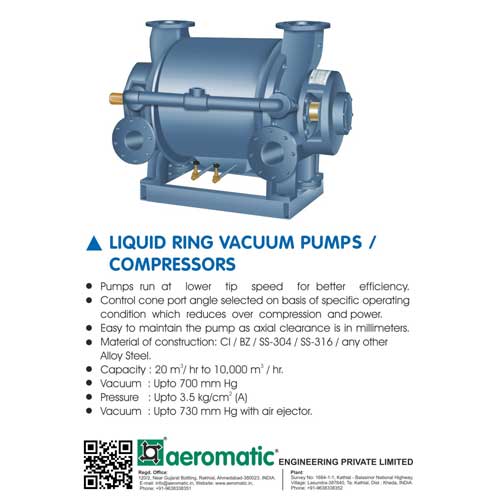
Liquid Ring Vacuum Pumps/Compressors
Compressors and Allied Equipment
Aeromatic Engineering Private Limited offers a wide range of liquid ring vacuum pumps/compressors.
Read more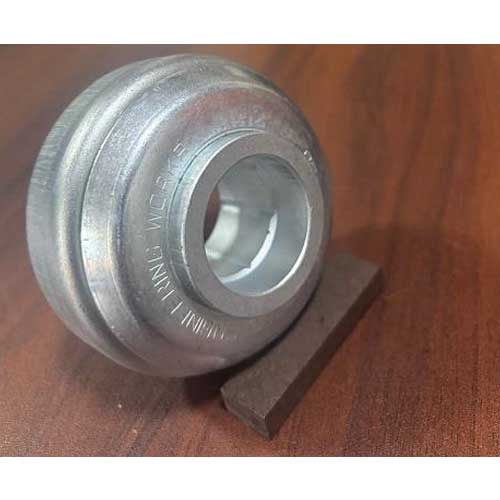
Hot Wheel Bearing
Bearings, Bushings, Wheels and Gears
SICCO Engineering Works offers a wide range of hot wheel bearing. Read more
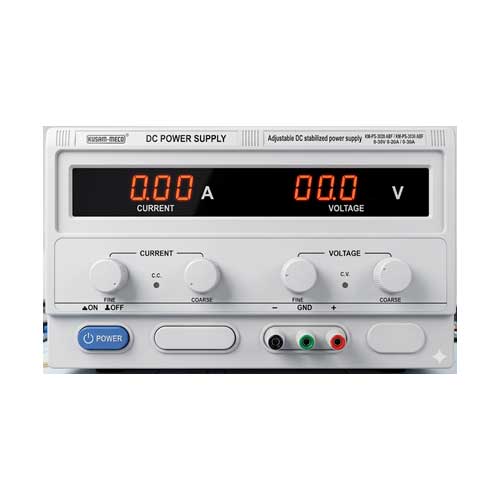
Kusam-meco DC Power Supply Model Km-ps-3020 Abf / Km-ps-3030 Abf
Power Supplies, Batteries & Accessories
<p>Kusam Electrical Industries Ltd offers Kusam-Meco DC power supply model KM-PS-3020 ABF/ KM-PS-3030 ABF</p> Read more
latest News
Subscribe to iNoW

For Industry News on WhatsApp, Give a Miss Call on: +91 84228 74016