








Schedule a Call Back


Future Factory Expo CXO Roundtable Charts Smart Transformation for SMEs
 Industry News
- Jul 17,26
During the roundtable, hosted by Smart Manufacturing & Enterprises (SM&E) and The Future Factory Expo 2026, industry leaders outlined how SMEs can use practical digitisation, automation, skilling and collaboration to build competitive, resilient and future-ready factories.
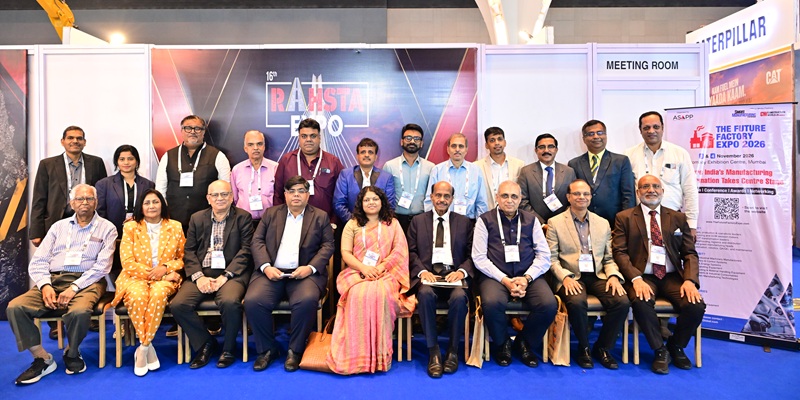
Though small & medium enterprises (SMEs) are considered to the backbone of India's economy, they are constantly under pressure because of rising competition, increasing raw material cost, skilled manpower shortages, and compliance issues. To discuss these issues and probable solutions, Smart Manufacturing & Enterprises (SM&E), in association with The Future Factory Expo 2026, organised a roundtable on “Building Future-Ready SMEs with Smart Technologies” on 9 July 2026 at the Jio World Convention Centre, BKC, Mumbai. Manufacturing leaders, technology specialists, consultants and policymakers examined how small and medium enterprises can strengthen competitiveness through digitisation, automation and intelligent manufacturing. The roundtable was a precursor to Future Factory Expo 2026, scheduled for 3–4 November at NESCO, Mumbai.
Welcoming the participants, Pratap Padode, Managing Director, ASAPP Info Global Group, and Editor-in-Chief, SM&E, placed the discussion within the context of India’s manufacturing ambitions. He said, “Future Factory Expo is envisioned as a powerful platform where manufacturing leaders can discover how to transform their facilities for the demands of an evolving global industry. As India expands its trade partnerships and global opportunities accelerate, manufacturers must move decisively from manual operations to mechanisation, and from mechanisation to intelligent, connected production. This roundtable brings together industry and government to shape the conversations, priorities and solutions that will define the Smart Manufacturing & Enterprises Conference. With support from Invest UP and other stakeholders, we aim to create an ecosystem that inspires investment, innovation, expansion and future-ready manufacturing across India.”
Uttar Pradesh accelerates manufacturing growth
The discussion highlighted Uttar Pradesh’s growing role in India’s industrial transformation. The state is emerging as a major manufacturing hub, accounting for more than half of India’s mobile phone production and attracting investments across electronics, defence, logistics and infrastructure.
Chief Guest Prerna Sharma, IAS, Additional CEO, Invest UP, outlined the state’s manufacturing proposition. She stated, “Uttar Pradesh is emerging as one of India’s most compelling manufacturing and investment destinations, powered by its young workforce, expanding infrastructure and unmatched market access. With more than 90 lakh MSMEs, a 75,000-acre land bank, two dedicated freight corridors, multiple expressways and airports, the state offers investors scale, connectivity and plug-and-play opportunities. UP now manufactures nearly 55 per cent of India’s mobile phones, has doubled exports in seven years and added over 4,500 factories last year alone. Through projects such as the Bundelkhand Industrial Development Authority, we are creating new growth centres that will drive balanced, future-ready industrial development.”

Participants noted that Uttar Pradesh’s large MSME base gives it a distinctive advantage. However, turning scale into sustained competitiveness will require stronger technology adoption, easier finance, improved skills, modern infrastructure and closer industry-government collaboration. Invest UP’s focus on industrial land, connectivity and investment facilitation was seen as important for enabling enterprises to establish, expand and modernise operations.
The roundtable underlined that SMEs are central to India’s manufacturing economy. They create employment, support large manufacturers, deepen domestic supply chains and contribute significantly to exports. Their productivity and quality will directly influence India’s ambition to become a globally competitive manufacturing economy.
K Nandakumar, Chairman, The Future Factory Expo 2026 Committee, and Founder and Chairman, Chemtrols Industries Pvt Ltd, said, “India must raise manufacturing’s share of GDP from about 14 per cent to at least 25 per cent, and SMEs will be decisive in achieving this ambition. Their transformation must begin with practical digitisation and progress towards smart, sustainable and globally compliant manufacturing. However, smaller manufacturers continue to face barriers in funding, skills, talent retention, cash flow and access to R&D. Cluster-based innovation, shared technology platforms and stronger government–industry support can help bridge these gaps. As global supply chains shift, India has a major opportunity to build leadership in aerospace, defence, electronics, medical devices, renewable energy and advanced manufacturing.”
These opportunities come with challenges. SMEs are contending with rising raw material costs, shortages of skilled manpower, tighter compliance and quality requirements, increasing competition and uncertain demand. Many also operate with limited capital, legacy machines and inadequate technical expertise. Automation can therefore no longer be viewed as optional; it is becoming essential for survival, growth and participation in global supply chains.
Zurvan Marolia, Co-founder, Takt Time Consultants, and former Senior Vice President, Godrej & Boyce Mfg Co Ltd, emphasised the role of larger manufacturers in strengthening SME capabilities. He commented, “SME competitiveness can be strengthened when large OEMs move beyond transactional sourcing and build genuine partnerships with their supplier base. Smaller enterprises need structured support to professionalise operations, adopt systems and progress from micro to small and medium scale. Smart manufacturing must not be treated as a sudden leap, but as a journey—from mechanisation to automation, feedback systems, data capture and intelligent decision-making. I call this the ‘smart quotient’: the ability to improve through scalable, measurable steps. Government, industry and OEMs must jointly create grading, skilling and incentive frameworks that help SMEs advance, retain talent and build long-term competitiveness.”
Turning smart manufacturing into action
Successful technology adoption must begin with business priorities rather than vendor-led purchasing. Automation, artificial intelligence, machine learning, industrial IoT, digital twins and data analytics can improve efficiency, reduce downtime, enhance traceability, strengthen safety and support faster decisions. Yet SMEs must select technologies according to their operational needs, investment capacity and readiness.
Sanjeev Dharwadkar, CEO, Pharma Tech Consulting LLP, and former Senior Director, Manufacturing, Sanofi India, said, “MSMEs must stop treating automation like a shopping list and start viewing it as a problem-solving strategy. The right question is not, ‘What technology should I buy?’ but ‘What business problem must I solve?’ In pharmaceuticals and healthcare, technology must improve quality, productivity and competitiveness while enabling right-first-time manufacturing, reducing cycle times and lowering working-capital requirements. Smart manufacturing should eliminate repetitive work, strengthen compliance and support faster, safer decisions—not create a fashionable façade. As product lifecycles shorten and digital risks grow, MSMEs must adopt technology selectively, strategically and responsibly to remain resilient and globally competitive.”
The roundtable examined the role of SMEs in a manufacturing environment shaped by uncertainty and supply-chain disruptions, adoption of automation and AI, barriers to implementation, and the need to make Indian factories smarter, safer and more sustainable. Participants included Manish Poudwal, CMD, Subtronics (India) Pvt Ltd; Ayaz Qazi, MD, Precihole Machine Tools Pvt Ltd; Umesh Mhatre, MD, Surface Modifications Technology Pvt Ltd; P V Ramachandran, Director, Eltek Motor India Pvt Ltd; Nishit Gandhi, CEO, Magma Technologies; Aniket Sawarkar, CEO, Avcon Systems; Mohan Suryawanshi, Consultant, Sainterview Tech Pvt Ltd; Chandumal Goliya, Managing Director, Kusam Electrical; Sanjay Deshmukh, COO, Findability Sciences; Dr Sharmila Amin, Managing Director (South Asia India), Bertling Logistics India Pvt Ltd; Krishn Gupta, Managing Director, SKG Refractories Ltd; and Girish Aralikatti, Principal Consultant, Aum Universal, among others.
The deliberations showed that the future of SMEs will depend on combining domain knowledge with digital capability. Incremental automation, workforce training, data-led management and collaboration with technology providers can improve productivity without expensive transformation programmes that fail to address real problems.
This is where Future Factory Expo 2026 will be especially relevant. The event will connect SMEs, manufacturing leaders, solution providers, policymakers and experts under one roof. It will offer opportunities to discover practical technologies, compare solutions, learn from successful implementations and build modernisation partnerships. By translating strategic conversations into actionable solutions, Future Factory Expo can help Indian SMEs move towards intelligent, resilient, safe and globally competitive manufacturing with greater confidence.
Future Factory Expo CXO Roundtable
Future Factory Expo 2026
smart manufacturing
future-ready SMEs
SME digitisation
manufacturing automation
Industry 4.0
artificial intelligence
industrial IoT
digital transformation
intelligent manufacturing
manufacturing competitiveness
workforce skilling
technology adoption
Prerna Sharma
Invest UP
sustainable manufacturing
K Nandakumar
Chemtrols Industries
Manish Poudwal
Subtronics
Precihole Machine Tools
Umesh Mhatre
Surface Modification
Related Stories
Automation & Robotics
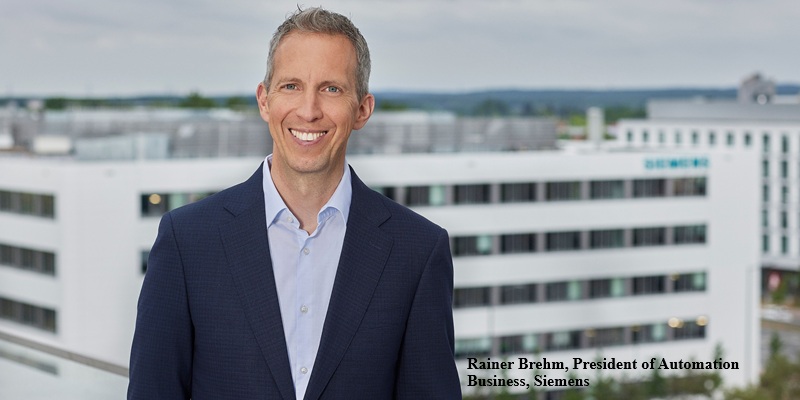
Siemens appoints Rainer Brehm as President of new Automation Business
Rainer Brehm to lead the newly established Automation unit, effective October 1, 2026. New organisation brings together key automation capabilities and further advances Siemens’ ONE Tech Company s..
Read moreSmart Manufacturing
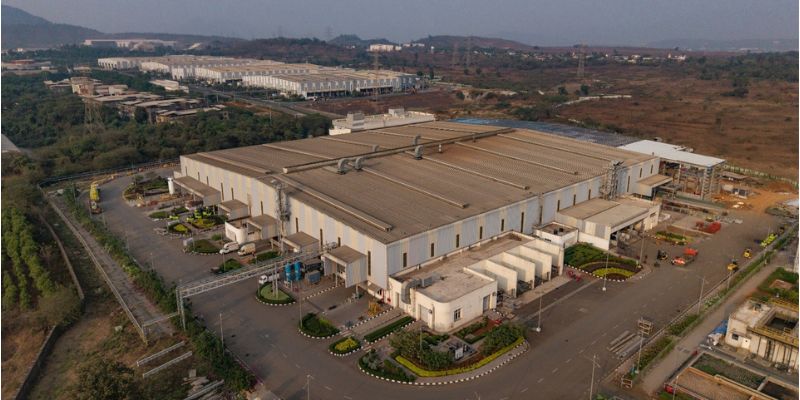
Godrej MHE begins operations at advanced Khalapur manufacturing facility
The facility will produce up to 6,000 material handling units annually, scalable to 15,000, for domestic and export markets.
Read moreOther Industrial Products
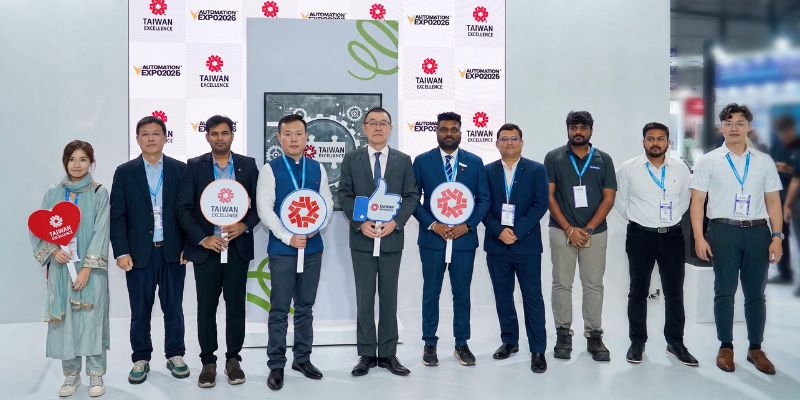
Taiwan Excellence showcases AI-powered manufacturing solutions at Automation Expo 2026
Taiwan Excellence showcased 55+ industrial innovations from 22 Taiwanese brands at Automation Expo 2026, highlighting AI-driven solutions for India's smart manufacturing growth.
Read moreRelated Products
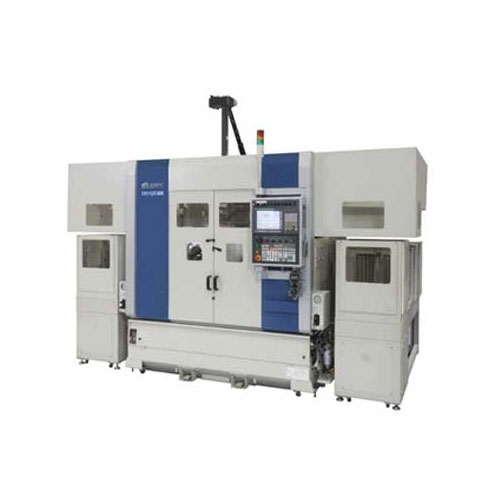
Compact Fmc - Motorum 3048tg With Fs2512
INDUSTRIAL AUTOMATION & TECHNOLOGY CONSULTANCY
Meiban Engineering Technologies Pvt Ltd offers a wide range of Compact FMC - Motorum 3048TG with FS2512.
Digital Colony Counter
INDUSTRIAL AUTOMATION & TECHNOLOGY CONSULTANCY
Rising Sun Enterprises supplies digital colony counter.

Robotic Welding SPM
INDUSTRIAL AUTOMATION & TECHNOLOGY CONSULTANCY
Primo Automation Systems Pvt. Ltd. manufactures, supplies and exports robotic welding SPM.
latest News
Subscribe to iNoW

For Industry News on WhatsApp, Give a Miss Call on: +91 84228 74016