





Schedule a Call Back


Packaging Industry : Preparing for the Future
 Technical Articles
- Nov 12,10
NULL


With the entire retail structure changing form and style along with the spurt in rural selling, the Indian packaging industry is all set to reap a rich harvest in the coming future, reports Huned Contractor
If statistics will tell its own story, here is the truth about India's packaging industry in figures. The market volume of the Indian packaging industry amounts to about Rs 77,570 crore and has constantly grown by approximately 15 per cent year on year. The pace of growth will accelerate to between 20-25 per cent over the next five years. The highest demand for packaging and associated equipment comes from the food processing industry at 50 per cent and from the pharmaceutical industry at 25 per cent. The large growing middle-class segment, liberalisation, and the organised retail sector are the catalysts to growth in the packaging industry. The Indian food market is estimated to be worth about Rs 8,82,350 crore according to the India Food Report 2008 published by Research and Markets.
 The food retail turnover is expected to grow from the current Rs 3,39,365 crore mark to Rs 7,27,212 crore by 2025. The pharmaceutical industry is expected to average an annual growth of 16 per cent till 2012. There are about 600-700 packaging machinery manufacturers, 95 per cent of which are in the small and medium sector located all over India. The Indian packaging machinery imports are of around Rs 606 crore (20-25 per cent) while the Indian packaging machinery exports are rapidly growing. If all this was not enough reason to cheer, India is fast becoming a preferred hub for packaging production due to the lower manufacturing costs and the availability of skilled labour. According to an industry report, the Indian packaging industry has made a mark with its exports that comprise flattened cans, printed sheets and components, crown cork, lug caps, plastic film laminates, craft paper, paper board, and packaging machinery. Moreover, given the increasing demand for consumable items, including ready-to-cook food both in the metro cities and even in the smaller tier-II cities, packaging has become an important element in order to help preserve the food items that now come with longer shelf life. It is no wonder then to find some of the bigger players making huge investments for the future. One such is Bosch Packaging Technology that has set up a packaging machinery plant in Goa. According to an interview of the company's president, Friedbert Klefenz, published in The Economic Times, the focus will be to cater to the demands of the confectionery industry. "However, for the first time, the company will also make machines for packaging pharmaceuticals," he is reported to have said. Yet another company that has put into operation an expansion plan to meet the growing demand is Hassia Packaging, a 100 per cent subsidiary of the global Oystar Group based in Karlsruhe, Germany. Operating in eight countries, with over 2,500 employees and annual revenue of approximately USD 450 million, the Oystar Group has built a strong reputation for delivering advanced and integrated packaging solutions for a wide range of industries, enabling clients to focus on their core competencies. Hassia Packaging specialises in automated packaging of food and other products in pouches, jars, and cans, catering to the needs of a diverse group of industries including dairy, malted food, health drinks, snack food, tea, coffee, sugar, salt, detergent, and agro-chemicals in India, the Middle East countries, Africa, South-East Asia, Australia, and New Zealand.
 Elaborating the company's plans, K Ravi, Managing Director, said, "We are going to double our capacity and also introduce new products. For instance, after successfully launching our VFFS bagging and filling systems for solid products, Hassia Packaging has now entered a new vertical in the dairy market for filling products in cups with the Universal Rotary Filler URF 785. These fill liquids and viscous products in pre-made cups. This machine has features like cup dispenser, filling station, lid placing, lid sealing, cup discharge, and exit conveyor with the optional facility of pre-fill/pre-cleaning, over-cap/printing, etc. This machine can fill three cups at a time with height of 25-125 mm holding 260 - 500 ml in volume. It can be used to pack yogurt, jam, shrikhand, dahi, ice cream and liquids in cups, tubs, and cones and is also useful for solid products." Essentially, it is the rise in organised retailing in India's tier-II cities that created a competitive packaging market beginning from 2008. Companies like Hindustan Unilever, Procter & Gamble India, Nestle India, ITC, Coca-Cola India, PepsiCo India, and Dabur India became very aggressive during this period and packaging became a big tool for launching new, India-specific products in different shapes and sizes. This period witnessed a flux of partnerships and joint ventures, including Alcan Packaging, a part of Rio Tinto Alcan, Klockner Pentaplast Group (KP), a German-based packaging solutions provider, and Polish firm Can Pak announcing new investments or expanding existing investments. "Packaging is now one of the most important factors in the retailing of products and this is combined with the aspects of safety and preservation. As such, India holds tremendous potential in this sector," said Rajesh Bayas, a partner with Sai Krupa Fruit Processing Private Ltd at Jejuri near Pune. The impetus for the Indian packaging industry can be attributed to some well-defined reasons but primarily, as Bayas pointed out, "Changing lifestyles and lesser time to spend in kitchens are resulting in an increasing incidence of eating away from homes, thus resulting in the explosive growth of restaurants and fast food outlets all over the country. Indians are trying out newer cuisines and also purchasing similar food items for their homes. Therefore, we see new products like pasta, soups, and noodles being launched in India, fuelling the growth of the packaging industry."
Further, with growing awareness towards contagious diseases like AIDS and other STDs, awareness towards usage of contraceptives and disposables syringes have increased the demand for packaging. Also, India comprises a big rural market and there has been a growing focus on rural marketing with manufacturers introducing low-priced goods in smaller pack sizes. Such low-priced sachets have proved to be extremely popular in smaller towns and villages. In the urban scenario, as people are becoming more health conscious, there is a growing trend towards buying well-packed and branded products rather than loose and unpackaged items. Packaging has also helped usher in certain norms in favour of the consumers such as the date of packing on bread, nutritional facts on snacks and beverages, etc.
Further, the growth in the packaging sector is now pushing entrepreneurs to innovate at a rapid pace. Mohali-based Khosla Machines is one such enterprise that, among other things, specialises in the packaging of biscuits. According to Ashim Khosla, the company's director, "Pouch packing has certain advantages that make it ideally suited for biscuits. One, it gives hermetic seals, i.e., the seals do not allow any moisture penetration. Biscuits being very hygroscopic in nature require this type of sealing on the package. Two, this type of package is very tolerant to the size and shape of the product and biscuits vary a lot in size and shape because of uncontrollable factors during the production process."
Research and development has therefore become an integral part of the industry. As the management of Mumbai-based Presto Pack Systems, manufacturers and exporters of industrial packaging machines, oil packaging machines, edible oil packaging machines, and milk packaging machines, puts it, "Our R&D experts are aware of the material and mechanical properties of basic material and components used in the production process, which helps them in testing our wide range of packaging machines. In fact, R&D plays a vital role in the smooth functioning of our company and our teams conduct research on various parameters like basic material, manufacturing process, and process technology in order to offer superior quality product range." One of the fastest growing segments in the Indian consumer market is that of packed snacks and therefore companies are now focusing on developing special machines and technologies to cater to the requirements posed by this sector. One such is Coimbatore-based ABC Agro and Food Machine (India) which is actively engaged in manufacturing and exporting a wide range of agro and food processing machinery that can be applied for the processing and packing of snacks and food items such as murukku, wafers, namkeen snacks, poori, chapati, idli, etc.
Similarly, Pune-based Nichrome, established in 1948, is known for its milk packaging machines. In the year 1977 Nichrome successfully designed and manufactured India's first pouch packing machine for milk. When the company turned 60, it repeated history by presenting India's first aseptic pouch packing system for long-life UHT milk. According to a statement made by the company's managing director Harish Joshi on the company's website, "Nichrome believes that a true packaging solution is an optimum combination of product to be packed, packaging machine, and packing material. There are several factors such as product behaviour and characteristics, the packing material, package style, pre and post-packaging systems, and so on. A consumer package products company faces several challenges. The products must have high retail shelf visibility and life. The packaging should be functional and economical. And in the case of launching new products, these have to be introduced into the markets quickly to take advantage of the most recent consumer trends. As such, reliable technology, right fit packaging solutions, and accurate, flexible and sturdy packaging systems minimise the down time of the machines and product and material wastage. Meanwhile, the ongoing developments in this sector are not just limited to style and form. There is more in-depth research being carried out on materials and technology, one of which is the use of nanotechnology. According to a researcher at Delhi's Indian Institute of Technology, nanotechnology in packaging can help prevent the sale of counterfeit products. "Using nanotechnology, companies can apply covert information directly on to the products and packaging.
They can encrypt nano-scale codes on to pharmaceutical pills for tracking and tracing, create nano bar codes which are invisible codes that are technologically very complex," he said.But along with the rise in the packaging sector, there has come about a greater concern for the environmental spill-out of packaging materials. Organisations such as the Indian Centre for Plastics in the Environment have been undertaking continuous awareness programmes by publishing information on waste management materials, statistics, as well as going to schools and colleges and teaching students and people about the correct usage of polymers.
"The good thing is that the packaging sector is developing in a holistic manner because corporations are also seen to be making efforts to adapt greener technologies. No company can now afford to use material that will harm the eco-system," opined Pune-based Shekhar Gadgil, Director, Pallavi Techno Foods, manufacturer of pulp processing plants, aseptic filling lines, etc.
Related Products
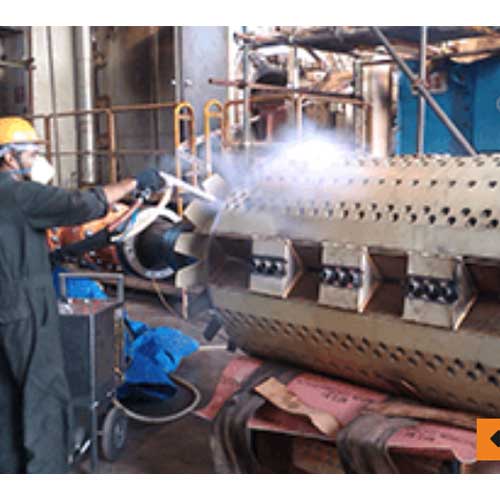
Cryogenic Cleaning Services - Cryogenic (Co2-dry Ice)
Industrial Cleaning Services
Rajamane & Hegde Services Pvt Ltd offers Cryogenic (CO2-Dry Ice) Cleaning for Electrical Rotating Machines Cryogenic Cleaning Method
Read more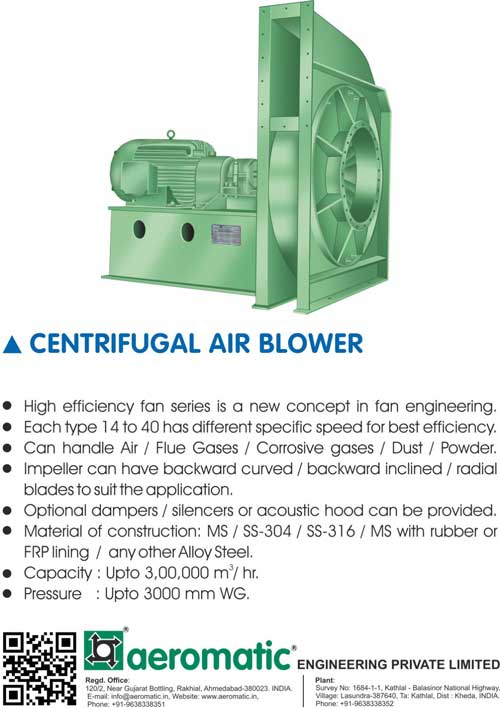
Centrifugal Air Blower
Blowers & Accessories
Aeromatic Engineering Private Limited offers a wide range of centrifugal air blower.
Read more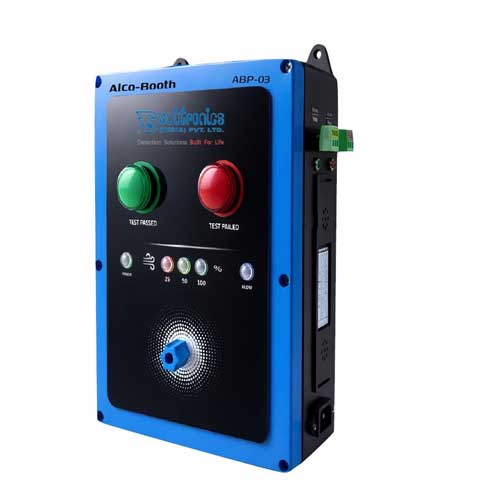
Alco-booth
Miscellaneous Industrial Supplies
Subtronics (India) Pvt Ltd offers a wide range of Alco-Booth – Model ABP-003.
Read morelatest News
Subscribe to iNoW

For Industry News on WhatsApp, Give a Miss Call on: +91 84228 74016