



Schedule a Call Back


New Generation Conveying Systems & Techniques
 Technical Articles
- Oct 08,12
NULL


With increasing space constraints many a times conventional conveying techniques fail to serve the purpose. This has given rise to new technologically advanced conveying equipments which solve a variety of problems where conventional conveying methods fall short, thereby enabling new kind of plant design and implementation that wasn't possible before. Bevcon Wayors, in collaboration with multiple foreign companies, has successfully brought "New Generation Conveying Systems and Techniques" to the Indian market. This is a part of a range of Bulk Material Handling and Processing Solutions the company has been offering since two decades. Bevcon Wayors has successfully tied up with SBS Belting - UK for cleated belt; DOS Santos International - USA for sandwich belt conveyor; and FMK - Poland for stockyard systems (linear stacker - reclaimer, wagon tippler and paddle feeder).
1. Air Supported Belt Conveyor
Air Supported Belt Conveyor overcomes many of the problems associated with standard roller-supported conveyors. The air supported belt conveyor is an air cushion-belt-conveyor. in this system the belt is carried on a film of low pressure air within a trough.
Air supported belt conveyor is used to convey a wide variety of materials. Moreover, air supported belt conveyors can convey materials at angles up to 25 degrees while the traditional conveying technologies can convey only up to a 16 degrees. The Bevcon air supported belt conveyors are available in different sizes with widths up to 2200 mm and conveying capacities up to 3000 tonnes/hr.

2. Sandwich Belt Conveyor
Sandwich Snake Belt Conveyors are so named due to the manner in which the material is 'sandwiched' between two rubber belts before it is inclined at angles up to 90 degrees. Material is 'hugged' by the belts throughout the inclined section to ensure that it does not slide back down the incline, even if the conveyor trips.
Sandwich snake belt conveyor consists of two endless belt conveyors that share a common load carrying path. The top and bottom belts are independently driven and tensioned. Along the carrying path the top and bottom belts are alternately supported against closely spaced troughing idlers. Radial pressure, due to belt tension and the curving profile, continuously hugs the material that is sandwiched between the two belts thus enabling material conveying vertically.
Advantages of Snake Sandwich conveyors:
 Unlimited conveying capacity
- A system suitable for the most rugged mine applications, yet gentle on sensitive and friable materials.
- High availability and low operating and maintenance costs.
- Smooth surfaced belts allow continuous belt cleaning by scrapers and plows. This also facilitates intermediate material discharge by belt plows, as appropriate, before and/or beyond the sandwiched part of the snake profile.
- All conventional conveyor hardware insures economy and fast delivery of replacement parts.
Snake Sandwich Conveyor Profiles
Snakes are available in widely ranging profiles of C and S-Shape. In any case, a long bottom belt approach is possible to the sandwich entrance, and discharge may be on the high incline or may be after the extension of the carrying belt beyond the mouth of the sandwich.
3. Cleated Belt Conveyor
Cleated type Belt Conveyors, also named as High Angle or Steep Angle Conveyors are used to transport products in bulk up to inclines of 30 to 90 degrees. The pocket conveyor is employed extensively for many different applications. Pocket conveyors comprise reasonably standard conveyor components and their design follows widely accepted design principles.

A salient feature of cleated belt conveyor is the design, which provides for efficient product transfer in space constrained areas. All components of conveyors are produced on state-of-the-art manufacturing equipment in collaboration with foreign companies. Its significant advantages are: prevents product degradation, no spillage with steep angle conveying, minimum maintenance & long belt life, low power requirement and quiet smooth running.
4. Stockyard System
The central function of stockyards in the field of bulk materials handling lies in the buffering, blending and storage between incoming and outgoing materials.
 Stacker: A stacker is a large machine used in stockyard system. Its function is to pile bulk material such as coal, limestone, ores, etc., on to a stockpile. Stackers are nominally rated for capacity in tonnes per hour (tph). They normally travel on a rail between stockpiles in the stockyard. A stacker can usually move in at least two directions: horizontally along the rail and vertically by luffing (raising and lowering) its boom. Luffing of the boom minimises dust by reducing the distance that material such as coal, limestone, ores needs to fall to the top of the stockpile. The boom is luffed upwards as the height of the stockpile increases. Some stackers can rotate the boom. This allows a single stacker to form two stockpiles, one on either side of the conveyor. Stackers are used to stack in different patterns, such as cone stacking and chevron stacking.

Reclaimer: A reclaimer is a large machine used in stockyard system applications. A reclaimer's function is to recover bulk material such as coal, ores and etc. from a stockpile.
Reclaimers are volumetric machines and are rated in cubic meters per hour (m3/h) for capacity, which is often converted to tonnes per hour (tph) based on the average bulk density of the material being reclaimed. Reclaimers normally travel on a rail between stockpiles in the stockyard. A bucket wheel reclaimer can typically move in three directions: horizontally along the rail; vertically by "luffing" its boom and rotationally by slewing its boom. Reclaimers are generally electrically powered by means of a trailing cable.
Stacker-Reclaimer: As the name suggests, it is a single machine with dual function of stacking and reclaiming. Stacker-reclaimer machine have significantly less maintenance cost in comparison to individual stacker and reclaimer machines
Rotary Wagon Tippler: A power-operated structure for discharging/unloading coal or other material from railway wagons turning through 170 degrees known as Rotary Wagon Tippler.

The Bevcon-FMK barrel type wagon tippler is designed for unloading broad-gauge open railway by inverting the wagon on its own centre of gravity to the angle of 170 degrees, thereby discharging its content into bunker below the tippler. The tippler ensures handling of wagons, without any damage. The tippler consists of two Circular rings a movable platform with travel rails and supports rollers.
As the tippler starts rotating, the table with wagon tips on its axis to the tippler's side and rest on the side wall. Sidewall is lined with rubber pads throughout the length of the tippler, which reduces the pressure on wagon walls. The wagons positioning system then places the loaded wagon inside the tippler. While the wagon is being unloaded, the wagon positioning system brings the next wagon closer to wagon tippler. Once emptied, the wagon is pushed out of the tippler and it is then replaces with loaded wagon.

One of the unique features of our systems is that its works purely on the basis of gravity thereby significantly reducing the operational cost in comparison to any other hydraulic support system presently found in market.
Paddle Feeder: One of the most critical equipments in stockyard system is the Paddle Feeder. Once the wagon discharges material into bunker, it helps to extract loose dump materials from bottom of the bunker table onto a belt conveying system underneath.
Paddle feeders are designed to unload different types of material. The discharge wheel is mounted on a hydraulic controlled arm that allows it to penetrate the material lying on the table deep inside the bunker.
 This helps to unload even the most cohesive and difficult flowing materials. Material collected from the table is continuously replaced by new material from top until whole bunker is emptied. Paddle feeder travels above and along conveyor so that the material collected from the table is dumped to the conveyor and transported further.
Bevcon-FMk paddle feeders use rack and pinion mechanism for travelling with hydraulic drive. Hydraulic system for the discharge wheel and the discharge arm is used as well. This makes ours paddle feeders very strong and reliable in use.
(Bevcon Wayors Pvt Ltd, Hyderabad. Tel: 040-23732628, 23747643. Fax: 91-40-23750435, 66623588. Email: shabbir.khan@bevconwayors.com, info@bevconwayors.com)
Related Products
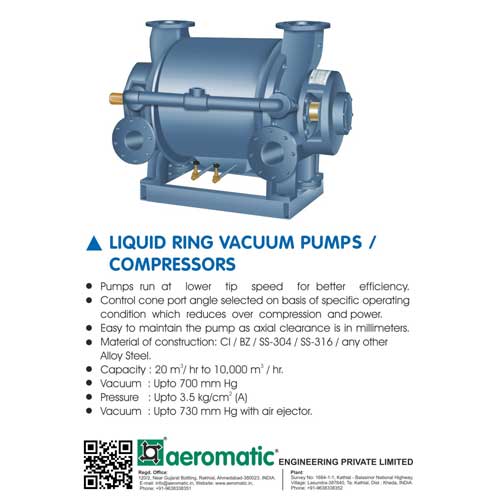
Liquid Ring Vacuum Pumps/Compressors
Compressors and Allied Equipment
Aeromatic Engineering Private Limited offers a wide range of liquid ring vacuum pumps/compressors.
Read more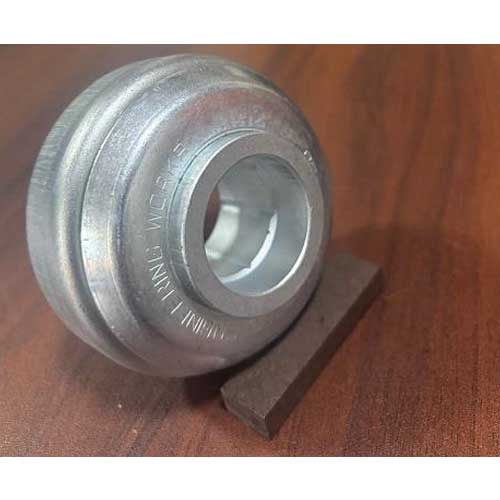
Hot Wheel Bearing
Bearings, Bushings, Wheels and Gears
SICCO Engineering Works offers a wide range of hot wheel bearing. Read more
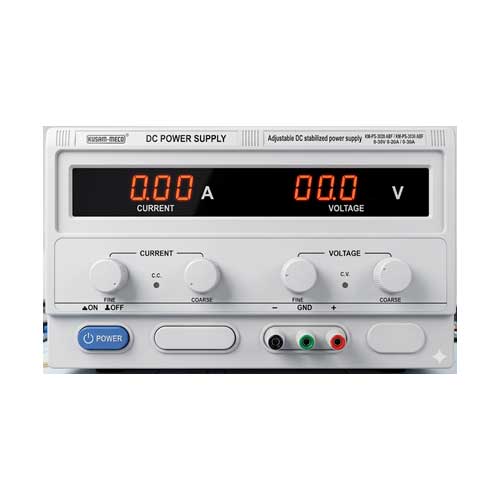
Kusam-meco DC Power Supply Model Km-ps-3020 Abf / Km-ps-3030 Abf
Power Supplies, Batteries & Accessories
<p>Kusam Electrical Industries Ltd offers Kusam-Meco DC power supply model KM-PS-3020 ABF/ KM-PS-3030 ABF</p> Read more
latest News
Subscribe to iNoW

For Industry News on WhatsApp, Give a Miss Call on: +91 84228 74016