





Schedule a Call Back


Lighting up India
 Technical Articles
- Nov 30,-1

With several government schemes getting into the implementation phase to help make the ‘Power for All’ mission a success, manufacturers of power generation, transmission and distribution are betting big on a turnaround.

There can always be a slip between the cup and the lip. However, given the direction that India’s power sector has taken of late, the slip seems unlikely. The utility electricity sector in India had an installed capacity of 303 GW as of June 30, 2016. Renewable power plants constituted 28% of total installed capacity and non-renewable power plants comprised the remaining 72%. The gross electricity generated by utilities was 1,106 TWh (terawatt hours) and 166 TWh by captive power plants during the 2014-15 fiscal. This includes auxiliary power consumption of power generation plants. In 2013, India became the world’s third-largest producer of electricity with 4.8% global share in electricity generation, surpassing Japan and Russia.
Given this scenario, manufacturers of power generation, transmission and distribution equipment find themselves in a prime position indeed. “India has been witnessing a significant rise in power demand for the past few decades on account of rapid growth in population, industrialisation and urbanisation. What has also helped is the government’s various initiatives including Deendayal Upadhyaya Gram Jyoti Yojana (DDUGJY) for electrification of rural pockets of India, which has spurred significant investments in the country’s power sector. Notable technological upgrades are underway to reinforce the country’s transmission and distribution network, which would continue to drive the demand for power and distribution transformers in India,” opines Babu Babel, President, Indian Electric and Electronic Manufacturers Association (IEEMA).

As per the latest update, the electrical equipment industry has showed signs of revival, growing 6.8% last fiscal over previous year on the back of the government’s rural electrification and transmission system strengthening drive, resulting in improved order flow. Power distribution and transmission equipment like transformers, conductors, meters, cables and switchgears registered good growth as the government is enhancing transmission capacity and pushing states to improve the distribution network.
According to a report titled ‘India Power & Distribution Transformers Market Forecast & Opportunities, 2020’, the power and distribution transformers market in India is projected to grow at a CAGR of over 10% till 2020. Power transformers contribute a major portion in overall market revenues due to their higher price points. Under the 12th Five Year Plan (2012-2017), the Indian government has allocated USD 200 billion for strengthening the country’s power generation, transmission and distribution sector. One of the major developments underway includes the country’s shift from 765 kV to 1,200 kV power transmission. This will fuel the demand for EHV and UHV class power transformer installations throughout the country. There is also an intense focus on the use of alternative energy resources like nuclear and solar energy for power generation, which is expected to further boost transformer deployments in the country in the coming years.
The report further states that the country’s power transmission and distribution (T&D) sector remained sluggish during 10th and 11th Five-Year Plan due to inadequate investments allocated by the Indian government. However, under the 12th Five Year Plan, the Indian government is geared towards expansion of the country’s T&D network with significantly higher investments than previous five-year plans, which is expected to result in robust growth of the power and distribution transformers industry over the next five years. Upcoming government projects like Green Energy Corridor for power generation from renewable sources would further add to the overall power and distribution transformer installations in the country.

India has also entered into a technological collaboration with Germany under which the latter would extend its technical assistance for upgrading India’s existing power grid and facilitate flow of renewable energy through the grid. Other initiatives like Restructured Accelerated Power Development and Reforms Programme are aimed at providing basic power infrastructure to rural inhabitants and households in the country, thereby buoying the demand for power and distribution transformers in India. The report also highlights the increasing penetration of Chinese transformer manufacturers in the Indian market, signalling higher competition ahead for domestic transformer manufacturers.
In terms of foreign companies eyeing the Indian power equipment pie, two major Chinese companies, TBEA and Baoding Tianwei Baobian, have already set up their transformer manufacturing units in Gujarat, while other Chinese players are showing interest in entering India through joint ventures and collaborations. Also, American electrical equipment maker Intermatic Inc announced its foray into India through a joint venture with Noida-based AMTL, which was earlier called Indo Asian Fusegear Ltd. Intermatic’s subsidiary Grasslin GmbH has struck a strategic alliance with AMTL to offer its switches, light and temperature control solutions. India’s electrical switches market is pegged at over Rs 1,000 crore.
Indian companies, on the contrary, are more focused towards exports as they earn higher profit margins on transformer exports to countries like the US, South Africa, Cyprus and Iraq. To reduce their dependence on overseas laboratories for testing extra-high-voltage transformers, Indian players are also setting sights on establishing their in-house testing facilities, mainly for UHV class transformers. Meanwhile, state-run Power Grid Corporation will procure distribution equipment worth Rs 35,000-40,000 crore from domestic vendors on behalf of states for implementation of rural electrification and network strengthening programmes.

Realising the importance of private participation in the power sector, the Indian government is strengthening its policies to encourage private investments. The Electricity Act 2003 caused the compulsory unbundling of the State Electricity Boards (SEBs) to improve their operational efficiencies, thus creating new market demand for better transmission equipment. “The government’s emphasis on the transmission and distribution sector reforms and investments are showing signs of fruition, thus creating a phenomenal growth opportunity for the Indian transformer market,” Frost & Sullivan’s research analyst S Bharath Srinivasan had stated in an earlier report.
According to Babel, the size of the Indian electrical equipment industry is valued at around USD 28 billion; a fourth of it is made up of power generation equipment with transmission and distribution contributing the rest. The industry provides direct employment to about 5,00,000 people and indirectly to about 1 million. “We, as a country, are aspiring to increase the output of the electrical equipment industry to USD 100 billion by 2022 and become a destination of choice for overseas’ producers of such equipment,” he says.
However, this is not to say that there are no pressure points. The growing presence of global participants in the power and distribution transformers market is a cause for concern for local manufacturers. International manufacturers have expertise in segments such as extra-high-voltage (EHV) power transformers and unitised substation technologies. Moreover, low investment in transformer research and development (R&D) in India poses a challenge to domestic participants, who eventually tie up with multinational giants for high-end technologies. “The global price hike in transformer raw materials such as copper, aluminium, and oil resulted in the increase in transformer prices in India. This has tilted the balance. Also, shortage of cold rolled grain-oriented steel (CRGO) is further escalating the price of this essential ‘transformer core’ material. With growing demand and price correspondingly rising, manufacturers are finding it difficult to maintain margins in the long term, thereby transferring the burden of increased costs to end users,” says Pune-based Rajesh Shah, director of Lecmec Engineering, a company that makes switchgears and other electrical equipment.

Fortunately, optimism is playing the upper hand. “Reforms in the sector and the enlargement of the power distribution network under the Accelerated Power Development and Reforms Programme (APDRP) is driving the growth and strengthening of sub-transmission lines. In addition, the increase in transmission grid reliability will result in heightened demand for power transformers,” Babel notes. The demand drivers are in abundance. Of the 1.4 billion people in the world who have no access to electricity, India accounts for over 300 million. The International Energy Agency estimates India will add between 600 GW to 1,200 GW of additional new power generation capacity before 2050. This added new capacity is equivalent to the 740 GW of total power generation capacity of European Union (EU-27) in 2005. Some of the other drivers include a rapidly growing economy, rising exports, improving infrastructure and increasing household incomes.
Commenting on the present scenario, S C Bhargava, Vice President (Electronics & Automation), L&T, had this to say during the last edition of ELECRAMA, “I think 4-5% growth in the electrical equipment industry is quite possible this year. When the GDP was growing at 6-7%, the industry grew at 12-13% but now we need to recognise that the GDP growth we are recording today does not include the growth taking place within the electrical industry. Further, the Ujwal Discom Assurance Yojana (UDAY), which will lead to a financial turnaround and revival package for electricity distribution companies of India with the intent to find a permanent solution to the financial mess that the power distribution is in, will play a big role in making states take full responsibility and thereby help in improving the distribution infrastructure. This will enhance the market potential for equipment manufacturers.”
Unfortunately, the one big hitch is inadequate last mile connectivity. The country already has adequate generation and transmission capacity to meet the full demand temporally and spatially. However, due to lack of last-mile link-up with all electricity consumers and reliable power supply (to exceed 99%), many consumers depend on DG sets, using costly diesel oil for meeting unavoidable power requirements. Also, more than 10 million households use battery storage UPS as back-up in case of load shedding. India imports nearly USD 2 billion worth of battery storage UPS systems every year. “The distribution companies should focus on providing uninterrupted power supply to all the consumers. That will change the entire picture,” Shah says.
– HUNED CONTRACTOR
Industry Overview
* The Indian power equipment industry comprises two segments – generation equipment (boilers, turbines, generators) and transmission and distribution (T&D) and allied equipment like transformers, cables, transmission lines, switchgears, capacitors, energy meters, instrument transformers, surge arrestors, stamping and lamination, insulators, insulating material, industrial electronics, indicating instruments, winding wires, etc.
* The generation equipment sector is 28% and T&D equipment sector 72% of the industry.
* The industry production for 2014-15 was Rs 1,28,000 crore; exports at USD 5.3 billion.
* Up to 9.9% of the manufacturing sector is in terms of value and 1.4% of India’s GDP.
* Direct employment to 5 lakh persons, indirect to 10 lakh, and over 50 lakh across the entire value chain.
* Diversified, matured and strong manufacturing base, with robust supply chain.
* Rugged performance design of equipment to meet tough network demand.
* Presence of major foreign players, either directly or through technical collaborations with Indian manufacturers.
* State-of-the-art technology in most sub-sectors at par with global standards.
* Major export markets include United States of America, United Arab Emirates, Germany, United Kingdom, Nigeria, Saudi Arabia, Australia, Brazil, Canada, and France.
* Major export products include switchgear and control gear, transformers and parts, industrial electronics, cables, transmission line towers, conductors, rotating machines (motors, AC generators, generating sets, etc.
* For the rapid development of the domestic electrical equipment industry, encompassing the complete value chain in power generation, transmission and distribution, a holistic mission plan has been launched by the Department of Heavy Industry (DHI), Government of India, with support from IEEMA. The plan lays down a clear roadmap for enhancing the competitiveness of the domestic electrical equipment industry.
* Vision 2022: To make India the country of choice for the production of electrical equipment and reach an output of USD 100 billion by balancing exports and imports.
Related Stories
Process Equipment

LANXESS to Produce Fire-Resistant Hydraulic Fluids in India
LANXESS will start local production of Reolube fire-resistant hydraulic fluids at its Jhagadia site, strengthening supply reliability across India and the IMEA region.
Read moreAerospace Defence
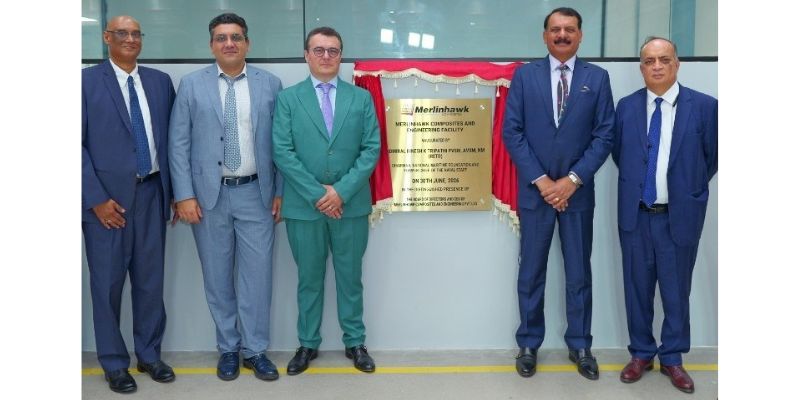
Merlinhawk Opens Advanced Composites Facility in Tamil Nadu
Merlinhawk Aerospace and Vega Composites have inaugurated an advanced composites facility at Shoolagiri to support aerospace and defence manufacturing in India.
Read moreAuto & Auto Components

Rane Madras to Acquire HCL Friction Business for Rs 3.70 Bn
Rane Madras will acquire Hindustan Composites’ friction business, including the COMPO brand, to create a Rs 10 billion-plus friction materials platform.
Read moreRelated Products
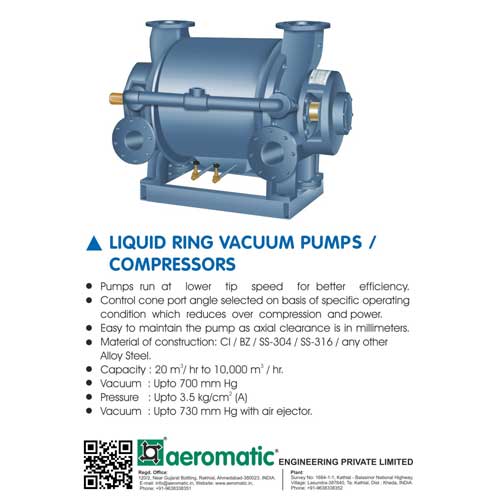
Liquid Ring Vacuum Pumps/Compressors
Compressors and Allied Equipment
Aeromatic Engineering Private Limited offers a wide range of liquid ring vacuum pumps/compressors.
Read more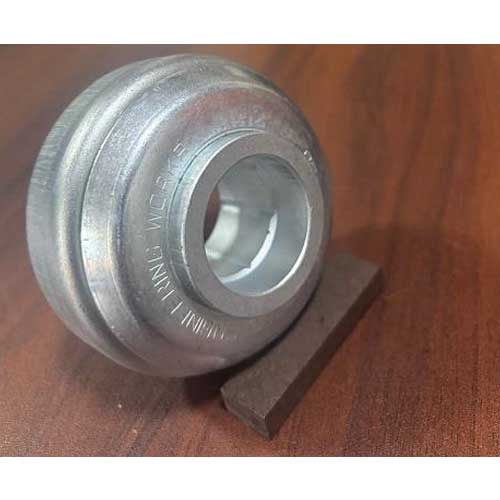
Hot Wheel Bearing
Bearings, Bushings, Wheels and Gears
SICCO Engineering Works offers a wide range of hot wheel bearing. Read more
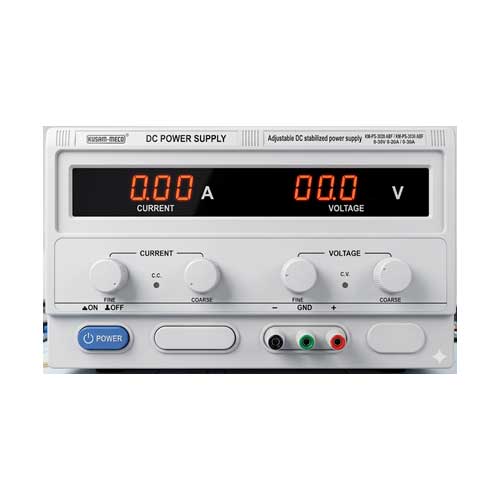
Kusam-meco DC Power Supply Model Km-ps-3020 Abf / Km-ps-3030 Abf
Power Supplies, Batteries & Accessories
<p>Kusam Electrical Industries Ltd offers Kusam-Meco DC power supply model KM-PS-3020 ABF/ KM-PS-3030 ABF</p> Read more
latest News
Subscribe to iNoW

For Industry News on WhatsApp, Give a Miss Call on: +91 84228 74016