





Schedule a Call Back


Infrastructure: India's growth Driver
 Technical Articles
- Feb 02,16

To say that India suffers from poor infrastructure is stating the obvious – it is at 85 in the World Economic Forum’s infrastructure ranking.

Infrastructure, according to Wikipedia, refers to the fundamental facilities and systems serving a country, city, or area, including the services and facilities necessary for its economy to function. These are typically structures such as roads, bridges, tunnels, water supply, sewers, electrical grids, telecommunications, etc., and can be defined as “the physical components of inter-related systems providing commodities and services essential to enable, sustain, or enhance societal living conditions.” The infrastructure sector is thus a key driver for a country’s economy, and it is no different for India. To say that India suffers from poor infrastructure is stating the obvious – it is at 85 in the World Economic Forum’s infrastruc ture ranking. This despite the country following a planned economic development model based on the erstwhile Soviet Union’s 5-year plans. The main reason for this is the poor implementation record, which is still the case where projects are delayed causing cost over runs and subsequent inefficiencies. According to data provided by the Ministry of Statistics and Programme Implementation (MOSPI) to the parliament in early 2015, four out of every 10 central government infrastructure projects are either running behind schedule or have overshot original cost estimates. In certain cases, costs have escalated manifold, even up to 20 times, and delays of 10-20 years are not rare.
As per available statistics, the transport sector constitutes 6% of the country’s GDP and 70% of the share of the roads sector. India has an extensive road network of 5.23 million km, which is the second largest in the world. More than 60% of freight and 90% of the passenger traffic in the country is handled by road. The GoI has launched major initiatives to upgrade and strengthen highways and expressways in the country. The private sector has emerged as a key player in the development of road infrastructure. The value of roadways and bridge infrastructure in India is expected to grow at a CAGR of 17.4% between 2012-17, to reach USD 10 billion. But the sector is also beset with a host of problems, not all related to government policies.

At a recent conference on financing infrastructure projects jointly organised by the Confederation of Indian Industry (CII) and the Gujarat government, it was stated that nearly a quarter of all major infrastructure projects in the country under the public-private-partnership model are stalled due to want of funds, lack of interest among stakeholders and unfavourable market conditions, not necessarily in that order, but a sort of vicious circle nevertheless. Inadequate due diligence in project preparation is also a reason in a few cases. Land acquisition is another major hurdle, the government having failed to pass an ambitious bill due to the vociferous opposition by various political parties, including a few of the allies of the ruling party. During the UPA-II government environmental concerns and objections stemming from them, real or motivated, were responsible too for stalling various projects.
Notwithstanding such irritants, the government is also actively engaged in troubleshooting and is keen to boost infrastructure growth, which is central to its Make in India campaign. A number of road building and power transmission projects have been awarded, including some power projects to public sector undertakings (PSUs). The government has also fast-tracked the construction of freight corridors and proposed master plans for Sagar Mala, which envisages interconnecting of coastal cities via roads, railways, ports, etc. It is focussed, unlike the previous government, on framing policies and promulgating laws primarily with two characteristics: these have to be transparent and should be in the interest of the public, the coal mine auctions and the Mines and Minerals (Development and Regulation)

Amendment Act being prime examples. Some of the steps taken in the recent past include:
*100 per cent foreign direct investment (FDI) under automatic route in the construction development sector
*Relaxation of rules for FDI in the construction sector by reducing minimum built-up area as well as capital requirement
*Increased capital outlays for roads, and railways in the last budget by Rs 140.3 billion (US$ 2.11 billion) and Rs 100.5 billion (US$ 1.51 billion) respectively, and
*Signing of a memorandum of understanding (MoU) with the US government to establish an Infrastructure Collaboration Platform. This envisages US industry participation in Indian infrastructure projects to improve the bilateral relationship and benefit both economies.

In line with the government’s Make in India initiative, India’s manufacturing infrastructure and capacity for innovation is poised for phenomenal growth: new smart cities and industrial clusters, being developed in identified industrial corridors having connectivity, new youth-focused programs and institutions dedicated to developing specialised skills. Among the new project initiatives are:
Impetus on developing Industrial Corridors and Smart Cities – Rs 50,000 crore (US$ 7.53 billion) earmarked to develop 100 smart cities across the country
*A new ‘National Industrial Corridor Development Authority’ is being created to coordinate, integrate, monitor and supervise development of all Industrial Corridors
*Work on 5 smart cities in progress as a part of the Delhi-Mumbai Industrial Corridor – Dholera, Shendra-Bidkin, Greater Noida, Ujjain and Gurgaon

*Chennai-Bengaluru Industrial Corridor: Master Planning for 3 new Industrial Nodes [Ponneri (TN), Krishnapatnam (AP), Tumkur (Karnataka)] in progress
*The East Coast Economic Corridor (ECEC) with Chennai-Vizag Industrial Corridor as the first phase of this project: Feasibility Study commissioned by ADB
*Amritsar-Kolkata Industrial Corridor: DMICDC selected as nodal agency for doing feasibility study, which is being conducted at fast pace
*North-eastern part of India planned to be linked with other Industrial Corridors in cooperation with the Japanese government
*Plans to invest US$ 137 billion in the rail network over the next five years in building rail infrastructure needed to unlock faster economic growth, and
*New industrial clusters for promoting advance practices in manufacturing.
The efforts are bearing fruit, though the results are not going to come thick and fast. One major positive is thee confidence of major global players in the Indian growth story is reaffirmed by these positive measures. While there was no doubt about the positives, the signals from the previous government had caused confusion with plans being put on hold. The situation has changed for the better. The Sany Group, one of the largest global manufacturing companies of construction equipment, recently announced the signing and handover of Green Energy Commitment to Prime Minister Modi towards development of 2000 MW of Renewable Energy Projects with investments of USD 3 Bn (Rs 20,000 crore) for the period 2016-20. Besides generating 4.8 TWh of green and clean power annually these projects will generate 1000 jobs and prevent carbon emissions of around 3.6 million tonnes per year.
Similarly, Australian infrastructure technology company Global Road Technology (GRT) is expanding its presence in Asia, commissioning a new factory in India to handle increased contracts on the sub-continent. The company has forecast more than $AU 300 million in projects over the next three years, delivering its patented liquid polymers and Cold In-Place Recycling technology to create “instant roads” in some of the India’s most populated regions. “Our technology allows us to construct a kilometre of expressway within 24 hours, cutting 75 per cent off standard construction times and significant savings in costs. We have the current resources in place to deliver more than 200km of road a year in India and we are scaling up those capabilities to triple output over the next three years,” said Mr Troy Adams, Managing Director of GRT. GRT’s technology allows governments, military, infrastructure and mining companies to deliver safer, more cost-effective roads much faster than conventional building methods.
No report on India is complete without the inevitable comparison with China, and the comparison invariably boils down to infrastructure. China’s manufacturing muscle is built on the solid body of its infrastructure and it still remains a top priority for the Chinese government, which has long realised the importance of reliable roads and rails, electricity, and telecommunications, the wheels on which a modern economy runs smoothly. Ironically, today there is a section within China that questions the zeal with which the government has built infrastructure amid the ongoing slowdown in the Chinese economy, but that has not much changed the pace of development, which continues unabated. But this is unlikely to be the case with India, because to be in that happy position, one has to first get there. One reason is India’s investment on infrastructure is a little over 4 per cent of the GDP compared to China’s 8 per cent. Hopefully, the various measures initiated by the government would begin that long march.
Related Stories
Machine Tools & Accessories
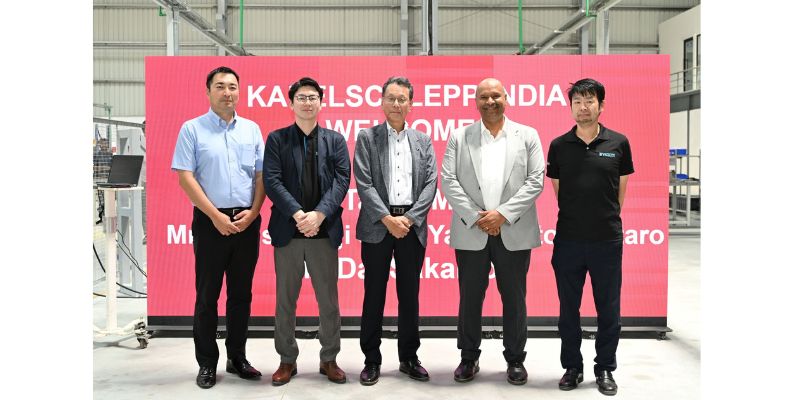
Tsubaki Leadership Reinforces India Growth Strategy during Kabelschlepp Visit
Tsubaki’s senior leadership visited Kabelschlepp India to review growth, localisation and innovation initiatives while strengthening engagement with employees, partners and customers.
Read moreAuto & Auto Components

Škoda Auto Volkswagen India Announces Leadership Transition
Piyush Arora will assume additional responsibility for Group sales and marketing in India as Jan Bures moves to a new role at Volkswagen AG.
Read moreProcess Equipment

Godavari Biorefineries Starts 200,000-litre Grain Distillery
The Rs 1.3 billion facility at Sameerwadi raises Godavari Biorefineries’ ethanol capacity to 800,000 litres per day and adds 60 million litres annually.
Read moreRelated Products
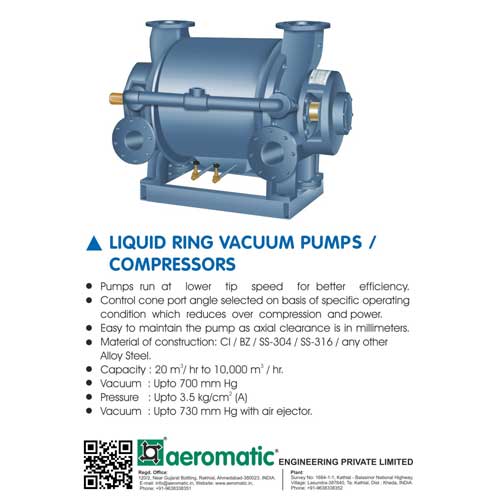
Liquid Ring Vacuum Pumps/Compressors
Compressors and Allied Equipment
Aeromatic Engineering Private Limited offers a wide range of liquid ring vacuum pumps/compressors.
Read more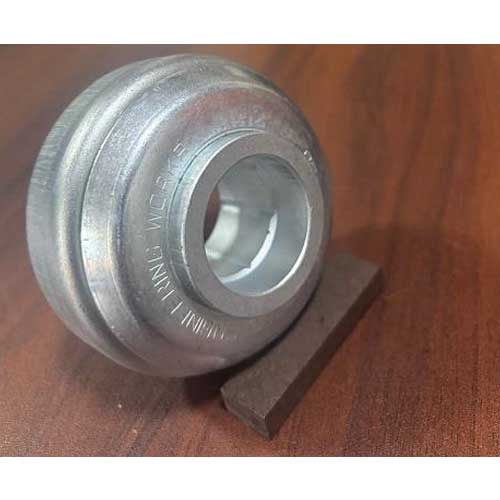
Hot Wheel Bearing
Bearings, Bushings, Wheels and Gears
SICCO Engineering Works offers a wide range of hot wheel bearing. Read more
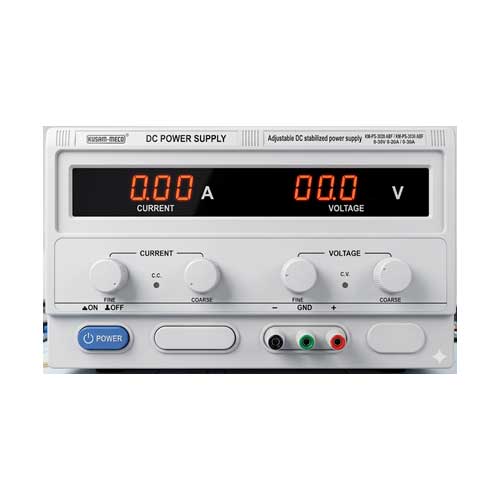
Kusam-meco DC Power Supply Model Km-ps-3020 Abf / Km-ps-3030 Abf
Power Supplies, Batteries & Accessories
<p>Kusam Electrical Industries Ltd offers Kusam-Meco DC power supply model KM-PS-3020 ABF/ KM-PS-3030 ABF</p> Read more
latest News
Subscribe to iNoW

For Industry News on WhatsApp, Give a Miss Call on: +91 84228 74016