







Schedule a Call Back


Godrej Enterprises: Engineering India’s Warehousing Future
 Articles
- Jun 25,26
Ashlin Rajan explores how Godrej’s Chennai facility is engineering the backbone of modern warehousing through scale, automation, sustainability and smarter intralogistics.
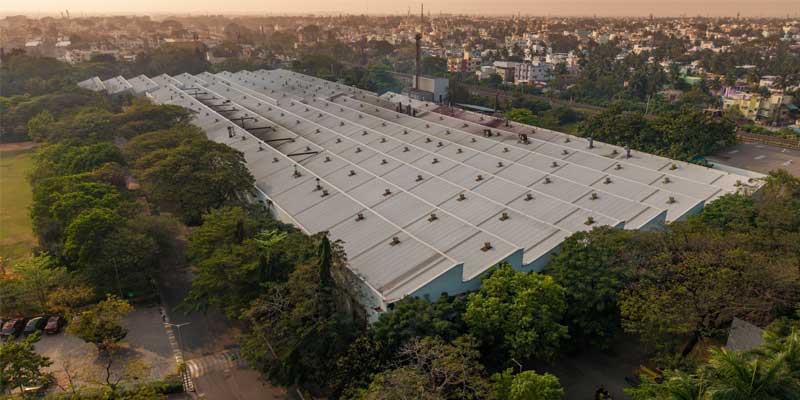
In a factory, every square metre is measured; in a warehouse, every second counts. Storage and intralogistics have become central to India’s industrial expansion, as e-commerce, quick commerce, food and beverages, FMCG, retail, automotive, pharmaceuticals, manufacturing and third-party logistics demand faster, denser movement. In this landscape, Godrej Enterprises Group’s Storage Solutions business has built a manufacturing capability around a critical question: how can space, steel and engineering make supply chains work harder?
At the centre is its Chennai manufacturing facility, described as one of Asia’s largest storage intralogistics manufacturing sites. Established in 2001 and spread across 26 acres in Tamil Nadu, the facility has grown into a manufacturing base with annual capacity of 100,000-plus tonnes. For 25 years, the business has supported storage, handling and movement of goods across warehouses, factories and distribution centres. Its engineered systems underpin operations across more than 50,000 facilities, giving the Chennai plant a role beyond fabrication.
Built for industrial scale
The Chennai facility manufactures storage and intralogistics systems that enable businesses to maximise warehouse capacity, improve efficiency and support high-throughput supply chains. Its product range includes pallet racking and shelving systems, mezzanine and multi-tier storage structures, racking for automation systems and automated storage and retrieval systems, high-density warehousing infrastructure, rack-clad warehouses, integrated warehouse systems and customised intralogistics solutions for complex requirements.

This breadth matters because warehousing is no longer passive support. A modern facility may need to hold slow-moving industrial inputs, fast-moving retail goods, temperature-sensitive products, automotive components or goods destined for same-day delivery. The Chennai plant operates not merely as a producer of racks and structures, but as a manufacturing backbone for engineered warehouse ecosystems.
The facility supports markets in more than 40 countries across Asia, the Middle East, Africa, Europe, Australia and America. Built on a “Make in India, For the World” philosophy, it reflects Indian manufacturing’s shift from domestic supply to export-oriented engineering capability.
From steel to structured flow
The manufacturing process begins with steel. While the final product may appear as racking, shelving, beams, uprights, panels or integrated structures, the value lies in how raw material is converted into reliable, repeatable and safe storage infrastructure. At the Chennai plant, sheet metal and steel components are processed through lines designed for scale, precision and throughput.
Material is received and prepared for forming or fabrication, after which components are cut, shaped and configured according to the warehouse design. Roll forming and related operations create profiles that provide the structural strength required for racking and storage systems. Components then move through welding, panel processing or other fabrication stages. Once manufactured, they undergo inspection and finishing before being packed for dispatch.
Packaging is not an afterthought. Storage systems often reach sites where erection schedules are linked to warehouse commissioning. Components must therefore be packaged and dispatched in a way that supports identification, sequencing and safe handling.
Automation on the shopfloor
A defining feature of the Chennai facility is its growing use of automation and robotics. The latest additions are driving operational efficiency gains of 15 to 20 per cent. These systems improve manufacturing efficiency, precision and throughput, while reducing fatigue and improving ergonomics.
One important addition is the automated coil handling facility. In storage system manufacturing, coil handling is a critical upstream activity because it influences roll forming capacity and material flow. Automating this area strengthens safety while improving consistency and speed. Similarly, automation in material handling, including auto loading and unloading of components, reduces manual strain and supports smoother movement across production stages.
The automated panel line is another significant capability. Described as a first-of-its-kind line, it integrates cutting and packaging stations and is equipped with double cutting and packaging stations. Its end-to-end automation runs from sheet metal processing to the final packaged product. The result is improved throughput, consistency and efficiency, where repeatability and clean finishing are essential.
Robotic welding adds another layer of productivity and precision. With a production capacity of more than 2,000 beams per day, the robotic welding system doubles productivity levels while enhancing quality and efficiency. In a segment where structural integrity is central to safety, consistent weld quality is part of product reliability.

Digital design and customer responsiveness
Manufacturing capability is increasingly shaped before steel reaches the line. Godrej Storage Solutions’ Aarohan Design Platform is a proprietary in-house platform developed to accelerate warehouse design and solutioning. It enables rapid creation of warehouse layouts and engineering designs, with automated generation of drawings and bills of materials.
The platform processes nearly 60 per cent of the business’s customer enquiries, improving responsiveness and reducing design lead times. In a market where warehouse requirements are becoming more specialised, design automation helps standardise accuracy while allowing customisation at speed.
The business is also supported by an Innovation Center, a decade-old platform focused on design-led innovation, collaboration and customer immersion. Accredited with Anna University as a Center for Research, it supports joint research and knowledge exchange with experts and universities. It also translates customer challenges into live demonstrations and solution development. Workshops and demonstrations seed ideas, including early thinking on last-mile logistics.
Quality, maintenance and compliance
The Chennai facility’s recognition with the TPM Excellence Award 2024 points to the role of Total Productive Maintenance in its operating culture. The award recognises achievements in productivity, quality, cost efficiency and workplace culture through TPM practices. In a large-scale engineering facility, this matters because productivity and quality depend on machine reliability, process discipline, operator participation and continuous improvement.
Quality control in storage and intralogistics manufacturing is tied to safety and repeatability. Racking systems and warehouse structures must perform under load, remain stable during operations and integrate with equipment, automation and human movement. Testing, inspection and traceability become essential safeguards across manufacturing. The larger principle is that structured maintenance and process control reduce variation and support dependable output.
Safety is embedded in the shift towards automation. Automated coil handling, auto loading and unloading, and robotic welding reduce operator exposure to repetitive, heavy or ergonomically difficult tasks. This strengthens workplace safety while improving throughput. Compliance is about building a manufacturing system where design, production, inspection and dispatch align with modern warehouse operations.
Sustainability as operating discipline
The Chennai facility’s sustainability approach is framed around resource efficiency, water stewardship and waste reduction. It has achieved a 60 per cent reduction in specific energy consumption and a 56 per cent reduction in specific water consumption. Real-time monitoring of energy and water usage supports this progress by making consumption visible and manageable.
Water management is central to its environmental practice. The plant follows zero-discharge practices and is water positive based on the 3R principles of reduce, recycle and reuse. In an industrial setting, such measures matter because manufacturing scale can place pressure on local resources. Treating water efficiency as a production discipline helps integrate sustainability into daily operations.
The facility is also a member of the EP100 initiative and has successfully doubled energy productivity to 90 Rs per kWh. On waste, the plant recycles 100 per cent of non-hazardous waste and has diverted 99.98 per cent of non-hazardous waste from landfill, receiving an “Aspiring to Zero Waste to Landfill” certificate from CII-GBC, Hyderabad. These practices indicate circularity, where efficiency is measured by output, resources consumed and waste avoided.

Strengthening the industrial ecosystem
The strategic importance of the Chennai facility lies in localisation and supply-chain resilience. By designing and manufacturing advanced storage and intralogistics solutions in India, the business supports domestic industries that require faster warehouse deployment, improved space utilisation and engineered storage infrastructure. This is relevant as e-commerce, automotive, pharmaceuticals, manufacturing and third-party logistics scale their networks.
The facility also contributes to competitiveness by reducing dependence on generic storage solutions and enabling customised engineering. As warehouses become more automated, the ability to manufacture racking for automation systems and automated storage and retrieval systems becomes important. It allows Indian businesses to build infrastructure suited to higher throughput, tighter delivery windows and complex product flows.
Exports further strengthen this role. With reach across more than 40 countries, the Chennai plant represents an Indian manufacturing capability serving global warehousing needs. Its “Make in India, For the World” philosophy connects local engineering, global markets and evolving industrial requirements.
Building for the next phase
The future of storage and intralogistics will be shaped by automation, data, sustainability and the pressure to make every cubic metre more productive. The Chennai facility is positioned within that transition. Its combination of capacity, robotic welding, automated panel processing, digital design, academic collaboration, TPM practices and sustainability measures gives it a foundation for relevance.
For Godrej Enterprises Group’s Storage Solutions business, the roadmap is likely to centre on deeper automation, faster design-to-delivery cycles, stronger innovation capability and broader export opportunity. For the industry, the facility demonstrates how a manufacturing site can influence far more than its own output. By engineering the systems that organise warehouses, factories and distribution centres, it helps determine how efficiently goods move through the economy. In modern manufacturing, that may be one of the most important forms of industrial infrastructure.
Warehousing
Intralogistics
Storage Solutions
Automation
Chennai Manufacturing Facility
Sustainability
Supply Chain
High-Density Warehousing
Godrej Enterprises
Vikas Choudaha
Ashlin Rajan
Future Factory
Related Stories
Machine Tools & Accessories
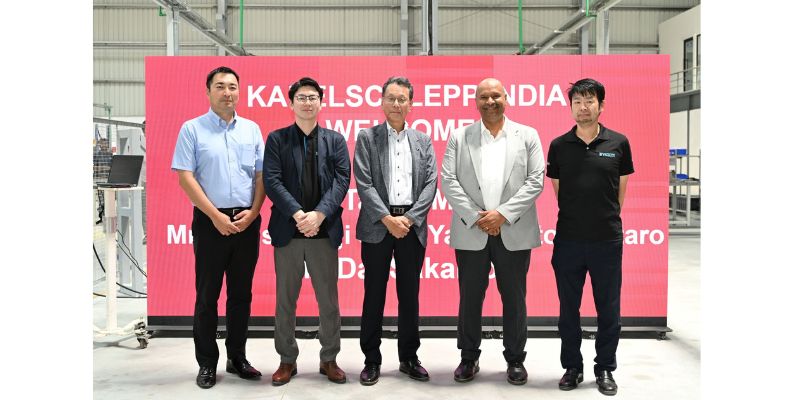
Tsubaki Leadership Reinforces India Growth Strategy during Kabelschlepp Visit
Tsubaki’s senior leadership visited Kabelschlepp India to review growth, localisation and innovation initiatives while strengthening engagement with employees, partners and customers.
Read moreAutomation & Robotics
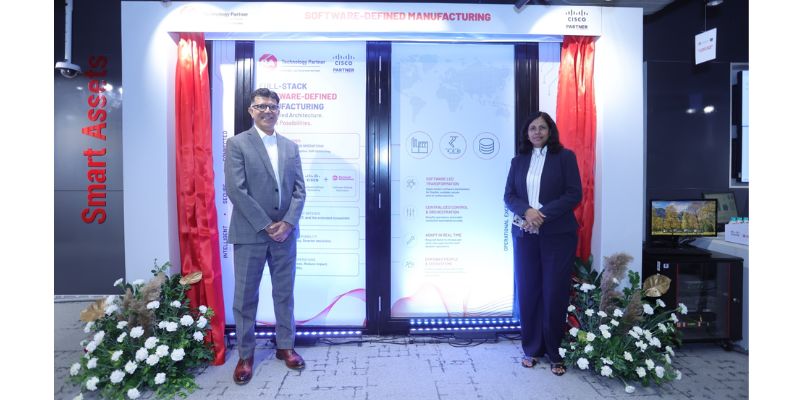
Rockwell Automation, Cisco Partner in India
Rockwell Automation and Cisco have announced a strategic collaboration in India to integrate IT and industrial automation, launch a software-defined manufacturing demo pod, and strengthen digital sk..
Read moreElectrical & Electronics

Philip Harting appointed to VDMA Main Board
Philip Harting joins the VDMA Main Board to represent mechanical and plant engineering amid industry transformation, geopolitical challenges and supply chain disruption.
Read moreRelated Products
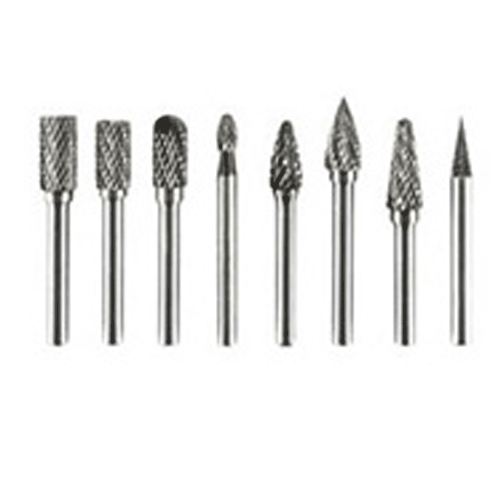
Carbide Burrs
ABRASIVES & FINISHING EQUIPMENT
SRT Industrial Tools & Equipments offers a wide range of carbide burrs.

Jamshedji Soil Compactor
ABRASIVES & FINISHING EQUIPMENT
Jamshedji Constro Equip Pvt Ltd offers a wide range of jamshedji soil compactor.
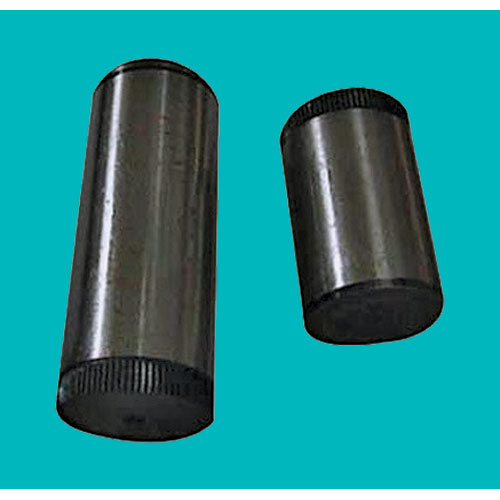
Ground Pins
ABRASIVES & FINISHING EQUIPMENT
Hans Machineries Private Limited offers a wide range of pins, hardened & ground. Read more
latest News
Subscribe to iNoW

For Industry News on WhatsApp, Give a Miss Call on: +91 84228 74016