








Schedule a Call Back


Facts About Power Factor
 Technical Articles
- Aug 06,12
NULL

Power Factor vis a component of power consumed by any AC circuit: kWH = kVAH x Power factor
Power supplied by electricity suppliers is affected by the change in power factor. As the billing depends on kWH hence the metering of the electricity supplied gets reduced with the reduction of the power factor. To maintain the losses the electricity suppliers resort to correction of the power factor to be implemented by the consumer.
The Following Points are Noteworthy:
On referring IS 325, which is a standard specification for induction motors, we find that a minimum value of product of efficiency and power factor has to be guaranteed. Which means that if power factor is attempted to be raised the efficiency of the system has to fall in the same proportion. While designing the electricity generators, which are known as alternators, a balance of efficiency and power factor is considered and wherever tricky combinations are worked it is the power factor, which is sacrificed to the permissible limits.

On referring the purchase specification of the power plants, viz., Standard Technical Specification for main plant package of sub critical Thermal Power Projects exceeding 2 x 500 MW issued by the Central Electricity Authority, Ministry of Power, Government of India, New Delhi, the desirable power factor is 0.85. Having considerable tolerance in the value the generation essentially is at 0.8 power factor. Again referring to Point 1, the supplier, when given a chance, will supply better efficiency sacrificing the power factor at all costs.
Here, it will be worth noting that in the present scenario of increasing efficiency to obtain Star Ratings from BEE (Bureau of Energy Efficiency) the power factor is likely to reduce. Whenever improvement of power factor is attempted it always reduces the system efficiency. Though the measurement of the power factor correction wins lots of admiration however the loss of efficiency remains unmeasured and definitely goes unnoticed.
Definitely, by increasing the power factor the electricity bill has to rise, yes, the power consumed by the system will be more with higher power factor. This is in the interest of the electricity supplier also.
The fact is that with reduction in power factor the electricity supplier is burdened by increased losses in transmission as the I2R losses increases with the increase in current or reduction in voltage. To recover from this loss, the consumer is burdened by power factor correction drive where the consumer is advised to increase the power factor to that extent and avail rebates offered by the electricity supplier.
The rebate given by the electricity supplier to the customer is 20% of the loss incurred to the consumer. Again the penalty charged by the electricity supplier from the consumer also is merely 20% of the gain saved by the consumer.
The power factor loss is generated by non linear loads like rectifiers, welding machines inverters frequency changers, and capacitors as all of them use peak values of voltage for fraction the time cycle of the AC electricity. Fluorescent light with ballasts, over rated machines, (i.e., choosing 7.5 kW in place of 5.5 kW requirement) also reduce power factor extremely. In fact choosing overrated machines is the main cause loss of efficiency and power factor both.
In domestic usage incandescent lamps, toasters, element heaters, water geysers have unity power factor. Already the required power factor is more than the desired 0.9. Please note that electricity suppliers sometimes allow domestic or small load connections not to be charged on the basis of power factor.
In fact, you will find various products, which claim to reduce your electricity bills up to 30%. They are all actually power factor reducers.
If a DG set is used for standby or backup to the power connection, on using the DG set the APFC has to be isolated from the circuit of the DG set supply otherwise the DG set gets loaded excessively thereby reducing the speed of the DG set up to zero. This is merely because the generation of DG set is at 0.8 pf and the APFC forces the DG set supply to increase the pf, which is not accepted by the DG set.
Reduction of power factor below 0.7 or so is not permissible in electricity rules hence the customer is warned whenever it happens.
To understand power factor better, compare AC electricity with the milk. Where water in the milk is compared with the power factor and the fat is compared with the efficiency. The cow gives milk, which may contain 80% water and 20% fat. The fat can be increased only by reducing the water contents; however if you increase water in the milk the fat percentage will reduce.
Another form of loss in the Electricity Quality is the Harmonics. All electrical machines using various types of materials in the core, body, etc., vibrate continuously and thereby produce waves of vibrations. These waves when produced in large amounts interfere and disrupt the AC sinusoidal waveform by entering into the magnetic circuit of the electrical machine.
These vibrating waves are known as harmonics. These harmonics, when generated vary from lower/smaller waves to large waves. Harmonics of up to 6th level are very minute and so to say do not disturb the AC sine Wave. Harmonics beyond 6th are considered being harmful. Machines like induction furnaces used for melting/heating produces 13th and larger harmonics of the range of 30% of the total power. Here harmonic filters and a capacitor bank need to be used to eliminate these harmonics.
The above facts may be verified with the induction furnace suppliers. Electricity suppliers are nowadays emphasizing consumers to install harmonic filters prior to getting electrical connections for induction furnaces. To one's astonishment these harmonics do not convert to mechanical load or do not load the driver/prime mover of the alternator; however they put load on the alternator. In plain terms if an induction furnace is run on DG set a furnace of 75 kW will require an alternator of 125 kVA in place of 100 kVA but the engine capacity required can be matched with 100 kVA alternator and need not be as required for 125 kVA alternator.
(The writer of the article is engaged in the design of induction motors and centrifugal pumps having experience of 26 years in the relevant field. Views expressed are of the writer based on his professional experience however technical criticism on the matter is welcome.
Contact: Alok Gupta, M/s Pratap Electric Motors, Jaipur. Tel: 0141-2340691. Fax: 91-141-2343298. Mobile: 093142-63288. Email: alok.agrofab@gmail.com, pratapak@ dataone.in)
Related Products
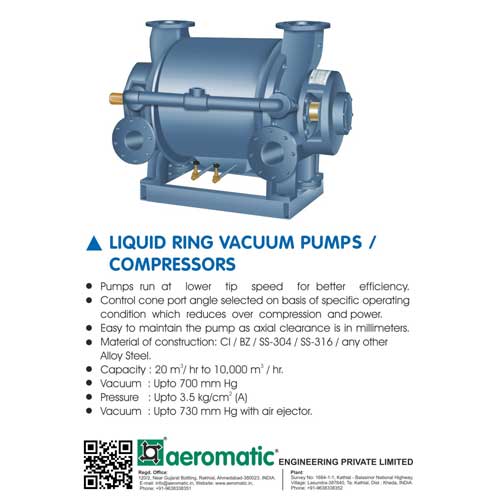
Liquid Ring Vacuum Pumps/Compressors
Compressors and Allied Equipment
Aeromatic Engineering Private Limited offers a wide range of liquid ring vacuum pumps/compressors.
Read more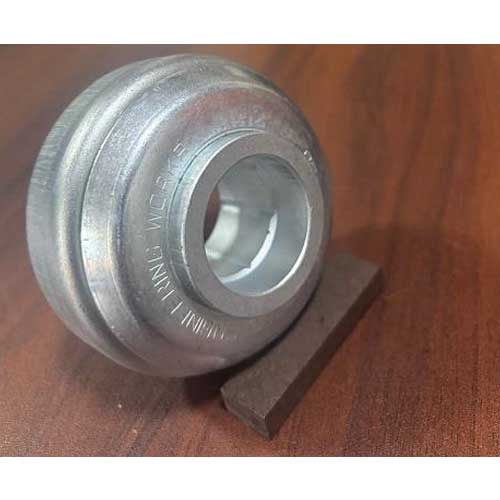
Hot Wheel Bearing
Bearings, Bushings, Wheels and Gears
SICCO Engineering Works offers a wide range of hot wheel bearing. Read more
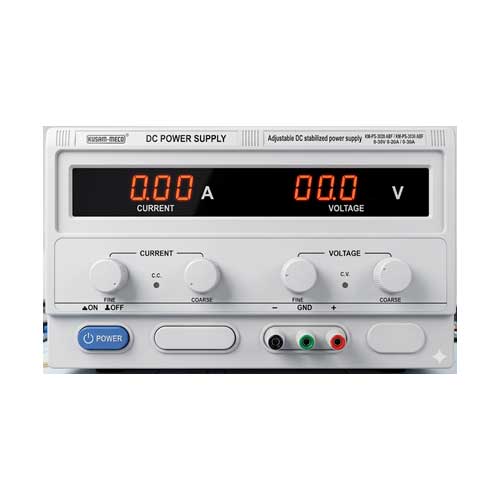
Kusam-meco DC Power Supply Model Km-ps-3020 Abf / Km-ps-3030 Abf
Power Supplies, Batteries & Accessories
<p>Kusam Electrical Industries Ltd offers Kusam-Meco DC power supply model KM-PS-3020 ABF/ KM-PS-3030 ABF</p> Read more
latest News
Subscribe to iNoW

For Industry News on WhatsApp, Give a Miss Call on: +91 84228 74016