








Schedule a Call Back


De-mystifying Design Automation with Knowledge-based Engineering
 Technical Articles
- Apr 07,11
NULL

The Scenario
Product design and development is the driving force of a manufacturing organisation. It decides the objective of the entire organisation. It can be broadly classified into two activities:
(a) New Product Design (NPD) and
(b) Application Engineering (AE).
NPD is an innovative process, and it involves market study, concept design, prototyping, testing, validation, detailing, etc.
Application Engineering is a rule based/repetitive process and it involves identifying customer specifications, selecting suitable product, creating GA layout, making modifications in certain product parameters, creating detail drawings, BOM, etc. 
The AE process often gets lesser priority in resource planning and many times it becomes a bottleneck. A systematic approach for the AE process can streamline the custom design process, and what is seen as a troublesome activity can be leveraged as a strategic advantage-through capability of the organisation in catering to diverse customer needs.
The Challenge
Creating a system for the AE activity is a challenge, because:
- Organisations have diverse product variants to choose from
- Optimum design changes needs skill
- Design change calls for through domain knowledge, and
- Design change also needs good understanding of CAD.

Thus, instead of developing a system for AE organisations depend on some key persons for AE process. This overloads the key persons and creates bottleneck.
The Approach
Knowledge-based-Engineering (KBE) has a systematic way of taking the organisation out of the complexity and challenges of the AE process, and creates a smooth path for effective and innovative application engineering.
Management of every organisation wants to have system for AE, but,
- They don't know where to start
- All design rules are not known to one person. The knowledge lies partially with different people.

Thus, there is a need to have a confident and credible approach and technique to solve the AE puzzle.
KBE approach can be defined in short as "If you define a problem, you are half way through in solving it". Through a KBE glass, problem definition becomes much simpler, because KBE is a template-based approach.
We often find it easier to fill a form (systematic) than writing an essay (free form).
Product Classification
The KBE approach starts with an overview of the complete product range of the company from their customer's perspective. The products are classified based on various attributes, e.g. layout type, technology, accessories, application type, sub-system, material of construction, etc. The classification stage is difficult, but once done, it gives overall perspective to look at the product portfolio. A side-benefit of this is that sales people and customer love to see a structured and understandable product portfolio. 
Design Variables
KBE assumes that design logic is ever-changing and unstructured. So, logic capturing is not necessarily sequential. You can start at any point and start capturing rules. It's like solving a jig-saw puzzle. You create clusters of pieces, and then join the clusters.
Thus, in KBE, you start defining variable and logic in bits and pieces. Many clusters of logic are created. Joining of these logic sets can be done later.
The variables are calculated recursively, so the order in which they are defined is immaterial. The value of a variable can be defined in various ways like:
- Formula
- Conditional
- Logical
- Look up table
- Series validation
- Range validation
- User defined function

Shape/Size Interdependency
KBE looks at design variables in a generic manner. The variables may be related with size of geometry, shape of geometry or no geometry.
- Geometry shape - e.g. table top = circular/rectangular
- Geometry Size - Length = 10, 20, 30...
- No Geometry - RPM = 100, 200, 300...
Thus, user can define all variables in terms of any other variables in any sequence and then link them with any model parameters.
Selection Logic
For a complex product portfolio, the calculation rules can be made simple if the inputs are validated. Also, end-users will find product selection easier. The various rules for input validations can be:
- Dependent product options
- Dependent size inputs
- Selection of inputs from dropdown list, etc.

Summary
Using KBE, a template-based configuration approach can be implemented. The template is a generic way of looking at any product portfolio.
A product designer can configure his product family using the template and define design variables and calculations.
The design variables are linked to CAD parameters of either master parts or library parts.
On definition of design logic for a product family, design automation application is auto generated, which can be used by sales team to generate customised design.
(CADECplus - CAD Enabled Product Configurator (www.cadec.in), Mark Design Solutions (P) Ltd, 1st Floor, Ksheerada Bldg, 266, Navi Peth,Ganjwe Chowk, L B Shastri Road, Pune 411 030. Tel: 020-64011848, 24327031. Email:info@ markengg .com)
Related Products
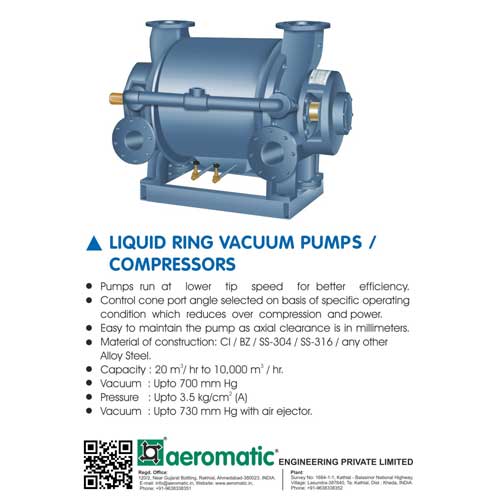
Liquid Ring Vacuum Pumps/Compressors
Compressors and Allied Equipment
Aeromatic Engineering Private Limited offers a wide range of liquid ring vacuum pumps/compressors.
Read more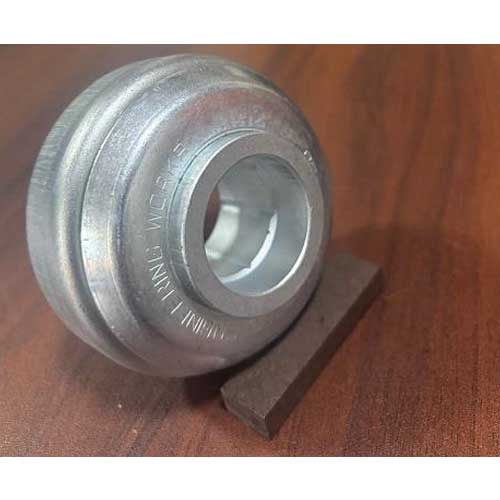
Hot Wheel Bearing
Bearings, Bushings, Wheels and Gears
SICCO Engineering Works offers a wide range of hot wheel bearing. Read more
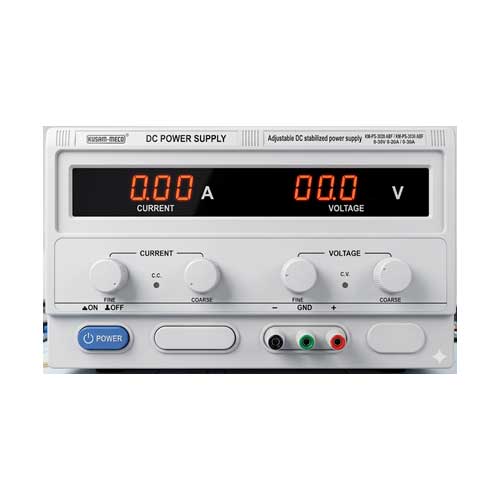
Kusam-meco DC Power Supply Model Km-ps-3020 Abf / Km-ps-3030 Abf
Power Supplies, Batteries & Accessories
<p>Kusam Electrical Industries Ltd offers Kusam-Meco DC power supply model KM-PS-3020 ABF/ KM-PS-3030 ABF</p> Read more
latest News
Subscribe to iNoW

For Industry News on WhatsApp, Give a Miss Call on: +91 84228 74016