







Schedule a Call Back


Advances in pneumatic valve technology
 Technical Articles
- May 01,17
Patrick Berdal, Product Manager for Valves at Parker Hannifin, outlines some of the key advances and how best to adopt them. As the technology of pneumatic valves advances and becomes ever more sophisticated, it can be a real challenge to ensure user industries are taking full advantage for the benefit of their organisation.

Patrick Berdal, Product Manager for Valves at Parker Hannifin, outlines some of the key advances and how best to adopt them.
As the technology of pneumatic valves advances and becomes ever more sophisticated, it can be a real challenge to ensure user industries are taking full advantage for the benefit of their organisation.
Pneumatic valves have come a long way since the development of the compressor over a century ago. The valves on today’s market are smaller, faster and more advanced than their predecessors and offer many advantages and opportunities for organisations that can be easily overlooked.
Initiated more than 20 years ago on proprietary designed valves, and more recently with the progression of ISO valve standards with collective wiring solutions, both end users and OEMs have experienced significant cost reductions from multi-supplier support, simplification of wiring and a decrease in unwanted machine downtime.
Intelligent, simple wiring
Collective wiring solutions, especially when integrated with a fieldbus solution, provide an elegant mechanism to consolidate solenoid wiring into a single “collective†connection on the valve manifold. This method significantly reduces costs and complexity, as the valve manifold can be moved out of the control cabinet to the point-of-use application located near the pneumatic process, eliminating long tubing runs and delayed responses in operation.
When integrating a fieldbus solution, there is a sharp reduction in the number of components needed on the bill of material as junction boxes and control cabinets are reduced to simple connections. Now, two cables – one for communication and one for power – can handle the workload of hundreds. Large machines can be broken down for shipment and reassembled with an absolute minimum amount of labour since the wiring is bus connected with only two cables.
With fewer components in the system, electrical losses are reduced and overall energy efficiency is increased. Additionally, the reduction of wiring into a collective wiring solution offers a low probability of wiring errors. Combined with elimination of junction boxes and conduit runs, this translates into simplified engineering drawings saving additional unnecessary time.
Incorporating a fieldbus solution, such as Parker’s Industrial Communication series – an automated industrial network specifically designed for communication between programmable logic controllers (PLCs) via a communications system such as Ethernet – to control pneumatic valves could be a first step towards implementing intelligent, cloud-connected Industry 4.0 innovations on the assembly line.
With many end users adopting Lean principles of manufacturing and continually striving to eliminate waste and improve material flow, collective wiring offers the additional benefit of easy relocation of manufacturing centres. With the elimination of junction boxes, disassembling a station can be as easy as disconnecting a few cordsets and reconnecting after the move. The control panel and overall machine size will be reduced because valve manifolds can be located conveniently around the machine, rather than in one large, central location.
In conclusion, whether an organisation is an OEM or an end user, there are a number of ways to capitalise on pneumatic valve advancements like ISO standardisation and collective wiring solutions. The next time an opportunity to specify a pneumatic valve solution arises, consider specifying an ISO standard with integrated fieldbus. If rising labour costs and wiring complexity are causing increases in machine cost and maintenance complications, look into the ever-advancing capabilities of collective wiring solutions and diagnostic capabilities. Improved profitability and decreased machine build times are all possible with today’s pneumatic valve solutions.
(Mitali Nair, Deputy Manager – Marketing, Parker Hannifin India Pvt Ltd. Email: mitali.nair@parker.com)
Related Stories
Heating & Cooling Equipment

Thermax Launches Intelligent Boiler and Heater Series at Boiler India 2026
Thermax has launched its intelligent boiler and heater series, led by the UltraPac-i biomass-fired boiler, with pilot installations demonstrating fuel savings of up to 10 per cent.
Read moreHeating & Cooling Equipment
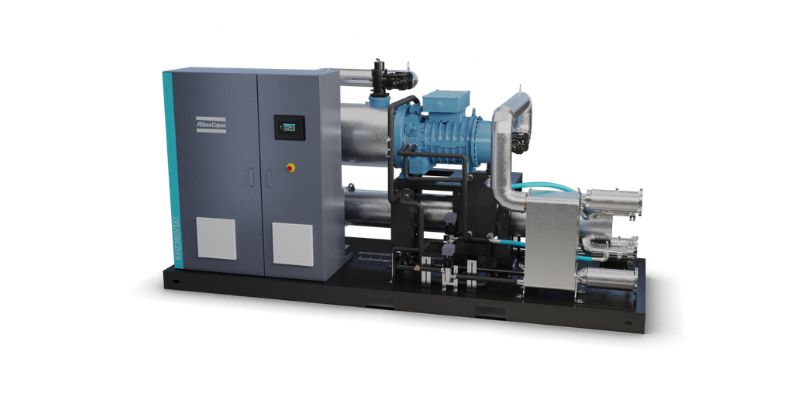
Atlas Copco Showcases Steam Compression and Heat Recovery at Boiler India
Atlas Copco is showcasing steam compression and industrial heat-pump technologies at Boiler India 2026 to help industries recover, upgrade and reuse low-pressure steam and waste heat.
Read moreAuto & Auto Components
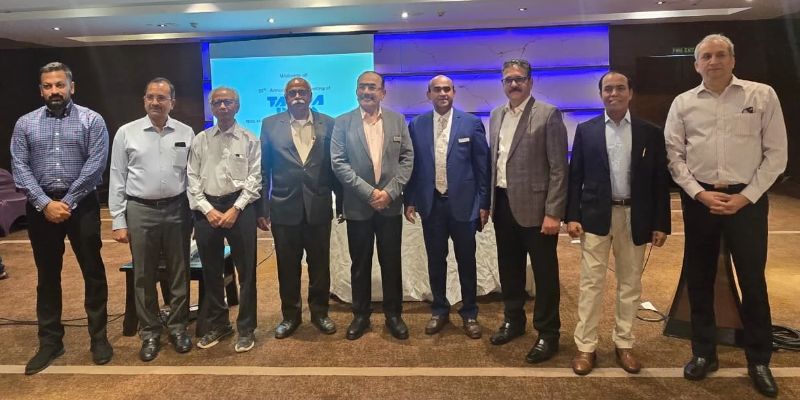
TAGMA India Elects Executive Council for 2026–2029 Term
TAGMA India has elected its 2026–2029 Executive Council, with Devaraya Manjunath Sheregar as President and D Shanmugasundaram as Vice President, following its 35th AGM.
Read moreRelated Products

Double Seated Globe Valve
Valves, Valve Components & Accessories
Dembla Valves Ltd offers a wide range of double seated
globe valve.
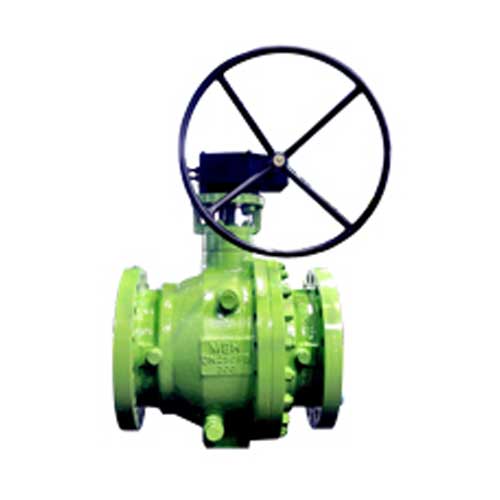
Trunnion Mounted 2pc Ball Valves
Valves, Valve Components & Accessories
Micon Engineers (Hubli) Pvt Ltd offers a wide range of
trunnion mounted 2PC ball valves

Open Type Rotary Goggle Valve
Valves, Valve Components & Accessories
Joshi Jampala Engineering Pvt Ltd offers a wide range of open type rotary goggle valve.
latest News
Subscribe to iNoW

For Industry News on WhatsApp, Give a Miss Call on: +91 84228 74016