





Schedule a Call Back


A pump for all occasions
 Technical Articles
- Nov 30,-1

 Jim Cairney, Engineering Manager at Oilgear in the UK, explains the principles and applications of the axial piston pump.
Hydraulic pumps provide a great deal of motive power, efficiently translating the rotary motion of a prime mover into hydraulic oil flow that can be easily routed and used for a vast range of tasks.
Hydraulic pumps come in many shapes and sizes, but one of the most versatile is the axial piston pump, which can be arranged as a pump or a motor, depending on the application. Coupled with a choice of control mechanisms, the axial piston pump can be applied to a myriad of tasks. The basic design provides an efficient delivery of power, which has led to an increasing number being specified in favour of fixed displacement gear or vane pumps.
At the heart of the axial piston pump is a group of finely machined pistons that are fitted inside a round cylinder barrel, which rotates. In a fixed displacement pump the cylinder barrel is inclined at an angle to the drive shaft so that as the cylinder rotates one revolution, the pistons complete a full stroke. The total displacement of the pump is determined by the size and number of pistons as well as the length of the stroke, which is determined by the angle of inclination.
A pump for all occasions…

In a variable displacement pump, the pistons are attached to an angled plate, known as the swash plate, so that as the assembly rotates the pistons reciprocate, parallel to the driveshaft. By changing the angle of the swash plate, the displacement is adjusted. In both cases the oil flow is controlled by the valve plate, which directs low pressure oil to the pistons on the suction stroke and the pressurised oil to the discharge port.
As a hydraulic pump, these components are used to provide the flow, which in turn can actuate hydraulic cylinders, valves, motors and brakes. However, the principle action of the pump can also be reversed with the flow being fed into the component, which in turn will rotate the driveshaft; the pump has then become a hydraulic motor.
While the essential principles are very similar in all hydraulic axial piston pumps, the finer details, such as the precise construction, materials, tolerances and control features are what make each pump design unique and influence the suitability of the component for a particular application.
One example would be the use of a hydrodynamic bearing, which is a feature of all Oilgear’s axial piston pumps. This allows the rotating barrel to ride on a thin film of oil, without the need for conventional bearings, which limit the operational cycle of many other pumps. In fact, because the input shaft bearing in Oilgear pumps does not have to support any of the load induced by the pressure, it will last many times longer. When it finally does require replacement, it can be changed without taking the pump apart, saving time and improving productivity.

Flow rate, maximum operating pressure and control options are key factors in selecting the suitability and efficiency of a hydraulic pump in an application. Usually the pump can be paired with a choice of control features to deliver the required combination.
Pressure compensation control uses a cylinder connected to the swashplate to adjust the displacement of the pump as the pressure in the output line approaches a set value. In some cases it may be necessary to combine pressure compensator control with load sensing or with a horsepower limiter depending on the application. Hydraulic systems that employ more than one pump can also have different control types on each pump, which, allow different application requirements to be met by the most suitable method without needing separate electric motors.
Identifying the most appropriate control method is just part of the pump selection process when developing a hydraulic system. In many cases the pump selection will use an existing configuration, which has been developed to suit a number of common applications. Maximum flow rates and operating pressures are used to determine a specific model while the control characteristics are selected to give the best operation while keeping power input within available limits. However, certain situations may require a very specific solution, such as a recent development that was created by the Oilgear engineers in Leeds, UK. Having been approached to deliver a hydraulic pump for a steering system on a ship, Oilgear realised that the very specific flowrate required for this application fell between two models of its PVV range of pumps.
It would have been possible to meet the flow requirements by down-rating an existing model, but this would have been a compromise that, in this situation, was not acceptable. As a result, the Oilgear designers set about creating a new model, the PVV-355, which would precisely meet the specification of the client. The creation of this new model has extended the original model range and is now available for general use.
While the majority of hydraulic applications involve pressurised mineral oil, there is a growing requirement for systems that operate with other fluids, especially low viscosity fluids with high water content and fire resistant fluids. Designing pumps for these applications raises a number of issues, with lubrication, or rather the lack of it, being a key issue. Without the natural lubricating properties of oil, issues such as bearing design, piston wear and pump sealing have to be reassessed.
Each industry faces its own challenges in terms of hydraulic operation, but all have the common goals of improved performance and minimal downtime. These can be achieved by combining design expertise and experience to identify the most appropriate design combination of pump and control system with the application in question, even if that means a new design.
Related Stories
Machine Tools & Accessories
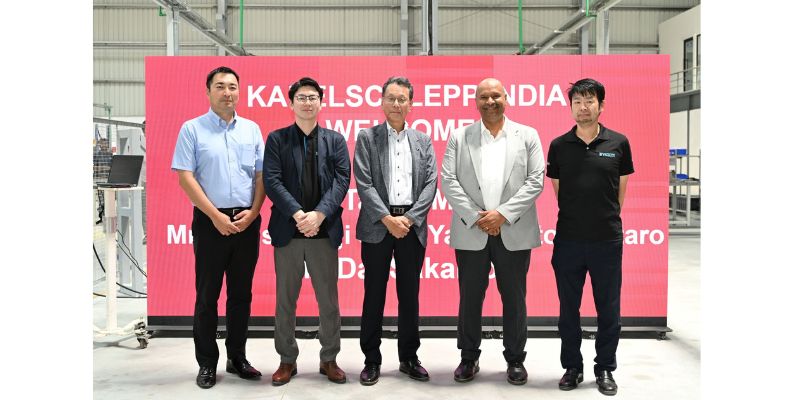
Tsubaki Leadership Reinforces India Growth Strategy during Kabelschlepp Visit
Tsubaki’s senior leadership visited Kabelschlepp India to review growth, localisation and innovation initiatives while strengthening engagement with employees, partners and customers.
Read moreAuto & Auto Components

Škoda Auto Volkswagen India Announces Leadership Transition
Piyush Arora will assume additional responsibility for Group sales and marketing in India as Jan Bures moves to a new role at Volkswagen AG.
Read moreProcess Equipment

Godavari Biorefineries Starts 200,000-litre Grain Distillery
The Rs 1.3 billion facility at Sameerwadi raises Godavari Biorefineries’ ethanol capacity to 800,000 litres per day and adds 60 million litres annually.
Read moreRelated Products
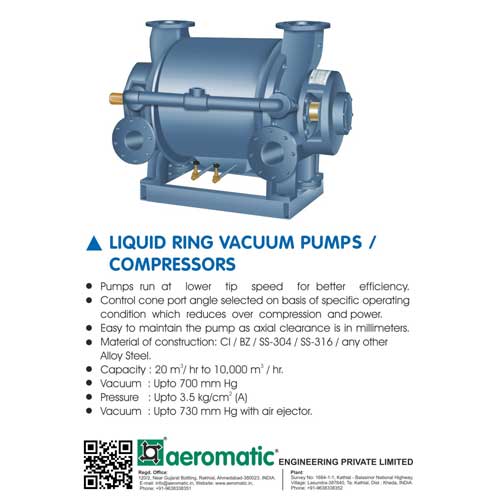
Liquid Ring Vacuum Pumps/Compressors
Compressors and Allied Equipment
Aeromatic Engineering Private Limited offers a wide range of liquid ring vacuum pumps/compressors.
Read more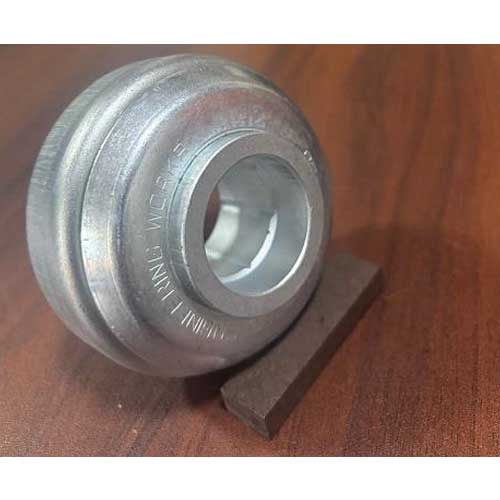
Hot Wheel Bearing
Bearings, Bushings, Wheels and Gears
SICCO Engineering Works offers a wide range of hot wheel bearing. Read more
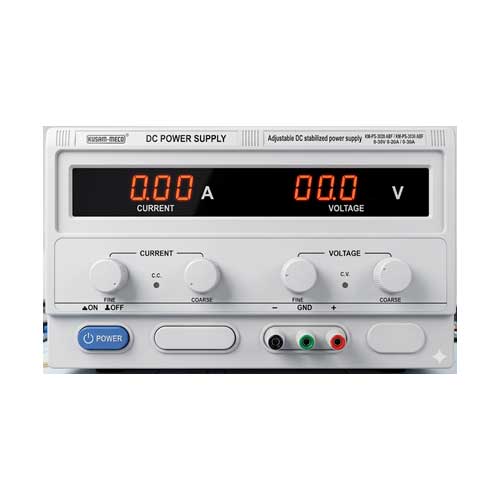
Kusam-meco DC Power Supply Model Km-ps-3020 Abf / Km-ps-3030 Abf
Power Supplies, Batteries & Accessories
<p>Kusam Electrical Industries Ltd offers Kusam-Meco DC power supply model KM-PS-3020 ABF/ KM-PS-3030 ABF</p> Read more
latest News
Subscribe to iNoW

For Industry News on WhatsApp, Give a Miss Call on: +91 84228 74016