







Schedule a Call Back


3 Essential Manufacturing Certifications Required for Aerospace Filtration
 Articles
- Jun 23,26
Aerospace filtration manufacturers must comply with ISO 9001, AS9100D and Nadcap standards, alongside regulatory requirements such as FAA compliance, to ensure product safety, traceability, process reliability and market credibility, says Emily Newton.
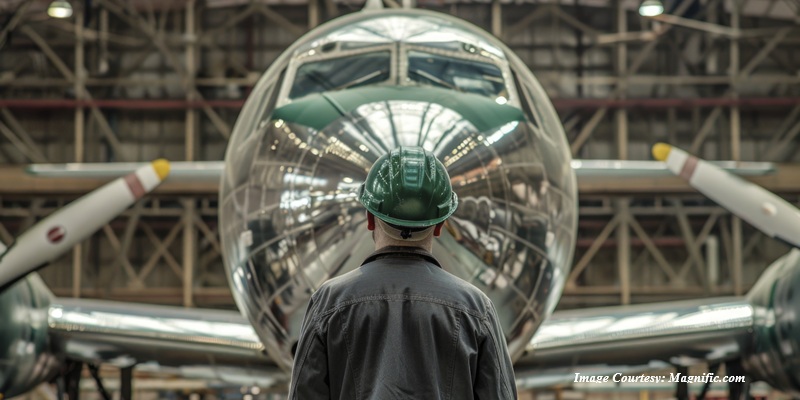
Aerospace filter certifications provide the essential framework that changes manufacturing processes into verifiable, repeatable systems capable of meeting aerospace industry requirements. These standards communicate trust across the supply chain, demonstrating that components meet rigorous safety and performance benchmarks before they reach an aircraft or spacecraft.
1. ISO 9001: The foundational quality standard
ISO 9001 establishes the baseline for any robust quality management system (QMS). While not specific to aerospace, it provides the foundation that manufacturers build upon. This internationally recognised standard emphasizes process control, thorough documentation and continual improvement.
Organisations that implement ISO 9001 reduce variability and ensure consistent output. For example, Parker Hannifin maintains ISO 9001-certified quality management systems. As a leading manufacturer of precision fluidics systems and components, it emphasises delivering high-quality products that meet customer requirements.
According to the company, “To ensure our products meet the highest standards of quality, we have achieved several quality certifications. Some of the certifications include ISO 9001 and ISO 13485.” This demonstrates how manufacturers use internationally recognised quality standards to support consistency and continuous improvement across industrial operations.
2. AS9100D: The aerospace industry-specific standard
AS9100D takes ISO 9001 and adds aerospace-specific requirements that address the unique challenges of aviation and space manufacturing. Developed and maintained by the International Aerospace Quality Group, AS9100D introduces additional controls focused on product safety and counterfeit part prevention.
Certified aerospace filters manufactured under AS9100D standards undergo rigorous tracking and verification processes that general industrial filters don't require. This certification shows that a manufacturer understands what standards aerospace filters need to meet for critical applications.
The value of these aerospace-specific controls becomes particularly important when producing specialised filtration solutions. For example, Chase Filters & Components is certified to AS9100D, which is critical for developing specialised filters capable of passing demanding tests, such as ASTM G175 Phase 2 for high-pressure oxygen service. According to the company, older systems may require customer aerospace filters, especially when replacement components are difficult to source.
“Working with a company that can design and build a custom aerospace filter makes it possible for your system to run at its best while not settling for a filter not built for your specific need,” it explains. AS9100D ensures that even custom-engineered components are manufactured under rigorous quality controls that support performance and long-term operational safety.
3. Nadcap: Accreditation for critical special processes
Unlike AS9100, which certifies a company's overall quality system, Nadcap accredits specific technical competencies. Managed by the Performance Review Institute, Nadcap focuses on special processes whose quality cannot be verified solely through final inspection. These include heat treating, coatings, welding and nondestructive testing.
For aerospace filter manufacturers, processes like brazing, surface treatments and precision cleaning must meet rigorous aerospace industry requirements through Nadcap accreditation. This program ensures that the most technically demanding manufacturing steps maintain consistency across production runs.
For example, all of Precision Castparts Corp.’s post-cast processing inspection facilities are Nadcap-accredited, which reflects a strong emphasis on process control. It notes that, “All castings are heat-treated to obtain required mechanical properties and also undergo numerous quality checks.” For aerospace filtration manufacturers and suppliers, this accreditation provides additional assurance that critical processes are performed consistently, validated appropriately and controlled to meet stringent industry requirements.
The role of FAA compliance in manufacturing
Government bodies, such as the Federal Aviation Administration (FAA), provide regulatory oversight that gives teeth to industry certifications. The FAA evaluates whether parts are airworthy and manufactured under proper controls, and certifications serve as the primary evidence manufacturers present to demonstrate compliance.
Certified aerospace filters and other high-performance components must meet exacting specifications to gain FAA approval. For example, HEPA filters in aircraft cabin air systems can remove up to 99.97 per cent of contaminants, a performance metric that requires superior manufacturing and rigorous quality control.
Many FAA requirements closely align with the principles in AS9100D and Nadcap, particularly in risk management, process control and verification. Traceability systems and corrective action management are also critical in providing evidence that products conform to design requirements and that any quality issues are properly investigated and resolved. To maintain compliance, manufacturers routinely prepare for audits and regulatory reviews by adhering to established quality procedures.
Market outlook for certified aerospace components
Aerospace filter certification requirements create clear competitive advantages in a growing market. As commercial and defense sectors increase production, the global aircraft filters market expands with sustained demand for certified components. New vehicle platforms entering service and aging fleets requiring replacement parts drive this growth.
Understanding what standards aerospace filters need is only the first step. Without AS9100, Nadcap accreditation and relevant regulatory compliance, manufacturers cannot compete for aerospace business regardless of their technical capabilities. Prime contractors and tier-one suppliers require documented proof of these credentials before awarding contracts, which makes them nonnegotiable entry requirements. Companies involved in military or defense projects must also comply with the International Traffic in Arms Regulations (ITAR), which govern who can manufacture and handle sensitive defense-related components.
Frequently asked questions about aerospace filter certifications
Aerospace certification requirements can raise questions for manufacturers new to the sector or companies expanding their capabilities.
Q: What’s the difference between ISO 9001 and AS9100?
ISO 9001 provides general quality management principles applicable across industries. AS9100 incorporates ISO 9001 completely, then adds aerospace-specific requirements addressing configuration management and traceability that general manufacturing doesn't demand.
Q: Is ITAR registration the same as a quality certification?
No. ITAR is a legal compliance requirement for export control that governs who can access technical data and where products can be shipped, while quality certifications like AS9100 address how products are manufactured.
Q: Why do some processes need Nadcap accreditation?
Certain manufacturing processes, such as heat treating or specialised coatings, cannot be fully inspected after completion. Nadcap accreditation verifies that a facility has demonstrated consistent capability in performing these critical processes according to industry specifications.
The future of aerospace quality and safety
Aerospace manufacturing demands a layered approach where each standard reinforces the others. Aerospace filter certifications create the safety margin that aerospace applications require. Manufacturers committed to aerospace markets must view this framework as an ongoing investment in capability and credibility.
About the author:
Emily Newton is a tech and industrial journalist and the Editor-in-Chief of Revolutionized magazine. Subscribe to the Revolutionized newsletter for more content from Emily.
Image Courtesy: Magnific.com
Aerospace filtration
Emily Newton
aerospace certifications
ISO 9001
AS9100D
Nadcap accreditation
FAA compliance
quality management systems
process control
traceability
Parker Hannifin
certified aerospace components
QMS
Precision Castparts
Related Stories
Aerospace Defence
3 Essential Manufacturing Certifications Required for Aerospace Filtration
Aerospace filtration manufacturers must comply with ISO 9001, AS9100D and Nadcap standards, alongside regulatory requirements such as FAA compliance, to ensure product safety, traceability, process ..
Read moreAerospace Defence
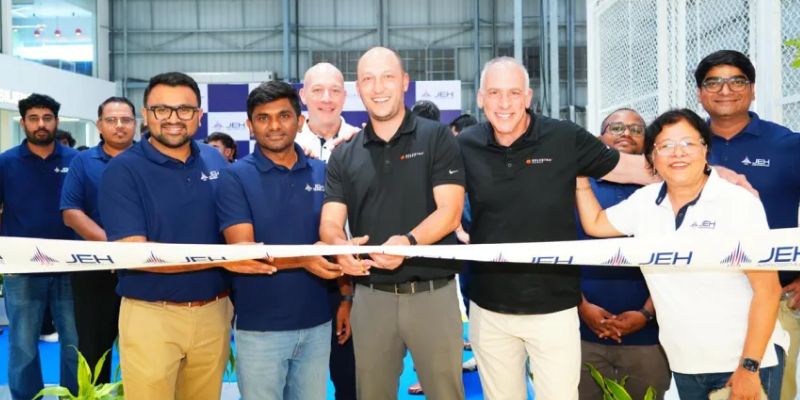
Jeh Aerospace, Solestra Open Hyderabad Global Manufacturing Centre
Jeh Aerospace and Solestra Group have opened a dedicated global manufacturing centre at Jeh’s Hyderabad facility under a multi-year, multi-million-dollar agreement.
Read moreAutomation & Robotics

5 Ways to eliminate end-of-line packaging bottlenecks in scaling facilities
End-of-line packaging bottlenecks in scaling manufacturing facilities reduce throughput and ROI, but can be mitigated through data-driven audits, automated box handling, robotic palletizing, appropr..
Read moreRelated Products
Troop Comforts revolutionises military gear with indigenous innovations
Aerospace & Defence
Troop Comforts Ltd (TCL), a state-owned defence corporation, has recently received a request for proposal (RFP) from the Northern Command of the Indian Army for its indigenously developed military gea Read more
latest News
Subscribe to iNoW

For Industry News on WhatsApp, Give a Miss Call on: +91 84228 74016