






Schedule a Call Back


Make in India: Strengthening Manufacturing for an Era of Uncertainty
 Articles
- Jan 26,26
India’s manufacturing sector stands at a critical inflection point as global volatility reshapes supply chains, competitiveness and resilience under the evolving Make in India vision, shares Rahul Bhandurge, Director (Sales and Business Development), BDB India Pvt Ltd.

Key Takeaways:
- Global manufacturing is shifting from cost efficiency to resilience and adaptability amid sustained volatility and disruption.
- India’s manufacturing sector has gained momentum but remains constrained by limited depth in components, skills, and advanced processes.
- A VUCA environment has intensified demand uncertainty, trade pressures, regulatory friction, and infrastructure challenges.
- Policy support, smart manufacturing, supply-chain diversification, and MSME strengthening are critical for India to build resilient, competitive manufacturing ecosystems.
The global manufacturing landscape is undergoing a profound reset. Rising geopolitical conflicts, intensifying trade tensions, supply chain fragmentation, and accelerating technological disruption have pushed businesses into a highly volatile, uncertain, complex, and ambiguous (VUCA) environment. Traditional assumptions around cost arbitrage, stable trade flows, and predictable demand cycles are no longer valid.
Against this backdrop, India’s manufacturing ambition anchored in the “Make in India” vision faces both unprecedented challenges and historic opportunities. The coming decade will determine whether India can translate geopolitical tailwinds into sustained industrial competitiveness, or whether structural gaps will limit its ability to scale. Success in a VUCA world will depend not just on capacity creation, but on resilience, adaptability, and strategic depth across the manufacturing ecosystem.
Current status of Indian manufacturing: At an inflection point
India’s manufacturing sector contributes approximately 16 to 17 per cent to GDP, significantly below the government’s long-term aspiration of 25 per cent. However, beneath this headline figure lies a more nuanced reality. Over the past decade, India has strengthened its position in several manufacturing verticals like electronics assembly, automotive and auto components, pharmaceuticals, specialty chemicals, renewables, and defence manufacturing. Policy initiatives, infrastructure development, and a growing domestic market have improved India’s attractiveness as a manufacturing destination.
More importantly, much of India’s manufacturing growth has been driven by assembly and downstream operations, with limited depth in components, materials, tooling, and advanced manufacturing processes.
Recent years have seen three important transitions underway:
From cost-led to capability-led manufacturing: Indian manufacturing is gradually moving beyond low-cost labour advantages toward capabilities such as design-for-manufacturing, process engineering, automation, and quality compliance aligned with global standards.
From import dependence to selective localisation: Policy interventions have accelerated domestic production of critical components in electronics, defence, telecom, and renewable energy. While full self-reliance remains distant, supply chain depth is improving.
From scale-first to resilience-first strategies
Manufacturers are increasingly prioritising supply assurance, vendor diversification, and risk mitigation over single-source efficiency.
These shifts signal maturity, but they also expose gaps that must be addressed for India to thrive in a VUCA environment.
Challenges intensified by a VUCA environment
Market volatility and demand uncertainty
Global demand cycles have become shorter and more unpredictable. Export-oriented manufacturers face fluctuating orders driven by geopolitical sanctions, currency volatility, and sudden policy shifts in destination markets. Planning horizons have compressed, placing pressure on working capital, inventory management, and capacity utilisation.
Trade tensions and import pressures
While geopolitical realignments benefit India in theory, in practice they also expose domestic manufacturers to aggressive import competition, particularly from China and other low-cost manufacturing hubs. In several sectors, Chinese imports continue to exert price pressure, challenging domestic players who operate with higher compliance and capital costs.
Skill gaps in advanced manufacturing
India’s workforce advantage is often cited, but there is a growing mismatch between available labour and the skills required for smart manufacturing—automation engineers, robotics technicians, data analysts, maintenance specialists, and quality professionals. The transition from manual to digital factories is constrained more by skills than by capital.
Regulatory complexity and compliance burden
Despite improvements in ease of doing business, manufacturers still navigate fragmented regulations across central, state, and local authorities. Compliance requirements related to labour, environment, safety, and taxation - while necessary - often lack harmonisation and predictability, adding operational friction.
Infrastructure and logistics inefficiencies
Although logistics costs are declining, they remain higher than global benchmarks. Delays at ports, variability in power quality, and uneven industrial infrastructure continue to impact manufacturing competitiveness, especially for time-sensitive global supply chains.
Opportunity landscape: Turning uncertainty into advantage
Despite these challenges, the current global environment is structurally more favourable to India than at any point in recent history.
Policy support for manufacturing ecosystems
Government initiatives have moved beyond broad-based incentives toward sector-specific support. Production-linked schemes, localisation mandates, and public procurement reforms are encouraging manufacturers to invest in domestic capacity. The next phase will require equal focus on supplier ecosystems, testing infrastructure, and technology enablement.
Supply chain diversification and “China Plus One”
Global manufacturers are actively diversifying supply chains to reduce concentration risk. India is increasingly viewed as a strategic manufacturing base—not just for cost reasons, but for geopolitical alignment, market scale, and long-term stability. However, capturing this opportunity depends on India’s ability to deliver consistency, quality, and scale.
Expanding domestic demand
India’s domestic market acts as a natural hedge against global volatility. Sectors such as electronics, mobility, energy, healthcare, and consumer goods benefit from strong internal demand, allowing manufacturers to balance export exposure with domestic growth.
Improved global market access
Trade agreements and bilateral partnerships are opening new export opportunities. However, these markets demand high standards of quality, traceability, and sustainability—areas where Indian manufacturers must continue to strengthen capabilities.
Emerging trends shaping manufacturing in a VUCA world
Several trends are becoming central to manufacturing decision-making in a VUCA world:
Smart manufacturing adoption: Increased deployment of automation, sensors, data analytics, and AI to improve productivity, quality, and responsiveness.
Flexible and modular production: Factories designed for rapid reconfiguration to manage product variety and demand fluctuations.
Supply chain risk diversification: Multi-sourcing, regionalisation, and higher inventory buffers for critical components.
Sustainability integration: Energy efficiency, emissions reduction, and ESG compliance becoming essential for global competitiveness.
Data-driven decision making: Greater use of real-time data to manage operations, suppliers, and customer commitments.
Together, these trends signal a shift from linear, cost-optimised manufacturing models to adaptive, resilience-oriented systems.
Strategic priorities for strengthening make in india
Building manufacturing depth
Long-term competitiveness will depend on developing upstream capabilities like components, materials, tooling, and equipment, rather than focusing solely on finished goods. Ecosystem depth reduces import dependence and enhances supply reliability.
Skill development aligned with industry needs
Skill initiatives must move closer to the factory floor. Industry-led training programs, apprenticeship models, and modular certification frameworks are essential to bridge the gap between education and industrial requirements.
Predictable and harmonised regulation
Stability in policy and regulation is critical in a VUCA environment. Clear timelines, harmonised standards, and digital compliance mechanisms can significantly reduce uncertainty for manufacturers.
MSMEs as the backbone of resilience
Micro, small, and medium enterprises form the foundation of manufacturing supply chains. Supporting MSMEs in technology adoption, quality improvement, and access to finance will directly enhance ecosystem resilience.
Risk-aware capital allocation
Manufacturing investments increasingly need to factor geopolitical, supply chain, and regulatory risks. Both public and private capital should prioritise projects that enhance strategic capabilities and ecosystem robustness.
Conclusion: From manufacturing scale to manufacturing strength
In an increasingly uncertain world, manufacturing strength is defined not only by scale and cost, but by adaptability, reliability, and depth. For India, the next phase of “Make in India” must focus on building systems that can absorb shocks, respond quickly to change, and meet global expectations consistently.
The opportunity is substantial, but it requires coordinated action between government, industry, and institutions to translate geopolitical tailwinds into lasting industrial advantage. In a VUCA world, resilience is not optional; it is the new measure of competitiveness.
About the author:
Rahul Bhandurge is Director – Sales and Business Development at BDB India Pvt Ltd, with over 17 years of experience in market research and industry. A Mechanical Engineer and management professional, he brings more than a decade of expertise in conducting primary research across diverse sectors. His experience spans automotive segments including OEMs, aftermarket, and electric vehicles, as well as non-automotive industries such as general engineering, capital goods, agriculture, building and construction, process industries, machine tools, metallurgy, aftermarket, and industrial goods and services.
Make in India
Indian manufacturing
VUCA environment
manufacturing resilience
smart manufacturing
supply chain diversification
industrial competitiveness
Rahul Bhandurge
BDB India
Related Stories
Machine Tools & Accessories

AMTEX 2026 and Fastener Fair India to Showcase Next-Gen Manufacturing Technologies
AMTEX 2026 and Fastener Fair India 2026 will bring together 650+ exhibitors and 4,000+ visitors at India Expo Mart, Greater Noida, showcasing advanced manufacturing and fastening solutions.
Read moreAuto & Auto Components
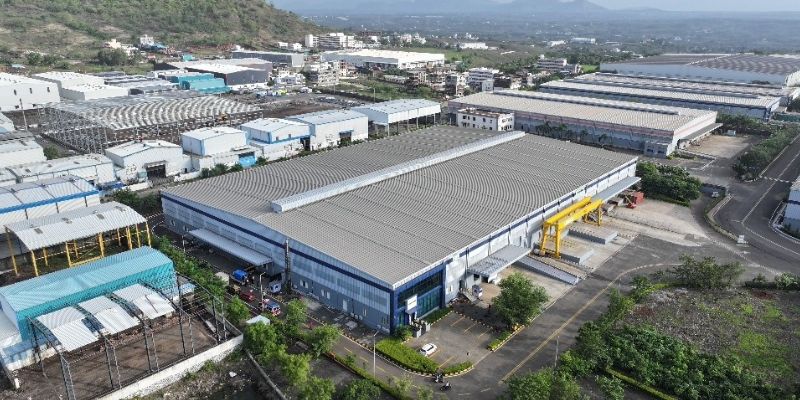
AmpereHour Opens 5 GWh BESS Manufacturing Facility in Pune
The Chakan facility will integrate Make in India battery blocks and digitally validated energy storage systems for utility-scale and industrial applications.
Read moreAutomation & Robotics
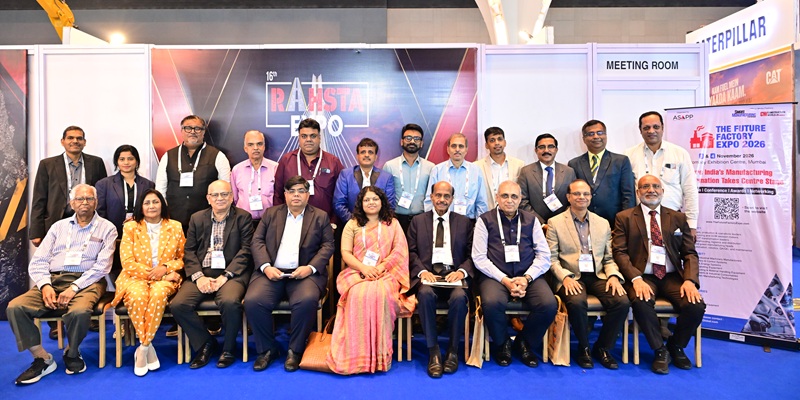
Future Factory Expo CXO Roundtable Charts Smart Transformation for SMEs
During the roundtable, hosted by Smart Manufacturing & Enterprises (SM&E) and The Future Factory Expo 2026, industry leaders outlined how SMEs can use practical digitisation, automation, skilling an..
Read moreRelated Products
latest News
Subscribe to iNoW

For Industry News on WhatsApp, Give a Miss Call on: +91 84228 74016