







Schedule a Call Back




India–EU FTA: Gains on Paper, Tests on the Ground
 Articles
- Feb 04,26
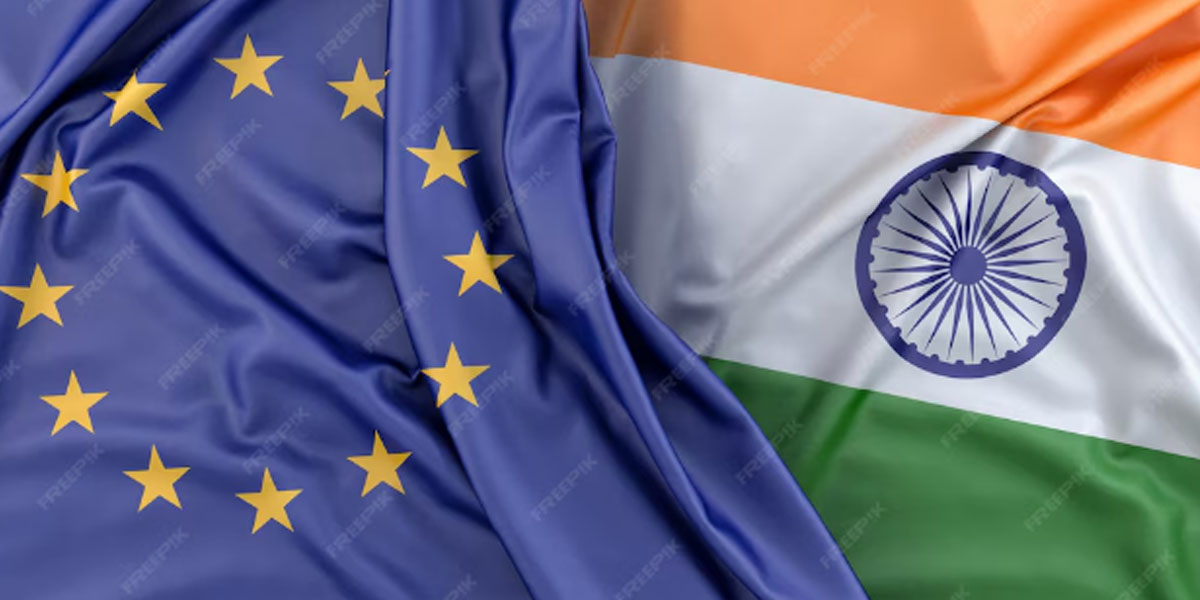
The India–EU Free Trade Agreement expands market access across goods, services and mobility, but its impact will hinge on regulatory alignment, carbon costs and execution, writes Rakesh Rao.
Big Takeaways
- India gains preferential access for 99 per cent of exports to the EU, creating a $75 bn opportunity from an already strong trade base.
- Labour-intensive sectors—textiles, leather, gems and marine products—stand to benefit fastest from duty elimination.
- Services and mobility may deliver the biggest long-term gains, but outcomes hinge on visas, data rules and regulation.
- Phased tariff cuts protect domestic industry, yet autos, wines and gourmet foods will face sharper competition.
- CBAM, quotas and regulatory complexity could narrow real gains unless compliance costs are managed effectively.
- The FTA opens a $25-trn trade corridor, but execution—not intent—will decide whether scale turns into sustained trade.
After nearly two decades of intermittent negotiations, India and the European Union finally concluded talks on a Free Trade Agreement (FTA) on 27 January 2026. The moment matters not only because of the size of the markets involved, but because the deal has arrived in a global trading environment that looks nothing like the one that existed when the first rounds began in 2007. Supply chains have become geopolitical assets. Regulations have become trade gates. Carbon has turned into a border variable. And talent—once treated as a domestic factor—is increasingly mobile, contestable and central to competitiveness.
The India–EU FTA brings together the world’s fourth-largest economy and its second-largest. India and the EU together account for 23 per cent of global GDP and 25 per cent of the world’s population—nearly $25 trillion and two billion people. Another framing used in the official narrative puts the combined footprint at about 25 per cent of global GDP and roughly one-third of global trade. Either way, the core proposition is clear: this is not a marginal tariff deal. It is a large, strategic trade corridor whose practical value will be decided by execution, regulatory alignment and domestic readiness.
Dinesh Kanabar, Chairman & CEO, Dhruva Advisors, sets the context by linking India’s trade approach to a world of shocks rather than steady-state liberalisation. “Great leadership, it is often said, lies in the ability to convert external challenges into strategic opportunities. In that spirit, it is heartening to see how India has responded to the headwinds created by higher tariffs imposed by the United States—not by retreating, but by accelerating its global economic integration through trade agreements with the UK, New Zealand, and now, most significantly, the European Union.”
He adds, “The India–EU Free Trade Agreement opens up one of the most important trading corridors in the world. For India, long a global leader in services, this pact expands access to the European market for its skilled professionals, technology services, and knowledge-based industries, at a time when human capital and digital capabilities are becoming central to global competitiveness.”
For the European Union, India represents both a vast consumer market of 1.4 billion people and a fast-growing economy with rising demand for advanced manufactured goods, green technologies, pharmaceuticals, and capital equipment. Reduced tariffs and clearer market access will allow European firms to participate more deeply in India’s growth story.
Kanabar states, “Beyond trade, the agreement strengthens strategic partnership between two major democratic blocs, promotes investment, technology collaboration, and resilient supply chains. In that broader sense, this is not merely a trade deal, but a platform for long-term economic partnership—rightly being hailed as the ‘mother of all deals’.”
Trade before the treaty: India–EU at scale already
The India–EU relationship is not a blank slate waiting for an agreement to create commerce. It already rests on large flows of goods, services and investment. In 2024–25, India’s bilateral trade in goods with the EU stood at Rs 11.5 trillion ($ 136.54 billion), with exports worth Rs 6.4 trillion ($ 75.85 billion) and imports amounting to Rs 5.1 trillion ($ 60.68 billion). Trade in services reached Rs 7.2 trillion ($ 83.10 billion) in 2024. Another consolidation of the numbers places bilateral goods and services trade close to $220 billion. The EU accounts for around 17 per cent of India’s total exports, while India absorbs about 9 per cent of the EU’s overseas shipments. For India, the EU is positioned as a major partner in both goods and services.
Within the EU, Spain, Germany, Belgium, Poland and the Netherlands are key destinations for Indian exporters. India’s major exports to the EU include petroleum products such as diesel and aviation turbine fuel, electronics including smartphones, textiles, machinery and computers, organic chemicals, iron and steel, gems and jewellery, pharmaceuticals and auto parts. Imports from the EU are concentrated in machinery and computers, electronics including integrated circuits, aircraft and parts, medical devices, scientific instruments, rough diamonds, organic chemicals, plastics, iron and steel, cars and auto components. This trade pattern—manufactured and energy exports out, capital and high-technology goods in—sets the stage for the FTA’s central tension: it offers India an opening to deepen labour-intensive and mid-technology exports, but it also brings competitive pressure in sophisticated manufactured imports.
Investment flows underline this depth. Cumulative foreign direct investment inflows from the EU into India totalled $ 117.4 billion between April 2000 and September 2024, accounting for 16.6 per cent of India’s cumulative FDI equity inflows of $ 708.6 billion. Around 6,000 EU firms currently operate in India. India’s outward FDI to the EU stood at about $ 40.04 billion between April 2000 and March 2024. The trade agreement does not start the relationship; it seeks to restructure it.
Rajesh Nath, Managing Director, VDMA India (German Engineering Federation), frames the agreement as a strategic pivot rather than a transactional lowering of duties. “The conclusion of the India–European Union Free Trade Agreement negotiations marks a decisive inflection point in India’s global economic engagement, signalling not just a trade pact but a strategic economic partnership between two of the world’s largest economic blocs.”
For industry, this is an agreement about standards and scale as much as it is about price. “In sum, the conclusion of the EU-India Free Trade Agreement represents a structural upgrade in India’s global economic architecture. It strengthens India’s manufacturing exports, accelerates integration into high-value global supply chains, unlocks investment and technology flows, and reinforces India’s credibility as a reliable, future-ready economic partner. For Indian industry, the agreement is not merely about tariff reductions; it is about scale, standards, and sustained global relevance. If leveraged effectively, the FTA has the potential to redefine India-EU economic engagement for the next decade, positioning India firmly at the centre of global growth and manufacturing transformation,” says Nath.
Table 1: India–EU Trade Snapshot (2024–25)
Indicator | Value |
Bilateral trade in goods | $ 136.54 bn |
India’s goods exports to EU | $ 75.85 bn |
India’s goods imports from EU | $ 60.68 bn |
Trade in services | $ 83.10 bn |
EU share of India’s total exports | ~17% |
India share of EU overseas exports | ~9% |
Cumulative EU FDI into India (2000–2024) | $ 117.4 bn |
India’s FDI outflows to EU (2000–2024) | $ 40.04 bn |
FTA timeline: From conclusion to entry into force
A concluded negotiation is not a functioning agreement. The agreement is expected to come into force from early next year, but the path runs through European institutional processes that are rarely swift.
Ajay Srivastava, Founder, Global Trade Research Initiative, says, “After nearly two decades of negotiations, India and the European Union concluded talks on a free trade agreement on January 27. The deal is expected to be signed in the coming months after legal scrubbing. Its implementation could take another year, as it requires approval by the European Parliament and all 27 EU member states. This is India’s ninth free trade agreement in the past four years.”
He states, “India and the EU together account for 23 per cent of global GDP and 25 per cent of the world’s population—nearly $25 trillion and two billion people. With bilateral goods and services trade already close to $220 billion, the agreement begins from a strong commercial base. On goods, the EU will cut or eliminate tariffs on about 99 per cent of Indian exports. Since many EU tariffs were already low, India’s main gains will come from labour-intensive sectors where duties were still high—notably garments (around 12 per cent) and footwear (8–15 per cent). Other beneficiaries include marine products, gems and jewellery, handicrafts, chemicals and machinery.”
Srivastava also maps the liberalisation India has offered, “India will reduce or eliminate tariffs on about 97 per cent of EU exports, with cuts phased in over 7–10 years. Duties on wines will fall from 150 per cent to 20–30 per cent, spirits to 40 per cent, beer to 50 per cent, and car tariffs from 100–125 per cent to 10 per cent for up to 250,000 vehicles. India will also move to zero tariffs on many agri-food and consumer products, processed foods, chemicals, machinery, electronics and aircraft.”
The agreement’s long game, he argues, is services—though it will not be automatic. “Services could be India’s biggest long-term gain, especially in IT, finance and professional services, but outcomes will depend on data-security recognition, visa access and regulatory flexibility.” And he ends with a warning: “The India–EU FTA lays the foundations for one of the world’s largest trade corridors, but its load-bearing tests still lie ahead. Tariff cuts open the gate, yet carbon taxes and regulatory hurdles threaten to narrow the passage. Unless these are addressed, the deal risks becoming a bridge that looks impressive on paper but carries far less trade than it promises.”
What the FTA covers, and what it leaves out
The agreement’s scope is wide. It covers trade in goods and services, rules of origin, customs and trade facilitation, trade remedies, sanitary and phytosanitary measures, technical barriers to trade, SMEs and digital trade. It also includes a mobility framework for professionals and discussions around social security engagement over a five-year horizon, along with provisions supporting student mobility and post-study opportunities. Intellectual property commitments align with TRIPS obligations while recognising aspects such as traditional knowledge and digital libraries. The agreement is also described as future-facing in areas such as Artificial Intelligence (AI), clean technologies and semiconductors.
Equally important is what is not covered. The draft narrative points out that there is no chapter on energy, critical minerals or government procurement, reflecting areas where convergence proved difficult. In a world where industrial policy often runs through procurement and where energy transition intersects with trade, these omissions matter. They do not weaken the deal’s core market-access value, but they shape where future negotiations will likely be pushed.
The headline commitments are large. The EU will cut or eliminate tariffs on about 99 per cent of Indian exports by trade value. On the first day of implementation, duties will be eliminated on 90 per cent of Indian goods entering the EU. On a further three per cent, levies will be phased out over seven years. In value terms, concessions will apply to 99.5 per cent of India’s exports to the EU. Average EU tariffs are already low at around 3.8 per cent, but will fall to about 0.1 per cent for Indian goods.
India will reduce or eliminate tariffs on about 97 to 97.5 per cent of EU exports by trade value, but with longer staging. On entry into force, India will cut duties on only 30 per cent of EU trade value, with liberalisation extending gradually over a ten-year period. Duties will fall to zero on 93 per cent of bilateral trade value over time, while a further 3.7 per cent will receive tariff reductions and quota-based concessions.
This sequencing is politically rational. It also sets the industrial policy question: can India use the phasing window to upgrade capabilities before competition sharpens?
Sachin Alug, CEO, NLB Services, interprets the phasing as an intentional design feature with consequences for supply chains and organisational behaviour. “The India–EU Free Trade Agreement marks a clear shift toward a more strategic and enduring economic partnership. For Europe, India offers scale, diversified capabilities, and services that support innovation, resilience, and competitiveness. For Indian enterprises, the agreement provides structured access to one of the world’s most regulated and quality-driven markets, encouraging higher standards and value-led growth.”
As European organisations deepen delivery footprints in India, the focus is steadily moving beyond offshore hiring toward building resilient Global Capability Centers with stronger governance, compliance, and operating rigor. “This evolution is expected to drive sustained demand for specialised capabilities across compliance and trade, ESG and sustainability reporting, data protection and regulatory programmes, digital and engineering delivery, GCC build-outs, and workforce and vendor governance,” elaborates Alug.
Equally important is the focus on people mobility, including simplified student access supported by a dedicated EU office in India. “Over time, this will strengthen education-to-employment pathways and the broader talent ecosystem across both regions.” And he closes with the operational truth that will decide the deal’s value: “Ultimately, the real impact of the agreement will depend on the speed of execution and how effectively policy intent translates into outcomes on the ground,” he states.
Key market-access commitments Ø EU tariff elimination for ~99.5% of Indian trade value Ø India duty concessions for ~97.5% of EU trade value Ø Immediate EU duty removal on ~90% of Indian goods Ø Phased liberalisation in India over up to 10 years Ø EU opens 144 services sub-sectors; India opens 102
|
Exports: Where the immediate gains are most visible
The headline attraction for India lies in market access. Over 99 per cent of Indian exports gain preferential entry into the EU, creating export opportunities estimated at Rs 6.41 trillion ($ 75 billion). Around $ 33 billion of exports in labour-intensive sectors such as textiles, leather, marine products, gems and jewellery are expected to benefit immediately from zero-duty access.
The logic is especially clear in segments where EU tariffs were still meaningfully high, despite low averages. Textiles and apparel sit right at the centre of this. Indian textile exports to the EU currently face tariffs of 12 to 16 per cent, making them less competitive than products from Bangladesh and Vietnam, which enjoy preferential access. The elimination of these tariffs under the FTA is expected to boost India’s market share and swing sourcing decisions in India’s favour.
Rubix, in statement, makes the competitiveness case with a focus on tariff disadvantages that accumulated over time. “The FTA will substantially improve India’s international competitiveness by phasing out tariffs on key labour-intensive and high-value export sectors such as textiles, leather, engineering goods, and chemicals. Preferential market access will restore tariff advantages lost due to the GSP withdrawal and enhance India’s export competitiveness relative to third-country competitors. Predictable market access in services, particularly in IT, professional services, education, finance, and construction, will support the expansion of India’s globally competitive service providers.”
The investment provisions in the FTA are expected to deepen foreign direct investment from EU economies by strengthening regulatory certainty and market access safeguards. “Given that EU FDI into India has historically been significant, accounting for around 16.5 per cent of India’s total FDI equity, the agreement is poised to attract higher and more diversified investment into sectors such as renewable energy, manufacturing, chemicals, and services creating jobs and fostering technology transfer,” Rubix states.
By streamlining customs, technical, and regulatory barriers, the FTA can reinvigorate growth in bilateral goods trade and help diversify India’s export destinations beyond major EU member states. Export diversification efforts could also help India redirect a portion of exports currently bound for the US, with an estimated $ 10–11 billion potential shift into the EU market, identified by the Rubix Country Insights–EU Country report, thereby reducing reliance on any single trading partner.
Engineering goods: Opportunity, but the devil is in the detail
Engineering goods, electronics and machinery are expected to gain over time, particularly as European firms diversify supply chains away from China. Yet engineering exports are also exposed to the EU’s regulatory and carbon regimes, which can be as consequential as tariffs.
Pankaj Chadha, Chairman, EEPC India, explains, “Overall, it is a positive development for the engineering sector. Engineering exports currently stand at around $ 20 billion, and we are targeting an increase to $ 25 billion over the next two years. From that perspective, the agreement offers encouraging signals, particularly in terms of improved market access for certain engineering products. We are pleased to note that there appears to be duty-free access for some important categories such as electric machinery, parts of iron and steel, and industrial machinery. These are major export items for India’s engineering sector, and duty-free access to the EU market can significantly enhance competitiveness.”
But Chadha’s concern is centred on uncertainty around iron and steel and the mechanics of quotas. “There are a few critical areas where details are still not fully clear. One major concern is iron and steel, which is a very significant export segment. At this stage, we do not know whether iron and steel will receive full duty-free access, whether a safeguard quota will apply, or if the quota levels have been reduced or retained. This clarity is essential for exporters to plan effectively.”
Then comes Carbon Border Adjustment Mechanism (CBAM)—arguably the most important constraint on carbon-intensive exports into Europe. “As of now, there is no clear visibility on how CBAM will be treated under the FTA framework. We are still awaiting official clarification on how the EU intends to view CBAM in the context of Indian engineering exports. This is an important issue, especially for carbon-intensive sectors such as iron and steel,” opines Chadha.
Automobiles: Calibrated liberalisation, export upside
Automobiles are among the most sensitive parts of the agreement. India’s import duties on cars currently range from 66 to 125 per cent. Under the FTA, reductions will be quota-based and carefully sequenced. Vehicles likely to sell below Rs 2.5 million, covering petrol, diesel and hybrid models, will not be exported directly by the EU, with manufacturing in India encouraged instead. For vehicles priced above Rs 2.5 million, duties will be reduced to between 10 and 40 per cent over time. For electric vehicles, quota-based duty reductions will begin from the fifth year of the agreement, with rates initially at 30 to 35 per cent before tapering further. Another framing puts the reduction path for cars at 100–125 per cent to 10 per cent for up to 250,000 vehicles.
Alug says, “The phased reduction of motor vehicle tariffs - from 110 per cent to 40 per cent, with a longer-term aim of 10 per cent within defined quotas- has the potential to reshape automotive supply chains. It lowers entry barriers while incentivising alignment with global quality, safety, and sustainability standards rather than volume-led exports.”
From the perspective of an Indian automotive manufacturer with global ambitions, Dr Anish Shah, Group CEO and MD, Mahindra Group, frames the deal as both macro and sector-specific in its design. “The India-EU FTA is a significant milestone as it provides the next wave of economic impetus for India, building on the strong foundation laid by a number of policy reforms. This FTA will provide meaningful benefits across multiple sectors, as it strikes a very good balance between opening the market while nurturing manufacturing in India.”
He sees a huge positive for the auto sector as it provides duty-free access to European markets and will attract European OEMs to invest further in India. “This agreement is very well designed, as it lowers in-quota duties only at higher priced segments which will enhance scale in the core segments relevant to Make in India for the world. We feel this will not change any competitive dynamics in the industry. This FTA is one of the most comprehensive Agreements covering themes such as AI, innovation, clean tech, mobility that will boost industry growth across sectors like IT services, aerostructures, finance, agriculture and renewable energy. The agreement ushers a generational opportunity for a values-led partnership between two natural allies in a volatile world,” explains Dr Shah.
The European Union is India’s largest trading partner for goods and a key market for the Indian auto-components sector, accounting for nearly 30 per cent of India’s component exports. Trade between India and the EU in auto components has remained broadly balanced, underlining the complementary strengths of the two regions. At a time when global supply chains are undergoing major realignments, the India–EU FTA is expected to create a framework for resilient, trusted, and diversified supply chains. For India’s auto-component industry, the agreement will lead to enhanced export competitiveness, facilitate deeper technology collaboration, and attract long-term investments, while enabling European companies to leverage India’s fast-growing automotive market - the world’s third largest.
Vikrampati Singhania, President, ACMA and Vice Chairman & MD, JK Fenner (India), said, “The signing of the India–EU FTA is a timely and strategic step. For the auto-components industry, it has the potential to unlock new opportunities for exports, technology partnerships, and investment-led growth. As global OEMs and suppliers look to build resilient supply chains, a well-balanced and pragmatic FTA can position India as a reliable manufacturing and sourcing partner for Europe, while strengthening our long-standing industrial partnership.”
ACMA believes that a calibrated approach on tariffs, regulatory standards, and sustainability related issues, including CBAM, will be critical to fully realising the agreement’s potential.
Not everyone views the auto chapter only through export and investment potential; there is also the domestic market effect at the premium end. Subhabrata Sengupta, Partner, Avalon Consulting, states, “It is a welcome move as it will introduce global benchmarks at attractive prices and shake up the top end. However, regulations on ARAI compliance remain and may add some costs and also give some protection to the Indian industry. The quota of 250K also ensures that the impact on mass segments would be limited.”
A trade agreement of this scale is never only about trade. It is also a signalling device for investment. The EU already accounts for 16.6 per cent of India’s cumulative FDI equity inflows, and the presence of around 6,000 EU firms gives a base from which investment could deepen. The FTA’s promise is that more predictable market access, improved regulatory certainty and streamlined trade facilitation can convert corporate interest into capital flows.
Dr Balaji Gopalan, Managing Director, Carraro India Limited, states, “The landmark India–EU Free Trade Agreement (FTA) represents a pivotal moment for bilateral trade and a transformative opportunity for India’s manufacturing sector, particularly in high-precision engineering. For Carraro India, the FTA enables deeper integration with European OEMs and suppliers, stronger technology collaboration, and long-term partnerships built on quality, reliability, and innovation. As we continue to invest in advanced manufacturing and sustainability-led processes, this agreement reinforces India’s emergence as a globally trusted hub for sophisticated engineering and future-ready mobility solutions. We are excited to deepen our partnerships, invest in advanced manufacturing, and contribute to India's engineering prowess on the global stage.”
Carbon and regulation: The real gatekeepers of trade traffic
The most modern challenge in the India–EU FTA is not tariffs but regulatory and carbon regimes. The EU’s Carbon Border Adjustment Mechanism creates compliance costs and reporting demands that can act like an economic tariff on carbon-intensive exports. The agreement includes forward-looking CBAM provisions, commitments and assurances around flexibilities, enhanced technical cooperation on recognition of carbon prices, recognition of verifiers, as well as financial assistance and targeted support to reduce greenhouse gas emissions and comply with carbon requirements.
Yet, as Chadha stresses, clarity on how CBAM is treated in practice under the FTA framework is crucial, particularly for iron and steel. This is where exporters face a double constraint: even with tariff preferences, their effective access could be narrowed by carbon costs and regulatory hurdles. For MSMEs, the compliance burden can be disproportionate, which makes the trade facilitation and regulatory cooperation chapters as commercially important as tariff elimination.
The agreement’s success will be measured by whether these constraints are addressed through predictable rules, credible capacity-building and financial and technical support that reaches firms beyond the largest exporters.
The global trade environment has added urgency to India’s FTA strategy. High tariffs imposed by the US have disrupted trade flows, with India facing tariffs of up to 50 per cent. In that context, the India–EU agreement becomes both a market-access instrument and a hedge. If exporters can diversify shipments and reduce reliance on any single destination, they reduce exposure to sudden tariff shocks. The EU, itself facing similar tariff risks, has a parallel incentive to strengthen trade corridors with large partners.
Export diversification efforts could also help India redirect a portion of exports currently bound for the US, with an estimated $ 10–11 billion potential shift into the EU market, identified by the Rubix Country Insights–EU Country report, thereby reducing reliance on any single trading partner.
The India–EU agreement is positioned as India’s 22nd FTA. It also sits in a broader narrative of India accelerating trade agreements since 2014. India has signed trade deals with Mauritius, Australia, the UAE, Oman, the UK and EFTA, and concluded talks with New Zealand. In 2025 alone, India signed agreements with Oman and the UK and announced the conclusion of talks with New Zealand. Framed together, the EU, UK and EFTA agreements effectively expand Indian access across much of Europe, though each agreement carries its own rules, timelines and sectoral carve-outs.
Srivastava’s point that this (FTA with EU) is India’s ninth free trade agreement in the past four years adds another layer: India is not pursuing a one-off deal, but building a portfolio. The portfolio approach reduces concentration risk and allows India to test how different agreements perform across sectors.
From promise to performance
Trade projections underline the agreement’s potential. Bilateral trade in goods, currently at about $136 billion, is expected to cross $ 200 billion within three to four years of implementation. Trade in services, estimated at $ 80 to 85 billion, could reach $ 125 billion over the same period. These numbers suggest ambition; they do not guarantee outcomes.
In the end, the India–EU FTA is best understood as an enabling structure. It will not substitute for productivity, quality, compliance or scale; it will reward them. For India, that means the agreement’s real advantage lies not in tariff arithmetic alone, but in whether it accelerates a manufacturing and services upgrade that makes India indispensable to European supply chains. If India uses the phasing window to raise standards, expand capacity, deepen compliance capability and attract investment into high-value segments, the corridor can carry meaningful trade and durable competitiveness. If it does not, the agreement risks validating Srivastava’s warning: a bridge that looks impressive on paper, but carries far less trade than it promises.
India-EU FTA
Free Trade Agreement
Bilateral Trade
India Exports
EU Trade
Global Trade
Economic Growth
India-EU Partnership
Tariff Reduction
Pankaj Chadha
EEPC India
Dr Anish Shah
Mahindra Group
Rajesh Nath
VDMA India
Vikrampati Singhania
ACMA
JK Fenner India
Ajay Srivastava
Global Trade Research Initiative
Sachin Alug
NLB Services
Dr Balaji Gopalan
Carraro India Limited
Dinesh Kanabar
Dhruva Advisors
Related Stories
Policy Regulation
India–EU FTA: Gains on Paper, Tests on the Ground
The India–EU Free Trade Agreement expands market access across goods, services and mobility, but its impact will hinge on regulatory alignment, carbon costs and execution, writes Rakesh Rao.
Read morePolicy Regulation
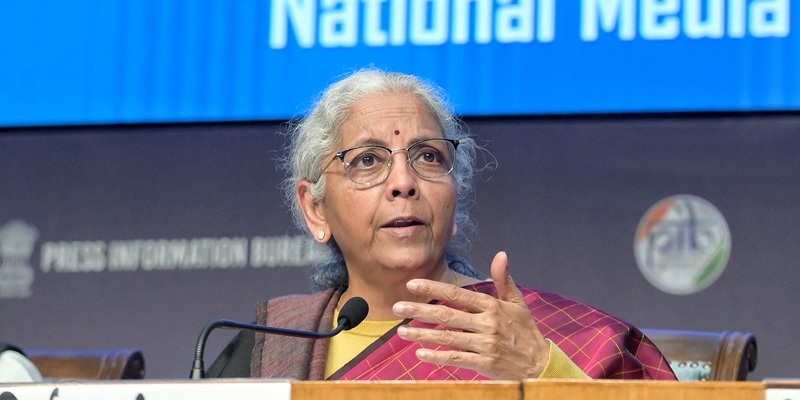
Budget 2026 sharpens focus on manufacturing scale-up across strategic sectors
Union Budget 2026–27 advances manufacturing-led growth with sectoral schemes, higher outlays and supply-chain reforms.
Read morePolicy Regulation
India-EU FTA: How Will the ‘Mother of All Deals’ Affect Indian Industries?
The India-EU FTA offers India significant scope to expand goods and services exports through duty reductions and improved market access, though gains may initially favour the EU, writes R Jayaraman.
Read moreRelated Products
latest News
Subscribe to iNoW

For Industry News on WhatsApp, Give a Miss Call on: +91 84228 74016