





Schedule a Call Back


How India Can Build Manufacturing Strength in a VUCA World
 Articles
- Feb 03,26
As global manufacturing resets under VUCA pressures, India stands at a strategic inflection point, balancing resilience, technology, sustainability and leadership to shape future supply chains, says Kshitij Tiwari, Founder and CEO, ideazmeet.

The last decade has seen manufacturing across the world
navigate its most transformative period. The acronym VUCA - which represents
Volatility, Uncertainty, Complexity and Ambiguity, defines the business climate
that senior leaders must steer through strategically and tactfully. We witness
global trade equations being rewritten by geopolitical realignments, national
security priorities and climate imperatives. Technologies that once conferred
competitive advantage have now been deemed standard requirements. Consumer
expectations are evolving rapidly with operating models requiring being as
adept.
In this environment, Indian manufacturing has reached a
pivotal moment. What began as an aspirational movement under Make in India has
matured into a larger strategic mission. It now seeks to position India not
only as a viable global manufacturing base but as a partner in shaping the
industries of the future globally. The opportunity is unprecedented and the
responsibility is equally significant.
The global reset in
manufacturing
Global manufacturing, in 2026, is undergoing a fundamental
reset after decades of disruption. The pandemic highlighted the limits of hyper-efficient,
globally stretched supply chains. The conflicts and trade rivalries that
followed underscored the need for resilience and strategic diversification.
Around the world, companies are re-evaluating their sourcing models to
prioritise risk management, predictability and continuity over pure cost
efficiency.
Technology is certainly redefining the meaning of
competitiveness from a business-growth perspective. Artificial intelligence,
advanced robotics and additive manufacturing are the centre of transforming
how, where and at what speed products are rolled out. The ability to merge
digital intelligence with physical precision has become a decisive
differentiator. From a leadership perspective, strategy and execution now
operate within compressed timeframes, demanding responsiveness that was once
optional, but is now existential.
For India, this shift presents a rare moment of alignment
between domestic capacity and global demand. While developed economies face
cost escalations, geopolitical uncertainties, cost and quality predictability,
and demographic slowdowns, India offers scale, youth and a policy framework
that is increasingly geared towards enabling global industry
transformation.
India’s moment of
opportunity
The performance of Indian manufacturing over the past few
years reflects a steady convergence of reform, investment, and ambition.
Initiatives such as the PLI Schemes (Production Linked Incentive Schemes), Make
in India 2.0 and the National Logistics Policy have created a more competitive
environment for producers and exporters alike. The ecosystem has churned deeper
incentives with stronger integration between large enterprises, global
investors and local supply networks.
The progress achieved in manufacturing, however, requires a shift
from cost-driven expansion to innovation-led competitiveness. The
differentiator will not be cheaper production but smarter manufacturing, riding
on tech ecosystems that can adjust dynamically to shifting customer,
environmental and technological expectations.
Weathering the storm
of unpredictable marketplaces
Despite its strong fundamentals, Indian manufacturing must
operate in environments and markets that remain deeply unpredictable.
Fluctuations in energy prices, supply chain bottlenecks and sudden trade
restrictions have made production planning increasingly complex. Dependence on
imported raw materials exposes many sectors to uncertainties arising from
geopolitical rivalries and export curbs, particularly from China. At the same
time, domestic constraints persist. Regulatory diversity across states often
leads to procedural complexity and slower turnaround times.
While digital transformation is gaining traction in large
companies, medium and small enterprises frequently struggle with the technology,
capital and skill requirements necessary to upgrade production technologies.
Compliance with evolving international standards for sustainability and
traceability adds yet another layer of challenge.
Finding advantage in
realignment
Volatility has also created new windows of strategic
advantage. The restructuring of global production networks under the China Plus
One strategy is generating strong tailwinds for India. Leading global
manufacturers in electronics, semiconductors, engineered goods, metal and
plastics, chemicals and renewable energy are expanding their operating bases in
Indian industrial corridors. This realignment is as much about trust and
political stability as it is about economics. India’s ability to negotiate new
trade agreements, maintain regulatory transparency and offer a predictable
policy environment is proving decisive for global investors seeking diversified
supply ecosystems.
For Indian business leaders, the focus must now move beyond
capturing relocated capacity to building globally competitive,
innovation-driven manufacturing platforms. True competitiveness lies not in
filling the supply chain gaps of others but in establishing India as a hub for
design, research, and advanced manufacturing intelligence.
Technology as the
strategic multiplier
The integration of digital technology is no longer a matter
of choice. It has become the defining pillar of long-term profitability. Within
the next decade, every successful manufacturer will be a digital enterprise in
some form. This does not require skilling and scaling digital capabilities from
zero to one; rather, partnering with the right technology builders and
ecosystem players could be the key. Intelligent data analytics, predictive
maintenance and real-time monitoring are enabling factories to operate as
adaptive systems rather than static production units. India’s digital ecosystem
provides a powerful foundation for this transition.
The country’s ability to create scalable digital
infrastructure, demonstrated through initiatives such as Aadhaar, the Unified
Payments Interface and ONDC, can be replicated in industrial manufacturing.
Digital twins, interoperable platforms and AI-driven production environments
offer the potential to raise efficiency, reduce waste and strengthen global
competitiveness. That said, productivity will no longer hinge purely on
machinery but on the intelligence embedded in processes and people.
The sustainability
imperative
Sustainability is now a decisive component of
competitiveness. With regulators, investors and customers aligning around
environmental responsibility, the green shift has moved from rhetoric to
requirement. For Indian industry, sustainability offers not only compliance
with emerging global standards but a clear opportunity for value creation.
Decarbonising energy use, adopting renewable power and enabling circular
manufacturing models can all strengthen operational efficiency and open new
markets.
Green hydrogen, low-carbon materials and climate-friendly
production processes position Indian manufacturers favourably in global supply
chains that prioritise ESG compliance. Corporate leadership will be measured
not merely by emissions targets but by the integration of sustainability into
core business thinking. For businesses today, aligning operational performance
with environmental outcomes is now a strategic imperative that determines brand
trust, investor confidence and long-term viability.
Building resilience
through collaboration
India’s next leap in industrial capabilities will depend on
its ability to institutionalise collaboration across the value chain.
Policymakers, industry bodies and corporate leaders must work in unison to
expand the ecosystem for research, innovation and technology commercialisation.
Advanced manufacturing hubs, public–private innovation clusters and
academia-industry partnerships can build domestic expertise in critical
material production and emerging technologies.
Equally important is workforce transformation. As automation
advances, the skill profile of manufacturing will evolve rapidly. Continuous
skill upgrading supported by flexible training frameworks and digital learning
tools will be essential for sustaining productivity gains.
The leadership
mandate
For India’s manufacturing ambitions to materialise fully,
leadership mind-sets must evolve. VUCA is not a phase; it is the new perimeter
of industrial competition. The ability to anticipate uncertainty, make decisive
capital choices and build adaptive business models will distinguish the truly
future-ready enterprise. The Make in India vision has succeeded in awakening
the industrial spirit. The next stage is to embed strategic resilience into
every part of the ecosystem. The convergence of technology, sustainability and
skilled talent will determine how India competes, collaborates and leads in the
decades to come.
Agile leadership will define the future of Indian
manufacturing. The nations and enterprises that can turn unpredictability into
momentum and uncertainty into renewed confidence will shape the architecture of
the next global supply chain. India is poised to be one of them. The question
that remains is not the "What" but the "How" and "How
soon".
About the author:
With over 13 years of professional experience in critical
business strategy, product growth, client engagement and sales, Kshitij Tiwari
leads with his experience and deep knowledge in manufacturing ecosystems. As
founder of ideazmeet, he combines his expertise in B2B partnerships, product,
fintech, sales and manufacturing to revolutionise networking in manufacturing
by leveraging technology.
Indian manufacturing
VUCA manufacturing
Make in India
smart manufacturing
global supply chains
manufacturing resilience
industrial sustainability
digital manufacturing
Kshitij Tiwari
ideazmeet
Related Stories
Machine Tools & Accessories
AMTEX 2026 and Fastener Fair India to Showcase Next-Gen Manufacturing Technologies
AMTEX 2026 and Fastener Fair India 2026 will bring together 650+ exhibitors and 4,000+ visitors at India Expo Mart, Greater Noida, showcasing advanced manufacturing and fastening solutions.
Read moreAuto & Auto Components
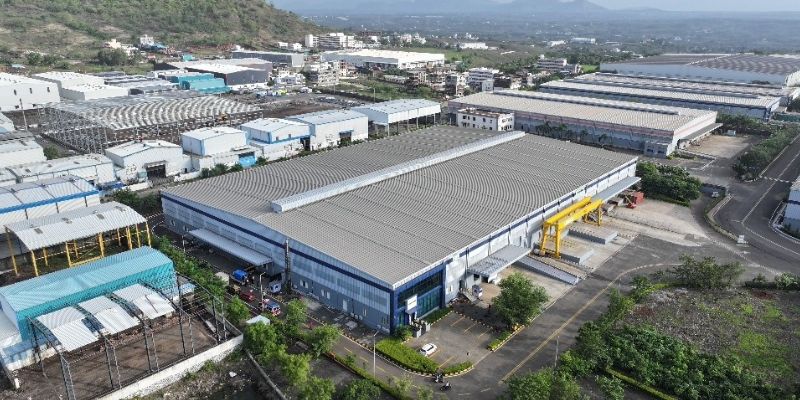
AmpereHour Opens 5 GWh BESS Manufacturing Facility in Pune
The Chakan facility will integrate Make in India battery blocks and digitally validated energy storage systems for utility-scale and industrial applications.
Read moreAutomation & Robotics
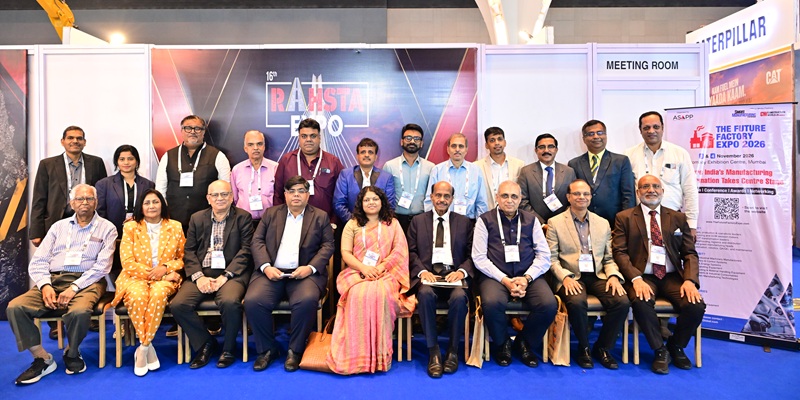
Future Factory Expo CXO Roundtable Charts Smart Transformation for SMEs
During the roundtable, hosted by Smart Manufacturing & Enterprises (SM&E) and The Future Factory Expo 2026, industry leaders outlined how SMEs can use practical digitisation, automation, skilling an..
Read moreRelated Products
latest News
Subscribe to iNoW

For Industry News on WhatsApp, Give a Miss Call on: +91 84228 74016