






Schedule a Call Back


War, uncertainty and the future of manufacturing resilience
 Articles
- Mar 28,26
As global conflicts such as the Israel–US–Iran war disrupt supply chains and energy markets, factories are being forced to rethink operations and accelerate the shift towards automation and digitalisation to build future-ready manufacturing systems.

The global manufacturing landscape is once again under pressure. The ongoing Israel–US–Iran conflict has introduced fresh uncertainty into already fragile economic systems, disrupting energy markets, supply chains, and industrial output. Manufacturing activity has slowed, costs have surged, and businesses are grappling with volatile demand and cautious investment sentiment.
Yet, this is not an isolated disruption. Over the past few years, the manufacturing sector has faced a series of shocks—the Covid-19 pandemic in 2020, the Russia–Ukraine war (since 2022), and the Red Sea crisis in 2023. Each event exposed vulnerabilities in global supply chains, energy dependence, and operational models. The latest geopolitical conflict has reinforced a critical reality: uncertainty and volatility are no longer exceptions but structural features of the global economy.
For India, which is positioning itself as a global manufacturing hub, these disruptions present both a challenge and an opportunity. The ability to navigate uncertainty while building long-term resilience will determine the trajectory of its manufacturing ambitions.
Resilience beyond the factory floor
India’s manufacturing sector is at a defining crossroads. As global supply chains undergo structural transformation and geopolitical realignments reshape trade flows, the country is uniquely positioned to scale its industrial capabilities. However, this opportunity comes with heightened expectations—on quality, efficiency, resilience, and speed.
At the same time, the operating environment has become significantly more complex. Rising input costs, supply chain bottlenecks, and energy disruptions are creating pressure across industries. MSMEs, in particular, face heightened vulnerability due to limited financial buffers and dependence on external inputs.
The current crisis has made one thing clear: traditional approaches to manufacturing—focused primarily on cost efficiency—are no longer sufficient. The need of the hour is resilience. Resilience in manufacturing today extends far beyond shop-floor operations. It encompasses the entire value chain—from sourcing raw materials to delivering finished products to customers.
Zurvan Marolia, former Sr. Vice President, Godrej & Boyce (Godrej Enterprises Group), highlights this shift in thinking: “Building resilience is not about building insurance; it is about building adaptability. In today’s environment, where disruptions can occur at any point in the value chain, organisations must develop the ability to respond dynamically rather than rely on static buffers. Resilience must be embedded across the entire system—from suppliers to logistics to customer delivery—so that even when one part of the chain is disrupted, the overall system continues to function effectively.”
According to him, resilience is closely linked to structured risk management. “Risk-enabled process management is critical because it allows organisations to anticipate potential disruptions and address them proactively. Just like brakes are essential for navigating a vehicle safely, risk management enables companies to move forward confidently in uncertain conditions,” says Marolia.
Energy shock and cost pressures
One of the most immediate impacts of the ongoing conflict in Middle East has been the disruption of energy markets. Rising oil prices and gas shortages have significantly increased production costs for manufacturers. India’s heavy dependence on imported energy makes it particularly vulnerable to such shocks. Energy-intensive industries such as chemicals, metals, and fertilisers have been among the hardest hit, with some units forced to scale back operations.
At the same time, the increase in energy costs has triggered a broader inflationary cycle. Prices of raw materials, logistics, and intermediate goods have risen, creating a cascading effect across industries. Manufacturers are facing a difficult balancing act—passing on costs to customers risks dampening demand, while absorbing costs squeezes margins. Hence, there is an urgent need for energy efficiency and optimisation. Reducing energy consumption is no longer just a sustainability goal; it is a strategic imperative for maintaining competitiveness.
Technology as the foundation of resilience
Supply chains have been severely disrupted by the conflict, with shipping routes affected and freight costs rising sharply. Delays in shipments and shortages of critical raw materials are impacting production schedules across industries. The closure or disruption of key maritime routes has created bottlenecks, leading to longer lead times and higher inventory costs. Manufacturers are also facing challenges related to payment delays and currency fluctuations, further adding to financial stress.
For MSMEs, these challenges are particularly acute. With limited access to working capital and fewer options for risk mitigation, they are more vulnerable to disruptions. The cumulative impact of these factors is a significant erosion of manufacturing competitiveness. However, these challenges also highlight the need for a fundamental transformation in how manufacturing systems are designed and operated.
At the centre of this transformation lies technology. Automation, digitalisation, artificial intelligence (AI), and advanced analytics are no longer incremental upgrades but foundational elements of a future-ready manufacturing ecosystem. Automation has evolved from a cost-saving mechanism to a strategic enabler of competitiveness. “Automation today is no longer an optional tool; it has become essential for survival in manufacturing. Whether it is a large enterprise or an SME, the ability to capture data, improve quality, and enhance productivity depends fundamentally on automation systems being in place. Without automation, it is not possible to even begin the journey towards smart manufacturing,” observes Sunil Mehta, Assistant Vice President, Mitsubishi Electric India, and President, Automation Industry Association (AIA).
Automation’s role today extends far beyond improving productivity—it is the backbone of data-driven manufacturing. He opines, “Modern automation systems—from PLCs and HMIs to robotics and drives—are becoming increasingly intelligent and affordable. This makes them accessible even to smaller manufacturers, allowing them to scale operations and compete globally. The real value of automation lies not just in output but in consistency, traceability, and energy efficiency.”
The democratisation of automation is particularly significant for India, where SMEs constitute the backbone of manufacturing.
At the same time, the integration of technology with process engineering is redefining manufacturing operations. Highlighting this evolution, Rajeev Solanki, India Head - Central Process Engineering, Legrand, says, “In the past, there was always a trade-off between design and manufacturing. Designers would create ideal products, and manufacturing teams would struggle to execute them efficiently. Today, that gap is closing because both sides are innovating simultaneously, and process engineering acts as the bridge between them.”
According to him, the future lies in proactive process engineering. “Instead of reacting to problems on the shop floor, manufacturers must anticipate constraints, simplify processes, and design systems that deliver the right quality, cost, and delivery time from the outset. Breaking processes into smaller pockets allows us to identify risks and deploy the right technologies where they matter most,” he elaborates. This shift towards proactive and simplified processes is critical for achieving agility in uncertain environments.
Digitalisation and AI: Driving measurable impact
Digital technologies are transforming manufacturing into a connected, data-driven ecosystem. “Digital twins are no longer just about simulation or visualisation. They are about creating a live, dynamic representation of your operations that can anticipate failures, optimise performance, and guide decision-making in real time. This shifts the entire maintenance philosophy from reactive or time-based to predictive,” elaborates Anindya Bhattacharya, Industry Solutions Advisor for India Business, Amazon Web Services (AWS).
He adds, “In large-scale operations, we are seeing how cloud platforms and control towers provide end-to-end visibility across the supply chain. From inbound logistics to outbound deliveries, every element is tracked and optimised. The integration of AI into these systems enables faster and more accurate decisions, which is critical in today’s volatile environment.”
Such technologies enable manufacturers to anticipate disruptions, optimise operations, and respond quickly to changing conditions.
The role of AI in manufacturing is shifting from experimentation to practical application. Sudipta Ghosh, Partner, PwC India, underscores this, “The question is not what is possible with AI, but what is possible within your organisation. Many companies fail because they chase advanced solutions without addressing foundational issues such as data availability and process maturity. The starting point must always be business impact.”
Operational metrics such as turnaround time, equipment reliability, and customer experience are leading indicators of success. “Once these improve, financial outcomes will follow. A practical starting point is predictive maintenance—identifying critical equipment failures and addressing them proactively can significantly enhance productivity and acceptance of AI initiatives,” he says.
AI-driven systems are also enabling better inventory management, demand forecasting, and supply chain optimisation—critical capabilities in a volatile environment.
Balancing long-term investments with short-term volatility
One of the biggest challenges for manufacturers is balancing long-term investments with short-term volatility. Capital goods businesses, in particular, operate in long investment cycles, making them highly sensitive to market fluctuations. “Capex is always a long-cycle investment, and returns take time. But at the same time, uncertainty cannot become a reason to stop investing, because that would compromise long-term competitiveness. What companies need to do is strike a balance—continue investing in the future while building enough flexibility in operations to manage short-term volatility,” explains Seshnath B, MD & CEO, Walvoil Fluid Power (India) Pvt Ltd.
He further adds a strategic perspective, “Flexible manufacturing systems and modular investments are becoming critical in this context. Instead of committing to large, fixed investments, companies should scale gradually and adapt based on market conditions. In fact, downturns can also present opportunities—investing during such phases can lead to better cost structures and stronger positioning when the market recovers.”
Vishal Adkar, AVP, Avalon Consulting, offers a structured framework for capital allocation, drawing from real-world industry examples. He outlines a three-tiered approach to investment:
1. Strengthening existing operations through efficiency improvements and digitalisation
2. Expanding capacity in existing product lines or entering adjacent markets
3. Diversifying into new products or segments over a longer horizon
This approach ensures that companies maintain operational stability while pursuing growth opportunities. “I think for any organisation, the way to allocate capital would be first to strengthen current operations, then expand, and finally diversify,” Adkar observes.
Such prioritisation helps avoid overextension while ensuring resilience against market uncertainties.
Workforce transformation and skills
Technology adoption is only as effective as the workforce that operates it. “Automation reduces repetitiveness but increases the need for higher-value human intervention. This means organisations must shift from task-based roles to capability-based roles, where employees are equipped with the skills needed to operate and manage advanced systems,” explains Munira Loliwala, VP-Growth & Strategy, TeamLease Digital.
This shift highlights the importance of aligning human capital with technological transformation. She adds, “The future workforce will be a blend of core employees, specialists, gig workers, and apprentices. Organisations must create flexible and inclusive workforce models while investing in continuous upskilling. At the same time, employee well-being and career development will play a critical role in attracting and retaining talent.”
Technology adoption has become a critical enabler of resilience. Automation, digitalisation, and artificial intelligence (AI) are transforming manufacturing processes and decision-making. However, many organisations are still at an early stage in their analytics journey. Even basic visibility into operations—such as demand forecasts, supply timelines, and production status—is often limited.
“The first step is to build cross-functional visibility. Even basic analysis can help identify risks and improve decision-making,” Adkar says.
Interestingly, advanced tools are not always necessary. Simple, structured data analysis can deliver significant value if implemented effectively. The real challenge lies in process integration and organisational adoption rather than technology itself. With the rise of AI and cost-effective digital solutions, adoption is expected to accelerate, particularly among small and medium-sized manufacturers.
Scaling technology: From pilots to enterprise impact
A major challenge in manufacturing is scaling technology beyond pilot projects. Many initiatives fail to progress due to lack of alignment, funding, or measurable outcomes. Anindya Bhattacharya elaborates, “One of the key challenges is that many pilot projects never move beyond the proof-of-concept stage. To address this, there is a shift towards demonstrating value upfront. Instead of asking customers to invest first, we show them how the solution works and delivers results before scaling it.”
He adds: “This outcome-based approach reduces risk and builds confidence. It also ensures that technology investments are aligned with business outcomes rather than being driven by experimentation alone.” Such models are likely to play a crucial role in accelerating adoption across the manufacturing sector.
Experts believe standardisation is a critical enabler of scalable manufacturing systems. It simplifies operations, enhances workforce efficiency, and ensures seamless integration across technologies. “Standardisation helps in building familiarity among the workforce and simplifies maintenance and inventory management. When systems are standardised, it becomes easier to train people, manage spare parts, and ensure consistent performance across operations,” elaborates Sunil Mehta.
According to him, technologies such as industrial Ethernet and communication protocols enable seamless connectivity across different systems and brands. “This interoperability is essential for building smart factories where data flows freely and decisions can be made in real time,” he says.
From uncertainty to opportunity
Technology adoption must be supported by strong leadership and organisational alignment. Without this, even the most advanced systems fail to deliver results. Sudipta Ghosh emphasises, “Transformation starts from the top. Leaders must clearly articulate why change is needed and ensure that this message is consistently communicated across the organisation. It is not enough to introduce new systems—leaders must actively use them and demonstrate their value.”
Behavioural change is as important as technological change. He adds, “Organisations must reward those who embrace innovation and create role models who drive transformation. At the same time, cross-functional collaboration is essential to ensure that solutions deliver end-to-end impact rather than isolated benefits.” This holistic approach ensures that technology initiatives translate into sustained business outcomes.
The ongoing geopolitical disruptions have exposed the vulnerabilities of traditional manufacturing models. However, they have also accelerated the adoption of technologies that can transform these challenges into opportunities. Manufacturers are increasingly focusing on building resilient, agile, and sustainable systems. This involves integrating automation, digitalisation, and AI with strategic planning and workforce development. As Zurvan Marolia aptly points out, resilience is about adaptability. In a world where disruptions are inevitable, the ability to adapt quickly will determine success.
India’s manufacturing sector has a unique opportunity to leapfrog traditional models and build future-ready systems. By embracing technology and rethinking operational strategies, it can not only withstand current challenges but also emerge stronger and more competitive in the global landscape.
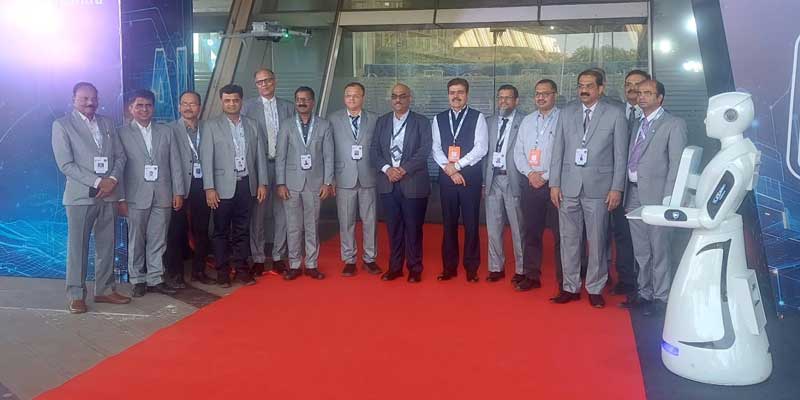
(This article is based on Panel Discussions hosted by Smart Manufacturing & Enterprises during SME Smart Manufacturing Conference on February 11, 2026, at National Stock Exchange of India in Mumbai)
Manufacturing disruption
Geopolitical risk
Supply chain crisis
Energy price volatility
Industrial slowdown
Cost inflation
MSME vulnerability
Global trade disruption
Production uncertainty
Manufacturing resilience
Sunil Mehta
Mitsubishi Electric India
Anindya Bhattacharya
Amazon Web Services
Rajeev Solanki
Legrand
Sudipta Ghosh
PwC India
Munira Loliwala
TeamLease Digital
Zurvan Marolia
Godrej & Boyce
Godrej Enterprises Group
Seshnath B
Walvoil Fluid Power
Vishal Adkar
Av
Related Stories
Smart Manufacturing
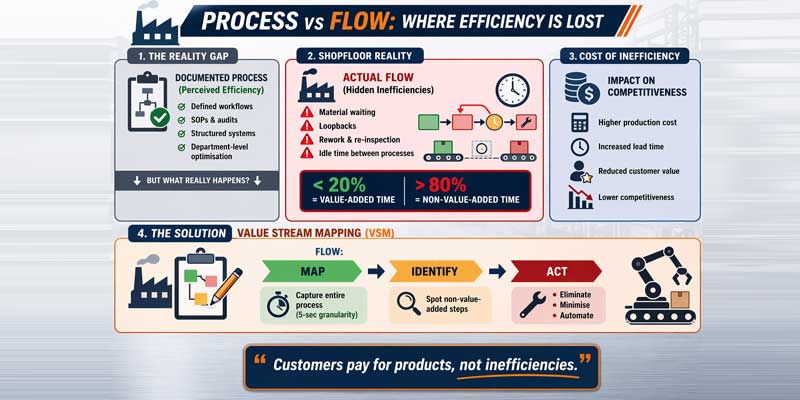
Improving Manufacturing Efficiency with the Right Flow
Often, the gap between documented processes and actual workflow leads to significant inefficiencies, with non-value-added time eroding competitiveness despite well-defined systems. In this month's c..
Read moreAerospace Defence
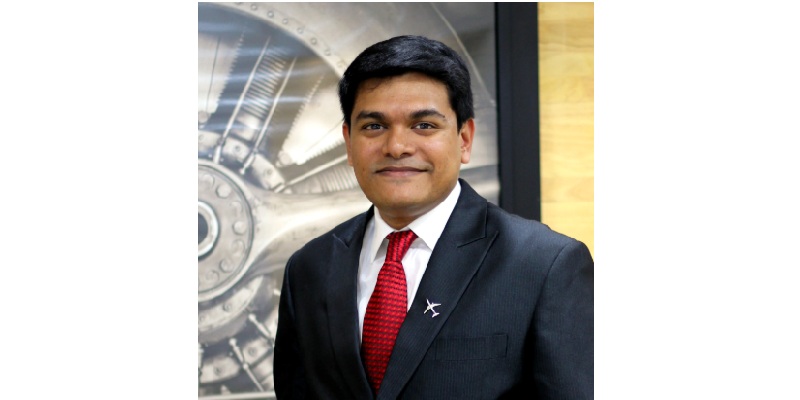
India’s drone future needs scale, reliability, localisation: Vamsi Vikas Ganesula
In this interview Vamsi Vikas Ganesula, Founder and Managing Director, Raghu Vamsi Aerospace Group outlines how conflicts, localisation, emerging technologies and policy support are reshaping Indiaâ..
Read moreAerospace Defence

India’s security calculus is shaped by West Asia conflict: Satyabrata Satapathy
In this interview with Satyabrata Satapathy, Co-founder & CEO BonV Aero, outlines how global conflicts, import dependence and policy shifts are accelerating India’s demand for drones, counter-dron..
Read moreRelated Products

Fanless Industrial Pc for Smart Manufacturing
Smart Manufacturing
CONTEC Launches BX-M4600 Series - Fanless Industrial PC for Smart Manufacturing.
latest News
Subscribe to iNoW

For Industry News on WhatsApp, Give a Miss Call on: +91 84228 74016