






Schedule a Call Back


Project execution in a VUCA world: Mitigating cost and time escalation
 Articles
- Jan 26,26
Projects today must succeed despite uncertainty, not in the absence of it. Project execution now demands resilience, digital intelligence and lifecycle integration to control cost and schedule risks, writes Amit Sharma, MD and CEO, Tata Consulting Engineers

Key Takeaways:
- Early design decisions and constructability inputs largely determine whether projects absorb or amplify volatility.
- Collaborative contracts and empowered governance help convert uncertainty into shared accountability and faster decisions.
Project execution today is being shaped by an environment that is volatile, uncertain, complex and ambiguous. What was once considered an exceptional risk has become a daily reality. Supply chains are disrupted without warning, regulatory frameworks evolve mid-course, climate events interrupt construction calendars, and technology cycles move faster than asset lifespans. In such a context, cost and time escalations are no longer anomalies. They are structural risks that demand a fundamental rethink of how projects are planned, governed and delivered.
The traditional project model was built for predictability. It assumed stable inputs, linear progress, and clearly defined boundaries between design, execution and operations. That model is increasingly misaligned with the world we now operate in. Projects today must succeed despite uncertainty, not in the absence of it. The question, therefore, is not how to eliminate volatility, but how to build resilience into project execution so that cost and schedule discipline can be maintained even as conditions change.
Integrating CAPEX and OPEX
One of the most significant contributors to escalation is the separation of design intent from execution reality. In a VUCA environment, early-stage decisions carry far greater weight than ever before. Incomplete scope definition, optimistic assumptions, and limited constructability inputs at the planning stage often lead to cascading impacts later. When uncertainty materialises, projects respond reactively, leading to redesign, rework, contractual disputes and time overruns.
At this stage, project planning is still often approached primarily through a capital expenditure lens. While CAPEX discipline remains essential, experience across large industrial and manufacturing projects increasingly shows that outcomes improve when sponsors, project teams and operations teams plan together across both CAPEX and OPEX phases. A strong CAPEX mindset brings structured upfront planning, scenario-based thinking, site and geotechnical diligence, utility planning, engineering discipline, procurement strategy and risk management. When this is complemented by an OPEX mindset that brings practical understanding of reliability, maintainability, operability and long-term performance, projects progress with far greater clarity and stability.
This integrated CAPEX–OPEX approach becomes even more powerful when supported by digital twins and enterprise-wide digital intelligence. Digital twins enable manufacturing facilities, plants, and infrastructure assets to be modelled, tested, and optimised well before physical execution begins. They enable teams to simulate multiple execution and operating scenarios, stress-test assumptions, and understand how decisions made during the CAPEX phase will affect throughput, reliability, energy consumption, and cost during operations. In a VUCA environment, this ability to visualise alternatives early significantly reduces uncertainty and improves decision quality.
Digital twins and resilience
When augmented with enterprise data, artificial intelligence and advanced analytics, digital twins evolve into active decision-support systems. They help identify emerging risks, optimise schedules, predict maintenance requirements and improve asset availability. More importantly, they bridge the traditional divide between project execution teams and operations teams by creating a shared, data-driven understanding of outcomes across the asset life cycle. This integration strengthens cost control, improves schedule predictability and supports sustained operational performance, which is especially critical in smart manufacturing environments where uptime, quality and efficiency are tightly interlinked.
Mitigating escalation, therefore, requires deeper integration between design, engineering, procurement, construction and future operations from the outset. Front-end planning must move beyond compliance-driven documentation and become a rigorous decision-making exercise. Scenario analysis, sensitivity modelling and risk-based design choices are no longer optional tools. They are essential instruments for safeguarding cost, schedule and operational outcomes across the life of the asset.
Another critical dimension is the evolving nature of risk itself. Earlier, risks were largely technical or financial. Today, they extend across geopolitics, regulatory compliance, supply chain resilience, workforce availability, cybersecurity and sustainability expectations. These risks do not sit neatly within project silos. They cut across stakeholders, contracts and timelines. Managing them requires governance frameworks that enable early visibility, faster decision-making and accountability at the right level.
In this context, the role of the owner’s engineer and project management consultant has expanded significantly. Beyond monitoring progress, the emphasis is now on anticipation and intervention. Real-time data, digital dashboards and predictive insights allow emerging risks to be identified before they translate into delays or cost escalation. However, technology alone is not the solution. It must be supported by empowered teams, clear escalation mechanisms and a culture that values transparency and early course correction.
Contracting strategies also play a decisive role in managing volatility. Rigid contracts that push all risk to one party often result in defensive behaviours and claims-led execution. In contrast, collaborative contracting models that recognise shared risk and reward mechanisms encourage alignment across stakeholders. Such models promote early problem-solving, flexibility in execution and joint ownership of outcomes. In a VUCA world, trust becomes a critical project asset.
Cost escalation is frequently perceived as a financial failure, but its roots are often behavioural and organisational. Delayed decisions, fragmented communication and misaligned incentives compound uncertainty. Addressing these challenges requires strong leadership at the project and enterprise level. Leaders must be comfortable navigating ambiguity, balancing speed with rigour, and making informed trade-offs between capital efficiency and long-term operational resilience.
Leadership in uncertainty
As digital twins, AI and advanced analytics become embedded in project execution and manufacturing operations, the importance of people and leadership development increases further. Technology enables insight, but it is people who interpret signals, challenge assumptions and decide when to act. Developing systems thinking, scenario-based decision-making capability and a solution-oriented mindset ensures that teams are always prepared with options and alternatives when conditions change. Retaining strong engineering fundamentals while encouraging continuous learning and digital fluency is essential to sustaining performance in a volatile environment.
Project execution in a VUCA world, therefore, demands a shift in mindset. From linear planning to adaptive execution. From short-term capital optimisation to long-term value creation. From transactional delivery models to integrated, lifecycle-driven partnerships. Organisations that internalise this thinking and align CAPEX, OPEX, digital intelligence and people capability will not only mitigate cost and time escalation but will also deliver resilient, future-ready manufacturing and infrastructure assets with confidence and consistency.
In an uncertain world, certainty is not achieved through rigid control. It is achieved through informed early decisions, lifecycle thinking, digital insight and leadership readiness to act before risks become realities.
About the author:

Amit Sharma is the Managing Director and Chief Executive Officer of Tata Consulting Engineers Ltd (TCE). His experience spans design and engineering consulting with a focus on product development, project and plant engineering and design & asset lifecycle management across process, discrete and infrastructure sectors. Sharma has championed the creation and implementation of enabling governance, business models, change management, program management and solutions.
Project Execution
VUCA Environment
Digital Twins
CAPEX and OPEX
Industrial Projects
Smart Manufacturing
Cost Escalation
Project Governance
Amit Sharma
Tata Consulting Engineers
Related Stories
Machine Tools & Accessories
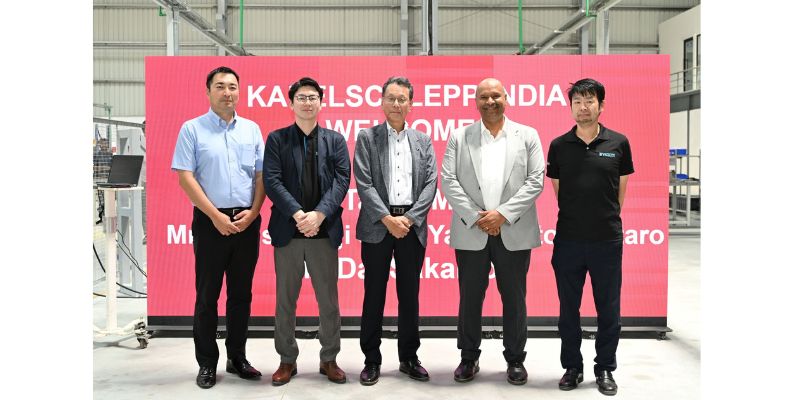
Tsubaki Leadership Reinforces India Growth Strategy during Kabelschlepp Visit
Tsubaki’s senior leadership visited Kabelschlepp India to review growth, localisation and innovation initiatives while strengthening engagement with employees, partners and customers.
Read moreAutomation & Robotics
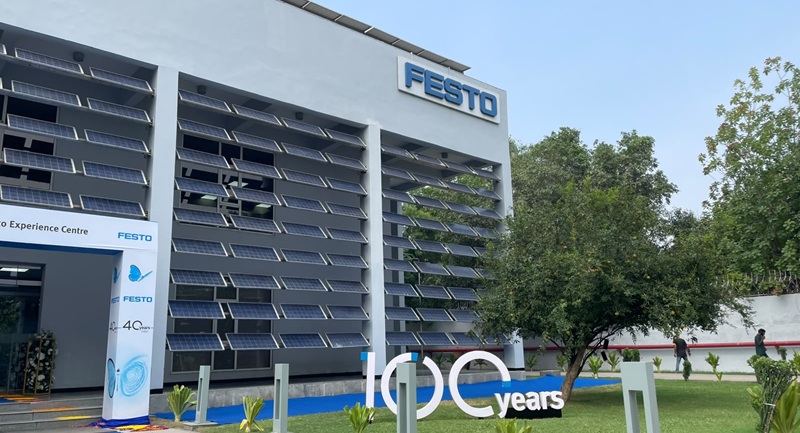
Germany's Festo opens Automation Experience Centre in Noida, Plans Expansion
It will be a dedicated hub for innovation, collaboration, skills development, and hands-on exploration of automation, digitalisation, and smart factory technologies.
Read moreOther Industrial Products
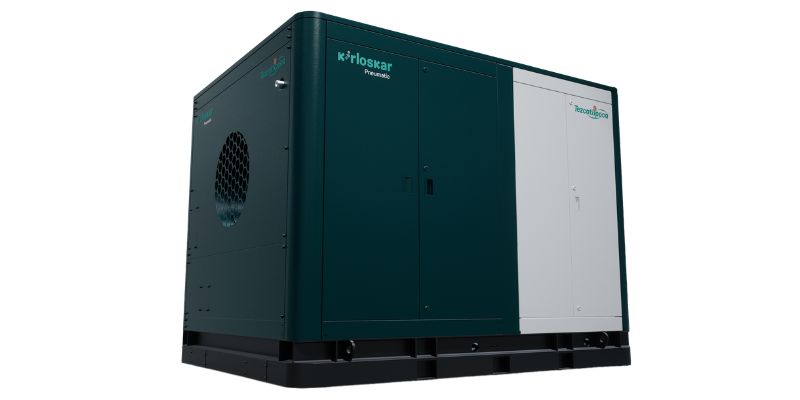
Kirloskar Pneumatic launches Tezcatlipoca A800 compressor
India’s first indigenously designed and manufactured centrifugal air compressor in the 600–980 CFM range extends centrifugal technology to lower-flow industrial applications.
Read moreRelated Products
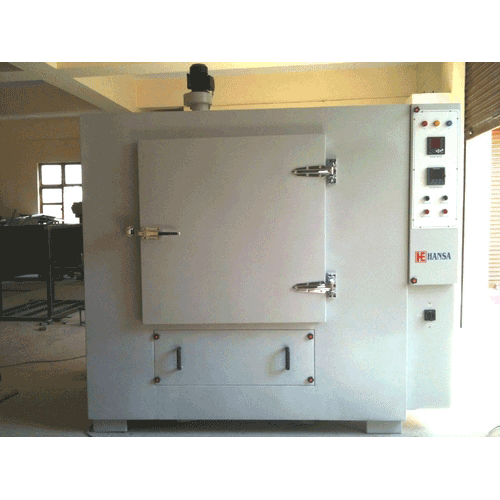
Heavy Industrial Ovens
INDUSTRIAL SUPPLIES
Hansa Enterprises offers a wide range of heavy industrial ovens.
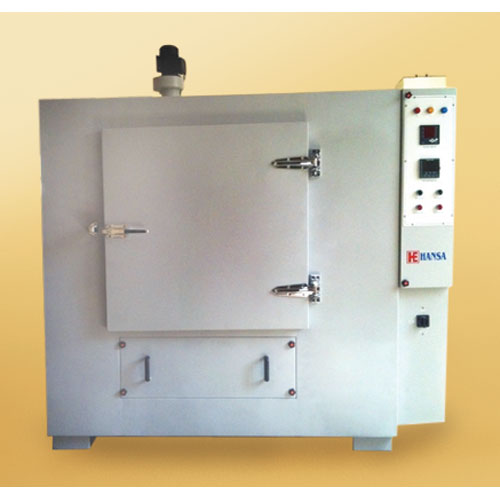
High Quality Industrial Ovens
INDUSTRIAL SUPPLIES
Hansa Enterprises offers a wide range of high quality industrial ovens. Read more
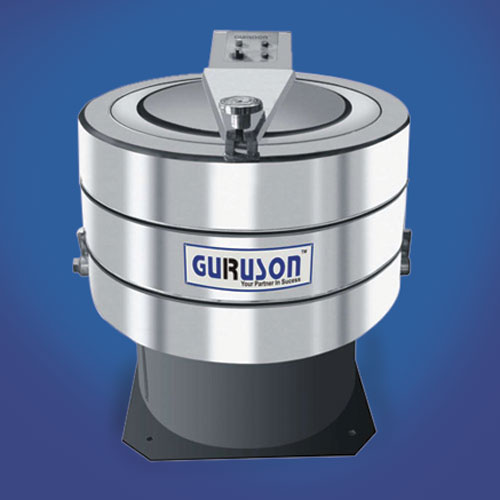
Hydro Extractor
INDUSTRIAL SUPPLIES
Guruson International offers a wide range of cone hydro extractor. Read more
latest News
Subscribe to iNoW

For Industry News on WhatsApp, Give a Miss Call on: +91 84228 74016