




Schedule a Call Back




India remains a key growth market for Phoenix Contact: Ulrich Leidecker
 Articles
- Mar 28,26
In this interview with Rakesh Rao, Ulrich Leidecker, COO & President BA, Industry Management and Automation, Phoenix Contact GmbH & Co KG, emphasises on regional resilience to support future industrial transformation and the importance of India for the group.

Phoenix Contact is leveraging global challenges such as deglobalisation and supply chain disruptions to drive localisation, digitalisation and energy-efficient solutions. India is emerging as a key strategic market, supported by strong supplier ecosystems and sustained double-digit growth potential. In this interview with Rakesh Rao, Ulrich Leidecker, COO & President BA, Industry Management and Automation, Phoenix Contact GmbH & Co KG, emphasises on regional resilience to support future industrial transformation and the importance of India for the group.
How is Phoenix Contact helping customers to solve some of their key challenges?
Many of today’s challenges—such as deglobalisation—initially appear as constraints but can evolve into opportunities. As industries shift towards regionalisation, producing locally for local markets becomes more viable and cost-effective.
At Phoenix Contact, we support this transition through solutions such as remote access, cybersecurity and digital service capabilities. These enable machine builders to efficiently manage and maintain globally deployed systems. In this way, challenges like supply chain disruptions can be transformed into opportunities for innovation and growth.
Which end-user industries are most significant for Phoenix Contact?
Factory automation remains our largest and most established segment. Our components are widely used across manufacturing environments—from control cabinets to logistics systems.
Additionally, the energy and power utility sector continues to be a core focus area. It is the industry where Phoenix Contact originated, and it remains central to our portfolio as global energy systems evolve.
Are you witnessing increased demand for DC solutions driven by renewable energy integration?
The demand fundamentally stems from the need for higher energy efficiency. However, customers often require guidance on how to achieve this. DC infrastructure in industrial environments enables more efficient energy use, particularly in systems with multiple moving components. Compared to alternating current (AC), direct current reduces conversion losses and improves overall system efficiency. While the need exists, it is our role to educate customers and demonstrate how DC solutions can be effectively implemented in their facilities.
How do localisation and supply chain diversification influence your strategy?
Recent global disruptions have highlighted the fragility of centralised supply chains. Events such as the Suez Canal blockage demonstrated the need for resilience. As a result, we are increasingly adopting a ‘local-for-local’ approach, qualifying suppliers across key regions including India. India plays a significant role in this strategy, both through global suppliers operating locally and through strong domestic vendors in areas such as moulding, stamping and plating. This diversification enhances resilience while maintaining quality standards, although it requires careful coordination across regions.
How do you view challenges arising from regulatory reforms?
Regulations aimed at sustainability—such as reducing emissions—are necessary and beneficial. However, excessive or redundant regulatory requirements can create inefficiencies. Duplicative approvals and testing processes increase costs and delay innovation without adding real value. A balanced regulatory framework is essential—one that supports sustainability without imposing unnecessary burdens on industry.
What is your outlook on the India–EU trade agreement?
We view it positively. India has demonstrated strong and accelerating growth over the past two decades. Reducing trade barriers will further enhance the exchange of products, technologies and solutions. Such agreements are likely to strengthen business opportunities and support continued industrial development.
What are your investment plans for India?
India remains a key growth market for Phoenix Contact. We have consistently achieved double-digit growth and expect this trend to continue over the next decade. We are currently expanding our production capacity, along with warehousing and logistics infrastructure, to support this growth. These investments reflect our long-term commitment to the Indian market.
Ulrich Leidecker
Phoenix Contact
Germany
Rakesh Rao
Industrial Automation
Digitalisation
supply Chain Localisation
Energy Efficiency
DC Power Systems
Industry 4.0
Smart Manufacturing
Global Trade
Related Stories
Automation & Robotics

Cost Takeout Through Acoustic Imaging
Acoustic imaging can enable cost takeout and deliver rapid savings for manufacturing operations.
Read moreAutomation & Robotics

Tsubaki's Zip Chain Actuator Advances High-Speed Linear Motion in Industries
Zip Chain Actuator offers a new approach to industrial lifting.
Read moreAutomation & Robotics

Digital transformation in Indian industries is accelerating: Hemanth Sheelvant
In this interview with Rakesh Rao, Hemanth Sheelvant, Senior Director - Digital Business, Robert Bosch GmbH, discusses the evolution of the manufacturing sector with the rise of AI integration and t..
Read moreRelated Products
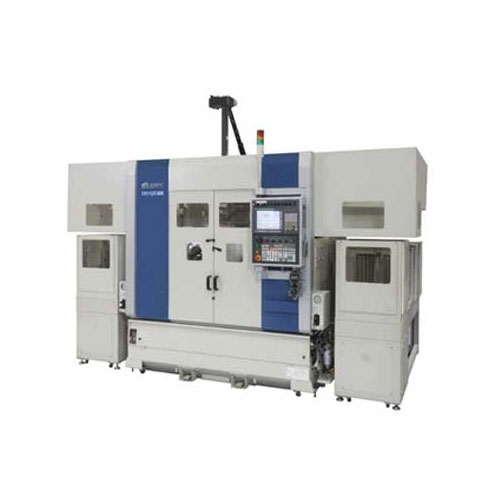
Compact Fmc - Motorum 3048tg With Fs2512
INDUSTRIAL AUTOMATION & TECHNOLOGY CONSULTANCY
Meiban Engineering Technologies Pvt Ltd offers a wide range of Compact FMC - Motorum 3048TG with FS2512.
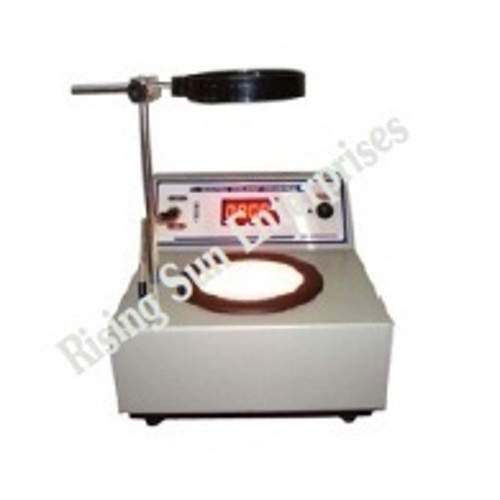
Digital Colony Counter
INDUSTRIAL AUTOMATION & TECHNOLOGY CONSULTANCY
Rising Sun Enterprises supplies digital colony counter.

Robotic Welding SPM
INDUSTRIAL AUTOMATION & TECHNOLOGY CONSULTANCY
Primo Automation Systems Pvt. Ltd. manufactures, supplies and exports robotic welding SPM.
latest News
Subscribe to iNoW

For Industry News on WhatsApp, Give a Miss Call on: +91 84228 74016