








Schedule a Call Back




India-EU FTA: How Will the ‘Mother of All Deals’ Affect Indian Industries?
 Articles
- Jan 31,26
The India-EU FTA offers India significant scope to expand goods and services exports through duty reductions and improved market access, though gains may initially favour the EU, writes R Jayaraman.
Now that the simmering euphoria of the deal has cooled down, all mothers must be feeling a sense of relief, to be relieved of this non-stop media coverage. However, the deal will be actualized fully only in the full year of 2026, i.e., it will take one full year to implement all that has been put on paper. The Department of Commerce, Ministry of Commerce and Industry, Government of India, has shared the details of the deal and lists all the ’benefits’ that could accrue to India. I guess EU will issue another note to tell their side of the story.
‘Bilateral merchandise trade between India and the EU has demonstrated sustained growth, valued approximately at Rs 11.5 trillion ($ 136.54 billion) in 2024-25, with India exporting roughly Rs 6.4 trillion ($ 75.85 billion) to the EU. India-EU trade in services reached Rs 7.2 trillion ($ 83.10 billion) in 2024’, according to the note. In the last decade, bilateral trade has doubled: EU imports grew by 140 per cent while EU exports grew by 58 per cent, according to European Council data (refer Table 1).
Table 1: India-EU bilateral trade in goods from 2019-2024 (value in Euro bn)
Year | India's export to EU | % Growth in Indian Exports | India's import from EU | % Growth in Indian imports | Total bilateral trade | % Growth in bilateral trade | Trade in balance |
2019 | 39.6 | 4.4 | 38.2 | -4.7 | 77.8 | | 1.4 |
2020 | 33 | -16.6 | 32.2 | -15.8 | 65.2 | -16.2 | 0.8 |
2021 | 46.2 | 39.9 | 41.9 | 30.3 | 88.1 | 35.1 | 4.3 |
2022 | 67.4 | 46 | 47.7 | 13.8 | 115.1 | 30.7 | 19.7 |
2023 | 64.9 | -3.8 | 48.3 | 1.2 | 113.2 | -1.9 | 16.6 |
2024 | 63.5 | -2.2 | 46.8 | -3.1 | 110.3 | -2.6 | 16.7 |
Source: Eurostat
Trading in goods has been increasing in the last five years. The top 10 items exported from India to the EU in 2024 is shown in Table 2.
Table 2: Top 10 exports to the EU from India in 2024 (HS level 6); Value in Euro million
HS Code | Product | Value |
851713 | Smartphones | 7909 |
271019 | Petroleum products | 6505 |
300490 | Medicaments | 1929 |
710239 | Diamonds | 1675 |
401170 | New pneumatic tyres | 624 |
610910 | T-shirts | 599 |
90111 | Coffee | 580 |
293399 | Heterocyclic compunds | 569 |
841290 | Engines | 484 |
851762 | Machines | 459 |
Source: Eurostat
So, the question is: how will the mother of all deals affect these items of manufactured products being exported? According to an article in The Times of India (TOI), dated January 28, 2026, for India-EU FTA, duties will be "zero" on the products such as marine products (from 26 per cent), leather (from 17 per cent), chemicals (from 12.8 per cent), textiles and garments (from 12 per cent), home décor, furniture (from 10.5 per cent), base metals (from 10 per cent), toys and sports goods (from 4.7 per cent), and gems and jewelry (from 4 per cent).
Over and above the duty, the EU also levies VAT, which varies with the country. Overall, the EU customs duty rates vary between 0 to 26 per cent and the VAT generally varies between 17 per cent and 27 per cent. The way to calculate the total levy is illustrated as: If you import €5,000 worth of goods (CIF value) with €200 customs duty in France (20 per cent VAT): VAT = (€5,000 + €200) × 0.20 = €1,040. So, the total levy is 200+1040 = 1240, or 25 per cent, approximately. Hence, the effective levy on imports varies between 17 per cent to 45 per cent approx., which is pretty high. It should be noted that the levy is calculated on the CIF value. The CIF for EU is lower than that for the USA, typically. Hence, it is cheaper to export to the EU than the USA.
To get a rough idea of how much duty will be saved by each of the signatories, I have used some assumptions and data form various websites, as well as from the TOI (January 28, 2026). Based on these sources, and my own estimates/ assumptions, we can arrive at a picture as shown in Table 3. The Table 3 shows the value of exports to the EU by India in 2024 (top 10 items only), the duties before and after the deal, and the savings in duties due to the duty reduction.
Table 3: Benefit of India-EU FTA for India on exports to EU
Export items | 2024 Value (Euro million) | Duty before FTA (%) | Duty after FTA | Duty benefit (in Euro mn) |
Smartphones | 7909 | 5 | 0 | 395.45 |
Petroleum products | 6505 | 12.8 | 0 | 832.64 |
Medicaments | 1929 | 12.8 | 0 | 246.91 |
Diamonds | 1675 | 4 | 0 | 67 |
New pneumatic tyres | 624 | 17 | 0 | 106.08 |
T-shirts | 599 | 12 | 0 | 71.88 |
Coffee | 580 | 12.8 | 0 | 74.24 |
Heterocyclic compunds | 569 | 12.8 | 0 | 72.83 |
Engines | 484 | 10 | 0 | 48.4 |
Machines | 459 | 10 | 0 | 45.9 |
Total | 21333 | | | 1961 |
The total duty that India can save in its exports to EU will be about 9.1 per cent, overall. This is under the assumption that the freight rates will not go up to either partially or completely negate the lower customs duty benefits. Or, to generalize, under pari passu conditions. This savings can be converted into extra sales/ exports, and therein lies the advantage of this ‘mother of all deals’ exercise. It should be noted that the exports can increase further due to the improved receptivity at the EU end, smoother flow of materials covered by the FTA, faster clearances of goods, fewer rigorous inspections at check points, and an overall congenial atmosphere of trade. The same figure for the imports from EU will be 12.38 per cent, as shown in Table 4.
Table 4: Benefit of India-EU FTA for EU on exports to India
Import items | Value (Euro mn) | Duty before FTA | Duty after FTA | Duty benefit (Euro mn) |
Aeroplane, powered aircraft | 5784 | 7.5 | 0 | 433.8 |
Non-industrial diamonds | 1684 | 0.25 | 0 | 4.21 |
Turbojets | 592 | 7.5 | 0 | 44.4 |
Waste and scrap of aluminium | 583 | 33 | 0 | 192.39 |
Waste and scrap of copper | 425 | 33 | 0 | 140.25 |
Electronic integrated circuits | 371 | 33 | 0 | 122.43 |
Waste and scrap of iron or steel | 365 | 33 | 0 | 120.45 |
Applicances of pipes, boiler shells, tanks, vats, etc | 357 | 27.5 | 0 | 98.18 |
Machines and mechanical applicances | 335 | 27.5 | 0 | 92.13 |
Diagnostic or lab reagents | 313 | 28.85 | 0 | 90.3 |
Total | 10809 | | | 1338.53 |
Source: Eurostat
It appears that EU is benefitting more than India. It may be noted that, in the above calculations, we have not included the benefits to EU on cars (110 per cent), spirits (150 per cent), various items of consumption (between 33 per cent to 110 per cent). In view of these benefits, it can be expected that more goods will likely flow from EU to India. However, the flow of human talent will be quite the reverse, which is in India’s favour. One main reason is that the demographics overwhelmingly favour India.
Table 5 indicates areas of exports from India which can benefit from the FTA.
Table 5: Areas of exports from India that will benefit from FTA
Export items | Before deal ($ mn) | Total EU market ($ mn) | % to EU market | Possible growth to EU in immediate future ($ mn) |
Engineering Goods | 16,600 | 20,00,000 | 0.83 | 18,260 |
Leather goods | 2,400 | 1,00,000 | 2.4 | 2,640 |
Marine products | 1,000 | 53600 | 1.87 | 1,100 |
Gems and jewellery | 2,700 | 79,200 | 3.41 | 2,970 |
Textiles | 7,200 | 2,63,500 | 2.73 | 7,920 |
Plastics & rubber | 2,400 | 3,17,500 | 0.76 | 2,640 |
Chemicals | | 5,00,000 | | |
Total | 32,300 | 33,13,800 | 0.97 | 35,530 (about 1.07% market share) |
Source: Eurostat
The market share of top ten Indian exports to the EU is not even 1 per cent. This is the extent to which the country has been neglecting a market which is much nearer than the USA, although more heterogenous in character. However, the Indian business talent can easily address this gap. In the last column, the possible exports figures based on the 10 per cent benefit due to the reduction of customs duty are shown. This is just an estimate, which is possible without any serious extra efforts. Indian business should move swiftly to capture at least 5 per cent of the EU markets before 2030, in these items, which can lead a substantial increase of 20 to 25 billion $. And this opportunity is only in the goods sector. The story in services is even more promising.
Table 6: India-EU bilalteral trade in services from 2019-2023 (value in Euro billion)
Year | India's export to EU | % Growth in Indian exports | India's import from EU | % Growth in Indian imports | Bilateral trade | % Growth in bilateral trade | Trade in balance |
2019 | 18.1 | 12.7 | 15.7 | 3.9 | 33.9 | | 2.4 |
2020 | 19.3 | 6.6 | 15.5 | -1.3 | 34.8 | -5.3 | 3.8 |
2021 | 23.1 | 19.7 | 21.8 | 40.6 | 44.9 | 27.8 | 1.3 |
2022 | 30.7 | 32.9 | 26.7 | 22.5 | 57.4 | 23.7 | 4 |
2023 | 33.8 | 10.1 | 26 | -2.6 | 59.8 | 0.2 | 7.8 |
Source: Eurostat
Only a few EU countries have found favour with PIO’s, as seen from the above picture. The opportunity lies in utilizing the openings in EU countries, where population growth has dipped, more hi tech persons are required, and Gen Z is much needed. However, this is a little more difficult and has to be done with some sensitivity, as jobs will be taken over by PIO’s, which could lead to some backlash. However, the EU deal has given this activity a legitimacy, and hence barriers should be low.
The picture looks to be of growth, continuous, and could imply acceptance of Indian services. The imports and exports appear to be of equal magnitude, perhaps reflecting a mutual respect and application. The trade balance is positive, although, once again, a small percentage of the total market size. The top investors from EU are the Netherlands ($52.7 billion), Germany ($15.0 billion) followed by Cyprus ($14.6 billion), France ($ 11.7 billion), and Luxembourg ($5.1 billion). These countries could be provided services.
According to the GOI factsheet, ‘Services being dominant and faster growing part of both economies will trade more in future. Certainty of market access, non-discriminatory treatment, focus on digitally delivered services, ease of mobility are expected to provide boost to services exports. ‘The FTA establishes an assured regime for temporary entry and stay for professionals, including Business Visitors, Intra-Corporate Transferees, Contractual Service Suppliers, and Independent Professionals’. These provisions in the deal should be utilized by the Indian services sector to build a solid base in EU, from where, one can branch out into the USA, Canada and many African countries. Wouldn’t be surprised if there is a sudden rush to open language institutes to teach the myriad tongues spoken in EU. This could be crucial for success, unlike the USA.
Overall, one can expect a 10 per cent increase in the immediate term in the services sector, which will translate into some $ 4 billion, thus increasing the EU exports to reach levels of more than $ 125 billion from $ 105 billion. The EU beckons, and I hope that India will respond suitably.
About the author:
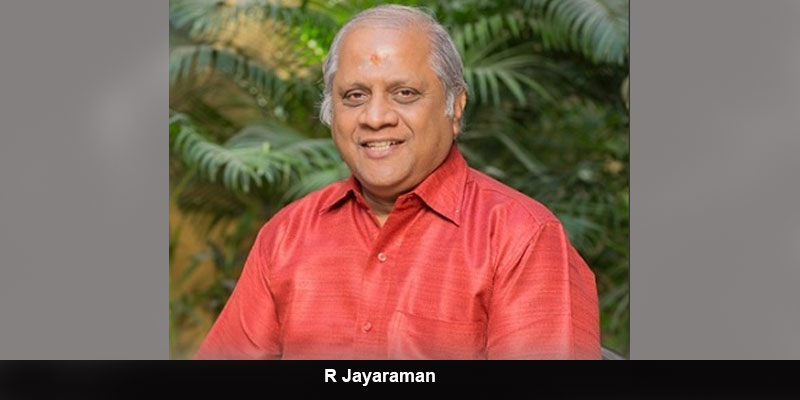
R Jayaraman is the Head, Capstone Projects, at Bhavan's S P Jain Institute of Management & Research (SPJIMR). He has worked in several capacities, including Tata Steel, for over 30 years. He has authored over 60 papers in academic and techno economic journals in India and abroad. Jayaraman is a qualified and trained Malcolm Baldrige and EFQM Business Model Lead Assessor.
India-EU FTA
bilateral trade
customs duty reduction
Indian exports
EU market access
services trade
manufacturing exports
trade policy
global supply chains
R Jayaraman
Related Stories
Policy Regulation
India-EU FTA: How Will the ‘Mother of All Deals’ Affect Indian Industries?
The India-EU FTA offers India significant scope to expand goods and services exports through duty reductions and improved market access, though gains may initially favour the EU, writes R Jayaraman.
Read morePolicy Regulation

Indian manufacturing sector: Negotiating its way in a less VUCA world
India’s manufacturing sector is evolving through policy support, technology adoption and sectoral growth, though challenges in R&D and skilling remain, writes Prof R Jayaraman, Head, Capstone Proj..
Read moreAuto & Auto Components

Manufacturing Strength Behind India’s Self-reliance and Global Positioning
India’s manufacturing sector is evolving from domestic self-reliance to global leadership, navigating a VUCA environment through strategic policy, capability building and infrastructure-led execut..
Read moreRelated Products
latest News
Subscribe to iNoW

For Industry News on WhatsApp, Give a Miss Call on: +91 84228 74016