






Schedule a Call Back


Building resilience in Indian manufacturing by shifting from redundancy to responsiveness
 Articles
- Mar 24,26
Manufacturing now operates in constant uncertainty. Resilience is no longer about recovery, but continuity and driven by adaptability, flexible investments, stronger systems and better decisions across the value chain.

Manufacturing resilience has moved well beyond the traditional idea of ‘risk management’. In today’s environment, marked by geopolitical disruptions, supply-chain fragility and demand volatility, resilience is no longer about absorbing shocks, but about operating seamlessly through them. For India, where manufacturing contributes close to 20 per cent to GDP and remains central to the Viksit Bharat 2047 vision, the shift is both urgent and structural.
What emerges clearly is that resilience cannot be achieved through excess buffers or insurance-like thinking. It must be designed into systems, across supply chains, capital allocation, innovation frameworks and data visibility, so that uncertainty becomes manageable rather than disruptive.
Risk is not eliminated- it is designed around
The instinctive response to uncertainty is to build redundancy, more inventory, more suppliers, more safeguards. But this approach often raises costs without improving responsiveness. The more effective path is to embed risk awareness into the system itself.
Zurvan Marolia, Senior Vice President, Godrej & Boyce, Godrej Enterprises Group reframes the discussion by expanding the definition of manufacturing beyond the shopfloor, covering the entire chain from raw material sourcing to final customer delivery. In such a system, resilience must be built across every node.
“We have to build optionality, we have to speedup decision making which can be done by systemisation and building more and more simplicity, so we have to build more and more simplicity with that,” he says, emphasising that the real lever is not redundancy but responsiveness.
He further underlines the core shift, “We have to understand that building resilience is not by building insurance but by building adaptability of ours.”
This perspective moves resilience from a defensive layer to a design principle, where organisations prepare for disruption in advance by aligning goals, identifying risks at each level and ensuring faster, more informed decisions.
Flexibility is the new capex strategy
In capital-intensive industries, the challenge is sharper. Investments are long-term, but market conditions are not. The question, therefore, is not whether to invest, but how to invest without locking into rigidity.
Seshnath B, MD & CEO, Walvoil Fluid Power India Pvt Ltd points to flexibility, both operational and strategic as the answer. “I think the critical thing is flexibility. We have to not only be flexible on the shop floor, but also flexible in our minds,” he says, highlighting that resilience begins as much with mindset as with machinery.
Flexible manufacturing systems, modular investments and multi-product lines allow companies to respond to shifting demand without overextending capital. Phased investments further reduce risk, enabling organisations to scale in line with market signals.
At the same time, he warns against the risks of stagnation in innovation. “The future is assured only when we are able to innovate. If we don't develop new products ourselves as a country, as a company, we run the risk of being left out on the wayside.”
Innovation, therefore, is not just a growth lever, it is a hedge against irrelevance.
Capital allocation: Strength before scale
Resilience is equally shaped by how capital is prioritised. A structured approach emerges as critical, one that balances immediate stability with long-term growth.
The first priority lies in strengthening existing operations, improving efficiency, upgrading systems and enhancing the bottom line. This is followed by expanding capacity in proven product lines or entering adjacent markets. Diversification, then, becomes a measured, longer-term move.
Such sequencing ensures that resilience is built on financial discipline, rather than aggressive expansion that could strain resources in volatile conditions.
Textile manufacturing: Opportunity amid structural gaps
From the textile machinery perspective, India’s position is both promising and incomplete. Domestic demand remains strong, yet a significant portion of requirements continues to be unmet locally.
ND Mhatre, Director General, ITAMMA points to this duality, “There is a lot of scope at India itself,” he notes, indicating the scale of domestic opportunity. At the same time, he highlights a critical distinction: “We have to make a distribution between Make in India and Made in India.”
The industry is also undergoing a structural shift towards man-made fibres and technical textiles, segments that offer greater scalability, consistency and application diversity compared to traditional cotton-based systems.
However, decentralisation has fragmented earlier integrated structures, particularly affecting MSMEs. Rebuilding connectivity across fibre, yarn, fabric and finishing through associations and technology platforms, will be essential for long-term competitiveness.
Sustainability: From compliance to control
Sustainability is often treated as an external requirement, something to comply with rather than integrate. But the discussion reframes it as a core resilience lever.
Zurvan Marolia, Senior Vice President, Godrej & Boyce, Godrej Enterprises Group captures this shift with clarity, “It’s not a nice to have. It's something critical to us being able to breathe and survive.”
He further explains that sustainability, when embedded into systems, reduces volatility: “It's not about an extra layer of the supply chain. It is about stripping waste, volatility and fragility out of the system.”
Circular approaches — reduce, reuse, repurpose, recycle and repair, lower dependence on external inputs and improve control over resources. Design choices, from material selection to manufacturing processes, become central to this transformation.
Adding an industry-specific lens, ND Mhatre, Director General, ITAMMA, emphasises the need to move beyond terminology and focus on intent. “I would rather say, instead of smart manufacturing, you go for responsible manufacturing,” he says, advocating for a more grounded approach.
He reinforces this with a broader perspective: “Instead of going for green, you go for grow green,” linking sustainability with growth and long-term viability rather than compliance alone.
Innovation gap: From theory to application
Despite its importance, innovation in Indian manufacturing continues to face structural challenges—particularly the disconnect between academia and industry.
Seshnath B, MD & CEO, Walvoil Fluid Power India Pvt Ltd acknowledges the intent but questions execution, “Academia and industry is a cliché. It says that we need to work together,” he notes, pointing to the gap between discussion and implementation.
He highlights the real value of collaboration, “It means faster problem solving and applied innovation,” especially when focused on specific technologies and market-driven solutions.
ND Mhatre, Director General, ITAMMA, echoes this concern from the textile ecosystem, stating, “There is no connection properly between student, academia, stakeholders, industry experts and government.”
He advocates a more practical approach, “Tailor-made innovation has to be done, which will help the industry, instead of sitting in the university, developing something which cannot be adopted in the industry.”
The solution lies in applied collaboration, industry-funded projects, student immersion in real operations and long-term partnerships that align research with practical needs.
Data maturity: Visibility before sophistication
While discussions around AI and advanced analytics dominate, the reality across manufacturing is far more fundamental.
Vishal Adkar, AVP, Avalon Consulting, points out that many organisations still lack basic visibility. “The problem is not the technology I would say the problem is the processes and the adoption in the people,” he says, highlighting that the barrier is organisational rather than technological.
He adds a pragmatic perspective, “And this does not require a fancy tool i think Excel is good enough.” The first step, therefore, is to create a unified view of demand, supply, production and logistics. Once this foundation is in place, more advanced analytics can follow. Without it, even the most sophisticated tools fail to deliver value.
As Indian manufacturing moves forward, the advantage will not lie with those who try to eliminate uncertainty, but with those who learn to work through it, quietly, consistently and with systems that are built to adapt.
(This article is based on the panel discussion on “Manufacturing Resilience in Uncertain Times, organised by Smart Manufacturing and Enterprises, at NSE, on February 11, 2026.)
Indian Manufacturing
SMEs
MSMEs
Zurvan Marolia
Godrej & Boyce
Seshnath B
Walvoil Fluid Power
ND Mhatre
ITAMMA
Vishal Adkar
Avalon Consulting
Sustainability
Textile Manufacturing
Supply Chain
Related Stories
Smart Manufacturing
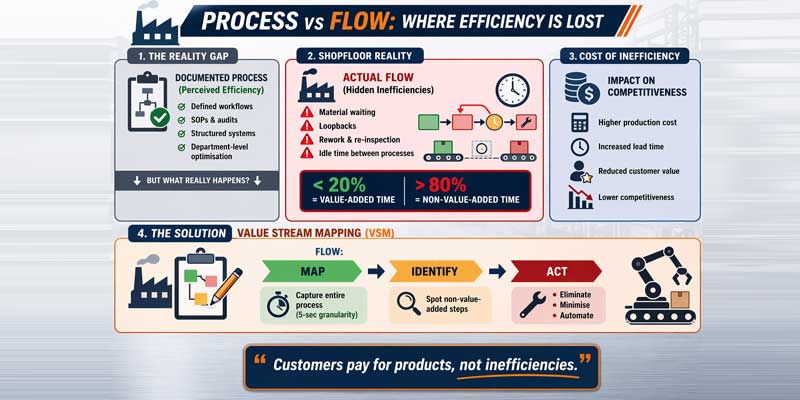
Improving Manufacturing Efficiency with the Right Flow
Often, the gap between documented processes and actual workflow leads to significant inefficiencies, with non-value-added time eroding competitiveness despite well-defined systems. In this month's c..
Read moreMaterial Handling Equipment
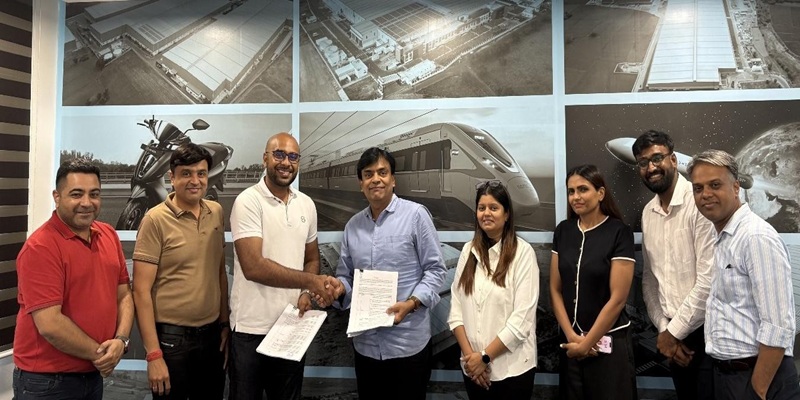
TVS ILP Expands into Siliguri
TVS ILP has signed MoU for 10 acres in Siliguri to strengthen its Eastern market presence and support organised Grade A warehousing.
Read morePlastic, Packaging & Printing

India is a key strategic growth market for Konica Minolta: Katsuhisa Asari
In this interview with Rakesh Rao, Katsuhisa Asari, MD, Konica Minolta Business Solutions India, articulates his strategic vision for future-ready operations and the company’s plans for India.
Read moreRelated Products
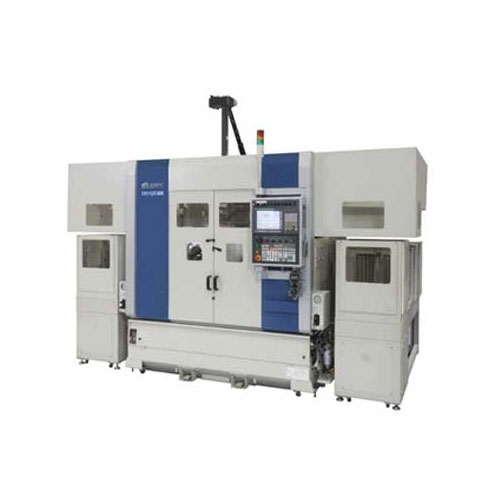
Compact Fmc - Motorum 3048tg With Fs2512
INDUSTRIAL AUTOMATION & TECHNOLOGY CONSULTANCY
Meiban Engineering Technologies Pvt Ltd offers a wide range of Compact FMC - Motorum 3048TG with FS2512.

Digital Colony Counter
INDUSTRIAL AUTOMATION & TECHNOLOGY CONSULTANCY
Rising Sun Enterprises supplies digital colony counter.

Robotic Welding SPM
INDUSTRIAL AUTOMATION & TECHNOLOGY CONSULTANCY
Primo Automation Systems Pvt. Ltd. manufactures, supplies and exports robotic welding SPM.
latest News
Subscribe to iNoW

For Industry News on WhatsApp, Give a Miss Call on: +91 84228 74016