




Schedule a Call Back


Resilience in Metal: Forging the Make in India Future in a VUCA World
 Articles
- Feb 03,26
The article examines how India’s stainless steel sector can turn global volatility, CBAM and supply risks into strategic advantages through sustainability, quality enforcement and digital transformation, says Rajamani Krishnamurti, President, Indian Stainless Steel Development Association (ISSDA).
The
global industrial landscape of 2026 is no longer defined by the steady,
predictable cycles of the past. Instead, we find ourselves navigating a
Volatile, Uncertain, Complex, and Ambiguous (VUCA) environment. Geopolitical
fragmentation, aggressive trade protectionism, and the urgent mandate
for decarbonisation have moved ‘predictability’ into the
realm of luxury. For India’s manufacturing sector, and specifically for the stainless
steel industry, this turbulence is not merely a challenge to be weathered;
it is a crucible in which a more resilient, self-reliant, and globally
dominant ‘Make in India’ must be forged.
The
global paradigm shift: From efficiency to resilience
For
decades, global
manufacturing prioritised ‘Just-in-Time’ efficiency
and cost-minimisation. This hyper-globalised model relied on the
assumption that borders would remain open and logistics would remain
cheap. The VUCA world has shattered this model. Today, the priority has shifted
to ‘Just-in-Case’ resilience. As trade tensions between major
economies escalate and US tariffs or Chinese export curbs create
sudden ripples in supply chains, India stands at a critical juncture.
The ‘China Plus One’ strategy
is no longer a theoretical corporate buzzword; it is an active
de-risking manoeuvre by global Original Equipment Manufacturers
(OEMs). However, for India to capture this migrating capital, we must offer
more than just a large labour pool or favourable demographics.
We must offer a stable, high-quality material ecosystem. In
the stainless steel sector, we are seeing this play out in real-time.
As the world seeks materials that offer both longevity and sustainability, India’s stainless
steel industry, the second largest in the
world, is emerging as the backbone of this new manufacturing
narrative.
Stainless
steel: The strategic material of a modern nation
In
any discussion regarding manufacturing strength, we must move beyond
final products and look at the fundamental materials. Stainless steel is not
just a commodity; it is a strategic asset. Its properties, unmatched
corrosion resistance, high strength-to-weight ratio, and 100 per cent
recyclability, make it the material of choice for the critical
infrastructure that a VUCA world demands.
Whether
it is the expansion of our railway networks with modern stainless
steel coaches, the construction of resilient bridges in coastal areas, or
the development of green hydrogen infrastructure, the integrity of the
material determines the lifespan of the asset. In a volatile economy,
the "Total Cost of Ownership" (TCO) becomes a more vital metric than
the initial procurement cost. When we factor in the "Life Cycle
Cost," stainless steel emerges as the most economical choice. By
choosing materials that last 50 to 100 years without significant maintenance,
India is building economic resilience into its very geography.
Navigating
the challenges: The headwinds of 2026
Despite
the optimism, the Indian manufacturer faces a gauntlet of structural and
systemic challenges that require urgent attention.
1. The
raw material conundrum and mineral security
The volatility of alloying elements like Nickel, Chromium, and Molybdenum remains a primary concern. These materials are often subject to the whims of global mining giants and geopolitical shifts in regions like Indonesia or the Democratic Republic of Congo. For the stainless steel industry, the lack of domestic nickel reserves creates a strategic dependency that can be weaponised in a VUCA world.
Our
strategy must be two-fold. First, we must engage in ‘Mineral
Diplomacy,’ securing these supply chains through long-term
government-to-government partnerships. Second, we must treat stainless steel
scrap as a national resource. Incentivising the domestic recycling of
scrap, which contains these valuable alloys, reduces our
import bill and our vulnerability to external price shocks.
2. The
menace of sub-standard imports and quality integrity
A significant threat to ‘Make in India’ is the persistent influx of sub-standard, non-BIS-compliant stainless steel. In an uncertain market characterised by high input costs, there is a dangerous temptation for downstream users to cut costs by using inferior materials. However, in critical applications like process industries, chemical plants, or structural engineering, this is a recipe for catastrophe.
We
must move beyond mere tariffs and strengthen our Quality Control Orders (QCOs).
Enforcement at the port of entry must be absolute to ensure that the Indian
market is not used as a dumping ground for rejected or low-grade global
inventory. Quality is not just a corporate requirement; it is a matter of
national safety.
3. The
digital and skills gap in industry 4.0
While Industry 4.0 offers a path to unprecedented efficiency, its adoption remains uneven across the Indian landscape. Smaller downstream manufacturers, who form the heart of our industrial ecosystem, often struggle with the capital intensity required for automation.
Furthermore, the ‘skills shortage’ in the era of smart manufacturing is a looming crisis. We need a workforce that is not just adept at traditional metallurgy but is also conversant in data analytics, AI-driven quality monitoring, and block chain-based supply chain transparency. Bridging this gap requires a radical realignment of our technical education systems with the current needs of the industry.
The
CBAM imperative: Turning a threat into a strategic advantage
As
we enter 2026, the European Union's Carbon Border Adjustment Mechanism (CBAM)
has transitioned from a policy discussion to a definitive trade reality. For
the Indian steel sector, which relies on Europe for nearly 25 per cent of
its exports, the stakes could not be higher. CBAM is effectively a ‘carbon
tax’ designed to level the playing field between EU producers, who pay
high carbon prices, and importers from regions with less stringent regulations.
The
challenge of carbon intensity
Currently,
much of India's primary steel production is coal-based, leading to a carbon
intensity that is significantly higher than the global average. Under the
definitive regime of CBAM starting in 2026, Indian exporters could face carbon
levies ranging from 20 per cent to 35 per cent of the product's value.
This ‘green tariff’ threatens to erode the price competitiveness of
Indian stainless steel in our most lucrative overseas market.
The
reporting and compliance burden
Beyond
the tax itself, the administrative burden of CBAM is profound. Indian manufacturers
must now provide verified, shipment-level data on both direct and indirect
emissions. For many of our MSME downstream units, the lack of digital MRV
(Monitoring, Reporting, and Verification) infrastructure poses an existential
threat. If we cannot prove our carbon footprint, we cannot sell to Europe.
The
opportunity: Leading the ‘Green Steel’ race
However,
viewed through a strategic lens, CBAM is an invitation to innovate.
The stainless steel industry is uniquely positioned here because our
primary raw material, scrap, is inherently low-carbon. By transitioning
more production toward the Electric Arc Furnace (EAF) route powered by
renewable energy, India can produce ‘Green Stainless
Steel’ that actually carries a lower carbon penalty than many of
its global competitors.
ISSDA
is advocating for a domestic carbon credit market that is compatible with the
EU's ETS (Emissions Trading System). If we can tax carbon domestically and use
those funds to subsidise our own green transition, we retain that
capital within India rather than paying it to the EU treasury. CBAM is the
ultimate "nudge" to accelerate our hydrogen-based iron making and
scrap-processing infrastructure.
Strategies
for a resilient future: A multi-pronged approach
To
accelerate India’s manufacturing growth amidst global ambiguity, we
must synchronise industry action with visionary policy support.
Leveraging
the circular economy and scrap formalisation
Sustainability
is no longer an "optional" CSR activity; it is a non-tariff barrier
in international trade. Stainless steel is the ultimate champion of the
circular economy. Roughly 80-90 per cent of stainless steel is
recovered at the end of its life and recycled without any loss in quality.
By formalising the
scrap collection industry, moving it from the unorganised sector
to a regulated industrial activity, and incentivising ‘Green
Steel’ production through renewable energy, India can bypass the
carbon-heavy legacy of older manufacturing models. This not only meets our COP26
and COP28 commitments but also makes our exports "future-proof"
against global carbon taxes like CBAM.
Strengthening
domestic value chains under Atmanirbhar Bharat
The
government’s Atmanirbhar Bharat initiative
must now evolve to focus on the ‘high-value-added’ segments. While
India is strong in long and flat products for general use, we must deepen
our capabilities in specialised alloys used in
aerospace, defence, and nuclear energy.
The
VUCA world has shown that high-end technology can be denied at any moment.
Reducing the reliance on imported high-end alloys for our strategic sectors is
the ultimate test of our manufacturing maturity. We must encourage joint
ventures and domestic R&D to ensure that ‘Made in India’ also means ‘Designed
in India’.
Policy
as a catalyst: Beyond monitoring to enabling
We require a regulatory environment that is ‘enabling’ rather than merely ‘monitoring’. This includes:
1. Trade
Corrective Measures: Swift and
decisive action against circumvention of duties and predatory pricing by
foreign entities. Our anti-dumping and countervailing duty mechanisms must be
agile.
2. Infrastructure
Synergy: Reducing the
high logistics costs, which currently stand at 13-14 per cent of GDP,
is non-negotiable. Through the Gati Shakti Master Plan, we must
ensure that stainless steel produced in the clusters of Odisha, Jharkhand,
or Gujarat can reach the hinterlands or export ports with minimal friction.
3. Green Standards and Taxonomy: Implementing the government’s Green Steel Taxonomy is crucial. This will provide clear star ratings for products based on their emission intensity, allowing ‘Green Stainless Steel’ to command a premium in both domestic and international markets.
The
role of innovation, R&D, and artificial intelligence
In
a VUCA world, the only constant is change. Innovation must
be democratised across the sector, reaching the smallest fabricator.
We are seeing exciting developments in "lean duplex" stainless
steels, which offer high strength with lower nickel content, providing a vital
hedge against global price volatility.
Furthermore,
the integration of AI in manufacturing is no longer science fiction. From
predictive maintenance of rolling mills to real-time
melt-shop optimisation using machine learning, digital tools are
reducing waste and enhancing product consistency. AI can predict slag
formation, optimise energy consumption, and ensure that every batch
of steel meets the most stringent global standards. ISSDA is actively
encouraging its members to view R&D not as a sunk cost, but as the only
insurance policy against obsolescence.
Building
global partnerships in the new world order
India
cannot thrive in isolation. While we push for self-reliance, we must also be
the preferred partner in global supply chains. This means aligning our
standards with international bodies and participating actively in
global trade forums. Our Free Trade Agreements (FTAs) with the UK, EU, and
other regions must be balanced to ensure they provide market access for our
value-added products while protecting our domestic industry from unfair surges.
Conclusion:
Trust as the ultimate currency
As
we look toward the horizon of 2026 and beyond, the success of ‘Make in
India’ will not be measured solely by the tonnage of steel produced
or the percentage of GDP contributed by manufacturing. It will be measured
by trust.
In
an uncertain world, global partners are looking for
a ‘Safe Harbour’. India can be that harbour. By anchoring
our manufacturing philosophy in material integrity, uncompromising quality
standards, and a deep commitment to sustainability, we transform ‘Make
in India’ from a slogan into a global hallmark of excellence.
Turning
challenges like CBAM and raw material volatility into competitive advantages requires
a collective will. The stainless steel industry is more than just a
sector; it is a reflection of the nation’s resolve. Like the alloy
itself, the Indian manufacturing spirit must be resilient, adaptable, and
resistant to the "corrosion" of uncertainty. Together, we are not
just making products; we are building a durable, stainless, and sovereign
future for India.
About the Author:
Rajamani Krishnamurti is
the President of the Indian Stainless Steel Development Association (ISSDA).
With decades of experience in the metals and minerals sector, he has been a
vocal advocate for industrial sustainability, policy reform, and the promotion
of stainless steel as a core component of India's infrastructure and
economic growth. Under his leadership, ISSDA has played a pivotal role in
bridging the gap between industry requirements and government policy, ensuring
that the Indian stainless steel sector remains globally
competitive and aligned with the nation's ‘Atmanirbhar’ goals.
India manufacturing
stainless steel industry
VUCA economy
green steel
CBAM compliance
Industry 4.0
circular economy
Make in India
Rajamani Krishnamurti
ISSDA
Indian Stainless Steel Development Association
Related Stories
Auto & Auto Components
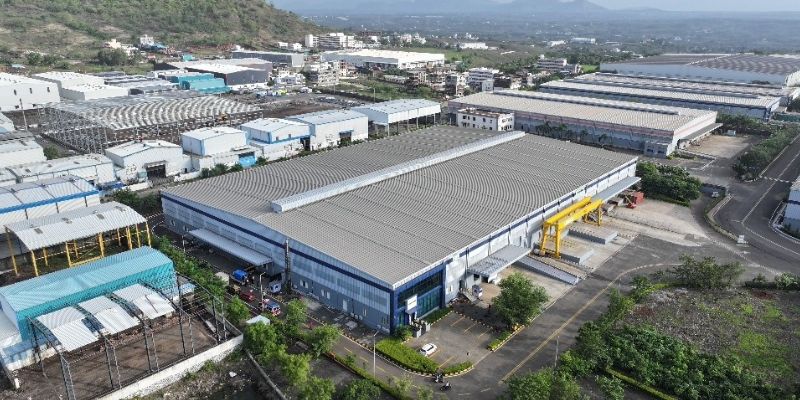
AmpereHour Opens 5 GWh BESS Manufacturing Facility in Pune
The Chakan facility will integrate Make in India battery blocks and digitally validated energy storage systems for utility-scale and industrial applications.
Read moreAutomation & Robotics
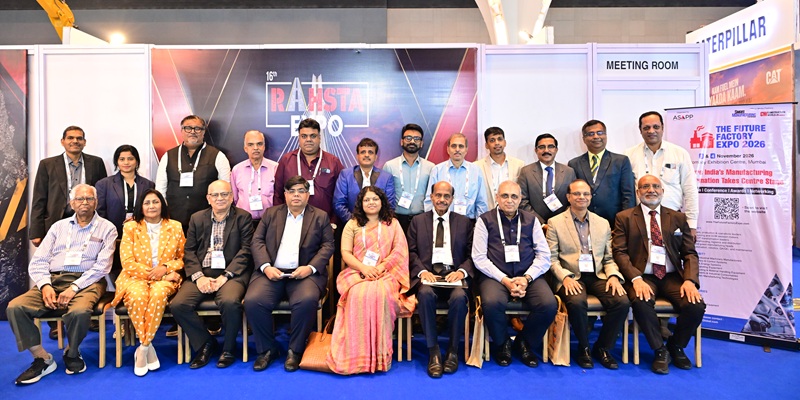
Future Factory Expo CXO Roundtable Charts Smart Transformation for SMEs
During the roundtable, hosted by Smart Manufacturing & Enterprises (SM&E) and The Future Factory Expo 2026, industry leaders outlined how SMEs can use practical digitisation, automation, skilling an..
Read moreAutomation & Robotics
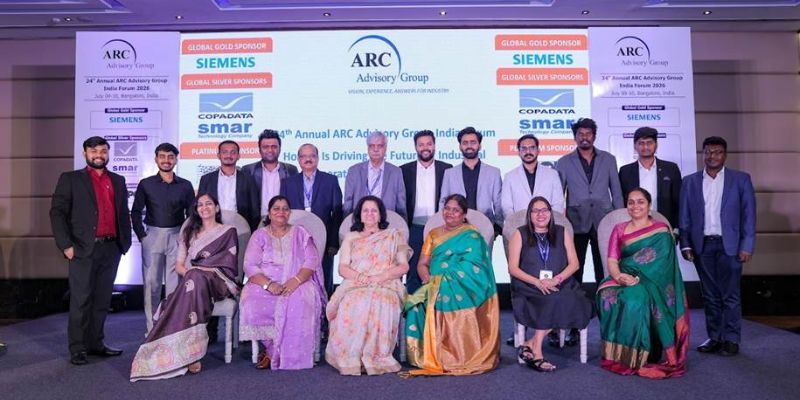
ARC India Forum Spotlights AI-Led Industrial Transformation
ARC Advisory Group’s 24th India Forum brought together 300-plus leaders to examine how AI is transforming industrial operations, manufacturing and supply chains.
Read moreRelated Products
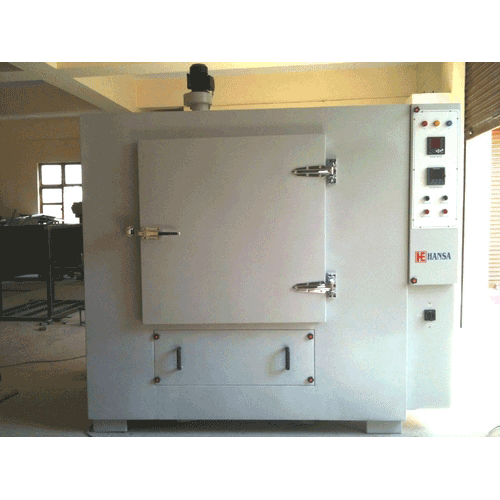
Heavy Industrial Ovens
INDUSTRIAL SUPPLIES
Hansa Enterprises offers a wide range of heavy industrial ovens.
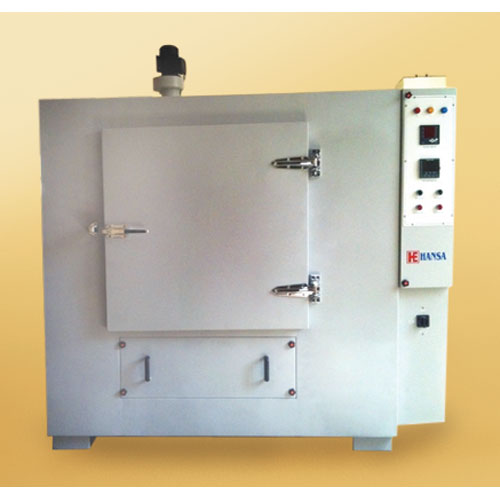
High Quality Industrial Ovens
INDUSTRIAL SUPPLIES
Hansa Enterprises offers a wide range of high quality industrial ovens. Read more
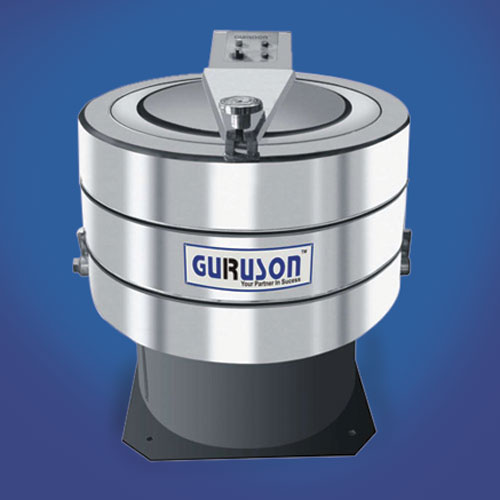
Hydro Extractor
INDUSTRIAL SUPPLIES
Guruson International offers a wide range of cone hydro extractor. Read more
latest News
Subscribe to iNoW

For Industry News on WhatsApp, Give a Miss Call on: +91 84228 74016