





Schedule a Call Back


New Opportunities in EV Manufacturing Amid Market Flux
 Articles
- Jan 26,26
India’s EV journey is entering a decisive phase, shifting from policy-led adoption to a focus on manufacturing depth, technology ownership, indigenisation and global competitiveness, shares Dr Uday Narang, Founder and Chairman, Anglian Omega Group and Omega Seiki Mobility.

Key Takeaways:
- India’s EV sector has entered a phase of consolidation, shifting from policy-led growth to market-led discipline where execution capability, financing access and unit economics define success.
- Manufacturing has advanced beyond assembly towards localisation, smart factories and modular EV platforms, but heavy dependence on imported battery cells and critical materials remains a structural constraint.
- Technology choices are converging on pragmatic, India-suited solutions, with emphasis on cost, safety, scalability and system-level efficiency rather than novelty.
- The article underscores that long-term EV manufacturing competitiveness will depend on policy stability, disciplined PLI execution, deeper R&D, indigenisation and stronger industry–academia and global partnerships
India’s electric vehicle journey has moved decisively from aspiration to action. What began as a policy-driven effort to reduce emissions and dependence on fossil fuel imports has today evolved into a far more strategic conversation—one centred on manufacturing depth, technology ownership, indigenisation, and global competitiveness. As the market matures, success is no longer defined merely by adoption numbers or headline announcements. The real test lies in whether India can build a resilient EV manufacturing ecosystem that is sustainable, scalable, and globally relevant.
“India’s EV journey is no longer about aspiration or adoption alone—it is about whether we can build a manufacturing ecosystem that is resilient, scalable, and globally competitive.”
The Indian EV industry is currently in a phase of consolidation and recalibration. The early years were marked by enthusiasm, rapid product launches, and a proliferation of start-ups chasing speed-to-market. Over time, however, market realities have asserted themselves. Consolidation is happening at a significant pace, and it is increasingly clear that only stronger, well-capitalised, and legacy players are able to sustain operations and scale meaningfully. Consumers have become more discerning, regulators more vigilant on safety and quality, and financiers far more cautious.
Financing, in fact, has emerged as one of the most critical bottlenecks across both B2B and B2C segments. Legacy OEMs, with access to captive or in-house financing arms, have been relatively insulated, while the start-up ecosystem has felt the brunt of tightening capital and stricter lending norms. Policy interventions such as FAME and the Production Linked Incentive schemes for automobiles and advanced chemistry cells have provided much-needed direction, but the industry is now clearly transitioning from policy-led momentum to market-led discipline, where unit economics, uptime, and execution matter far more than intent.
“The phase of exuberance is behind us; India’s EV industry is now defined by consolidation, where only strong, well-capitalised players with execution capability will endure.”
“Financing has emerged as the single biggest constraint across the EV value chain, insulating legacy players while severely testing the survival of the start-up ecosystem.”
From a technology standpoint, the industry is also converging around more pragmatic choices. Battery technology illustrates this clearly. LFP chemistry has emerged as the most practical and scalable solution for Indian operating conditions, offering a balanced trade-off between cost, safety, and performance. While LTO technology provides superior safety and a longer lifecycle, its higher cost, greater weight, and limited ability to scale make it unsuitable for mass adoption in most segments.
Looking ahead, the next phase of growth will be driven by bundled technologies—on-board chargers, magnet-less motors, higher levels of software integration, and eventually autonomous capabilities. These innovations are not about novelty; they are about improving efficiency, reducing dependence on critical imported materials, and enhancing system-level integration. Powertrain design, too, is evolving, with increasing emphasis on handling higher loads and steeper gradients to reflect real-world Indian usage conditions. Electric two-wheelers and three-wheelers continue to dominate volumes due to favourable total cost of ownership, electric buses have demonstrated the viability of electrification at scale through government-led adoption, and passenger EVs are steadily gaining acceptance as infrastructure and product offerings improve.
“The industry is moving away from theoretical perfection towards practical choices—technologies that balance cost, safety, scalability, and real-world Indian operating conditions.”
On the manufacturing front, India has made meaningful progress. The industry has clearly moved beyond basic assembly of imported kits towards capability-driven scale. Serious players are investing in backward integration, localisation, and the development of domestic supplier ecosystems. Dedicated EV platforms, flexible production lines, and modular architectures are becoming standard as manufacturers seek efficiency across multiple segments. Battery pack assembly, motors, power electronics, and vehicle control systems are seeing increasing levels of domestic value addition. Automation, digital manufacturing tools, and global-grade quality systems are now integral to new plants, with smart factories being set up that emphasise traceability, productivity, and data-driven decision-making. This reflects the industry’s transition from pilot projects to industrial maturity.
“The next phase of EV growth will be driven not by novelty, but by bundled technologies—magnetless motors, onboard charging, deeper software integration, and system-level efficiency.”
Collaboration has emerged as a defining feature of this growth phase. International alliances are increasingly central to accessing technology, accelerating learning curves, and building scale. Importantly, Indian OEMs are no longer only collaborators; they are increasingly acquiring or integrating international capabilities, as seen in the global expansion strategies of homegrown players like Mahindra across Europe and the United States.
At the same time, public–private partnerships are gaining momentum. Universities and research institutions are working closely with industry players—particularly start-ups—across battery chemistry, materials science, power electronics, and software. These collaborations are helping bridge the long-standing gap between research and commercialisation. Combined with India’s cost competitiveness, strong engineering talent base, and large domestic market, this positions the country not just as an EV consumer, but as a credible manufacturing hub for emerging markets in Asia, Africa, and Latin America.
“Indian OEMs are no longer passive participants in global EV supply chains—they are increasingly acquiring, integrating, and shaping international capabilities.”
“Public–private collaboration, especially between start-ups and universities, is becoming critical in converting research into manufacturable, scalable EV technologies.”
Despite this progress, indigenisation remains one of the most pressing challenges. Battery cells—the heart of an electric vehicle—are still overwhelmingly imported, with a significant proportion sourced from China. This dependence on overseas suppliers for cells, rare-earth materials, semiconductors, and advanced power electronics exposes manufacturers to geopolitical risks, supply disruptions, and cost volatility. While battery pack assembly has been localised to a large extent, the absence of large-scale domestic cell manufacturing and limited raw material processing capabilities continue to constrain true self-reliance.
The domestic supplier ecosystem is still evolving, and many tier-1 and tier-2 suppliers lack the technological depth, scale, or financial strength to invest in EV-specific components without long-term visibility on volumes. Developing alternatives such as magnet-less motors—which could significantly reduce reliance on rare-earth imports—requires sustained R&D investment and patient capital. Technology ownership remains another structural gap, as critical IP across cell chemistry, battery management systems, motor control, and software is often sourced or adapted from global partners.
Addressing these challenges will require a coordinated, phased, and long-term approach. Stable and predictable policy frameworks are essential to give manufacturers and suppliers the confidence to invest. Fragmented or short-term incentives only add uncertainty and slow decision-making. Strategic international alliances must go beyond sourcing and evolve into structured partnerships for technology transfer and co-development. OEMs need to work far more closely with suppliers through joint development programmes, assured sourcing commitments, and shared-risk models. Long-term R&D collaboration with universities and research institutions is critical to building domestic competence in core technologies.
At the same time, initiatives like the PLI scheme for advanced chemistry cells must be executed with discipline, aligned with the right technology choices, and integrated with vehicle manufacturing. Investments in recycling, second-life applications, and large-scale skilling across the value chain will be equally important to reduce structural dependence on imports over time.
“Fragmented and short-term incentives slow decision-making; what industry needs most is policy stability that allows capital, capability, and confidence to compound over time.”
Research and development sit at the heart of this transition. EVs are fundamentally technology products, where performance, safety, and cost competitiveness are tightly linked to innovation. India has a unique opportunity to innovate for its own operating conditions—high ambient temperatures, diverse road quality, and demanding usage cycles—rather than merely adapting global solutions. Strong in-house R&D capabilities allow manufacturers to reduce dependence on external technology, shorten development cycles, and protect intellectual property, while collaboration with start-ups and academia can further accelerate innovation.
The evolving EV ecosystem also opens up new opportunities beyond vehicle manufacturing. Significant value lies in batteries, power electronics, charging infrastructure, software, recycling, and energy storage systems. As global demand rises for affordable EVs, export-oriented manufacturing for cost-sensitive markets presents a compelling opportunity for India. The convergence of EVs with digital technologies—connected platforms, data analytics, and energy management—creates additional avenues at the intersection of manufacturing and software.
“As demand for affordable EVs grows globally, India is uniquely positioned to become a manufacturing hub for emerging markets.”
Ultimately, EV manufacturing is about far more than mobility. It represents a generational opportunity to upgrade India’s manufacturing base, move up the value chain, and build globally competitive capabilities. It supports national priorities around energy security, emissions reduction, and high-skill job creation. As the global automotive industry undergoes a fundamental transformation, countries that establish strong EV manufacturing ecosystems today will define the future of mobility. For India, success in EV manufacturing is not just about building vehicles—it is about reshaping the future of manufacturing itself.
Conclusion
In my view, Indian EV manufacturing stands at a rare and defining inflection point. The foundations have been laid—policy intent is visible, industry capability is evolving, and market demand is real. What will determine the outcome now is execution with consistency and conviction. If India can move beyond fragmented interventions and adopt a long-term, stable approach to policy, financing, and industrial development, EV manufacturing can become a powerful catalyst for structural transformation. This is not just about replacing internal combustion engines with electric drivetrains; it is about building technology ownership, resilient supply chains, and globally competitive manufacturing depth.
Done right, EV manufacturing can fundamentally reshape India’s industrial landscape—driving advanced manufacturing, strengthening domestic suppliers, creating high-quality jobs, and positioning the country as a credible alternative in global supply chains. The opportunity is to leapfrog, not imitate—to innovate for Indian conditions while building at global scale. With sustained government support, deeper industry–academia collaboration, patient capital, and a sharp focus on indigenisation, India can transform EV manufacturing into a long-term growth engine. The choices we make today will decide whether India becomes merely a large EV market or a true global manufacturing and technology leader in the electric mobility era.
About the author:
Dr Uday Narang is the Founder and Chairman of Anglian Omega Group and Omega Seiki Mobility. He has been actively involved in the business since 2015. Presently heading Anglian Omega Group and is taking a lead role in expanding Asian and ASEAN markets in Automotive Parts, Steel & Infrastructure projects. He has more than 15 years of experience in the industry which has given him an incisive understanding of the operations of the company as well as great insight into the larger trends.
India EV manufacturing
electric vehicle ecosystem
EV indigenisation
EV supply chain
battery manufacturing India
electric mobility India
EV technology localisation
Dr Uday Narang
Anglian Omega Group and Omega Seiki Mobility
Related Stories
Auto & Auto Components
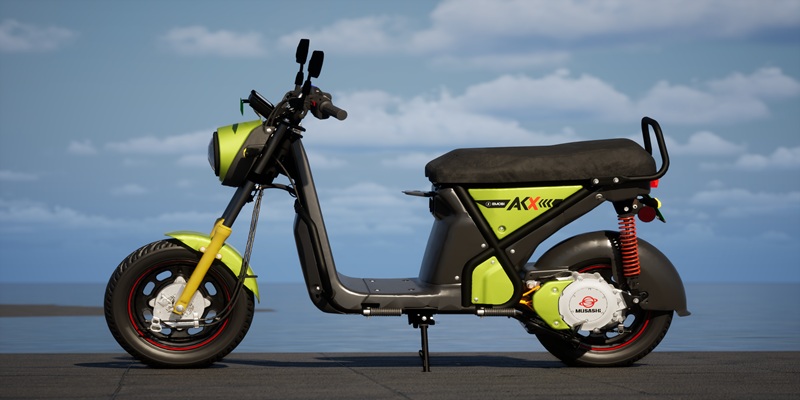
Emobi AKX to feature Musashi e-Axle EV drive unit
Emobi’s AKX becomes its second electric two-wheeler to feature Musashi’s e-Axle technology, aimed at improving acceleration, torque and ride performance.
Read moreElectrical & Electronics

Agratas Completes Steel Frame at Sanand Battery Plant
Agratas advances its Sanand battery facility with steel frame completion, marking a key milestone towards 2027 production and supporting India’s clean energy ambitions.
Read moreAuto & Auto Components

Valeo opens Pune e-Axle line for Mahindra EV platform
Valeo launches a new e-Axle manufacturing line in Pune to supply integrated electric powertrains for Mahindra’s Born Electric platform, strengthening localisation and EV capabilities.
Read moreRelated Products

Automotive Oil Pump
AUTO COMPONENTS & ACCESSORIES
Kalpak Auto Pvt Ltd offers a wide range of
automotive oil pump.
Tata Motors unveils facilities for development of Hydrogen propulsion tech
AUTO COMPONENTS & ACCESSORIES
Tata Motors, India?s largest automobile company, unveiled two state-of-the-art & new-age R&D facilities for meeting its mission of offering sustainable mobility solutions. The unveilings constitute of Read more
Tata Motors plans petrol powertrain for Harrier and Safari SUVs
AUTO COMPONENTS & ACCESSORIES
Tata Motors is in the process of developing a new petrol powertrain for its premium sports utility vehicles, the Harrier and Safari, as confirmed by a senior company official. Currently, these models Read more
latest News
Subscribe to iNoW

For Industry News on WhatsApp, Give a Miss Call on: +91 84228 74016