





Schedule a Call Back


Industrial AI is essential for autonomous plant operation: Swapnil Deosthali
 Articles
- Jul 27,26
In this interview with Rakesh Rao, Swapnil Deosthali, Executive VP and Head – Digital Industries, Siemens India, shares insights on building autonomous, sustainable and resilient manufacturing ecosystems in the chemical industry.
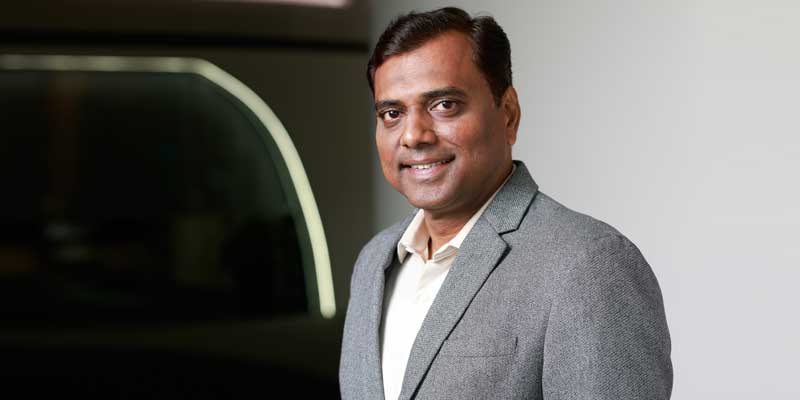
Chemical manufacturers are navigating the challenge of operational efficiency amid growing sustainability pressures. In this interview with Rakesh Rao, Swapnil Deosthali, Executive Vice President and Head – Digital Industries, Siemens India, explains how Siemens is enabling the transition towards future-ready chemical plants and building resilient manufacturing ecosystems.
How is Siemens helping chemical manufacturers address key concerns facing them?
Chemical manufacturers are facing a difficult mix of energy and feedstock volatility, margin pressure, rising operating costs, supply-chain disruption and stricter environmental expectations. Global overcapacity in some segments, regional shifts in production and weak demand in certain markets are adding to profitability pressures. At the same time, ageing assets, fragmented data systems and shortages of experienced operators and engineers are affecting productivity, reliability and knowledge retention.
Siemens addresses these challenges by integrating automation, industrial software, digital twins, simulation, AI-driven analytics, integrated engineering and lifecycle services. Its four Digital Threads provide a clear framework: Intelligent Plant & Process Design enables faster project implementation and process development; Smart Operation for Chemicals for adaptive, data-driven and increasingly autonomous plants; Digital Plant & Integrated Process Engineering for a consistent digital backbone from design to operations; and reduced downtime due to AI-driven predictive maintenance resulting in improved operational efficiency.
A manufacturing environment automated with advanced process control and batch software, integrated with ERP systems through MES, helps build resilience by enabling adaptation to external changes such as feedstock variations, rapid capacity adjustments and repurposing of manufacturing environments for different products.
For example, a chemical company can use a process digital twin to test process changes before implementation, monitor energy performance in real time and use integrated engineering data as asset digital twin to keep modifications documented and compliant.
Siemens’ work with BASF, using technologies such as DCS based on SIMATIC PCS 7 combined with SIMATIC Batch for highly flexible batch control, COMOS and SIMIT for integrated engineering and simulation, illustrates how virtual testing, operator training and process optimisation can reduce commissioning risk and support continuous improvement.
In a highly automated sector like chemicals, autonomous manufacturing is emerging as the next phase of digital transformation. How can chemical manufacturers build a roadmap towards achieving this goal?
Autonomous operation is a concept where production, processes and logistics are highly automated and connected to enable efficient and scalable operations. The goal is to minimise human interaction while increasing productivity.
Achieving this goal involves developing a digital transformation framework while keeping the big picture in mind and then identifying and executing actions targeted towards the highest-impact, high-ROI projects. A step-by-step approach involves assessing current landscape, evaluating current IIoT maturity level, defining future IIoT roadmap keeping highest priority area in mind, creating IIoT action plan and propose solutions based on such action plan.
It must be noted that adopting digitalisation to achieve autonomous operation could lead to different paths and solutions for different companies considering their own current maturity levels and priorities for specific KPIs.
Most importantly, the path towards fully automated systems requires foresight and commitment from decision-makers.
In essence, purposeful and coordinated use of automation and digitalisation, coupled with AI focusing on specific areas, is the foundation to achieve autonomous operation.
Industrial AI is one of the essential ingredients for achieving autonomous operation. Siemens approaches Industrial AI by bridging the physical and digital worlds, combining real-world operational technology (OT) with advanced artificial intelligence. Rather than treating AI as a standalone tool, Siemens integrates it natively into the Industrial Metaverse.
With chemical companies increasingly focusing on decarbonisation, how is Siemens supporting manufacturers in improving energy efficiency, optimising resources and reducing their carbon footprint?
Decarbonisation is a strategic and operational priority for chemical manufacturers because the sector is energy-intensive and closely linked to downstream value chains. The challenge is to lower carbon footprint while maintaining quality, safety, supply reliability and profitability. Siemens supports this through automation, electrification, industrial software, digital twins, AI-driven analytics and energy-management solutions.
A key first step is real-time visibility of energy and emissions across utilities, process units, production lines and equipment. With this data, manufacturers can identify losses, benchmark performance, optimize operating parameters, support ISO 50001-aligned energy management and track ESG targets.
Digital twins and AI can simulate process scenarios and recommend ways to reduce steam, electricity, cooling demand or waste without affecting yield or quality.
Siemens also supports broader sustainability pathways such as product carbon footprint transparency, circular economy models, chemical recycling, low-carbon process routes, carbon capture and green hydrogen. For example, a site seeking to reduce steam and electricity intensity can capture real-time data from meters, drives and process systems, compare actual consumption against expected performance, simulate alternatives and use analytics to identify improvement opportunities. This can improve yield, reduce waste, lower energy cost and reduce carbon intensity.
High investment costs, legacy infrastructure and skill gaps remain major barriers to automation adoption in chemical plants. How can companies overcome these challenges and build future-ready manufacturing facilities?
High investment costs, legacy infrastructure and skill gaps are real barriers, especially in brownfield plants built up over decades with different control systems, data structures and practices. Transformation need not be a disruptive “rip-and-replace” exercise. A more practical route is a phased, business-value-driven roadmap starting with visible-return use cases such as energy management, asset performance, process optimisation, quality, compliance documentation and plant visibility.
Digital twins and virtual commissioning can reduce risk by allowing manufacturers to simulate process configurations, automation logic, equipment layouts and operating scenarios before physical changes are made. This helps identify design issues earlier, reduce rework, shorten commissioning and protect production continuity, which is particularly important for brownfield upgrades.
Advanced OTS (Operator Training Systems) aided by such digital twins can train the operator on real-life situations by de-skilling real time plant operation and hence reduce dependence on skilled workforce.
Standardisation and modularisation also make transformation more scalable. Reusable engineering libraries, modular plant concepts, standard automation architectures and integrated engineering data can simplify expansion, replication and modernisation across sites. Legacy assets can be connected to modern platforms through sensors, edge computing, MES, analytics and industrial software, allowing companies to modernize incrementally while protecting existing investments.
Siemens Xcelerator, automation, software and lifecycle services support this incremental approach by helping build a digital backbone that connects engineering, production, maintenance, quality, energy and sustainability data. Workforce development is equally important: automation, Industrial AI and analytics can support operators, capture know-how and enable predictive maintenance, but employees need digital, automation, data and cybersecurity skills to use these tools effectively.
Future-ready chemical facilities will combine integrated engineering, IT/OT convergence, data-driven decisions, autonomous operations, workforce training and lifecycle cybersecurity. The aim is to create plants that continuously improve safety, reliability, productivity, sustainability and resilience without overwhelming capital budgets or operations teams.
With chemical plants become increasingly connected and digitalized, what measures should manufacturers adopt to secure automation and control systems?
As chemical plants become more connected, cybersecurity is central to operational resilience, safety and business continuity. IT/OT convergence, remote access, legacy control systems and data-driven operations have expanded the attack surface. A cyber incident can affect not only data but also plant availability, process safety, product quality and regulatory compliance.
Manufacturers need a defence-in-depth strategy across IT and OT, securing every layer from enterprise systems and engineering workstations to DCS, PLCs, HMIs, industrial networks, field devices and remote access points. Siemens’ industrial cybersecurity approach uses layered protection aligned with standards such as IEC 62443 and strengthened by Zero Trust principles, where access is authenticated, authorized and continuously monitored.
Key measures include network segmentation; controlled, role-based and secured remote access; protection of DCS, PLCs, HMIs and engineering systems; continuous monitoring for threats, vulnerabilities and abnormal behavior; secure backup and recovery; and cybersecurity requirements built into engineering, commissioning, operations and modernisation. Secured remote connectivity solutions such as Siemens’ SINEMA RC allow all the advantages of remote connectivity for troubleshooting without compromising on cybersecurity.
Siemens
Swapnil Deosthali
Digital Industries
chemical industry
industrial automation
digital twins
autonomous manufacturing
industrial AI
cybersecurity
process digitalisation
Simatic pcs 7
sustainable manufacturing
chemical manufacturing
Rakesh Rao
Related Stories
Automation & Robotics
LTTS Launches Agenticiq AI Platform for Engineering and Manufacturing
LTTS has launched AgenticIQ, an end-to-end Agentic AI platform designed to enable autonomous, multi-agent workflows across engineering, manufacturing and industrial operations.
Read moreAutomation & Robotics
Honeywell expands AI and cybersecurity skilling initiative in India
Under Saksham, Honeywell Technologies aims to equip over 300,000 students with skills in AI, cybersecurity, sustainability and advanced technologies by 2030.
Read moreAutomation & Robotics
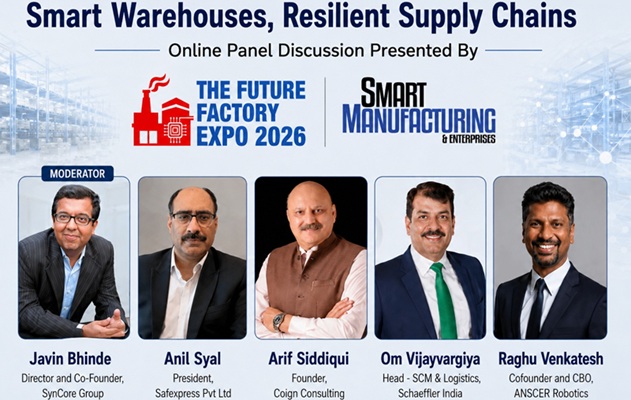
Future Factory Expo Webinar Series: Smart Warehouses for Resilient Supply Chains
In the run-up to Future Factory Expo 2026 (to be held on November 3-4 in Mumbai), Smart Manufacturing & Enterprises recently hosted the webinar exploring how automation, digitalisation, smart infras..
Read moreRelated Products
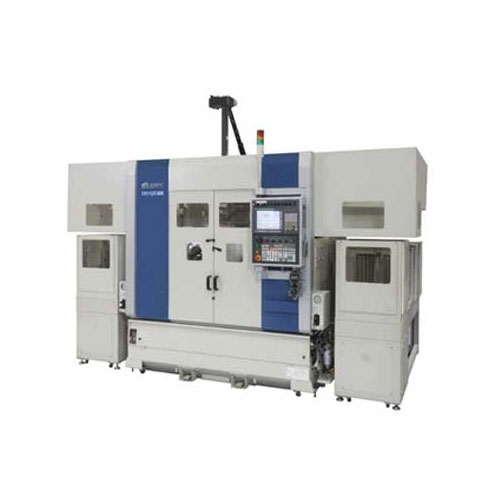
Compact Fmc - Motorum 3048tg With Fs2512
INDUSTRIAL AUTOMATION & TECHNOLOGY CONSULTANCY
Meiban Engineering Technologies Pvt Ltd offers a wide range of Compact FMC - Motorum 3048TG with FS2512.
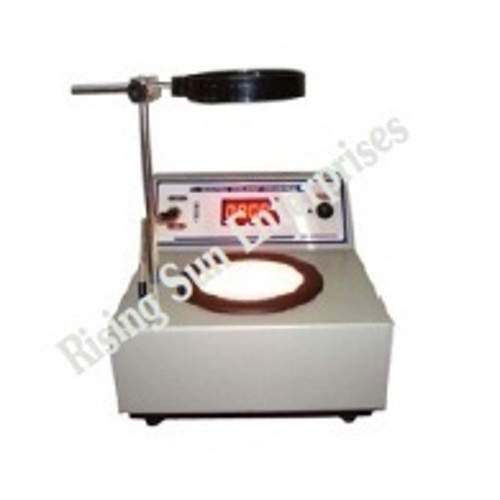
Digital Colony Counter
INDUSTRIAL AUTOMATION & TECHNOLOGY CONSULTANCY
Rising Sun Enterprises supplies digital colony counter.

Robotic Welding SPM
INDUSTRIAL AUTOMATION & TECHNOLOGY CONSULTANCY
Primo Automation Systems Pvt. Ltd. manufactures, supplies and exports robotic welding SPM.
latest News
Subscribe to iNoW

For Industry News on WhatsApp, Give a Miss Call on: +91 84228 74016