





Schedule a Call Back


How Indian Manufacturing Is Learning to Scale While Thriving in a VUCA World
 Articles
- Feb 03,26
Global manufacturing is being reshaped by a VUCA world, where resilience, adaptability and reliability outweigh efficiency, creating challenges and strategic opportunities for India’s manufacturing future, outlines Soumyadeep Kundu and Sagar Ravindra Ghuge, Assistant Professors, TAPMI.

A large
part of this decade thus far has been characterised by uncertainty and
volatility. Beginning with the COVID-19 pandemic that disrupted the globe for
almost two years, followed by major geopolitical conflicts such as the ongoing
Russia-Ukraine war, and more recent shift in trade and economic policies under
the Trump administration, the traditional
manufacturing, operations and supply chain playbooks stand
fundamentally challenged.
Numerous
other disruptions of various shapes and forms are not temporary deviations from
an otherwise stable global order, they are the new normal. These
signal a world increasingly defined by Volatility, Uncertainty, Complexity and
Ambiguity, a VUCA environment (Figure 1). In such a world order practices
like planning for long cycles, tightly optimised supply chains, and reliance on
single sources, become sources of risk rather than strength.
Rather, resilience, adaptability, and the ability to make timely, informed decisions under uncertainty are strategic assets and capabilities which continue to increasingly define competitive advantage in modern manufacturing.

Figure 1: The VUCA Environment
For India, this shift presents a dual reality to contend with. On
one hand, the uncertainty surrounding global manufacturing has laid bare
various structural weaknesses within the India manufacturing system, ranging
from uneven technological knowhow, fragmented and inadequate supplier networks,
skills gap amongst labour forces and regulatory complexities.
On the other hand, the same uncertainty has led to global
manufacturing firms to rethink their overly concentrated and overly reliant
supply chains. This has led to new trends such as “nearshoring” and
“friend-shoring”, giving opportunities to countries which can offer
reliability, adaptability, stability and trust. India, among several other
countries, occupies a lucrative position.
The essential question therefore is not whether Indian
manufacturing can survive the VUCA world, but whether it can grab the
opportunities presented, and can learn to adapt and thrive because of it. Here,
we examine and understand how recent global disruptions have reshaped the
operating environment for global manufacturers and Indian players in
particular.
Furthermore, we explore the challenges and opportunities that lie
ahead, and go on to outline a strategic roadmap for building adaptable,
resilient and future-ready manufacturing systems in India.
Manufacturing
at a turning point
Manufacturing, across the globe, is undergoing a fundamental
reset, driven by various geopolitical and economic factors, which have
aggravated in recent years. The disruptions of the past few years exposed the
flaws and vulnerabilities in our manufacturing and supply chains, and even
altered and challenged the very assumptions on which these manufacturing and
supply chain strategies were built.
The traditional playbook of the yesteryears is now redundant!
Geopolitical tensions, trade disputes and policy-driven interventions are now
recurring characteristics of the operating environment for manufactures
worldwide. Events such as tariff uncertainty, export controls, and sudden
supply restrictions, like that of rare earth metals, have demonstrated how
localised decisions can trigger global production bottlenecks.
In addition to these global factors, shifting market dynamics add
to the complexity. Fast changing consumer preferences, demand patterns and technology
adoption cycles are occurring faster than what traditional manufacturing setups
can keep up with and handle. To mitigate these challenges, manufacturing firms
are moving away from traditional manufacturing models which are optimised for
efficiency under relatively stable conditions, and are embracing practices and
systems which can absorb shocks, adjust rapidly, are resilient and continue
performing effectively under uncertainty.
This transition reflects a shift in manufacturing logic, from
efficiency-centric models designed for stable environments, toward
resilience-centric systems built to perform reliably under volatility and
uncertainty (Figure 2).
Amidst this changing landscape, India occupies a unique enviable
position. While the global volatility and uncertainty has exposed structural
issues within the Indian manufacturing ecosystem, it has also highlighted some
relative sources of strength with significant potential.
In contrast to other regions plagued by persistent political and policy instability, India offers a certain degree of continuity, stability and predictability which global manufacturers have increasingly come to value recently. This relative stability, when combined with scale, market potential, and effective policies, enhances India’s appeal as a potential manufacturing destination for global manufacturing firms.

Figure 2: From efficiency-centric to resilience-centric manufacturing
However, this opportunity will not materialise automatically and
is neither universal. As manufacturing logic and competitiveness shifts,
success will depend less on cost advantage and more on the ability to deliver
reliably under uncertain conditions. For manufacturers, reliability,
responsiveness, adaptability and operational discipline are becoming decisive
factors when exploring long-term partnerships.
For the Make in India agenda, this moment represents a clear and
decisive inflection point, which could make or break India’s manufacturing’s
future and survival. Make in India cannot succeed in a VUCA world by chasing
scale and capacity alone. It must be complemented with resilience and strategic
flexibility. The next phase and future of India’s manufacturing journey will be
defined not only by what it produces, but by how well it performs when the
assumptions fail and disruptions become the norm.
The VUCA reality
for Indian manufacturers
Globally, volatility does not affect all manufacturers and
manufacturing systems equally. Some are more prone to disruption. The impact is
often shaped and amplified by domestic structures, institutional constraints,
and firm-level capabilities. For the Indian manufacturing ecosystem, the VUCA
environment not only leads to external uncertainty, but also persistent
operational and strategic challenges, which complicate decision making and
execution. Geopolitical tensions, supply chain shocks and a host of other
events have become mainstays of the operating environment.
Aggravating these are tariff uncertainty, export controls and
logistics volatility which introduce complications to sourcing, pricing and
delivery commitments. For Indian firms, these disruptive forces result in
continuous planning challenges, where assumptions on various operational
factors need to be revised.
These external forces interact with the internal structural
constraints of the Indian manufacturing ecosystem. One such glaring constraint
is India’s relatively weak integration into global value chains, especially in
high-value segments like semiconductors. Dependence on imported intermediaries,
coupled with cost and policy constraints over time has confined firms to lower
value assembly activities. This is further aggravated by persistent gaps in
labour productivity and relatively modest investments in research &
development, which thwart Indian manufacturer’s advance up the value chain.
Domestic institutional factors further add to the complexity.
Regulatory and compliance requirements across various facets,
increase coordination costs and slow expansion decisions. For MSME enterprises,
such an environment disincentives those from scaling, trapping them in
low-productivity equilibrium and weakening the supplier base of the country.
Additional frictions at the firm and market level also persist.
A significant fraction of manufacturers rely heavily on domestic
demand. This limits their learning from more demanding global markets.
Furthermore, many firms continue to rely on experience driven planning and
fragmented data management systems, and lack decision-support tools that can
translate information into timely action under uncertainty. Global volatility
interacts with domestic manufacturing structural constraints, amplifying
operational risk and exposing fragilities across India’s manufacturing
ecosystem (Figure 3).
Another challenge for Indian manufacturers which often hinder their access to global markets are the increasing requirement on sustainability compliances. Environmental and social expectations are increasingly embedded in buyer requirements, financing decisions, and export access. For many firms, especially smaller suppliers, adapting to these requirements without compromising cost or quality remains a significant operational challenge.

Figure 3: When VUCA meets structural constraints
Overall,
these challenges highlight bitter realities of the VUCA world, especially for
the Indian manufacturing ecosystem. For us, the challenge is not uncertainty
itself, but the aggravating dalliance between uncertainty and structural
limitations. Addressing and mitigating the challenges of this interaction is
essential not only for tackling risks, but also to leverage opportunities the
VUCA world creates.
Opportunity
in uncertainty
Uncertainty
is usually viewed as a constraint, a challenge, something which should be
minimised or hedged. However, during periods of uncertainty and volatility, we
tend to see the redistribution of opportunity. As global manufacturing is
reconfigured in response to the uncertainty and volatility it now faces, new
windows are opening for countries that can offer not just cost advantage, but
also reliability, adaptability and resilience.
Firms
are reassessing their long standing manufacturing strategy which have come to
be over concentrated or heavily dependent on single sources. The focus is now
on diversifying their production footprint to reduce exposure to geopolitical
and operational risks. The much discussed “China+1” strategy reflects this
shift. This shift is not about relocating low end assembly work, it is a
reassessment of how and where value is created. For India, this creates an
opportunity, but one that is conditional on numerous factors working right.
In
today’s operating environment, relative stability itself becomes a strategic
asset. India’s political stability, large domestic market, and recent policy initiatives
aligned with industry expansion makes it an attractive candidate for global
manufacturers looking to diversify their production. Global buyers are also
rethinking what they value in their suppliers. Volatility increasingly rewards
firms that can deliver consistently under uncertain conditions. Uncertainty
does not favour the lowest-cost producer, but the most reliable one.
This
shift in global manufacturing strategy creates learning and upgrading
opportunities for Indian manufacturers to move up the global value chain.
Greater participation in global value chains exposes firms to more demanding
quality standards, tighter delivery commitments, and stronger sustainability
expectations. This can be a catalyst which propels many Indian manufacturers from
low-value assemblers towards higher-value activities.
The
on-going global disruption can encourage the development of new manufacturing
models grounded in innovation, resilience and sustainability. However, this
transformation is not something that’s automatic; it requires deliberate
choices and concentrated actions. Indian manufacturers will have to accelerate
adoption of advanced technologies such as Industry 4.0 systems, analytics, and
digitisation, to enable smarter, more flexible operations. Furthermore,
sustainability can no longer be treated as an external compliance requirement;
it must become a cornerstone of manufacturing competitiveness, shaping
production processes, supply chain design and market positioning.
For
India, the opportunities presented by uncertainty lie not in eyeing short-term
gains, but in building long-term capacity and capabilities in resilient
manufacturing systems. Doing so requires moving beyond opportunistic responses
towards adopting a coherent roadmap, which aligns policy, industry and
institutional efforts to enable India to thrive in the VUCA world.
A
roadmap for thriving: Building resilience by design
Thriving
in a VUCA world requires more than just isolated and localised policy
initiatives or just firm-level responses. What it demands is a coordinated
strategy in which the government and manufacturing industry play complementary
roles. From the institutional and regulatory perspective, policy must create
nurturing and enabling conditions for industries to develop resilience, while
manufacturing firms must take advantage of these policies and translate them
into operational capability and competitive performance.
One
without the other is insufficient. Rather than a series of checklists of
reforms, the roadmap for Indian manufacturing must be geared towards a
capability building journey, unfolding across the ecosystem, firm, and
time-horizons. Keeping these objectives in mind, we provide the following
roadmap for the institutional and industry stakeholders.
Strengthening the foundation: Policy and ecosystem
enablement
The
initiating step of the roadmap begins with reducing the systemic, institutional
and regulatory frictions which tend to amplify uncertainty. It’s imperative to
provide an enabling environment for Indian manufacturers to improve their
competitiveness at a global scale.
Trade
and regulatory liberalisation, like through focused and calibrated efforts
towards reducing tariffs on intermediate inputs, can play a vital role in
global value chain integration. Lowering input costs and easing access to
components would enable firms to participate deeply in international production
markets and move beyond low value markets.
While
this may sound like providing subsidies to manufacturers, such initiatives
should be accompanied with conditions hedged on time-bound capability building
on part of the manufacturers, who should be pushed towards developing
self-sufficiency over time. Continued regulatory and compliance simplification
is another important institutional aspect which can aid in mitigating
uncertainty.
Infrastructure
and Technological enablement is another pillar which contributes towards
ecosystem readiness. Accelerated and focused investment in logistics,
multimodal connectivity, and digitally enabled industrial infrastructure can
make India an attractive destination for global manufacturers, and also enable
Indian manufacturers.
Recent
government initiatives like PM Gati Shakti and development of Dedicated Freight
Corridors are steps in the right direction, which have begun yielding
dividends. Strategic initiatives around technology transfers, especially in
sectors like semiconductors, advanced electronics, aerospace, defence, can
support capability upgrading and strategic autonomy. Recent initiatives in this
regard show the intent of the government. In a VUCA world, policy effectiveness
depends not only on long-term vision, but also on flexible regulatory
frameworks supported by rapid feedback loops that allow for corrections during
moments of crises.
Industry action for capability building
While
institutional efforts and policies can shape the terrain, manufacturing firms
must build capabilities that allow them to compete on it. For the manufacturing
ecosystem, resilience cannot be built overnight and not a one-shot effort. It
must be approached as a phased transformation.
Phase 1:
Establishing operational visibility and decision readiness
The
immediate priority of manufacturers should be in investing towards systems and
processes which offer greater and better operational visibility, like in
inventory management, supplier networks. This allows manufacturers to transform
complexity into manageable information. Tools like Digital Dashboards,
integration of digital twins and AI, and decentralised decision-making
structures allow for faster responses when conditions change. Stress testing,
scenario planning, and deliberate “red teaming” help firms challenge existing
assumptions and prepare for extreme disruptions.
Phase 2:
Diversification and workforce upskilling
Once
firms have built visibility across their operational networks, they must then
address risks that come from concentration. Diversifying suppliers and sourcing
locations helps reduce vulnerability to unprecedented shocks and reduced uncertainty.
This requires careful identification and vetting of suppliers. Though it may be
a time consuming activity, it's nonetheless an important one. Simultaneously,
there is a need for sustained investment in workforce upskilling.
Initiatives
like the PM Kaushal Vikas Yojana are notable initiatives on part of the
government which firms need to capitalise on. The skills that matter in a VUCA
world extend beyond technical proficiency. Skills and capabilities like systems
thinking, adaptability, and risk literacy, especially in high-technology,
data-driven manufacturing environments are becoming increasingly important.
Phase 3:
Innovation-led growth and global expansion
In the long run, resilience becomes a catalyst for growth. Firms which would have built flexible operations and strong domestic capabilities would be better positioned to expand into global markets. This phase emphasises continuous innovation, investment and incentives for R&D, quality leadership, and deeper collaboration across industry, academia, and startups. Such initiatives can translate domestic capabilities into sources of sustained global competitiveness.

Figure 4: A roadmap towards competitiveness in a VUCA world
These policy and industry actions outlined above provide a roadmap
for thriving rather than merely surviving. In the VUCA world, the only
certainty is that Uncertainty cannot be eliminated. However, we can always try
to design systems which can better deal with and mitigate this uncertainty.
Manufacturing systems that combine institutional ecosystem
support, decision intelligence, adaptive human-machine capabilities, and
integrate sustainability by design, are better suited and equipped to face the
global volatility.
For India, the opportunity lies in not replicating past industrial
models, but to build a new one that is grounded in resilience, adaptability,
innovation and trust. In a world increasingly defined by chaos, preparedness is
not just defensive, but also a foundation for long term growth.
About the authors:
Prof Soumyadeep
Kundu is an Assistant Professor at T A Pai Management Institute
(TAPMI), where he teaches in the area of Operations and Decision Science. An
academic specialising in operations management, multi-channel retailing and the
sharing economy, he holds a PhD from IIM Kozhikode and a BTech in Electrical
& Electronics Engineering from KIIT.
Prof Sagar
Ravindra Ghuge is an Assistant Professor at T A Pai Management Institute
(TAPMI), teaching in the area of Operations and Decision Science. A dedicated
researcher and academic in operations and supply chain management, he has
recently submitted his PhD thesis titled ‘Role of Additive Manufacturing in
Spare Part Management’ at the Indian Institute of Management (IIM) Mumbai.
Global manufacturing
VUCA
digitalisation in manufacturing
India manufacturing sector
supply chain
Make in India
global supply chain
Soumyadeep Kundu
Sagar Ravindra Ghuge
Related Stories
Auto & Auto Components
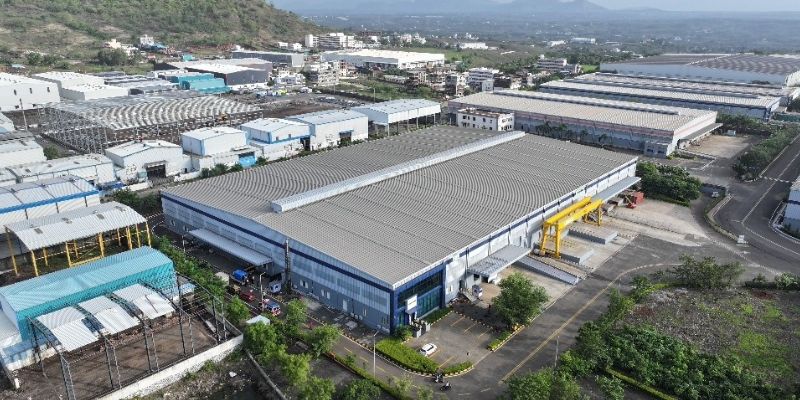
AmpereHour Opens 5 GWh BESS Manufacturing Facility in Pune
The Chakan facility will integrate Make in India battery blocks and digitally validated energy storage systems for utility-scale and industrial applications.
Read moreAutomation & Robotics
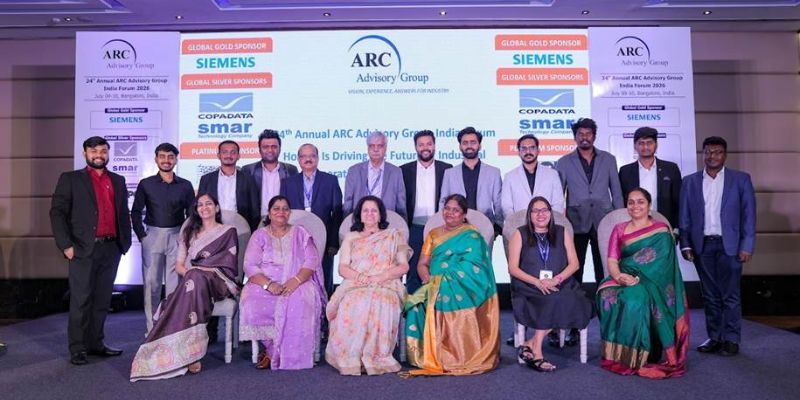
ARC India Forum Spotlights AI-Led Industrial Transformation
ARC Advisory Group’s 24th India Forum brought together 300-plus leaders to examine how AI is transforming industrial operations, manufacturing and supply chains.
Read moreSmart Manufacturing

Hitachi Vantara’s Norman Plant Named WEF Lighthouse Facility
Hitachi Vantara’s Norman manufacturing site has earned WEF Lighthouse status for using AI to reduce lead times, inventory and carbon emissions.
Read moreRelated Products
latest News
Subscribe to iNoW

For Industry News on WhatsApp, Give a Miss Call on: +91 84228 74016