





Schedule a Call Back


How AI is transforming smart manufacturing and unlocking new industrial efficiency
 Articles
- Dec 02,25
Balaji Krishnamoorthy, Executive Vice President, Findability Sciences, outlines how AI is reshaping smart manufacturing, boosting efficiency, enabling predictive insights, and driving faster, data-led decisions across industrial operations.

The question I keep getting asked repeatedly is “The noise around AI and the hype, is it a bubble?” The best answer to that is to talk about the amazing success and Use Cases we have quietly kept delivering for our manufacturing clients, globally!
I was talking with the CIO of a multi-billion dollar manufacturing Firm, and while discussing smart manufacturing, he said, “We strongly believe that the next wave of industrial efficiencies will not come from machines, but Intelligence.” Which is so true, with my discussions with leaders in manufacturing companies, AI is the center stage to power growth, efficiencies, quality and flexibility.
Why now?
The pressures on manufacturers have never been more than now with political uncertainties, cost pressures, antiquated machinery, aging skilled workforce in many geographies, supply chain volatility, and pressures on localisation and customisation. It is all about survival and revival.
For Indian manufacturers, the need for AI is now for the sake of survival and to compete with Global firms. As I talk with manufacturers in the US, they are looking for setting up manufacturing and sourcing capabilities as the China+1strategy. This provides Indian manufacturers a great opportunity to not just depend on cheap labor but use AI as a differentiator to attract opportunities.
The "why" essentially boils down to three main pressures: global competitiveness, operational inefficiencies, and government mandate. The government’s push and financial incentives is actively creating an ecosystem that rewards AI adoption, making it financially riskier not to adopt these technologies.
The Production Linked Incentive (PLI) Schemes, IndiaAI Mission and DPI (Digital Public Infrastructure), are programmes that Indian manufacturers can leverage and grow.
To summarise for Indian manufacturers adopting Artificial Intelligence (AI) is not just a technological upgrade, but as a strategic necessity to remain competitive in the global market.
This leads to the broader question of why the need for all manufacturers globally is now, and let me explain that a bit further. The need for manufacturers now is to evolve: from automation to cognition, machines, humans or robots doing repetitive tasks are not good enough, but every aspect of manufacturing must become smart, i.e. learn, adapt, change, implement in real time and hence the need for Artificial Intelligence.
We were discussing this with the CEO of a large chemical manufacturer, who has been in business for over 100 years; his question was “How can I make our manufacturing energy needs more efficient?” One way would be to achieve that by replacing the entire machinery, which was not just cost prohibitive but impractical; the other option is with implementation of Artificial Intelligence. This gave them savings of 18 per cent efficiencies in the first year, hoping to reach higher efficiency gains in the coming years. This is one of many examples that I will talk about in the article, all real life use cases implemented by us at Findability Sciences.
What are the impediments to AI in smart manufacturing?
Before we look at the rise and how AI powers smart manufacturing, let’s understand the challenges.
When we typically advise our clients, we start with, there is no Artificial Intelligence without information architecture or data, which is still true, but in the case of the shopfloor and adoption of AI, the first and foremost advice we give is work on the culture so that there is no resistance to change. Quoting one of the leaders in manufacturing we work with, he said, “I can cook with AI, but we need to make them eat,” extremely important to start with cultural shift. Other key challenges include ROI uncertainty to skills to antiquated infrastructure, fear of job loss, etc. However, all the challenges can be addressed by embracing change and working with the right partner and vendor who have the experience and collaborates with clients to deliver success.
How are we helping manufacturers?
AI is powering smart manufacturing at our clients and helping them thrive – even amid disruption, it is offering benefits that align on two different fronts: helping drive ongoing operational improvements, that include increasing production throughput, improving asset utilisation, and enhancing product quality. And secondly, it is creating greater customer value by revolutionising manufacturing capabilities, delivering design improvements, and enabling sales and customer service.
At the operations level, or what we call Industrial AI, our AI capabilities are seeing direct results for our clients in use cases like Predictive Maintenance, Inventory & Supply Chain Optimisation, Process Automation, Energy Efficiences, and many more. On the business side for manufacturers our Commercial AI is helping in use cases across finance, with anomalies and fraud, insights and planning on cash flow and financial reporting, for the sales leaders on demand and sales, pricing both at the product and commodity level, market intelligence etc. We are very proud of the work we are doing and enabling every department and leader within manufacturing and driving productivity and results.
To think of AI in smart manufacturing, don’t get entangled in jargon like Agentic AI or LLMs or Neural Networks, but understand what the business use case is and whether AI can drive ROI for it. If you have questions, talk to experts to learn more about how AI can help smart manufacturing.
Information from other sources also confirms the value of smart manufacturing and AI
According to a report from the IBM Institute for Business Value (IBV), smart manufacturing is delivering dramatic benefits in productivity and profitability improvements: Over 60 per cent of manufacturers report productivity and profitability increases of more than 5 per cent in the past year. In addition, the potential value of data sharing in manufacturing process optimisation has been estimated at over $100 billion.
The time is now
The journey from Industry 1.0 to Industry 4.0 began well over 200 years ago, but the next wave of smart manufacturing that will enable possibilities for resource/process efficiency, asset utilisation, labour productivity, quality enhancement, time-to-market reduction, will be driven by Artificial Intelligence, and will happen over the next few years and not take centuries.
Finally, to quote my professor from my specialisation course on smart manufacturing at MIT, way before people were talking about Artificial Intelligence, they had said “Smart manufacturing can harness the transformative power of Digital tools and Data will become a key differentiator.” While looking to transform your shop floor, don’t just look at people, process and machinery, but look at how AI can power and change the future of manufacturing, and our success confirms AI is not hype. Let AI be at the centre of your Evolution-to-Revolution in smart manufacturing.
About the Author
Balaji Krishnamoorthy is the Executive Vice President at Findability Sciences, has led the company’s expansion into new global markets across Data and Artificial Intelligence. He has driven major technology transformations, built strategic partnerships with leading AI product companies, and delivered proven business outcomes through innovative data-driven solutions. With over 30 years of experience spanning technology and sales, he brings deep expertise in both structured and unstructured data to solve complex client challenges.
For Indian manufacturers, the need for AI is now for the sake of survival and to compete with Global firms.
To summarise for Indian manufacturers adopting Artificial Intelligence (AI) is not just a technological upgrade, but as a strategic necessity to remain competitive in the global market.
Smart manufacturing
Findability Sciences
Industrial efficiency
AI
Artificial Intelligence
AI in manufacturing
Industrial AI solutions
Related Stories
Machine Tools & Accessories
AMTEX 2026 and Fastener Fair India to Showcase Next-Gen Manufacturing Technologies
AMTEX 2026 and Fastener Fair India 2026 will bring together 650+ exhibitors and 4,000+ visitors at India Expo Mart, Greater Noida, showcasing advanced manufacturing and fastening solutions.
Read moreElectrical & Electronics
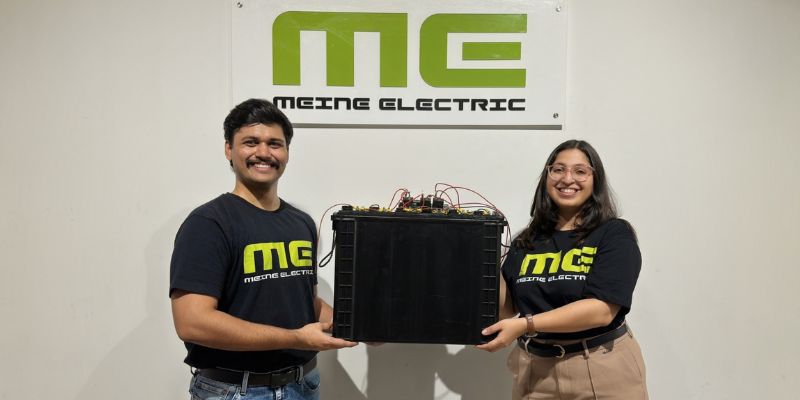
Meine Electric Develops Fast-Charging Iron-Air Battery System
The independently validated system charges in six hours and discharges over 18 hours, targeting daily renewable energy balancing and long-duration storage applications.
Read moreSmart Manufacturing

DCM Shriram Partners Serentica for 58 MW Hybrid Renewable Project
The project will supply renewable power to DCM Shriram Chemicals’ Bharuch plant and raise the company’s total renewable energy capacity to 176 MW peak.
Read moreRelated Products
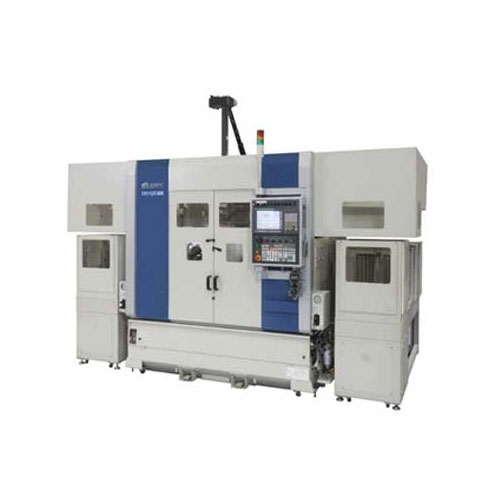
Compact Fmc - Motorum 3048tg With Fs2512
INDUSTRIAL AUTOMATION & TECHNOLOGY CONSULTANCY
Meiban Engineering Technologies Pvt Ltd offers a wide range of Compact FMC - Motorum 3048TG with FS2512.

Digital Colony Counter
INDUSTRIAL AUTOMATION & TECHNOLOGY CONSULTANCY
Rising Sun Enterprises supplies digital colony counter.

Robotic Welding SPM
INDUSTRIAL AUTOMATION & TECHNOLOGY CONSULTANCY
Primo Automation Systems Pvt. Ltd. manufactures, supplies and exports robotic welding SPM.
latest News
Subscribe to iNoW

For Industry News on WhatsApp, Give a Miss Call on: +91 84228 74016