




Schedule a Call Back


Conference on 'PHD Manufacturing Signature Series 2015 - Zed Effect'
 Industry News
- Mar 16,15
NULL


The PHD Chamber organised a conference on 'PHD manufacturing Signature Series 2015 - Zed Effect' on 19th February 2015 at PHD House, New Delhi which was inaugurated by Shri Narendra Singh Tomar, Union Minister of Steel and Mines, Govt of India.
Mr Alok B Shriram, Senior VP, PHD Chamber highlighted that India's manufacturing sector could reach USD 1 trillion by 2025. This could be achieved on the back of the continually growing demand in the country and the inclination of multinational corporations to establish low-cost plants in India. Up to 90 million domestic jobs could be created by 2025, with the manufacturing sector contributing to about 25-30 per cent of India's gross domestic product (GDP).
According to World Bank estimates, simply halving the delays due to roadblocks, tolls and other stoppages could cut freight times by some 20-30 per cent and logistics costs by an even higher 30-40 per cent. This alone can go a long way in boosting the competitiveness of India's key manufacturing sectors by 3 to 4 per cent of net sales, thereby helping India return to a high growth trajectory and enabling large scale job creation, he added.
He emphasized that steel is the core sector for development of any economy. Hoping to benefit from the 'Make in India' programme, all steel producers would look to expand their capacity to about 100-110 million tonnes per annum. Currently the total output stood at above 83.2 million tonnes in the year 2014, cementing India's position as the fourth-largest steel producer for fifth year now in a row. The sector is also looking to benefit from the fall in iron ore prices to five-year low levels, as also from the declining coking coal prices.
Mr Anil Khaitan, Chairman, Industry Affairs Committee, PHD Chamber while felicitating the chief guest and participants said studies conducted on the manufacturing industry have concluded that India has a working population of 75%. Out of this, only 600 million have acquired education till middle school. Due to this reason, the manufacturing industry in India, which is labour intensive, can provide the requisite number of employment units in the country. Studies have indicated that the productivity of the manufacturing industry in India is approximately 1/5th of the productivity in the manufacturing industry of United States of America. It is about ? as compared to the productivity levels in South Korea as well as Taiwan.
Sources estimates that the higher input costs for the Indian manufacturing sector as a result of cascading effect of indirect taxes on selling prices of commodities, higher cost of utilities like power, railway transport, water, higher cost of finance and high transactions costs puts the sector at a severe disadvantage as compared to its Asian counterparts, he added.
Mr Naveen Jindal, Chairman, Jindal Steel and Power Ltd demanded transparent policies from the government for all sectors including steel, coal and mines so that no ambiguity prevails and business is conducted with ease and fairly.
Mr Jindal said that the scarcity of Non Cooking coal and Iron ore is the major concern for the steel sector. India has more than 200 coal blocks but only 30 coal blocks has been started so far. At the time of independence, India and China were producing the same volume of steel whereas now China is producing 822 MT and India could be able to touch at appx.85 MT. Government should take imperative steps to encourage manufacturing like expansion of ports, Railway Network etc., he added.
Shri Narendra Singh Tomar, Union Minister of Steel and Mines said that the Ministry of Steel is making necessary provisioning in the law to involve private sector participation in exploration of mines and minerals and also empowering them to compensate the cost involved in exploration.
He said that the auctioning would be only channel available for obtaining mines and minerals reserves in all categories including captive mines and merchant mines and even a foreign entity such as POSCO would have to be awarded mining and mineral blocks through auction process even though it has been seeking to invest in India in its mines and minerals segment for over a decade.
By the month of May 2015, the ministry of steel and mines will finalize the new auction rules and regulations for future as for which the mines and minerals resources be awarded and the new rules and regulations finalized by the centre be referred to states such as Odisha, Chhattisgarh, Jharkhand.
He also apprised participants about the initiative taken by the government to strengthen the steel sector by increasing the production of iron ore and also restrict unwarranted imports to save the interest of domestic manufacturers.
Mr D P Deshpande, Managing Director, Tata Sponge Iron Ltd said that large unorganized sector serves the steel manufacturing industry and the manufacturers must owe the responsibility to organize them, to enable them to produce good quality products and become competitive like Tata follows the model of TQM (Total Quality Management).
Recent falling IIP figures in manufacturing are a curse for economy. The steel demand is low in the recent past, which in turn is creating pressure on steel domestic prices. According to a McKinsey report, lack of facilities in infrastructure and logistics amounts to INR 45 billion which is equal to 4.3% of India's GDP.
India has an advantage of demographic dividend wherein it is easy to find employees for different jobs. India must produce good quality products to enable growth in exports and to reduce the trade deficit.
Mr Easwaran Subramanian, Senior Director - Consulting, Deloitte Touche Tohmatsu India Private Limited said it was the need of hour that private industry players need to invest in R&D to encourage the innovation and new technologies which will lead to zero effect and zero defect. India has to focus on increasing its productivity, which increased by .4% in comparison to last year whereas China is more than doubled its productivity.
Mr Rajiv Bajaj, Partner, Nomura Research Institute India (NRI) said that despite tough conditions to do business in India, the automotive industry has marked India's position in the world. Today, India is the largest tractor producer, 2nd largest two wheeler producer and 3rd largest truck and bus producer in the world.
Related Products
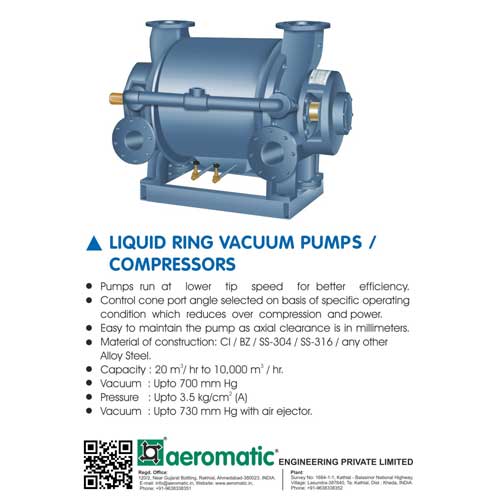
Liquid Ring Vacuum Pumps/Compressors
Compressors and Allied Equipment
Aeromatic Engineering Private Limited offers a wide range of liquid ring vacuum pumps/compressors.
Read more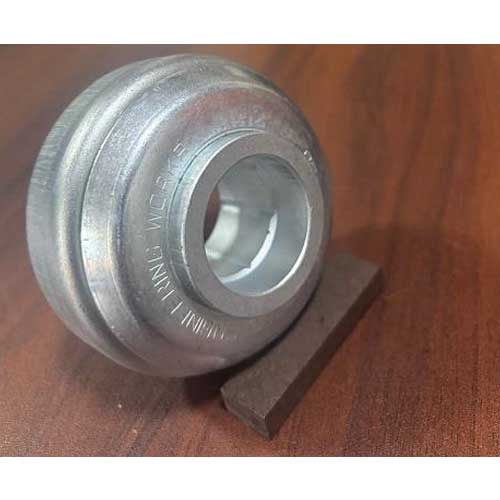
Hot Wheel Bearing
Bearings, Bushings, Wheels and Gears
SICCO Engineering Works offers a wide range of hot wheel bearing. Read more
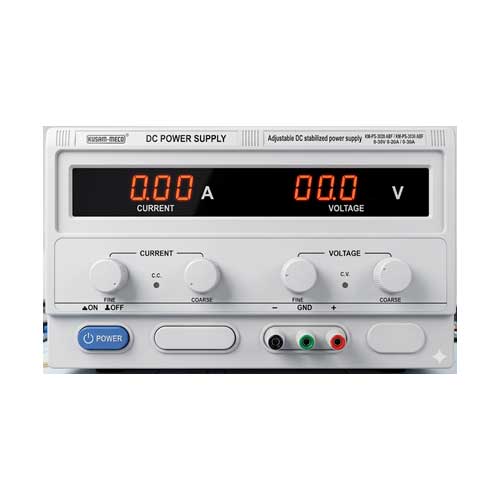
Kusam-meco DC Power Supply Model Km-ps-3020 Abf / Km-ps-3030 Abf
Power Supplies, Batteries & Accessories
<p>Kusam Electrical Industries Ltd offers Kusam-Meco DC power supply model KM-PS-3020 ABF/ KM-PS-3030 ABF</p> Read more
latest News
Subscribe to iNoW

For Industry News on WhatsApp, Give a Miss Call on: +91 84228 74016