








Schedule a Call Back


Companies must focus on high-impact areas for digital transformation: G Balaji
 Articles
- Jul 27,26
In this interview, G Balaji, Sr VP, Energy Industries, ABB India, shares insights on the company’s approach to extended automation and emerging technologies shaping the future of chemical manufacturing.

With chemical manufacturers looking to accelerate innovation, optimise assets and scale operations safely, automation and digital tools are expected to play a key role. In this interview, G Balaji, Senior Vice President, Energy Industries, ABB India, shares insights on the company’s approach to extended automation and emerging technologies shaping the future of chemical manufacturing.
How is ABB helping chemical manufacturers improve efficiency, safety, sustainability and plant performance?
Chemical manufacturers today have a tremendous opportunity to become more agile, sustainable and responsive to evolving market needs. Success will depend on how effectively they can accelerate innovation, optimise assets and scale operations safely. We help customers achieve this by integrating automation, electrification and digital technologies across the entire plant. For instance, we have helped a custom chemical manufacturing company automate over 650 reactors and more than 3 lakh connected devices at their largest multi-product plant in Tuni, Andhra Pradesh, improving operational visibility, production flexibility and process safety. In another specialty chemicals facility, our modular automation architecture accelerated commissioning and enabled faster product introductions, while improving batch consistency and asset utilisation.
Beyond automation, we are helping customers transition from reactive to predictive operations through AI-enabled digital solutions that improve reliability, reduce unplanned downtime and support faster decision-making. What differentiates ABB is our ability to unify these capabilities on a single platform, enabling chemical manufacturers to achieve three outcomes simultaneously: faster time-to-market, higher plant availability and safer, more sustainable operations.
What strategies can help chemical manufacturers overcome barriers such as legacy infrastructure, high investments and skill gaps in adopting advanced automation?
Digital transformation does not have to begin with a large-scale rip-and-replace project. Manufacturers should consider a phased approach, focusing first on high-impact areas where modernisation can deliver measurable business value. The goal is not a one-time transformation project, but a continuous journey of improvement that delivers value at every stage and creates a foundation for more autonomous, sustainable operations in the future. We call this approach “Automation Extended.” It is a strategic evolution of traditional automation that enables companies to extend the value of their existing control systems by seamlessly integrating AI, advanced analytics, predictive maintenance, industrial IoT and digital applications, without disrupting operations or replacing core automation infrastructure.
Automation Extended separates industrial automation into two distinct but integrated environments:
- Stable Core Control Layer: Maintains real-time process control and operational stability.
- Flexible Digital Layer: Supports AI, advanced analytics and digital applications, enabling innovation without risking core operations.
Rather than treating automation as a one-time investment, Automation Extended creates a foundation for continuous improvement and future-ready operations. Equally important is the people dimension. Technology delivers results only when operators and engineers have the right skills and insights to use it effectively. That is why workforce enablement and strong technology partnerships are critical to accelerating digital adoption. Companies seeing the greatest success are those that start with targeted use cases, such as predictive maintenance, energy optimisation or process performance improvements, and scale from there. This helps them realise value faster while building a pathway toward more autonomous operations.
As chemical plants become more connected, how can manufacturers strengthen cybersecurity while ensuring safe and uninterrupted operations?
The most resilient plants are those that view cybersecurity as an ongoing discipline, embedded throughout the asset lifecycle and aligned with broader business objectives. The goal is no longer simply to prevent cyber-attacks, but to ensure safe, resilient and uninterrupted operations. The first step is adopting a defense-in-depth approach that combines secure industrial control systems, network segmentation, continuous monitoring, access controls and regular vulnerability assessments across both IT and OT environments.
A secure automation architecture starts with cybersecurity by design, not as an afterthought. As operational data increasingly flows across connected systems, cybersecurity becomes fundamental to maintaining production integrity, safety and business continuity. Through the Automation Extended approach, manufacturers can modernize and adopt digital capabilities while preserving the integrity of their core control systems. This enables them to leverage AI, analytics and IIoT technologies without compromising the security of plant operations.
Achieving long-term resilience also requires organisations to focus on robust governance, supported by incident response plans, regular employee training and trusted technology partners with expertise in both cybersecurity and industrial operations.
Which emerging technologies and automation trends will shape the chemical industry, and how is ABB preparing customers for the future?
For decades, automation has driven efficiency and reliability by giving industries greater control and visibility over their operations. Now, a fundamental shift is underway. The next generation of automation moves beyond isolated applications, embedding intelligence directly across the plant floor and enabling operations that are not just controlled, but predictive, adaptive and autonomous.
Consider a reactor beginning to drift from its optimal conditions. Rather than waiting for an operator to intervene, AI detects the trend in real time, identifies the best corrective action and, where appropriate, implements it automatically. The result is a plant that responds faster, performs better and operates more sustainably, with minimal disruption. We are entering a new chapter in industrial automation, one where intelligence is not a feature but the foundation. This shift will redefine how industries manage safety, productivity and sustainability for years to come.
Another area to watch is the evolution of digital twins. They are becoming intelligent, data-driven models that continuously learn from real-time operations. A chemical manufacturer developing a new formulation can simulate different process parameters, predict product quality and optimise production before implementation, reducing trial and error, minimising off-spec batches and accelerating time to market.
The companies that will lead the next decade will be those that can transform intelligence into operational advantage. At ABB, this vision is reflected in our approach to autonomous operations. By combining automation, AI and digital technologies through solutions such as ABB Ability™ System 800xA and ABB Ability™ Genix, we are helping customers build plants that are more connected, resilient and intelligent. This enables faster, data-driven decision-making while keeping human-machine collaboration at the center of operations.
ABB India
G Balaji
chemical industry
industrial automation
autonomous operations
digital transformation
artificial intelligence
industrial IoT
cybersecurity
digital twins
ABB Ability System
Related Stories
Automation & Robotics

Honeywell expands AI and cybersecurity skilling initiative in India
Under Saksham, Honeywell Technologies aims to equip over 300,000 students with skills in AI, cybersecurity, sustainability and advanced technologies by 2030.
Read moreMachine Tools & Accessories

Schaeffler India appoints Amit Bhalerao as Chief Operating Officer
Amit Bhalerao will lead Schaeffler India’s manufacturing operations, with a focus on operational excellence, digital transformation, localisation and capability development.
Read moreAutomation & Robotics

Siemens appoints Rainer Brehm as President of new Automation Business
Rainer Brehm to lead the newly established Automation unit, effective October 1, 2026. New organisation brings together key automation capabilities and further advances Siemens’ ONE Tech Company s..
Read moreRelated Products
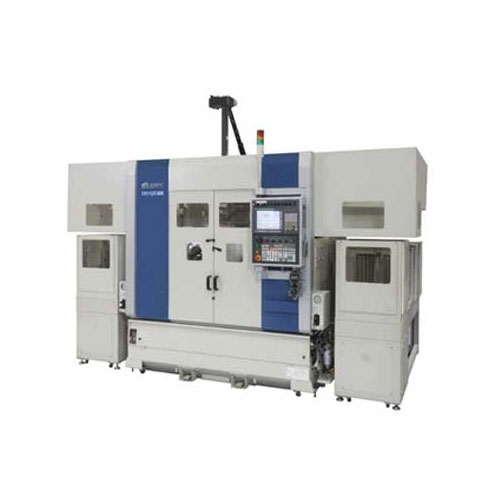
Compact Fmc - Motorum 3048tg With Fs2512
INDUSTRIAL AUTOMATION & TECHNOLOGY CONSULTANCY
Meiban Engineering Technologies Pvt Ltd offers a wide range of Compact FMC - Motorum 3048TG with FS2512.
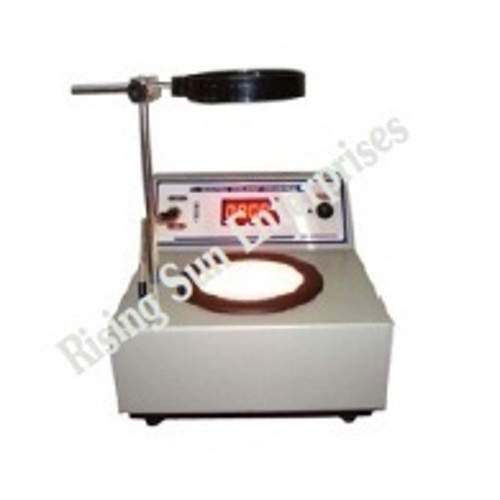
Digital Colony Counter
INDUSTRIAL AUTOMATION & TECHNOLOGY CONSULTANCY
Rising Sun Enterprises supplies digital colony counter.

Robotic Welding SPM
INDUSTRIAL AUTOMATION & TECHNOLOGY CONSULTANCY
Primo Automation Systems Pvt. Ltd. manufactures, supplies and exports robotic welding SPM.
latest News
Subscribe to iNoW

For Industry News on WhatsApp, Give a Miss Call on: +91 84228 74016