




Schedule a Call Back


Battery Scrap Sourcing Emerges as a Key Advantage for India’s Recyclers
 Articles
- Jul 28,26
India’s expanding battery market is increasing demand for reliable scrap collection and recycling networks to strengthen domestic supply chains and reduce imports.
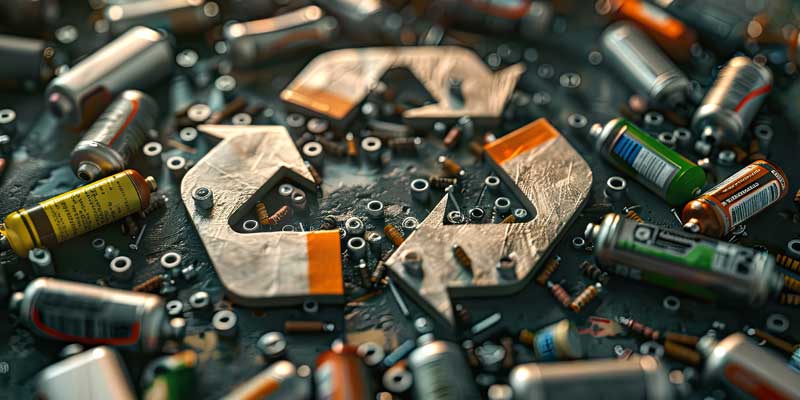
India’s growing demand for batteries across electric vehicles, telecom infrastructure, renewable energy storage systems and conventional automotive applications is increasing the importance of reliable raw material sourcing. As more batteries reach the end of their useful life, recyclable scrap is emerging as a critical secondary resource for supporting domestic supply chains, reducing import dependence and advancing circular economy objectives.
Used batteries, once viewed primarily as waste, are increasingly being recognised as a valuable industrial resource. With battery consumption rising across the country, access to end-of-life batteries could become a more significant competitive advantage than recycling capacity alone.
Unlike traditional manufacturing sectors, where raw material sourcing is relatively straightforward, battery recycling depends on a complex collection ecosystem. Used batteries are dispersed across millions of households, workshops, dealers, fleet operators and industrial users. Recovering them efficiently requires established sourcing networks, collection systems and logistics capabilities. Historically, much of this collection activity was handled through informal channels.
The recycling process includes collection, battery breaking, smelting, acid treatment, plastic recycling, refining and alloying. It produces lead ingots with a purity of more than 99.97 per cent.
India’s recycled lead industry benefits from lead’s high recyclability, with nearly 85–90 per cent of domestic lead production derived from recycling. More than 80 per cent of lead consumption is used in battery manufacturing.
The sector has around 672 registered recycling units across four regional clusters, with an installed capacity of approximately 3.53 million tonnes per annum.
India’s lead-acid battery market was valued at Rs 421.5 billion in FY2025 and is projected to reach Rs 596.71 billion by FY2030, growing at a compound annual growth rate of 7.2 per cent. Demand is being driven by automotive, telecom, renewable energy, inverter, UPS and data centre applications.
However, India’s recycled lead industry continues to face a supply-side gap. The unorganised sector accounts for an estimated 24.4 per cent of recycled lead ingot supply, while imports contribute another 14.4 per cent.
In FY2024, India imported around 1,53,500 tonnes of lead scrap worth Rs 24.86 billion, mainly from the USA, the UK and Australia. The value of these imports has grown at a compound annual growth rate of 11.6 per cent since FY2019.
This dependence reflects the gap between installed recycling capacity and reliable domestic scrap collection. Stricter environmental regulations, traceability requirements and Extended Producer Responsibility norms are gradually shifting volumes towards organised recyclers.
As battery consumption rises, competitive advantage is likely to depend less on plant size alone and more on the ability to establish compliant scrap-sourcing, collection and processing networks.
Organised recyclers are consequently investing in collection networks, sourcing partnerships and recovery technologies. For many industry participants, securing feedstock has become as important as expanding processing capacity. Some recycling networks now source recyclable material from more than 50 countries, indicating the increasing strategic importance of feedstock access.
Recycling operations serving the battery and metal industries manufacture pure lead and lead alloys using recyclable materials such as battery scrap, remelted lead ingots, lead blocks, lead scrap and lead master metal.
Recycling is also increasingly being considered from a resource security perspective. As supply chains face geopolitical disruptions and commodity price volatility, recovering metals already available within the economy offers economic and strategic advantages. Materials previously treated as waste are gradually being recognised as valuable industrial resources.
India’s recycling sector is witnessing increased investor interest, supported by recent listings, regulatory developments and the performance of listed companies.
CMR Green Technologies’ Rs 6,308.8 million initial public offering, comprising an offer for sale of 3.29 crore shares, listed at Rs 275 against a price band of Rs 182–192. The listing represented a premium of 43.43 per cent, indicating investor interest in scaled recycling platforms.
Jain Resource Recycling also recorded a positive market debut in October 2025. Its Rs 12.5 billion initial public offering was priced at Rs 232, while the shares listed at around Rs 265, representing a premium of nearly 14 per cent.
Among listed companies, Gravita India remains a market reference for the sector’s long-term performance, having listed at Rs 210.40 against its initial public offering price of Rs 125.
Another recycling business preparing for a public listing has received approval from the Securities and Exchange Board of India. Its proposed initial public offering comprises a fresh issue of Rs 3.2 billion and an offer for sale of up to 37,650,000 equity shares with a face value of Rs 2 each.
With a 1.5 per cent share of the recycled lead ingot market in FY2025, the business recycles end-of-life energy-storage products and non-ferrous scrap into materials used across the energy-storage, e-mobility, automotive and chemical industries.
The next phase of India’s battery sector may therefore depend not only on manufacturing capacity but also on the efficiency with which the country collects, recovers and reuses materials already in circulation.
battery recycling India
lead scrap sourcing
recycled lead industry
lead-acid battery market
battery waste management
circular economy
end-of-life batteries
organised recyclers
Related Stories
Electrical & Electronics
MiniMines secures patent for Hybrid Hydrometallurgy battery recycling technology
MiniMines has secured an Indian patent for its HHMR technology, enabling recovery of high-purity critical minerals from end-of-life lithium-ion batteries and electronic waste.
Read moreAuto & Auto Components
Tata Motors Opens Vehicle Scrappage Facility in Patna
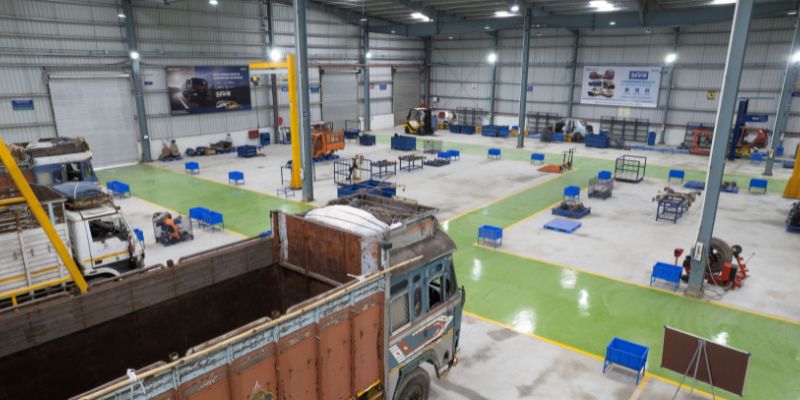
Tata Motors has opened its Re.Wi.Re vehicle scrappage facility in Patna, Bihar, with an annual capacity to safely dismantle up to 15,000 end-of-life vehicles.
Read moreElectrical & Electronics
Battery Scrap Sourcing Emerges as a Key Advantage for India’s Recyclers
India’s expanding battery market is increasing demand for reliable scrap collection and recycling networks to strengthen domestic supply chains and reduce imports.
Read moreRelated Products
Kusam-meco Handheld Thermal Camera Model- Km 300
ELECTRICAL & ELECTRONIC EQUIPMENT
KUSAM-MECO, the innovators of new products in the Test and Measurement field, have added a new Thermal Imager with Camera.
Read more
Ultra-slim Humidity/temperature Indicator With Large 4” Display
ELECTRICAL & ELECTRONIC EQUIPMENT
Countronics offers a wide range of ultra-slim humidity/temperature indicator with large 4” display – Model 7100-4W.
Read more
Integrated Electric Gripper S Series
ELECTRICAL & ELECTRONIC EQUIPMENT
IBK Engineers Pvt Ltd offers a wide range of integrated electric gripper S series.
latest News
Subscribe to iNoW

For Industry News on WhatsApp, Give a Miss Call on: +91 84228 74016